Canon Confirms Development of High Megapixel Camera

If it is just using the same process as the 7DII that's fine by me.

From what I've seen, banding noise has been far more detrimental than the actual DR limitations in Canon's past sensor lineup. Given that DR above ISO 800 is virtually identical across the industry it's really just the noise that gets everyone excited, and that's not a problem resulting from the manufacturing process.
 
Upvote 0
9VIII said:
If it is just using the same process as the 7DII that's fine by me.

From what I've seen, banding noise has been far more detrimental than the actual DR limitations in Canon's past sensor lineup. Given that DR above ISO 800 is virtually identical across the industry it's really just the noise that gets everyone excited, and that's not a problem resulting from the manufacturing process.

Yes, I agree. The fixed pattern noise in the 7DII is very dramatically lower than in the 5DIII.
 
Upvote 0
Lee Jay said:
LetTheRightLensIn said:
"Northlight has been told that the high resolution camera coming from Canon will be based on the 4.2 micron pixel design of the Canon EOS 7D Mark II"

I sure hope not, since that means it won't touch Exmor.

7DII versus A77II (Exmor). Seems like the 7DII wins at all ISOs above 200, which is where it counts.

1. Who says that is the only place where it counts?
2. So winning by like 1/8th stop, which you can't even notice counts, but losing by a couple stops at lowest ISO doesn't count?
3. The differences are more stark comparing 810 to 5D3.
 
Upvote 0
neuroanatomist said:
For me, 'everyday shooting/viewing' doesn't comprise tripod mounted static subjects cropped to 100%. If that's your usual method/subject, then bravo –

First of all, why do you mention 100% ::). How the heck do you expect to see gains in resolution if you look at say 25% view? ::) ::) ::)

Second, it's just not that hard to get similar results off tripod. Yeah maybe if you shoot 1/60th at 400mm you may struggle, but who says to do that.

I don't have it online at the moment, but I have a real world test shot of Hairy Woodpecker with same lens, same spot, same distance, same time on 7D and 5D3 and I noticed the same increase in detail with the 7D shot AND these shots were even at ISO2500 to ISO3200 no less! So much for the myth that sure you see a big gain in reach at ISO100 but above ISO200 there is nothing to ever be gained from 7D reach over a 5 series no matter the bird type.

And if it is sooo impossible, then how come many people regularly use 1.4x TC on lenses used with 5D3 cameras AND even 7D series cameras?? They just toss on the TC and lose a stop of light and some AF performance and waste money and add CA for nothing?

your results have validity as far as comparing teleconverters vs. pixel interpolation for increased resolution, which is certainly not the topic at hand.

::)
Why not? In fact it's actually giving your side an unfair advantage since there is no extra loss due to higher sensor density but there is a bit of extra loss due to optical defects.
 
Upvote 0
LetTheRightLensIn said:
Lee Jay said:
LetTheRightLensIn said:
"Northlight has been told that the high resolution camera coming from Canon will be based on the 4.2 micron pixel design of the Canon EOS 7D Mark II"

I sure hope not, since that means it won't touch Exmor.

7DII versus A77II (Exmor). Seems like the 7DII wins at all ISOs above 200, which is where it counts.

1. Who says that is the only place where it counts?
2. So winning by like 1/8th stop, which you can't even notice counts, but losing by a couple stops at lowest ISO doesn't count?

That's right. Any extra performance where performance is already very limited (high ISO) is most welcome. Any extra performance at base ISO where performance is already excellent is of marginal value.

3. The differences are more stark comparing 810 to 5D3.

We aren't talking about the 5D3 pixels, we're talking about the 7DII pixels.
 
Upvote 0
erjlphoto said:
Would be very surprised if Canon goes with a Sony sensor.
I appreciate that Canon makes their own rather than buying them from someone else.

I used to appreciate that back when they were clearly the best for stills and back in the 5D2 era when it also led to have the best video quality in a DSLR. Now that they cripple the video and are well behind for low ISO high DR shooting, not so much.
 
Upvote 0
LetTheRightLensIn said:
neuroanatomist said:
your results have validity as far as comparing teleconverters vs. pixel interpolation for increased resolution, which is certainly not the topic at hand.

::)
Why not? In fact it's actually giving your side an unfair advantage since there is no extra loss due to higher sensor density but there is a bit of extra loss due to optical defects.

Correct, and you've understood something most people don't.

Shrinking pixels and adding teleconverters are the same thing, except the teleconverter is not perfect optically.

Since a TC is mounted between a lens and a camera, you can either think of it as mounted to the lens and thus affecting what the lens does (that's the conventional way) or as mounted to the camera and thus affecting what the camera does. If you do the later, the focal length and f-stop don't change, but the sensor shrinks by the TC ratio (and, obviously, the pixels on it do as well). In fact, it's easy to see this effect if you look through a TC from the lens' side.

Teleconverter%20optical%20reduction.jpg
 
Upvote 0
Sporgon said:
Lee Jay said:
neuroanatomist said:
For me, 'everyday shooting/viewing' doesn't comprise tripod mounted static subjects cropped to 100%. If that's your usual method/subject, then bravo – your results have validity as far as comparing teleconverters vs. pixel interpolation for increased resolution, which is certainly not the topic at hand.

You don't need a tripod and static subjects to get little or no relevant movement during an exposure. Good technique, fast shutter speeds, and IS can all combine to get pixel-level performance equal to the best you can get in the lab, and I do it regularly. I shoot a lot of airplanes and often have final images that are 1:1 pixel crops from a crop camera with a 2x teleconverter mounted.

You are so wrong there. Granted you may; or may not. For the bayer pattern of pixels to describe everything accurately any microscopic movement and your four three colour arrays will receive confused information. Frequently the data from a hand held shot can looked clogged up - if you're going to be really picky about it, and that is infantisimal movement. IS does not produce the same data as a genuinely stable shooting platform, and remember just because it's on a tripod doesn't mean it's totally stable.

So when you say "good technique, fast shutter + IS = as good as in the lab" ( by the 'lab' I presume you mean rock steady platform etc etc.) then that statement is both misleading and wrong.

This is 16MP APS-C density equivalent (reached through TCs which even puts this at a great disadvantage since you have TC optical loss which pure sensor density increase would not), shot hand held, a heavy lens too, without even any particular care taken and yet it is sooooo blurry that both aliasing and sub-pixel color moire show up ;D.

https://farm9.staticflickr.com/8588/15963861117_0545e61388_o.jpg
 
Upvote 0
Lee Jay said:
LetTheRightLensIn said:
2. So winning by like 1/8th stop, which you can't even notice counts, but losing by a couple stops at lowest ISO doesn't count?

That's right. Any extra performance where performance is already very limited (high ISO) is most welcome. Any extra performance at base ISO where performance is already excellent is of marginal value.

hmmmm

So a literally impossible to notice difference matters at high ISO, but it can never, ever matter for anyone under any circumstance that there is a 2-3 stops clearly visible difference at low ISO since no shot could ever possibly under any circumstance ever need more DR than a 5D3 already delivers at ISO100.

hmmmmm ;)


We aren't talking about the 5D3 pixels, we're talking about the 7DII pixels.

then compare 7D2 to D810 it's still more stark difference
 
Upvote 0
3kramd5 said:
LetTheRightLensIn said:
That is something a bit cool about the D810 type cameras, you get your FF (and at top most quality) and then you can go into a crop mode and get a decent reach...

Crop mode doesn't get you reach, it gets you smaller files.

Yeah I know. It was maybe a bit confusing hwo I put it, but I meant the pairing of reach and speed in crop mode on the D810. I meant that you can go into that mode and get the decent reach (which you already had in FF mode) AND your decent fps at the same time. And, as you also mention, which I forgot to, you save a lot of space too. Who wants to store 30MP worth of junky outer borders.
 
Upvote 0
LetTheRightLensIn said:
Lee Jay said:
LetTheRightLensIn said:
2. So winning by like 1/8th stop, which you can't even notice counts, but losing by a couple stops at lowest ISO doesn't count?

That's right. Any extra performance where performance is already very limited (high ISO) is most welcome. Any extra performance at base ISO where performance is already excellent is of marginal value.

LOL

this CR site is so crazy

So a literally impossible to notice difference matters at high ISO,

I did blind testing between these two cameras. The difference is more the noticeable and every one of my viewers picked the 7DII as the winner, and not by a small amount.

but it can never, ever matter for anyone under any circumstance that there is a 2-3 stops clearly visible difference at low ISO since no shot could ever possibly under any circumstance ever need more DR than a 5D3 already delivers at ISO100.

In my experience, no. Even with LR's controls pushed to -100 and +100, Canon's older 18MP sensor delivers more DR at base ISO than I need for any scene. If a crazy situation comes up, a 7DII can shoot two shots 6 stops apart from each other in a tenth of a second resulting in a blended image having 18 stops of DR.

then compare 7D2 to D810 it's still more stark difference

That's a different sensor size.
 
Upvote 0
Lee Jay said:
In my experience, no. Even with LR's controls pushed to -100 and +100, Canon's older 18MP sensor delivers more DR at base ISO than I need for any scene.

Yes, maybe for you, which is fine enough, but you are not everyone and all it takes is something as simple as walking up to a forest dappled in sunlight and you are past the DR that any Canon can comfortable handle.

If a crazy situation comes up, a 7DII can shoot two shots 6 stops apart from each other in a tenth of a second resulting in a blended image having 18 stops of DR.

I've not personally found that to work out so well in practice. I always get minor alignment issues which slightly rob the shot a bit or even leave bits of a weird look here and there and little branches and leaves and can whip around a lot even in such a short time.


That's a different sensor size.

It is, but Canon DR at low ISO tends to be the same across all sensor sizes for a given generation (and for the most part even across generations for quite a while now).
 
Upvote 0
LetTheRightLensIn said:
Lee Jay said:
In my experience, no. Even with LR's controls pushed to -100 and +100, Canon's older 18MP sensor delivers more DR at base ISO than I need for any scene.

Yes, maybe for you, which is fine enough, but you are not everyone and all it takes is something as simple as walking up to a forest dappled in sunlight and you are past the DR that any Canon can comfortable handle.

I've posted this before.

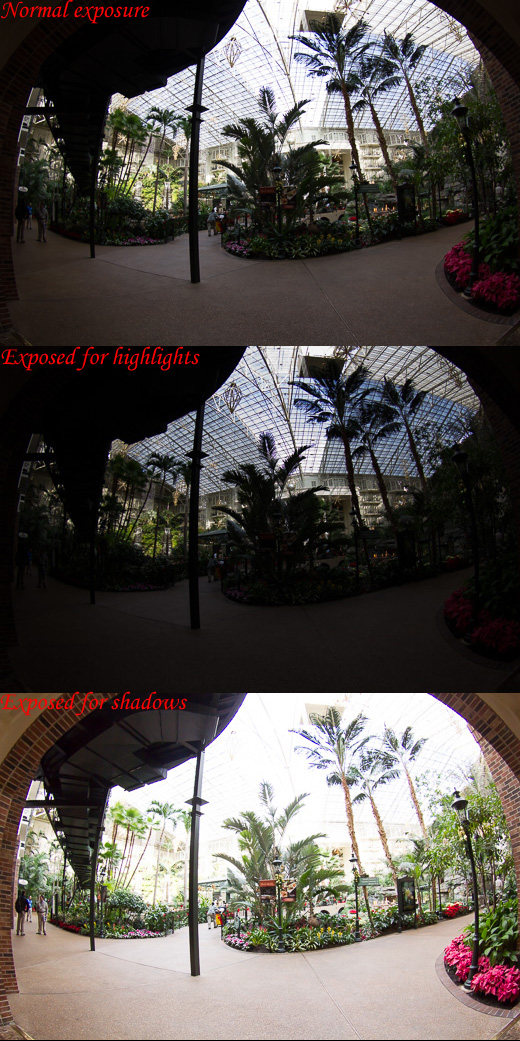
The top is the normal exposure - the way an out-of-camera JPEG would look. The middle is exposed for the highlights so the roof and sky aren't blown out and the bottom is exposed for the shadows so the dark areas underneath everything are visible.
9045%20exposures.jpg


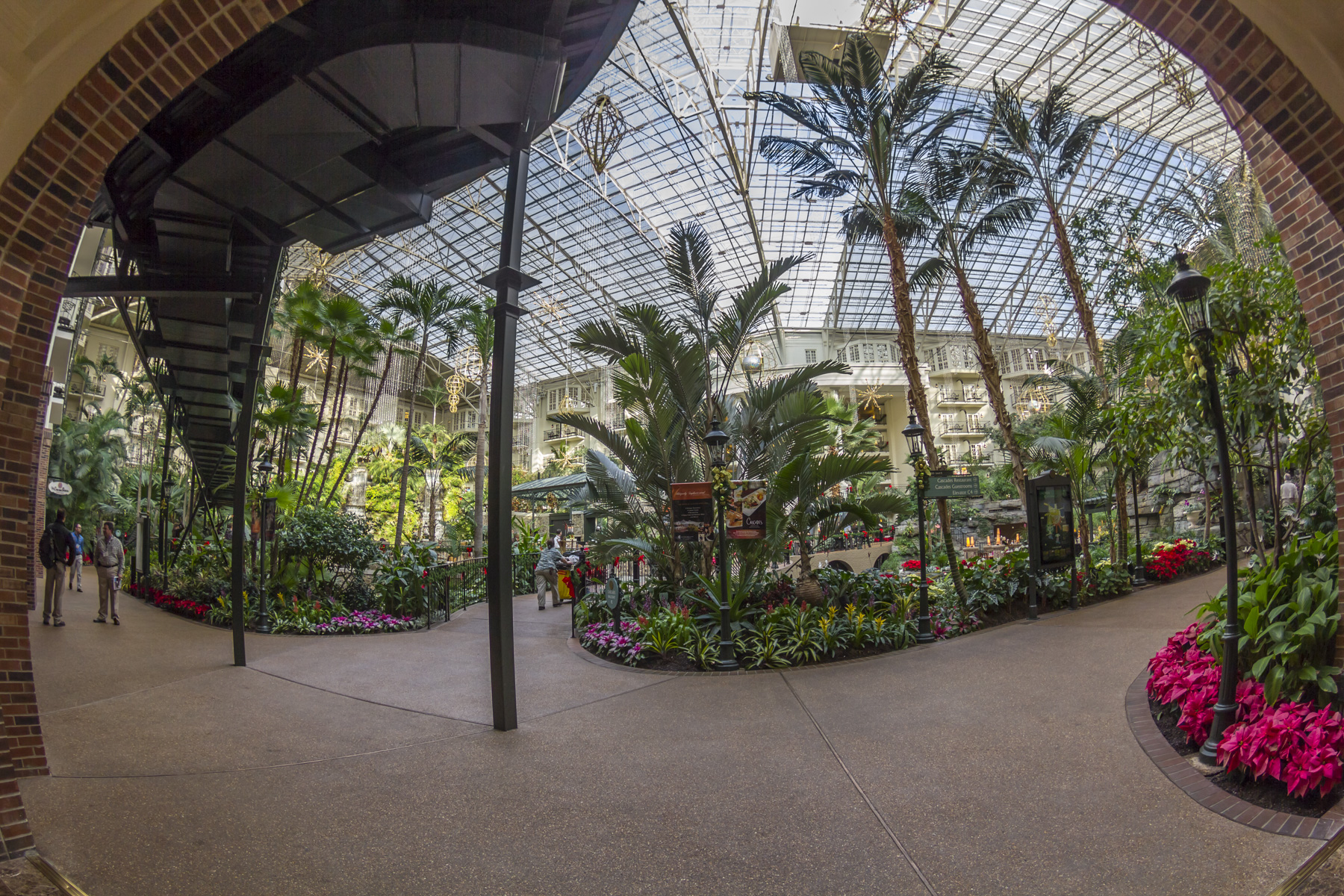
Realize, this is one exposure. This is what it looks like with LR's controls pushed to their extremes.
9045%20finished.jpg


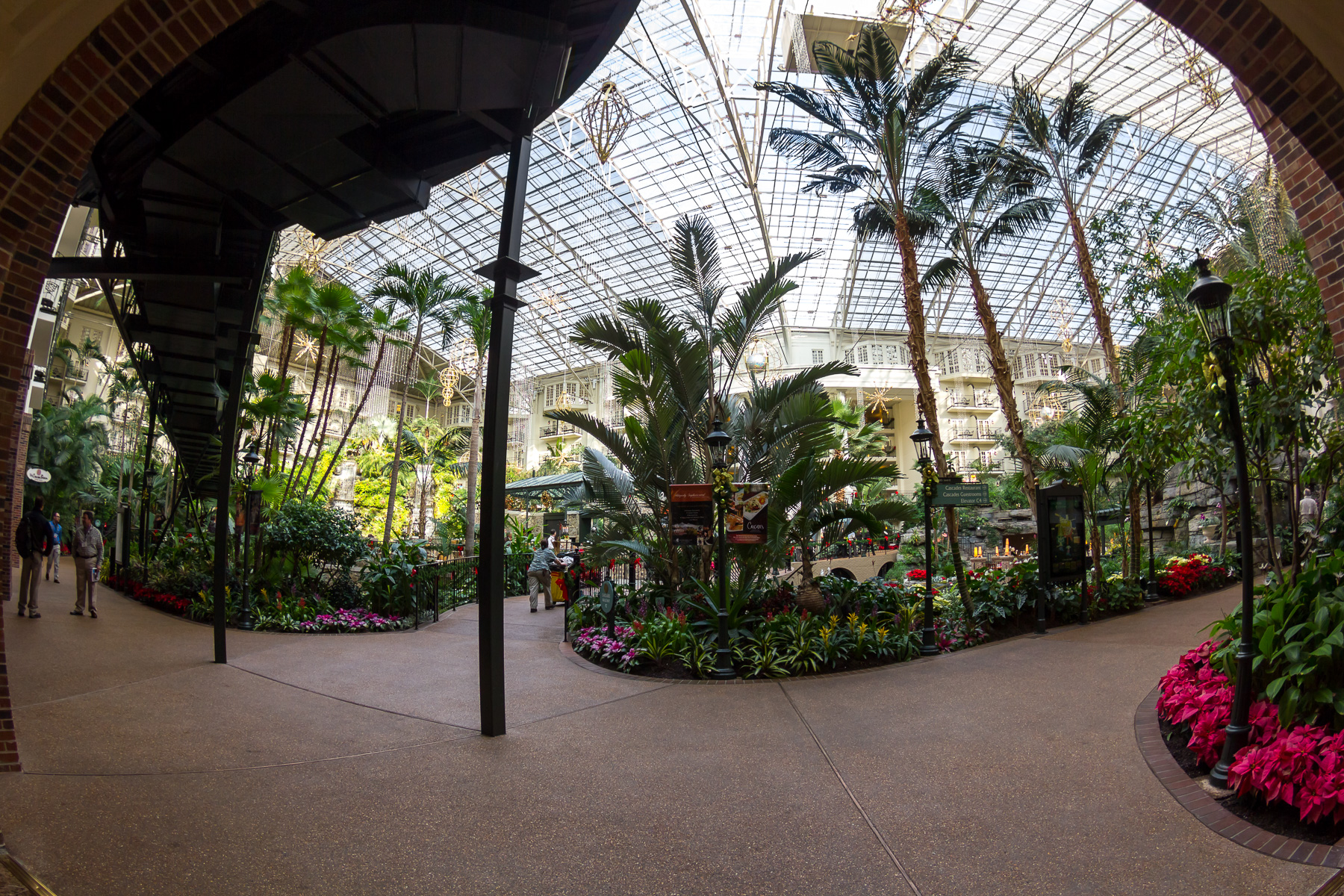
Personally, that looks a little flat and unnatural to me (too much DR squashed into too little final viewing space). I like it with a little less DR and a little more contrast.

T2i_9045.jpg
 
Upvote 0
dilbert said:
3kramd5 said:
LetTheRightLensIn said:
That is something a bit cool about the D810 type cameras, you get your FF (and at top most quality) and then you can go into a crop mode and get a decent reach...

Crop mode doesn't get you reach, it gets you smaller files.

Good way to describe crop mode!

And by extension, APS-C based cameras get you cheaper and smaller files.

And generally more "reach" (resolving power) because they actually do have smaller pixels.
 
Upvote 0
dilbert said:
Lee Jay said:
dilbert said:
3kramd5 said:
LetTheRightLensIn said:
That is something a bit cool about the D810 type cameras, you get your FF (and at top most quality) and then you can go into a crop mode and get a decent reach...

Crop mode doesn't get you reach, it gets you smaller files.

Good way to describe crop mode!

And by extension, APS-C based cameras get you cheaper and smaller files.

And generally more "reach" (resolving power) because they actually do have smaller pixels.

If the high MP camera uses the 7D2 sensor design then the 7D2 won't have more reach.

It'll just be a cheaper camera with smaller files.

It'll have more "reach" than the 5DII or 5DIII.
 
Upvote 0
Lee Jay said:
If this 52MP camera really is going to be the 5D Mark IV, then it really, really needs better ways to reduce file size in-camera, including cropping (i.e. 1.4x, 1.6x, 2.0x) and way better reduction methods than mraw and sraw, such as the ones used in the new DNG spec. I'm not really interested in 100,000 100MB raw files. That's 10TB!

It seems like it should be possible to take advantage of the spatial locality to significantly reduce file size in a lossless way, in much that JPEG does it lossily. The higher the bit depth, the more bits that are likely to match from pixel to pixel. Basically, start with a lossy compression like JPEG, decode it, compute the difference from the original data, and RLE the resulting stream of mostly zeroes.
 
Upvote 0
I am interested in practicalities based on experiment. My basic query to myself over the last week or so has been: for routine lightweight telephoto use, do I use my new 100-400mm II on my 7DII or the 100-400mm + my 5DIII + 1.4x TC III? Bryan of TDP has the 5DIII marginally better:

http://www.the-digital-picture.com/Reviews/ISO-12233-Sample-Crops.aspx?Lens=972&Camera=453&Sample=0&FLI=5&API=2&LensComp=972&CameraComp=963&SampleComp=0&FLIComp=4&APIComp=0

and I find the same from my own extensive tests with my particular lens and cameras. But, the difference is pretty small. Both out-resolve the bare 100-400 on the 5DIII. Based on my current usage, I would only ever use a high MP FF in its crop mode for bird photography, and the rest of the pixels would be wasted on me. For, the remainder of my photography, I am not pixel limited and so higher MP wouldn't interest me anyway.
 
Upvote 0