
You are using an out of date browser. It may not display this or other websites correctly.
You should upgrade or use an alternative browser.
You should upgrade or use an alternative browser.
Canon EF 16-35mm f/2.8L III Coming in June [CR3]
- Thread starter Canon Rumors
- Start date
SOOO excited for this lens.
I sold my 16-35 II about 7 months ago and i miss it so much. I virtually used that lens as a body cap for my camera.
However once i received the 24-70 II and other newer lenses I stopped relying in that lens due to the fact that my images were so much sharper and cleaner in the other lens.
This will with out a doubt be a purchase i make. I will buy this lens as soon as i can. Most lenses i wait for reviews, this one I will not.
I sold my 16-35 II about 7 months ago and i miss it so much. I virtually used that lens as a body cap for my camera.
However once i received the 24-70 II and other newer lenses I stopped relying in that lens due to the fact that my images were so much sharper and cleaner in the other lens.
This will with out a doubt be a purchase i make. I will buy this lens as soon as i can. Most lenses i wait for reviews, this one I will not.
Upvote
0

ahsanford said:mnclayshooter said:EEEP...
I was about 1 mouse click away from buying the f4 today at lunch when I saw this. Might be holding out a little bit. Some people will no-doubt unload their f4 to get the 2.8, I'd guess - even though they seem to be targeted to two slightly different crowds.
Slightly different? Unless you want to dabble in astro, I don't know how a delighted 16-35 f/4L IS user would make the jump:
1) "You know what would make this landscape even better? An aperture I'll never use, a ton more weight, and some new 82mm filters. That sounds awesome."
2) "My videos would get even better without IS. Take my money, Canon."
Both of those: said by no one ever.
The only way there will be an exodus from the 16-35 f/4L IS to the 16-35 f/2.8L III is if it blows minds optically. I just don't see that happening give how damn good the f/4L IS is today.
I personally only see the 'first!' / 'gotta have the latest-greatest' crowd (i.e. very well-heeled enthusiasts) as those that would jump from the f/4L IS to the f/2.8L III. Pros are much more disciplined and segmented into using the right lens for the job.
So I principally see the overhwhelmingly most-likely buyers of the 16-35 f/2.8L III as all the people who are shooting with the 16-35 f/2.8L II today. It's a straight upgrade for the sports/event crowd and that's that.
- A
Perhaps your rational does not apply to everyone.
I'm an amateur who has to carefully consider what I put into my bag and often compromises has to be made.
Definitely find the f/4.0 an amazing proposition but I'm probably going to plumb for the f/2.8 III instead. Why? Well, as compromises goes, the f/2.8 can go to f/2.8 and it gives me the option to do all 'scapes, including astro. From my personal point, I do my landscapes off a tripod so although I would love IS in all my lenses, it's very much a nice-to-have for my personal style.
I don't do many events but I'd happily settle for the success rate of a non IS 16-35 f/2.8. Judging by the excellent work I've seen.
That being said, I believe that there is a wide angle lens out there for all of us and we will take the option that best fits our personal circumstance.
Upvote
0

Krob78 said:If their complaining about the size and weight, it's only because they've not been shooting with the 11-24mm f/4 ;Dromanr74 said:davidj said:If it's going to be called the "Canon EF 16-35mm f/2.8L III" then it won't have IS, but I'd be happier if it was the "Canon EF 16-35mm f/2.8L IS" instead.
For those of us interested in IS, why would Canon make us choose between the f/4 IS and a way more expensive f/2.8 without?
Because othervise everybody will be complaining about size and weight...
I'm in agreement with you there...

Upvote
0
GMCPhotographics said:ahsanford said:GMCPhotographics said:I was pondering this the other day. Canon used to get a bad rap for their wide lenses. But these days, they have the most interesting, innovative, creative and capable wide lenses in their lens portfolio...more so than any other brand. The fish eye zoom 8-15L....unique and the last fisheye I'll ever need. The TS-e 17L...again unique and a fantastic optic. The new 11-24mm L is the widest rectilinear zoom lens ever made and again it's an amazing optic. The 16-35 LIS f4 has won a lot of hearts for it's impressive optical capability...so an f2.8 version should be very welcome too.
+1. The tilt-shift world has always been good, but their ultra-wide zooms have been iffy for landscape needs until the 16-35 f/4L IS came out. Then came the 11-24 f/4L. So most landscapers have just about everything they need except for a fast + wide + coma free lens for astro.
- A
iffy??? The current 16-35IIL is fine for landscapes...I would know...I've taken enough of them. Most L lenses I've tried way outperform most of the people I've seen use them:


There's nothing "iffy" about that lens...if you think there is...then you haven't been using it right.
My (copy of the) lens is not corner sharp. For blurred water this might be no issue. For "architectural" work in my opinion it is. If trying to do corner sharp architectural work with the lens means not using it right then maybe i'm ok with your coment. Otherwise I guess I'm not.
At the time the EF 16-35 f/2.8 L II came out, there were limited alternatives to it for my purpose. Today, the EF 16-35 f/4 IS and the EF 11-24 f/4 are valid alternatives. A corner sharp f/2.8 lens would still be nice... The current model does have flaws... CA being an other one to be mentioned...
Upvote
0
GMCPhotographics said:ahsanford said:GMCPhotographics said:There's nothing "iffy" about that lens...if you think there is...then you haven't been using it right.
Forgive me for not clarifying. It's "Iffy" from a sharpness perspective, and in fairness, that's a picky thing for me to say (but I'm surely not the only one who has said it here).
No one is saying you cannot render a great image with it. Lovely shots, btw, thanks for sharing.
Can you give some more context on the sunstars you spoke of before? I love mine on the 16-35 f/4L IS -- what makes you such a fan of them on the f/2.8L II?
- A
No probs, and your welcome.
The sunstar is a cobination of stopping down to f16 / f22. But it's shape and number of points is dependent on the number of aperture blades inside the aperture diaphragm. Odd numbers double the sunstars, even numbers produce symetrical. The 16-35IIL has just the right number of blades to look great and full. The 16-35 f4 LIS and the 24-70IIL both have a higher number of blades and their sunstars look too congested and too full to use as easily.
In theory:
The 9 bladed (rounder) apertures are for better background blur.
The 8 bladed apertures created nicer stars...
Upvote
0


This is where I wish Canon would make a 16-35mm f/2.8 IS. I love my 16-35mm F/4 IS for video, handheld long exposures, and for how sharp it is, but as a photojournalist I wish I could use it more in low light/fast action. Typically I'm fine with my 24-70mm f/2.8 for those situations, but it would be a nice way to mix up my shots. I'm not keen on having two 16-35mm lenses though, so I'm not sure a F/2.8 III would be able to convince me to drop my F/4 IS and the unique handheld long exposure shots it offers.
Upvote
0

Sabaki said:Perhaps your rational does not apply to everyone.
I'm an amateur who has to carefully consider what I put into my bag and often compromises has to be made.
Definitely find the f/4.0 an amazing proposition but I'm probably going to plumb for the f/2.8 III instead. Why? Well, as compromises goes, the f/2.8 can go to f/2.8 and it gives me the option to do all 'scapes, including astro. From my personal point, I do my landscapes off a tripod so although I would love IS in all my lenses, it's very much a nice-to-have for my personal style.
I don't do many events but I'd happily settle for the success rate of a non IS 16-35 f/2.8. Judging by the excellent work I've seen.
That being said, I believe that there is a wide angle lens out there for all of us and we will take the option that best fits our personal circumstance.
I appreciate your post. For a long time, Canon offered a good lens and a great lens for a lot more money. Amateurs/enthusiasts like us weighed each decision carefully and often went for the pricier lens because it was clearly the best -- the sharpest, fastest focusing, best built, etc. This also gave photographers a sense of future-proofing the purchase for long-term ownership or resale considerations.
However, of late, I would contend that Canon is taking the traditional 'best' market position and splitting it's L market into more specialized tools. Consider the UWA zoom lineup:
8-15 f/4L --> fishbowl for a jillion nutty little needs
11-24 f/4L --> architecture (and people with ultra-ultra-utra-wide addiction)
16-35 f/4L IS --> landscape and video
16-35 f/2.8L II or III --> events, sports, and possibly astro (if coma pans out)
So, it's less a matter of 'what is best' and more a matter of 'what is best for you'. You clearly are thinking that through, but I would argue that the 16-35 f/2.8L III being the top dog for all UWA needs is unlikely to occur.
- A
Upvote
0
I like to take a lot of night video of landscapes (Think vegas strip, fireworks, night concerts, etc) I've got the F2.8 II which I'm using on a 6D that I've used to get some great videos BUT in most cases I can't use a tripod as I'm walking around, slowly and steadily but not enough to overcome image jitter and hand movement. (Part of this is the heaviness of the camera + lens as I didn't have this problem as much with the much lighter T4i and 10-22)
The IS should overcome some of that but will I lose much with the lighting sensitivity at F4 vs F2.8 in terms of video performance?
The IS should overcome some of that but will I lose much with the lighting sensitivity at F4 vs F2.8 in terms of video performance?
Upvote
0
I think Canon's decision to skip IS in fast wide angle lenses is due to a combination of technical and application reasons. Technical challenges have been discussed.
What do I mean by application challenges? Fast telephoto lenses see significant use in sports and wildlife. Daylight shooting, in fractions of a second, is a great fit for IS. If you have little light so your exposures approach seconds, IS becomes ineffective. But, because the typical application has a mobile subject filling much of the frame, you would say the shot didn't work because of subject motion. The IS system would not be blamed for such a failure.
Now go for a wide angle lens. Daylight shots, fractions of a second, probably stopping down to limit the light anyhow, IS works great. Dark shots, maybe showing people on a concert stage where motion blur in the people is fine, but the architecture should be sharp. Exposure approaches seconds, IS is helpless if you move an inch. But, you spent all that money on this lens, the shot isn't sharp, must be Canon's fault.
If I am right that a fast wide lens is way more likely to be used and judged in situations where IS can't overcome typical photographer motion, then it is reasonable for Canon to not make the lens. In a totally reasonable world customers could listen to the arguments against, then say "We understand, but want one lens for all of these applications. We won't expect it to work for really long exposures." The world isn't totally reasonable.
What do I mean by application challenges? Fast telephoto lenses see significant use in sports and wildlife. Daylight shooting, in fractions of a second, is a great fit for IS. If you have little light so your exposures approach seconds, IS becomes ineffective. But, because the typical application has a mobile subject filling much of the frame, you would say the shot didn't work because of subject motion. The IS system would not be blamed for such a failure.
Now go for a wide angle lens. Daylight shots, fractions of a second, probably stopping down to limit the light anyhow, IS works great. Dark shots, maybe showing people on a concert stage where motion blur in the people is fine, but the architecture should be sharp. Exposure approaches seconds, IS is helpless if you move an inch. But, you spent all that money on this lens, the shot isn't sharp, must be Canon's fault.
If I am right that a fast wide lens is way more likely to be used and judged in situations where IS can't overcome typical photographer motion, then it is reasonable for Canon to not make the lens. In a totally reasonable world customers could listen to the arguments against, then say "We understand, but want one lens for all of these applications. We won't expect it to work for really long exposures." The world isn't totally reasonable.
Upvote
0
GMCPhotographics said:ahsanford said:GMCPhotographics said:There's nothing "iffy" about that lens...if you think there is...then you haven't been using it right.
Forgive me for not clarifying. It's "Iffy" from a sharpness perspective, and in fairness, that's a picky thing for me to say (but I'm surely not the only one who has said it here).
No one is saying you cannot render a great image with it. Lovely shots, btw, thanks for sharing.
Can you give some more context on the sunstars you spoke of before? I love mine on the 16-35 f/4L IS -- what makes you such a fan of them on the f/2.8L II?
- A
No probs, and your welcome.
The sunstar is a cobination of stopping down to f16 / f22. But it's shape and number of points is dependent on the number of aperture blades inside the aperture diaphragm. Odd numbers double the sunstars, even numbers produce symetrical. The 16-35IIL has just the right number of blades to look great and full. The 16-35 f4 LIS and the 24-70IIL both have a higher number of blades and their sunstars look too congested and too full to use as easily.
Lovely landscape shots, but from what I've read (and it's been mentioned here), it's the sharpness of the 16-35 f/2.8L II *wide open* that people would like improved. If you're shooting landscapes stopped way down, that won't be of relevance - and at f/16-22, diffraction becomes a dominant factor in sharpness. I guess people using this lens for events, wide open, are the ones who'd benefit most from an upgraded version.
Upvote
0
scyrene said:GMCPhotographics said:ahsanford said:GMCPhotographics said:There's nothing "iffy" about that lens...if you think there is...then you haven't been using it right.
Forgive me for not clarifying. It's "Iffy" from a sharpness perspective, and in fairness, that's a picky thing for me to say (but I'm surely not the only one who has said it here).
No one is saying you cannot render a great image with it. Lovely shots, btw, thanks for sharing.
Can you give some more context on the sunstars you spoke of before? I love mine on the 16-35 f/4L IS -- what makes you such a fan of them on the f/2.8L II?
- A
No probs, and your welcome.
The sunstar is a cobination of stopping down to f16 / f22. But it's shape and number of points is dependent on the number of aperture blades inside the aperture diaphragm. Odd numbers double the sunstars, even numbers produce symetrical. The 16-35IIL has just the right number of blades to look great and full. The 16-35 f4 LIS and the 24-70IIL both have a higher number of blades and their sunstars look too congested and too full to use as easily.
Lovely landscape shots, but from what I've read (and it's been mentioned here), it's the sharpness of the 16-35 f/2.8L II *wide open* that people would like improved. If you're shooting landscapes stopped way down, that won't be of relevance - and at f/16-22, diffraction becomes a dominant factor in sharpness. I guess people using this lens for events, wide open, are the ones who'd benefit most from an upgraded version.
This is not the case (for my copy). Even stopped down I have mushy corners. This "ruined" one of my lifetime compositions...
Upvote
0

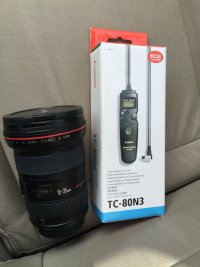
Stewart K said:I just picked up a 16-35 f2.8 II plus the Canon timer for $800, both brand new condition!!!!
Interested in hearing about the mark 3!
Wow! Great find!
Upvote
0
Nice to hear, love my 16-35 2.8 II. Use it at around 2.8-4 at events and more than sharp enough. Soft in the far corners, but very sharp in the middle. On 5.6-8 its very sharp in my opinion.
For astro it would be great to have more sharpness in the edges on 2.8. But I don't see any sharpness difference in the middle on F2.8 and F8.
Corners f2.8 vs f8: https://i.imgur.com/SzEDpVT.png
For astro it would be great to have more sharpness in the edges on 2.8. But I don't see any sharpness difference in the middle on F2.8 and F8.
Corners f2.8 vs f8: https://i.imgur.com/SzEDpVT.png
Upvote
0


Rick said:Basil said:What pray tell is the most glaring weakness that this new lens solves?
Hopefully, V. II's poor edge/corner performance.
What Rick said plus it's uncanny ability for sun glare (different from sun flare) If the sun is directly behind you and the camera, if you swing the camera 1 inch left or right from center, you will have sun glare in the photo. I may be exaggerating a little, but only a little. I hope the new lens coatings will tame that down a lot.
Upvote
0
Similar threads

- Replies
- 60
- Views
- 11K

- Replies
- 51
- Views
- 5K
- Replies
- 42
- Views
- 3K

- Replies
- 69
- Views
- 15K
L
- Replies
- 52
- Views
- 14K
