
Canon EOS 80D Manuals available

Jun 17, 2012
94
22
5,543
44
China
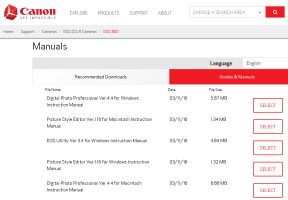
Canon EOS 80D Manuals available on February 22, 2016 at the website of Canon Europe and now at Canon USA.

The following Canon software should be available soon.

Digital Photo Professional Ver.4.4
EOS Utility Ver.3.4
Picture Style Editor Ver.1.16

Canon USA is 10 days ahead of us.
 

Attachments

  • QQ图片20160301130632.png
    QQ图片20160301130632.png
    55.3 KB · Views: 245
dolina said:
Is the 80D really UHS-I?
Is that surprising? Everything less than UHS-I would be a step back (max 25MB/s). UHS-I can do up to about 100MB/s, which is more than double the speed that the 70D does.
UHS-II needs a more complex SD-card socket, so as long as the 80D does not want to do more than 100MB/s (which I doubt) it will stick to UHS-I.
Anyway the maximum burst is vastly increased compared to 70D (with UHS-I card):
RAW: 16->25
RAW+Ljpeg: 8->22
fine L jpeg:65->110
Especially the almost tripple max burst for RAW+Ljpeg is really GAS-inducing.
 
Upvote 0
midluk said:
dolina said:
Is the 80D really UHS-I?
Is that surprising? Everything less than UHS-I would be a step back (max 25MB/s). UHS-I can do up to about 100MB/s, which is more than double the speed that the 70D does.
UHS-II needs a more complex SD-card socket, so as long as the 80D does not want to do more than 100MB/s (which I doubt) it will stick to UHS-I.
Anyway the maximum burst is vastly increased compared to 70D (with UHS-I card):
RAW: 16->25
RAW+Ljpeg: 8->22
fine L jpeg:65->110
Especially the almost tripple max burst for RAW+Ljpeg is really GAS-inducing.
P/S cameras have been out for a year with UHS-2.
 
Upvote 0
Don Haines said:
P/S cameras have been out for a year with UHS-2.
Do they really use the speed? If marketing finds out a camera claiming UHS-II sells better than one with just UHS-I, even when it does not affect performance, they might put in a UHS-II socket but just ignore the added contacts and fall back to UHS-I. Nobody would ever notice.
 
Upvote 0
midluk said:
dolina said:
Is the 80D really UHS-I?
Is that surprising? Everything less than UHS-I would be a step back (max 25MB/s). UHS-I can do up to about 100MB/s, which is more than double the speed that the 70D does.
UHS-II needs a more complex SD-card socket, so as long as the 80D does not want to do more than 100MB/s (which I doubt) it will stick to UHS-I.
Anyway the maximum burst is vastly increased compared to 70D (with UHS-I card):
RAW: 16->25
RAW+Ljpeg: 8->22
fine L jpeg:65->110
Especially the almost tripple max burst for RAW+Ljpeg is really GAS-inducing.

No it doesn't. UHS-II is just an extra set of connections. That is what allows the higher transfer speeds. The cards themselves are backwards compatible with earlier SD standards, as is the interface.

No reason not to include a UHS-II interface, except to save 0.5 cents per camera.
 
Upvote 0
Tugela said:
midluk said:
dolina said:
Is the 80D really UHS-I?
Is that surprising? Everything less than UHS-I would be a step back (max 25MB/s). UHS-I can do up to about 100MB/s, which is more than double the speed that the 70D does.
UHS-II needs a more complex SD-card socket, so as long as the 80D does not want to do more than 100MB/s (which I doubt) it will stick to UHS-I.
Anyway the maximum burst is vastly increased compared to 70D (with UHS-I card):
RAW: 16->25
RAW+Ljpeg: 8->22
fine L jpeg:65->110
Especially the almost tripple max burst for RAW+Ljpeg is really GAS-inducing.

No it doesn't. UHS-II is just an extra set of connections. That is what allows the higher transfer speeds. The cards themselves are backwards compatible with earlier SD standards, as is the interface.

No reason not to include a UHS-II interface, except to save 0.5 cents per camera.

There are days I wish engineering was that simple. The UHS-I interface doesn't appear to be the limiting factor. So it's a bit more than an extra set of connections, unless you aren't planning to connect them to anything. Otherwise it may affect everything upstream to the sensor since all data paths must be wider to carry and process the 8 additional signals and the associated data to feed them - new PCBs, ribbon cables, buffers, processors, etc. may be required. The addition of all that probably requires more power and cooling. It would be much more than a few cents per camera and take some significant engineering time to redesign to take advantage of the UHS-II interface versus evolving from the previous design.

You can always put a UHS-II card in the UHS-I slot - they are compatible.
 
Upvote 0
dcm said:
There are days I wish engineering was that simple. The UHS-I interface doesn't appear to be the limiting factor. So it's a bit more than an extra set of connections, unless you aren't planning to connect them to anything. Otherwise it may affect everything upstream to the sensor since all data paths must be wider to carry and process the 8 additional signals and the associated data to feed them - new PCBs, ribbon cables, buffers, processors, etc. may be required. The addition of all that probably requires more power and cooling. It would be much more than a few cents per camera and take some significant engineering time to redesign to take advantage of the UHS-II interface versus evolving from the previous design.

You can always put a UHS-II card in the UHS-I slot - they are compatible.
More likely the licensing fees would have jacked up the price of the camera.

Again, wish these standards were introduced as soon as the next model so we can enjoy more data hungry features earlier.
 
Upvote 0
dcm said:
Tugela said:
midluk said:
dolina said:
Is the 80D really UHS-I?
Is that surprising? Everything less than UHS-I would be a step back (max 25MB/s). UHS-I can do up to about 100MB/s, which is more than double the speed that the 70D does.
UHS-II needs a more complex SD-card socket, so as long as the 80D does not want to do more than 100MB/s (which I doubt) it will stick to UHS-I.
Anyway the maximum burst is vastly increased compared to 70D (with UHS-I card):
RAW: 16->25
RAW+Ljpeg: 8->22
fine L jpeg:65->110
Especially the almost tripple max burst for RAW+Ljpeg is really GAS-inducing.

No it doesn't. UHS-II is just an extra set of connections. That is what allows the higher transfer speeds. The cards themselves are backwards compatible with earlier SD standards, as is the interface.

No reason not to include a UHS-II interface, except to save 0.5 cents per camera.

There are days I wish engineering was that simple. The UHS-I interface doesn't appear to be the limiting factor. So it's a bit more than an extra set of connections, unless you aren't planning to connect them to anything. Otherwise it may affect everything upstream to the sensor since all data paths must be wider to carry and process the 8 additional signals and the associated data to feed them - new PCBs, ribbon cables, buffers, processors, etc. may be required. The addition of all that probably requires more power and cooling. It would be much more than a few cents per camera and take some significant engineering time to redesign to take advantage of the UHS-II interface versus evolving from the previous design.

You can always put a UHS-II card in the UHS-I slot - they are compatible.

Since they are building a new camera it is reasonable to presume that they would use new components as well, and not just change the shape of the body slightly. So that cost is already built in. The actual increase in manufacturing costs for something like that would be on the order of 0.5 cents.

The NX1 has a UHS-II interface. I am not aware of any other camera that does though. And it does make a difference, especially when you are transferring your pictures to the computer at the end of the day. It is a small cost to making the camera, but one that produces significant benefit for the user.
 
Upvote 0
Tugela said:
Since they are building a new camera it is reasonable to presume that they would use new components as well, and not just change the shape of the body slightly. So that cost is already built in. The actual increase in manufacturing costs for something like that would be on the order of 0.5 cents.

Engineering doesn't really work like that. You always reuse as much as you can. Any change in design takes time and money to prototype, develop, validate and test. Manufacturing costs aren't really relevant. R&D costs are.
 
Upvote 0
Sharlin said:
Tugela said:
Since they are building a new camera it is reasonable to presume that they would use new components as well, and not just change the shape of the body slightly. So that cost is already built in. The actual increase in manufacturing costs for something like that would be on the order of 0.5 cents.

Engineering doesn't really work like that. You always reuse as much as you can. Any change in design takes time and money to prototype, develop, validate and test. Manufacturing costs aren't really relevant. R&D costs are.
I don't know what and how much can/could be reused in 80D coming from 70D.
When you think about new sensor+new DIGIC+new AF it's hard to believe for me that the card slot was so modular that it could be reused with all the other changes. If it was so, then this modularity would have helped a lot to include a new UHD II module (maybe used in a P&S before? ;) ).

But you're right in principle about R&D costs split over the sales numbers.
 
Upvote 0