Canon High End Mirrorless Camera Talk [CR2]

ethanz said:
rrcphoto said:
well, looking at bhphotovideo and amazon.. they don't appear to be flying off the shelves there. the only ones that seem to be flying off the shelves is the 5D Mark IV.

Do you have a link so I can see their sales listings of camera? Thanks

https://www.bhphotovideo.com/c/search?setNs=p_POPULARITY%7c1&Ns=p_POPULARITY%7c1&ci=9811&srtclk=sort&N=4288586282

https://www.amazon.com/gp/bestsellers/electronics/12556502011/ref=pd_zg_hrsr_electronics_1_4
 
Upvote 0
privatebydesign said:
Cthulhu said:
ethanz said:
Here's proof that Sony is winning and Canon is doomed. A PJ using a sony at the White House. I don't see any Canons there. Pros are throwing out their 1dx2's and buying the Sonys. Sorry Neuro, better get rid of your Canon stuff, because its junk.

::) ::) ::) ::) ::)

Humor aside, I figure it's a matter of time until press shifts to quieter cameras for this type of coverage, now that it's available.
Peter Souza, Obama's photographer, who has created some absolutely fantastic images had a brief dalliance with Sony, he used 5D models for years but moved to Sony while using the 5D MkIII's which he used a lot. He dropped Sony after less than a year and went to 5D MkIV's.

he didn't even use sony for that long - a few weeks.

there was only one press photo taken with Sony .. the rest were from the 5D's.
 
Upvote 0
If Canon is coming out with a high end mirrorless in Q4 of 2018, that's 15-18 months from now, likely 16. They will have certainly set the design by now, and long lead time parts will be on order, it takes on the order of 1 year for some hard tooling, and developing the sensor likely takes longer. We are never getting the latest tech when we buy a new camera model, its always 1-1/2 - 2 years out of date.

If features change between now and the introduction, it will be because they could not be developed in time to meet the schedule. Assembly is going to start 6 months before the first shipments, so there is really about 12 months to get it all done.
 
Upvote 0
neuroanatomist said:
HarryFilm said:
Again, large sensor 48-bit colour, 50 megapixel
mirrorless is what Canon will be giving us next year!

YOU CAN TAKE STATEMENT THAT TO THE BANK!

I could, if I wanted to be poor. I'll pass.

-----

While I do understand your skepticism, some recent engineering specs and math equations sent to me by my Germany/Netherlands contacts seems to indicate quite clearly that Canon has solved the write speed/recording format issue quite nicely with the system I saw demonstrated VERY CLEARLY on a recent Skype call.

It definitely looks like the two internal SSD cards and/or the two CFAST cards
are being interleaved for still photo use in RAW and JPEG-2000 modes. At 296 megabytes per frame at 25 fps the RAW frame rate is theoretically 3.7 gigabytes per second per drive or card. EVIDENTLY it seams RAW isn't really *RAW* but rather a modified RAW-lite similar to what's in the recently introduced Canon C200 Cinema camera which is PROBABLY a run-length encoded image format at about a 3:1 to 5:1 compression ratio which means a high of 1.2 gigabytes per second down to as low as 741 megabytes per second. I would expect a large 12 to 16 gigabytes internal RAM buffer would bring buffer write times to around less than 4 seconds in RAW-lite mode. which is enough for a 3-to-4 second burst shooting speed at 25 fps!

Using JPEG-2000 4:4:4 codecs, the compression ratios are down to 10:1 to 15:1 or 370 megabytes per second or as low as 247 megabytes per second for a 50 megapixel image sequence. That is what it looks like the performance parameters are going to be for now! This would seem to indicate that there will be not only two high-speed DIGIC processors onboard but that it was mentioned that two separate FPGA chips (Field Programmable Gate Array) were added to take the compression load off the DIGICs!

Cost-wise that would be less than $400 Euros to add both those powerful FPGA chips, which makes engineering and financial sense to me since FPGA's are ALSO FLASH UPDATEABLE in the field which means NEW codecs could be added later!

---

I do have a technical surprise for everyone here since my Germany/Netherland contacts have a specific public reveal/public leak in mind (which they haven't told me about yet!) but it seems they want to do something just before the International Broadcasters Convention (IBC) which is 14-to-19 September 2017 in Amsterdam.
It seems they have certain imagery and documents which they will release then which will remove all doubt about their claims! They were SUPPOSED to release this just after NAB 2017 but that did not happen! We shall see!!!

 
Upvote 0
HarryFilm said:
neuroanatomist said:
HarryFilm said:
Again, large sensor 48-bit colour, 50 megapixel
mirrorless is what Canon will be giving us next year!

YOU CAN TAKE STATEMENT THAT TO THE BANK!

I could, if I wanted to be poor. I'll pass.

-----

While I do understand your skepticism, some recent engineering specs and math equations sent to me by my Germany/Netherlands contacts seems to indicate quite clearly that Canon has solved the write speed/recording format issue quite nicely with the system I saw demonstrated VERY CLEARLY on a recent Skype call.

It definitely looks like the two internal SSD cards and/or the two CFAST cards
are being interleaved for still photo use in RAW and JPEG-2000 modes. At 296 megabytes per frame at 25 fps the RAW frame rate is theoretically 3.7 gigabytes per second per drive or card. EVIDENTLY it seams RAW isn't really *RAW* but rather a modified RAW-lite similar to what's in the recently introduced Canon C200 Cinema camera which is PROBABLY a run-length encoded image format at about a 3:1 to 5:1 compression ratio which means a high of 1.2 gigabytes per second down to as low as 741 megabytes per second. I would expect a large 12 to 16 gigabytes internal RAM buffer would bring buffer write times to around less than 4 seconds in RAW-lite mode. which is enough for a 3-to-4 second burst shooting speed at 25 fps!

Using JPEG-2000 4:4:4 codecs, the compression ratios are down to 10:1 to 15:1 or 370 megabytes per second or as low as 247 megabytes per second for a 50 megapixel image sequence. That is what it looks like the performance parameters are going to be for now! This would seem to indicate that there will be not only two high-speed DIGIC processors onboard but that it was mentioned that two separate FPGA chips (Field Programmable Gate Array) were added to take the compression load off the DIGICs!

Cost-wise that would be less than $400 Euros to add both those powerful FPGA chips, which makes engineering and financial sense to me since FPGA's are ALSO FLASH UPDATEABLE in the field which means NEW codecs could be added later!

---

I do have a technical surprise for everyone here since my Germany/Netherland contacts have a specific public reveal/public leak in mind (which they haven't told me about yet!) but it seems they want to do something just before the International Broadcasters Convention (IBC) which is 14-to-19 September 2017 in Amsterdam.
It seems they have certain imagery and documents which they will release then which will remove all doubt about their claims! They were SUPPOSED to release this just after NAB 2017 but that did not happen! We shall see!!!

Well, I guess we'll see who's right this fall ;)

My money is on this camera NOT having 4K judging on Canon's stinginess in this matter but I hope I'm wrong.
 
Upvote 0
Again, I truly do understand and am very sympathetic to your skepticism (I WOULD BE TOO!) but when a live Skype Stream shows such clear video (I should have done a screen capture!) of such an obvious Canon 1Dx mk2-like Design (it looks VERY DIFFERENT than the recently introduced Canon C200 Cinema EOS camera which has a basic video box look to it!), it means to me something is coming up REAL SOON NOW!

HOW my contacts actually GOT the specifications is very unclear to me but because they are literally electrical/chip engineers and computer scientist professionals, I just cannot easily dismiss their claims. They've been right far too many times within the last 10 years on various product launches for me to say clearly that its all just B.S. !!!

I'm just passing along what I get because I am NOT PART OF their "Team" and I have NO other information as to the HOWS of them getting their clearly high-level technical information! They may have or actually BE the people on the inside! That is only a supposition as I have NO definitive proof ...BUT... I'm personally putting some of that information currency I've gotten INTO THE BANK because I think it's at least 90% true!

And you are right....we shall see soon enough if it's at all true!
 
Upvote 0
docsmith said:
Orangutan said:
chrysoberyl said:
What are the advantages of mirrorless? Besides very high shutter speeds? Size and weight are not issues for me; in fact, I like how the 5D IV feels with a Sigma 135mm Art on it.

Please direct me to the thread where this was discussed. Thanks!

To start, think about the benefits of Live View:

  • live histogram
  • focus peaking
  • zebras
  • seeing what the sensor sees
  • spot focus anywhere

Also, once you remove the mirror apparatus (size and location) you're free to make a number of changes, as suits a particular need:

  • Want it smaller and lighter? Just squeeze it together and make a smaller device
  • Want 16 usable stops of DR? Use two sensors and a partial mirror to have full-time integrated HDR
  • Want better light collection, color, resolution from the same pixel count? Install a trichroic prism and 3-sensor system for separate R,G,B collection.
  • Want maximum size from each capture? Use a 42mm square sensor to grab the whole image circle, and never have to choose "portrait" or "landscape" at capture.
  • Want a disruptive design? Make the "camera" just a large lens cap, and move all control, preview, etc. to your mobile device or VR goggles.
Are those necessarily benefits of mirrorless? Seems like several of those are introducing new, and likely complex and expensive, new technologies.

The standard "pro" list of mirrorless as I know it:
  • Bodies can be smaller as you do not need the mirror box.
  • Lenses can be placed closer to the sensor as you no longer need to account for space for the mirror. This, in theory, could make lenses a bit smaller. In practice...see the G-series lenses. :o But, there does seem to be some benefit if you look at EF-m vs EFs lenses
  • FPS would no longer be limited by the motion of the mirror
  • Could potentially be much quieter
  • Removal of the mirror could result in a cost savings and eliminates a moving part that could fail
  • On sensor AF could be wider, covering close to the entire frame

On the "Con" side:
  • Many are fine with current dSLR ergonomics and do not want smaller ergonomics
  • Smaller body likely equals smaller battery which could impact both number of shots per battery charge and voltage to drive AF
  • Until we have a truly rapid global shutter, we will still need a mechanical shutter which will limit FPS
  • New lens mount would make all of our current lenses obsolete
  • No mirror eliminates the possibility of an optical viewfinder, thus you end up with electric view finders
  • Until recently, sensor AF was not as fast as PDAF

I own both. I personally enjoy the 5DIII ergonomics and OVF. Is the market eventually headed mirrorless? Likely, as I hear it will eventually be less expensive to manufacture and the less expensive products do tend to win out in the long run.

But, I am one of those practical people (usually) that buys the best camera available at the time and defines "best" as fitting my personal needs. I own the G7X and M3 for size/weight advantages and the 5DIII for everything else.

Lots of articles out there on this. For example:

https://photographylife.com/mirrorless-vs-dslr

It seems I'm the only person in this world that hates AFMA calibration.
 
Upvote 0
Jopa said:
It seems I'm the only person in this world that hates AFMA calibration.

No, you're not. I hate it with a passion.

I don't care about zebra/live view/focus peaking/4k video etc.

But I care about AF accuracy. Apart from possible weight/size reduction (not major), this is the single biggest attraction of MILCs to me.
 
Upvote 0
Thinking of what to expect from a new "high end" Mirrorless from Canon ...

Question : how does in-body stabilization for stills shots actually work ? Its just occurred to me that for video all that is happening is that camera shake is being removed by mapping one frame to the next and aligning the pictures on top of one another ... but for still shots this doesn't make any sense at all. Does it work by gyroscopes allowing the sensor to "float" ? Or what ? Does it actually offer any huge advantage in the way that lens optical stabilization does ?

I would love to hear if anyone knows anything about this ...

thanks
 
Upvote 0
Woody said:
Jopa said:
It seems I'm the only person in this world that hates AFMA calibration.

No, you're not. I hate it with a passion.

I don't care about zebra/live view/focus peaking/4k video etc.

But I care about AF accuracy. Apart from possible weight/size reduction (not major), this is the single biggest attraction of MILCs to me.

This!!! 100% this!!!!! After getting a m43 and seeing that all the photos (of still subjects) taken at f1.8 have 100% accurate focus, I cannot look back to AFMA again!
 
Upvote 0
> Interleaving the data across 2 cards is just asking for a trouble...

There are two types of data loss:

One is when your card fails and you lose data that you have recorded.

The other, less obvious, is the loss of a shot because your buffer is full and you are cannot therefore record it to card.

While it certainly shouldn't be the default, I can see a good case for a system where, for example, during shooting photos are written alternatively to each of the cards in order to maximise throughput and therefore increase the number of shots that can be taken before your buffer fills up.

A background task would then at low priority mirror the shots between the two cards so that they are not written concurrently but delayed.

As I said, many people would not trust this. But for some people this may be essential to get the performance out of the camera they need. So why not make it an option?
 
Upvote 0
You loose a few a shots due to the buffer is full and you loose entire content of the card due to the card failure.
this is an extreme risk as the data being spanned across 2 cards and each card contains half of the entire data only. Most people would not have a clue. Canon plays safe. Always.


jolyonralph said:
> Interleaving the data across 2 cards is just asking for a trouble...

There are two types of data loss:

One is when your card fails and you lose data that you have recorded.

The other, less obvious, is the loss of a shot because your buffer is full and you are cannot therefore record it to card.

While it certainly shouldn't be the default, I can see a good case for a system where, for example, during shooting photos are written alternatively to each of the cards in order to maximise throughput and therefore increase the number of shots that can be taken before your buffer fills up.

A background task would then at low priority mirror the shots between the two cards so that they are not written concurrently but delayed.

As I said, many people would not trust this. But for some people this may be essential to get the performance out of the camera they need. So why not make it an option?
 
Upvote 0
Jopa said:
If Canon makes a FF mirrorless the first thing I would do is to buy the notorious Sigma 50 Art :)

I am not entirely certain if Sigma Art lenses fare better on MILCs. Will give it another try in future.

On the other hand, I find STM lenses AF very accurately (including 50 f/1.8 STM) through the OVF on my 77D. Strange
 
Upvote 0
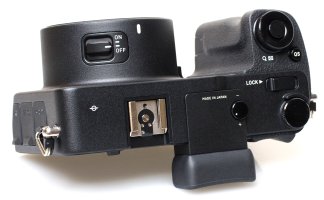
Don, Mahdi was referring to the protruding lens mount on the Sigma cam. a built in, integrated adapter to compensate the longer EF flange distance. that's all.

Don Haines said:
mahdi_mak2000 said:
I believe they should go with this sigma quattro design. a built in M to EF mount. to compensate the camera flange distance of EF mounts.
WOW!

A high end camera with terrible ergonomics and a striking lack of controls..... no thanks!
 
Upvote 0