Canon RF 300-600mm f/5.6L IS USM, Here We Go Again

Some birder I met told me about the same story recently. I immediately started to caress my 200-800 after the first cases reported in the net, what basically means that I take nearly always my heavier and bigger 600mm lens out when I think I should better rely on a really rugged gear. So the zoom lost a substantial part of its usability for my purposes, and I am really disappointed by Canon for the first time since many years. Ruggedness and reliability was always something that kept me within Canon's ecosystem, in particular because we had much more trouble with my wife's big Nikon gear over the years. Plus, I should add that, even non L gear from Canon never let me down so far. But, obviously, now Canon seems to feel forced to reside to critically cheap engineering solutions at least with some gear. They really shouldn't do that - a good reputation is quickly destroyed, and it is much harder to regain it again.
I would never go on an important nature trip without a back-up body and lens (and back-up everything else). For local use my, 200-800 is treated like any other lens to give it every chance of breaking where I can deal with it best, and test it. On my very first serious bird watching trip, to the Pantanal some 13 years ago, I took just a 7D and an EF 100-400mm (first version). The AF broke on my last day when the camera and lens fell between my legs on to the car mat, lens down, through only about 15-20 cm. Lucky it wasn't the first day. A useful lesson.
 
  • Like
Reactions: 1 user
Upvote 0
I would never go on an important nature trip without a back-up body and lens (and back-up everything else). For local use my, 200-800 is treated like any other lens to give it every chance of breaking where I can deal with it best, and test it. On my very first serious bird watching trip, to the Pantanal some 13 years ago, I took just a 7D and an EF 100-400mm (first version). The AF broke on my last day when the camera and lens fell between my legs on to the car mat, lens down, through only about 15-20 cm. Lucky it wasn't the first day. A useful lesson.
If you have to fly, is one lens in the carryon and one on luggage?
 
Upvote 0
If you have to fly, is one lens in the carryon and one on luggage?
Usually on such trips my wife comes with and I carry the R7 + RF 100-400mm and R5 + RF 100-500mm for both of us in a small case that can fit under the seat (though it will end up in the overhead locker). All the important electronic gear, computers etc and binoculars will also be in our hand luggage in the larger cases allowed along with the minimal clothing we can survive with. Two small carry ons and the other two carry ons are often enough without having to check in a larger for the hold. I used to take for serious trips a Sony RX10iv as well - I regret having sold it as it is now out of production and used copies are at the former new price. The RF 100-500mm is really great for travel because it takes up so little space and is so light. I would never check in a camera or lens, unless it was a second RF 100-400mm as an extra back up.
 
  • Like
Reactions: 2 users
Upvote 0
I find the most important thing is to be as close to your subject as possible, if you're more than 10-15m away atmospheric conditions start to trash the I.Q at 20m just forget it
I am well aware of atmospheric interferences and if the subject is more than 60 ft away I normally just do not bother with the photo. With that said, you mention a very good point that is often overlooked.
 
  • Like
Reactions: 1 users
Upvote 0
If you have to fly, is one lens in the carryon and one on luggage?
I never put any camera gear on checked luggage if it is worth any value. Once I checked the Canon RF 40 mm f2.8 pancake lens which I once stuck in a sock and into a hiking boot when I was traveling to Alaska. I needed a wider angle lens that was compact and it was an obvious choice. Needless to say, it survived without any issues.
 
  • Like
Reactions: 1 user
Upvote 0
Some birder I met told me about the same story recently. I immediately started to caress my 200-800 after the first cases reported in the net, what basically means that I take nearly always my heavier and bigger 600mm lens out when I think I should better rely on a really rugged gear. So the zoom lost a substantial part of its usability for my purposes, and I am really disappointed by Canon for the first time since many years. Ruggedness and reliability was always something that kept me within Canon's ecosystem, in particular because we had much more trouble with my wife's big Nikon gear over the years. Plus, I should add that, even non L gear from Canon never let me down so far. But, obviously, now Canon seems to feel forced to reside to critically cheap engineering solutions at least with some gear. They really shouldn't do that - a good reputation is quickly destroyed, and it is much harder to regain it again.

Cheap-feeling plastic L lenses, darker and darker apertures, monstrous vignetting, noisy and slow AF motors from the 90's, that L lenses that cannot even cover a full frame image sensor, unambitious designs, overheating and unreliable cameras (R6 anyone?). And now lenses snapping in two. I don't really like this new Canon.
Shareholders probably want more profit in a shrinking market.
 
  • Like
Reactions: 1 users
Upvote 0
While you have some sense in what you say, you're looking at the pessimistic side. There are also, (albeit more expensive) much sharper/faster lenses, much lighter/cheaper lenses. For releasing about 6 lenses a year, they seemed to start with the higher priced and the lower priced and are now beginning to provide for mid-priced lens buyers.

That said, there's nothing stopping you from selling everything and going to another company's mount.
 
  • Like
Reactions: 1 user
Upvote 0
As much I am in favor of the (faster) f/5.6 in that proposed 300-600, the 200-800 is just 1.3 stops slower than f/5.6. For the longest time I was hesitant to go much higher than ISO 500 or 800, but state-of-the-art noise reduction now makes ISO 8000-25600 possible (with proper focus and exposure). I would probably miss the 600-800 range since most of my bird images are at 800mm.
The 200-800 has been shown by people on this forum to not increase resolving power beyond about 640mm. You'd get the same image quality by shooting at 600mm and then increasing the image size in photoshop... And you'd get better image quality (probably much better) with a 300-600/5.6L + 1.4x TC.
 
Upvote 0
Cheap-feeling plastic L lenses, darker and darker apertures, monstrous vignetting, noisy and slow AF motors from the 90's, that L lenses that cannot even cover a full frame image sensor, unambitious designs, overheating and unreliable cameras (R6 anyone?). And now lenses snapping in two. I don't really like this new Canon.
Shareholders probably want more profit in a shrinking market.
I want the 1980s/90s/2000s Canon back. The Canon that lead the market in lens innovation, camera innovation, and sensor design.
 
Upvote 0
Yeah, i agree Canon doesn't give a choice but that's a different issue. The 100-500 does not mean to be more than what it is. Canon needs to offer more options, they always had this problem. In the EF era you had the $1500 100-400 and the $10K 500 F4, nothing in between.
In the EF era there were several Sigma lenses in between. The 150-600, the 500/4.5 (used only in later years), the 500/4 (incredible lens!), and the 300-800/5.6 (heavy. very heavy. but good!) all sat in there. Also the EF 500/4L was just over $8k, but I'm sure any replacement would be $10k+ today.

In today's world, Canon refuses to allow Sigma onto FF RF so there are no longer any middle ground options. And that's the problem really. Closed mounts are anti-consumer, but unless the EU decides to intervene (seems unlikely), I doubt Canon will ever open RF.
 
Upvote 0
Canon really needs to step up in this segment. A 300–600 mm f5.6 sounds very promising, but at what price? Sony and Nikon already offer options in this range, and quite solid ones at under $2,000. Even if Canon delivers outstanding image quality, autofocus, and build, they can’t realistically charge much more than $3,000–$4,000 for it.
 
Upvote 0
The 200-800 has been shown by people on this forum to not increase resolving power beyond about 640mm. You'd get the same image quality by shooting at 600mm and then increasing the image size in photoshop... And you'd get better image quality (probably much better) with a 300-600/5.6L + 1.4x TC.

I disagree, my friend has the Sony A1 and the excellent Sony 200-600 and he gets pretty much identical image quality to me with my R6ii and 200-800 his high MP and my extra magnification make for very similar results when he crops in to match my FOV. But he's jealous of my dynamic range and shadow recovery
I'd suggest you actually try the 200-800 out for yourself rather than listen to people on this forum or check out reviews by highly respected bird photographers such as Duade Paton https://duadepaton.com/ or Jan Wegener https://www.janwegener.com/
Also a 300-600mm f/5.6 if it's built to the same standards as the RF 100-300mm /2.8 would be a $10,000 USD lens so I'd expect it to be a bit better I.Q. than a $2,100 USD which isn't terribly surprising
Here's an image I took with my R6ii and 200-800: let me know what's wrong with it's resolution at 800mm IMG_8733.jpeg
 
  • Like
Reactions: 6 users
Upvote 0
I agree that Canon is lazy and feels like lost it's passion when it comes to lens designs. For example Nikon, (a much smaller company in worst financial situation) managed to design brand new 400 2.8 and 600 F4 primes with teleconverters and also a line of amazing 6.3 primes, taking over the telephoto lead. In the meantime, Canon managed to "solder" an RF adapter to the 6 year old EF designs. Canon used to be a leader in telephoto lenses, now it feel like they are lagging behind Nikon, Sony and even Sigma soon.
Nikon had to try and woo people precisely because it had lost so much market share. I don't happen to agree Canon is "lazy" in lens design, but they certainly have less incentive to innovate being so dominant.
 
  • Like
Reactions: 2 users
Upvote 0
Cheap-feeling plastic L lenses, darker and darker apertures, monstrous vignetting, noisy and slow AF motors from the 90's, that L lenses that cannot even cover a full frame image sensor, unambitious designs, overheating and unreliable cameras (R6 anyone?). And now lenses snapping in two. I don't really like this new Canon.
Shareholders probably want more profit in a shrinking market.
I do not recognise this analysis. What is wrong with the R6? They have more super telephoto options at a wider range of prices than when I started in 2012. ONE lens clearly has design/construction issues in a minority of cases. Previously they were praised for their internal construction by eg Roger(?) who did the teardowns. Your pessimism is overstated.
 
  • Like
Reactions: 1 user
Upvote 0
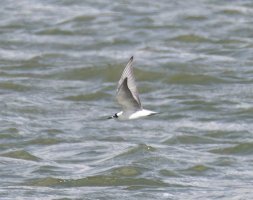
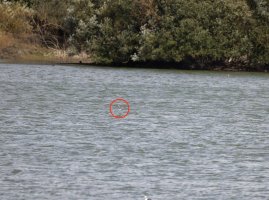
I have posted several threads on the RF 200-800mm, and several others have come in with more images. The facts are that the lens is tack sharp at 650mm and gets a tiny bit more resolution at 800mm with the extra 200mm. In the latest thread you can see it actually outperforms the EF 600mm f/4 iii. It could be optimised for 800mm and be more strongly constructed but it is already a damn good lens. As for distances, its eye/bird AF works well at long distances and focusses beyond the range of the RF 100-500mm. And it is useful at very long distances - today I went out on a rare bird alert that there was a scarce vagrant of a White-winged Tern. It was flying more than 250m (that's about 15x further than 60 ft) from the closest viewing point, but I was able to AF on it as a tiny dot and get an image that was sharp enough to identify it, despite being only 155 pixels long, and keep it for my records! The other birders were using long 'scopes and their notebooks.

https://www.canonrumors.com/forum/t...tc-vs-ef-600mm-f-4-iii-vs-rf-200-800mm.44688/
https://www.canonrumors.com/forum/threads/summary-of-my-rf-200-800mm-testing.43239/
https://www.canonrumors.com/forum/threads/rf-200-800mm-500mm-vs-800mm-etc-with-birds.43235/

6L8A1840-DxO_White_winged_tern_250m_away.jpg6L8A1840-DxO_White_winged_tern_full_circled.jpeg

RF5ii + RF 200-800mm, 1/3200s, iso 800, f/9, processed with DxOPL.
 
  • Like
Reactions: 5 users
Upvote 0
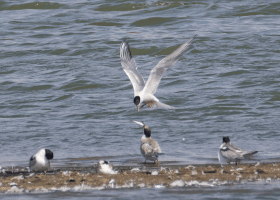
As an extra - here is an animated gif of a Common Tern feeding its chick at about 300m away, below where the White-winged tern is flying. The 200-800mm is picking out the detail in these images that are only 1079x772px crops from the centre. That lens is plenty sharp at 800mm.

Tern_Feeding_Chick_300m.gif
 
  • Like
Reactions: 2 users
Upvote 0
I disagree, my friend has the Sony A1 and the excellent Sony 200-600 and he gets pretty much identical image quality to me with my R6ii and 200-800 his high MP and my extra magnification make for very similar results when he crops in to match my FOV. But he's jealous of my dynamic range and shadow recovery
I'd suggest you actually try the 200-800 out for yourself rather than listen to people on this forum or check out reviews by highly respected bird photographers such as Duade Paton https://duadepaton.com/ or Jan Wegener https://www.janwegener.com/
Also a 300-600mm f/5.6 if it's built to the same standards as the RF 100-300mm /2.8 would be a $10,000 USD lens so I'd expect it to be a bit better I.Q. than a $2,100 USD which isn't terribly surprising
Here's an image I took with my R6ii and 200-800: let me know what's wrong with it's resolution at 800mm View attachment 225780
This is really fantastic but could you post the before image as well for my curiosity. Because so much processing goes into making the final image unless this is cropped but directly from the camera? Thanks!
 
  • Like
Reactions: 1 user
Upvote 0