Canon to Come Out with a Canon RF 14mm f/1.4L VCM?

Richard CR

Canon Rumors Premium
Dec 27, 2017
2,323
3,610
17,629
Canada
www.canonnews.com
In this patent application (2026-003292), Canon showcases several fast primes, and it is likely the patent application for the Canon RF 20mm f/1.4 VCM. But with this patent application, two embodiments are very interesting for CanonRumors' viewers, which are the 14mm F1.4 embodiments. These embodiments feature the optimal lens length of approximately 99cm, depending on […]

See full article...
 
A 14/1.4 would be nice but looks to be heavy and expensive with all those elements. I wouldn’t need close minimum focus distance or IS for Astro.

Having a similar lens in price to the Sony 14/1.8 would suit everything I would need and some of the physical features of the sigma 14/1.4 (dew heater placement, focus lock etc) would round out the perfect lens :)

I am yet again see any discounts on the RF20/1.4 so I haven’t pulled the trigger for it although it would have better coma than the sigma EF20/1.4 that I currently use
 
Upvote 0
The 20/1.4 VCM is a great lens and I’d almost certainly buy a 14/1.4 or 14/1.8 VCM, should one come along. But personally, I’d take a TS-R 14 over the faster VCM prime, in a heartbeat.

Also, with a TS-R the purists won’t be able to complain about cutting the corners off the FF image circle.
 
  • Like
Reactions: 2 users
Upvote 0
I'd prefer a TS-R 12mm f/2.8 over that one (or RF 12mm f/2).

I'm not sure a TS-R of 12mm is even possible, if it did, it'd probably look something like the Nikkor 7.5mm, which would be highly amusing to be honest.

Hah. i guessed around the correct number, it'd be 7.8mm, assuming a 10mm shift amount, or a full 66mm image circle diameter.
 
Last edited:
  • Like
Reactions: 1 user
Upvote 0
I'll take one 🙂

I'm still using the Sigma EF 14mm f/1.8 with an adapter. Since I use it quite often, I’d gladly upgrade and get rid of the adapter.
If Canon releases a 14mm f/1.4 that’s sharp with minimal coma, I'm willing to splurge whatever it takes for that one 😅

I personally don’t miss OIS on this lens (the Sigma), and I wouldn’t mind if Canon released their version without it as well. To be honest, I’m also not too concerned about digital corrections or stretching. Hopefully it doesn’t vignette too much though, because I’m already shooting with these types of lenses at high ISO sometimes, and I don’t want to push corner brightness corrections too far due to noise.
 
Upvote 0
I'm not sure a TS-R of 12mm is even possible, if it did, it'd probably look something like the Nikkor 7.5mm, which would be highly amusing to be honest.

Hah. i guessed around the correct number, it'd be 7.8mm, assuming a 10mm shift amount, or a full 66mm image circle diameter.
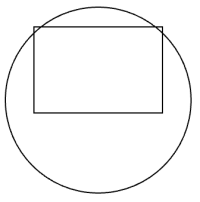
If the movements of a TS-R lens are encoded, it would be possible to use a lens profile to correct for asymmetrical distortion and vignetting. In theory, that means Canon could actually 'cut the corners' of a TS image circle, making it smaller than strictly required. I highly doubt they'd do that, but it would certainly give the optical purists conniptions if it happened.

Screenshot 2026-01-13 at 11.11.31 AM.png
 
Upvote 0
If the movements of a TS-R lens are encoded, it would be possible to use a lens profile to correct for asymmetrical distortion and vignetting. In theory, that means Canon could actually 'cut the corners' of a TS image circle, making it smaller than strictly required. I highly doubt they'd do that, but it would certainly give the optical purists conniptions if it happened.

View attachment 227493

depends, you'd have to restrict the movement, you couldn't, for instance, shift in different angles - you could only move up and down, and left and right from center.
 
Upvote 0
depends, you'd have to restrict the movement, you couldn't, for instance, shift in different angles - you could only move up and down, and left and right from center.
Rotation could be encoded, too, right? The position of the sensor relative to the image circle could then be calculated, and since DLO is (as I understand it) based on calculations from the optical formula of the lens, it should be possible to apply corrections to any orientation. For Canon, at least. I believe that DxO, for example, uses empirical measurements to drive their lens profiles and in that case, developing a profile for such a lens would likely be a prohibitive investment.
 
Upvote 0
If the movements of a TS-R lens are encoded, it would be possible to use a lens profile to correct for asymmetrical distortion and vignetting. In theory, that means Canon could actually 'cut the corners' of a TS image circle, making it smaller than strictly required. I highly doubt they'd do that, but it would certainly give the optical purists conniptions if it happened.

View attachment 227493
Purist here 😆

What would be the point though? apart from price maybe?
But TS lenses are niche lenses so I'd assume not too price-sensitive... and they are not exactly walkaround lenses, they are meant to be used with tripod etc. So making them smaller and lighter should not be a priority
 
Upvote 0
What would be the point though? apart from price maybe?
But TS lenses are niche lenses so I'd assume not too price-sensitive... and they are not exactly walkaround lenses, they are meant to be used with tripod etc. So making them smaller and lighter should not be a priority
Which is why I stated, "I highly doubt they'd do that."

However, Richard's point is a good one that hadn't occurred to me, mainly because I do usually use shift only in the vertical or horizontal directions. I've been hoping a TS-R lens would have encoded movements mainly because it would enable DxO to develop correction profiles for a shifted lens...but doing so for all possible sensor positions in the image circle (assuming rotation is encoded) likely precludes development of such profiles. So I guess I can stop hoping for encoded movements, since it will add to the cost of the lens without significant benefit (I doubt Canon would offer DLO for those lenses, anyway, but if they do I may have to use DPP for part of my workflow, ugh).
 
Upvote 0
Which is why I stated, "I highly doubt they'd do that."
we agree
However, Richard's point is a good one that hadn't occurred to me, mainly because I do usually use shift only in the vertical or horizontal directions. I've been hoping a TS-R lens would have encoded movements mainly because it would enable DxO to develop correction profiles for a shifted lens...but doing so for all possible sensor positions in the image circle (assuming rotation is encoded) likely precludes development of such profiles. So I guess I can stop hoping for encoded movements, since it will add to the cost of the lens without significant benefit (I doubt Canon would offer DLO for those lenses, anyway, but if they do I may have to use DPP for part of my workflow, ugh).
I admit that I am not familiar with how profiles are created. If they are simply collections of discrete values that instruct the software which values to use for the geometric / vignetting corrections based on aperture and focal length (for zooms), then rotation would be an issue. If formulas can be encoded in profiles then I imagine it could be done. But if formula are not supported right now, then it would be a pretty major upheaval on the software side.

eh, I used DPP last time for a few days when I bought my R5 (it was on the first day and Adobe was not ready for its RAW files for a few days) and I do not miss it one bit 🤮
 
Upvote 0