Canon to Come Out with a Canon RF 14mm f/1.4L VCM?

Conventionally:
<24mm = ultrawide
24-35mm = wide
36-69mm = normal
70-299mm = telephoto
≥300mm = supertelephoto

We can all make up our own definitions, of course.

‘Fast’ is more loosely defined, but generally faster than f/2.8 for primes and f/2.8 or faster for zooms (not counting supertelephoto lenses, where ‘fast’ is anything with a front element diameter ≥100 mm).
Telephoto is a type of lens that has curious definition. it's a lens that employs a telephoto group, which extends it's focal length beyond it's normal phyical length. This means a telephoto lens is one that employs this design and has a focal length longer than it's physical length. This is a bit of a bizarre definition, because it fails to mention the length of the lens including the distance to the film (or sensor) plane. So for example a EF 85mm f1.4 LIS is not considered a telephotos because the lens is longer than its focal length, where as the EF 85mm f1.2 L is physically short then it's focal length. However, put the EF 85mm f1.2 L on a EF to R mount adapter and neither are considered to be telephoto because the lens is now effectively longer to the mount. If we take a RF 24-70 f2.8 LIS, it's not considred a telephoto becuase it's focal lenth is less than it's physical length. But it is pushing into tele territory. I think even a RF 24-105 f4 LIS isn't considred a tele by this definition either. Some definitions add clarity to conversation, other just seem to add murky waters.
Yes, in general terms, anything between 70mm and 300mm is commonly termed as Telephoto.

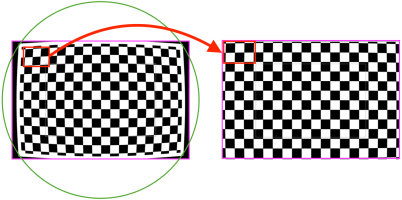
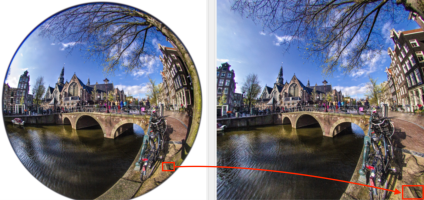
I do question this patent for a RF 14mm F1.4 VCM, with a stated focal length of 14.4mm and the short image circle that clearly needs digital stretching....surely that going to be closer to a 15mm lens in real world use? At the tele end of the focal scale, a few mm in focal length doesn't mean much but at the wide end 1mm means quite a lot to the angle of view.
 
Upvote 0
I do question this patent for a RF 14mm F1.4 VCM, with a stated focal length of 14.4mm and the short image circle that clearly needs digital stretching....surely that going to be closer to a 15mm lens in real world use?
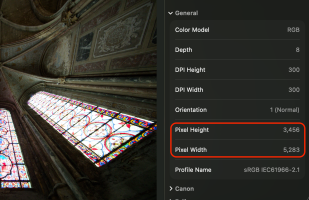
The 14-35L is even wider if corrected. If I export a picture from DxO to LR I can choose "largest rectangle" and get an image which is 8600px. The sensor of my R5m2 has only 8192px.
 
  • Like
Reactions: 1 user
Upvote 0
Telephoto is a type of lens that has curious definition. it's a lens that employs a telephoto group, which extends it's focal length beyond it's normal phyical length. This means a telephoto lens is one that employs this design and has a focal length longer than it's physical length. This is a bit of a bizarre definition, because it fails to mention the length of the lens including the distance to the film (or sensor) plane. So for example a EF 85mm f1.4 LIS is not considered a telephotos because the lens is longer than its focal length, where as the EF 85mm f1.2 L is physically short then it's focal length. However, put the EF 85mm f1.2 L on a EF to R mount adapter and neither are considered to be telephoto because the lens is now effectively longer to the mount. If we take a RF 24-70 f2.8 LIS, it's not considred a telephoto becuase it's focal lenth is less than it's physical length. But it is pushing into tele territory. I think even a RF 24-105 f4 LIS isn't considred a tele by this definition either. Some definitions add clarity to conversation, other just seem to add murky waters.
Yes, in general terms, anything between 70mm and 300mm is commonly termed as Telephoto.
There is a difference between the terminology for lens design and the terminology for categorizing focal length. The latter is really about angle of view.

A 35mm lens on FF is a wide angle lens, but it’s a normal lens on APS-C, edging into the telephoto range on m4/3 and is an ultrawide lens on a larger (e.g., Phase One) medium format camera.
 
  • Like
Reactions: 1 user
Upvote 0
The 14-35L is even wider if corrected. If I export a picture from DxO to LR I can choose "largest rectangle" and get an image which is 8600px. The sensor of my R5m2 has only 8192px.
The sensor can't capture more than what the lens' angle of view projects. Unless you Ai algorthm is generating a heck of a lot more peripheral information! Typically, a lens that will require a lot of software correction has a wide angle of view to the one listed in the lens title. EF the RF10-20L is a bit wider than 10mm if uncorrected.
 
Upvote 0
The sensor can't capture more than what the lens' angle of view projects. Unless you Ai algorthm is generating a heck of a lot more peripheral information! Typically, a lens that will require a lot of software correction has a wide angle of view to the one listed in the lens title. EF the RF10-20L is a bit wider than 10mm if uncorrected.
I pointed out above that angle of view relative to focal length depends on sensor size. But it also depends on how much the distortion is corrected. Consider the RF 15-35/2.8, which at the wide end has a 110° AoV because it’s pretty much fully rectilinear. Compare that to the EF 15/2.8 Fisheye, same focal length but a 180° AoV.

I found that the RF 14-35/4 gives an uncorrected AoV of about 13mm based on comparison to the EF 11-24/4, and with conversion in DxO to fill the corners it ends up at about 13.5mm (DPP and camera JPGs are about 14mm).
 
  • Like
Reactions: 1 user
Upvote 0
I pointed out above that angle of view relative to focal length depends on sensor size. But it also depends on how much the distortion is corrected. Consider the RF 15-35/2.8, which at the wide end has a 110° AoV because it’s pretty much fully rectilinear. Compare that to the EF 15/2.8 Fisheye, same focal length but a 180° AoV.

I found that the RF 14-35/4 gives an uncorrected AoV of about 13mm based on comparison to the EF 11-24/4, and with conversion in DxO to fill the corners it ends up at about 13.5mm (DPP and camera JPGs are about 14mm).
I'm not disagreeing with you, however:

The 14-35L is even wider if corrected. If I export a picture from DxO to LR I can choose "largest rectangle" and get an image which is 8600px. The sensor of my R5m2 has only 8192px.
Nemorio was saying that his RF14-35 gains a wider angle of view when corrected. DXO's AI corner filling isn't adding true detail it's generating / guessing what might have been there. AI is capitalising on the fact that the lens is designed a bit wider angle of view so there is room to software correct and still make the stated focal length. The RF 10-20mm f4 L is another great example of this, wider than stated because it is assumed that the photographer will use the lens profile correction.
Don't get me wrong if I need that extra 1mm I'd use it in a hear beat.
What I was saying is that the rumoured specs from the patent of the RF14mm f1.4 VCM are 14.4 mm focal length, with quite a short image circle. With Software (non generating) profile this would yield noticibly less that the stated 14mm focal length.
 
Upvote 0