Canon's Medium Format

Status
Not open for further replies.
Sporgon said:
;D

You seem to have been posting throughout the night ! I'm in England, it's 10 am here, a much more civilised time for posting ;)

Lol, how dare you accuse me of being uncivilized??? I'm gonna gather up 300 of my lads, we're gonna take our shirts off, don swords and armor, and meet you on the field of battle in Greece or somewhere! But halfway through we'll both fall in love with some brunette britt chick with a crackly voice, and she'll kill us both!
 
Upvote 0
vscd said:
@jrista
I really like to interchange information with you on this objective way, but I think you're to bent to think on your decisions, you once made. I know what you're talking about and I mostly agree, but there is more than just theory... there is practice use. Even if we get out the AA-Filter of the formula, which we always did (because we choosed the D800E to compare) and we think of an optimal lense (which are rarely seen!) to serve a D800E... the result is something you have to explain after all. So I took the time, went to http://www.dpreview.com/reviews/sigmasd1/19 and got both RAW-Files, from the Nikon D800E (http://movies.dpreview.com.s3.amazonaws.com/nikon_d800e/DSC_0087.NEF.zip) and from the SD1M (http://movies.dpreview.com.s3.amazonaws.com/sigma_sd1m/SDIM6084.X3F.zip).

Your misunderstanding. Every bayer pixel may have only one color, but regardless of color, every pixel receives "light". This is why the spatial resolution of a bayer sensor is so high, and why a D800 is capable of resolving so much detail. If you convert a bayer sensor's data to monochrome, you effectively have just the full detail luminance.

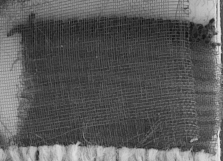
I take you literally, ok? I converted the NikonFile with CaptureOne7 to a stock b/w TIFF and the SigmaFile with SigmaPhotoPro5.5 to a b/w TIFF, too. So, here are the results (as png, to loose no pixelinformation):

NikonD800E:
DSC_0087.png


Sigma SD1:
SDIM6084.png


Sigma SD1, (normal) resized to fit the Nikonsize:
SDIM6084_enlarge.png


There are no tricks, no JPG Artefacts, no Color, no catch. You can repeat this by your own. Now, if you speak scientifically (as you apparently like), your theory has to get prooved. One counter evidence prooves a theory wrong, you know... this is my try. Explain the results as we speak from a 15MP against a 38MP. In my humble opinion the Sigma clearly outperforms the Nikon, and this is not just a pixelpeeping Testchart, this is my daily experience. I don't speak about the disadvantages (AF, HighISO, Accu...), they are all clear and bespoken.

You and I clearly see different things. You seem to be seeing the LARGE SCALE contrast between certain threads in the upscaled sigma image as an indication that it has more detail. That is not resolution, that is just a form of contrast. Probably due to the way the Foveon deals with color, or possibly the exact nature of the illumination used. I'll use your own sample data to demonstrate the difference in SPATIAL RESOLUTION, for which the advantage clearly goes to the D800E:

UnSH5yU.gif


I've enlarged your samples by 200% using nearest neighbor filtering, so as to preserve the exact details on a per-pixel basis (Bilinear or Bicubic filtering would have changed the pixels). I've aligned the two images to be as close to exactly on top of each other as possible. I've highlighted the most obvious regions where very fine detail can be seen with orange arrows. You can clearly see that the D800E has at least twice the real-world "resolution" (read that as spatial resolution or resolving power, not width and height image dimensions) as the SD1.

Your looking at the wrong bits of "detail". Your seeing the bright higher contrast threads in the red swatch as an indication of "more detail". That's not more detail, it's just a difference in contrast. That could be caused by the lighting that was used when the SD1 image samples were taken, it could be due to nuances in the way the Foveon sensor works and deals with color, it could be any number of things. But that's the wrong thing to look at. The best example of the D800's spatial resolution advantage is seen in the very fine dark strands of threads in the upper right corner...in the D800 they are VERY fine and VERY crisp, however in the SD1 upscaled image they are quite soft. Where at their finest those strands are about 1 1/4 pixels thick in the D800, they are at least 2-4 pixels thick in the SD1. That would roughly equate to a FACTOR OF TWO difference in real-world resolution between these two cameras, probably more than that.

I'm not trying to dash anyones hopes and dreams, here, honestly. I'm not trying to bring up math and theory just to be "more complicated" and confuse you guys. I'm just trying to be objective and accurate. Foveon's advantage is not, has never been, and will never be in terms of resolving power. It just plain and simply does not and can not resolve as much detail as a bayer sensor. The facts are staring you in the face right up there in that little animated GIF.

Foveon's advantages lie elsewhere...in native sharpness and native color fidelity.
 
Upvote 0
CarlTN said:
jrista said:
Sure. As I've said, I have nothing against the concept, at all.

I truly, honestly believe that does Foveon a disservice. Not everything is about megapixel count.

Sigma should be marketing their DP series of cameras on the STRENGTHS of Foveon, instead of fabricating fanciful "megapixel equivalency" numbers and the like. They are undermining Foveon that way, when it IS such amazing technology.

If you were being honest here, you would own one yourself.

If a camera with a Foveon sensor was available in late 2008/early 2009, I very probably would. However, Foveon was a mythical beast back then...the sensor was designed, but Sigma did not own it at the time. There WAS no Foveon camera. So I ended up with Canon. I'm now bought into the Canon system. I own tens of thousands of dollars worth of Canon lenses. Canon cameras are better for astrophotography. I have no reason to switch now.

CarlTN said:
You obviously are trying to have it both ways, trying to appear unbiased. You frankly have everything against this concept, when it comes to this manufacturer. Admit it, you don't like Sigma as a company, you would not buy any of their lenses or cameras.

I have absolutely no qualms about admitting I am biased against Sigma's handling of Foveon. I think they are doing it an injustice. I haven't NOT admitted that, as a matter of fact, I've been pretty up front about it! Beyond that, please don't try and put words or opinions in my mouth. As I've told you many times in the past, you really do not know me, Carl. You are a small, weak man who has to poke and jab from the sidelines, because you are too afraid to just stand up and be strait with anyone. So you poke and to prod and you bait, just like your doing here now. I'll be strait up and honest again: I find that to be pathetic and distasteful. Especially on a public forum like this.

So here's the truth. I'm not against Sigma in general, I think their recent lenses are EXCELLENT, and I applaud them for providing some competition on that front for Canon and Nikon. I GREATLY appreciate the fact that Sigma exists and is continuing to produce quality lenses, especially for short focal lengths/wide angles. I've had my eye on the Sigms 35mm for a while, and I may buy one of their wide angle zooms. I'm not against buying Sigma, so long at it meets my own personal quality standards. I hope they stick around, too, for the long run. I truly do not care for their cameras. I have absolutely no problem admitting that. It's my opinion. Everyone is entitled to their opinion, and I have no reason to hide mine. I think they have potential, but Sigma just doesn't put the right kind of effort into their cameras. I've found their firmware to be very lacking, to be more specific, and I am definitely not the only one. They have made strides over the years, but their progress on the ergonomics, functionality, and firmware front is too slow. They would have to rival Canon's ergonomics and firmware for me to take much interest in them. I'll be quite frank here, it wouldn't matter if Sigma used a bayer type sensor or the Foveon in their cameras...that isn't the reason I wouldn't buy one.


CarlTN said:
But The difference between you and me is, I've owned a foveon camera, the one with the sensor you deride most (and I currently own 2 Sigma lenses at the moment). It simply had more resolution than its native 4.6 MP dimensions...I'm sorry but it just did. You can rely on math all you like, but the proof is in the using, and viewing. To say that it only had 4.6 MP of resolution is utter nonsense. Plenty of reviews have backed me up on this.

Take a look at my recent reply to VSCD. I used his own sample images to prove, visually, the difference in resolution between the SD1 and the D800. The difference is very obvious. If there was a tiny difference, it wouldn't be obvious. From a pixel size standpoint, the SD1, which has no AA filter AND requires no interpolation, has at least 2.5 pixels for the fiber widths of the finest strands of thread in the upper right corner (in some cases it seems to be close to 3px). The D800 has about 1.25 pixels for the fiber widths of the finest strands of thread in the upper right corner. That is a spatial resolution difference of at least 200%!! That sounds about right...15mp vs. 36.3mp. From a SPATIAL resolution standpoint, Foveon sensors cannot be measured by their photodiode count. They have to be measured from their literal pixel count on the sensor (each Foveon pixel has three photodiodes). So yes, your camera has 4.6mp of "resolution"...spatial resolution, or resolving power. There is nothing you can do about it.

CarlTN said:
As for the Quattro sensor, I have no idea why it has fewer photodiodes for the other color channels...but frankly, if they are making the camera produce a 39 MP jpeg, then logic would dictate that it is resolving at least somewhat more than 10 MP.

You can create a 39mp JPEG simply by upscaling. However again, I have provided a demonstration of how upscaling does not increase resolution by using VSCD's own images. Go see for yourself. Sigma can upscale to their hearts content, it doesn't change the fundamental laws of physics that govern how much real resolution you have.

CarlTN said:
With a bayer array, you don't have 18 MP of all three colors of photodiode in your 7D. You have far less than that. And yet you're happy with the results you get.

Your right in that I don't get 18mp of "colors". I get 18mp of "luminance", I get less than 18mp of "chrominance". Again, I haven't been trying to hide that fact. I've been very explicit in my answers as to the terms I use. Again, refer to the SD1 vs. D800 GIF I posted. LUMINANCE resolution in a bayer sensor is "full"...you get 18mp, or 20mp, or 22.3mp or 36.3mp, whatever it is. Your CHROMINANCE (color) resolution is LESS than full, because of the interpolation. That causes a loss in color fidelity (color accuracy, natural vibrancy, color contrast), but it does NOT cause a loss of spatial resolution.

I really don't know how many times I'll have to say that before it sinks in. I'm not obfuscating the facts here, I'm trying to expose them. I guess you guys will have to remove the scales from your eyes first, though, because the message really doesn't seem to be sinking in.

CarlTN said:
Again, the proof is in the using, and the images, and less so the math. Math can be used to predict things like a rise of 10 feet in sea level over the next 20 years due to that nasty old capitalism, but how accurate, honest, and complete is that math?

Sure, the proof is in the images. I think I proved with the little GIF I posted that the D800 has about twice the spatial resolution as the upscaled SD1 image. Math and theory simply model reality, physics. Use and sample images cannot violate the laws of physics here, there is no magic bullet that will somehow make a 15mp Foveon have the same spatial resolution as a 36.3mp D800E, or even a 36.3mp D800 with AA filter. It just can't happen.

I'm not exactly sure how the bit about rising sea levels has anything to do with the debate here. That is less based on math and more based on speculation and assumption...the prediction about how much sea levels might rise is indeed mathematical, based on the volume and density of ice found at the poles, however whether the prediction comes true or not is not based on math, it's based on the (probably mistaken) assumption that global temperatures will continue to rise. Since August 2013, global temperatures have taken a deep dive...when Arctic sea ice was supposed to disappear entirely in August, instead it was at it's greatest extent in decades. Where the winter this year was supposed to be mild, it's been record-breaking cold.

Don't conflate speculation with math. I'm not speculating about Foveon...Foveon is no longer some mythical sensor that is predicted to materialize at some future date. Foveon is a concrete thing that actually exists, has explicit specifications, and HAS BEEN measured with enough accuracy to prove that math and reality, a far as it pertains to Foveon, DO correlate.

 
Upvote 0
You can clearly see that the D800E has at least twice the real-world "resolution" (read that as spatial resolution or resolving power, not width and height image dimensions) as the SD1.

The only thing I clearly see, are the both corners you mentioned. Yepp, the line is smaller and more accurate, but that's the only sweet spots for the Nikon, the 98% percent of the (for me) important picture is in the center, where the D800E just compounds every wire with each other into a heap-meshup . Try to find the one diagonal wire in the lower center. It's not visible and it's not visible in the Pentax 645D (!) eighter. The Sigma shows it clearly... for me the results are by far better than the Nikon. Maybe we talk at cross-purposes, but if that's not resolution or sharpness or spatial whatever than may it be. Whatever it is, I like it. I want it. I want it THAT way. The only thing I could admit is that the lense of the nikon was limited, as not even the Zeiss OTUS is able to serve the Nikon to the fullest (29MP was counted @DXO). I think you don't want to see, what I see (or vice versa) ::) But let me say, those Sigma FoveOn Pictures are available with my Pocket DP3M, too. You just don't need the ultra-highpriced lenses, you can do this with the Kitzoom (17-55 2.8) of a SD1 or with a 50mm 2.8 @DP3M.

I rarely use my DP3M, I'm mostly a Canon 5D kind of guy (yes, the first one, on purpose)... and the other time I often use my Zenza Bronica ETRSi (645 mediumformat, analoque). But if I decide to go out with a tripod and shoot landscapes, nothing came close to the foveon. And I borrow sometimes a Nikon D800 (sadly without "E") from a friend of mine. They can't match the pictures and the tests were with the Sigma 35mm 1.4 ART. So this shouldn't be the weak point of the system.
 
Upvote 0
vscd said:
You can clearly see that the D800E has at least twice the real-world "resolution" (read that as spatial resolution or resolving power, not width and height image dimensions) as the SD1.

The only thing I clearly see, are the both corners you mentioned. Yepp, the line is smaller and more accurate, but that's the only sweet spots for the Nikon, the 98% percent of the (for me) important picture is in the center, where the D800E just compounds every wire with each other into a heap-meshup . Try to find the one diagonal wire in the lower center. It's not visible and it's not visible in the Pentax 645D (!) eighter.

The Sigma shows it clearly... for me the results are by far better than the Nikon. Maybe we talk at cross-purposes, but if that's not resolution or sharpness or spatial whatever than may it be. Whatever it is, I like it. I want it. I want it THAT way.

You CAN see the diagonal threads in the D800 image. I can see them fine, it's just that those threads are dark, rather than light...but at the same time, they are dark and much more finely delineated than the SD1 image. I'm not sure if you guys just don't have that great of eyesight, or if you are just subconsiously not seeing what you don't want to see here, but those "diagonal wires" (it's thread, btw, since were talking about a fabric swatch) are MOST DEFINITELY visible on both the D800 and 645D images. They are far sharper and clearer in both the D800 and 645D as well...the only difference is their contrast with the rest of the threads.

Again, that could EASILY be due to how they illuminated the scene when taking the SD1 sample shots. I've seen plenty of other samples of that same scene for other cameras where those diagonal threads were more or less visible, and the vast majority of them are from bayer sensors. Because of that, I'm suspecting even more that how well those diagonal threads show up is due to lighting, and possibly color balance (the color balance of the SD1 image is quite different than the D800 and 645D images...that affects color contrast, and if one was to change the color balance of the D800 and 645D images, they could probably enhance those diagonal red threads of the foreground mesh vs. the background blue fabric). DPR doesn't maintain that sample scene to perfection...there are LOTs of little changes that occur from camera review to camera review...slight changes in the orientation of the feathers, slight changes in lighting or light angle, etc.

I truly think you are latching onto a facet of those images that really has nothing to do with the sensor, and more to do with the scene. That's the danger with custom test setups, especially ones that have the potential to change or that aren't performed with the utmost care with EXACTITUDE in all the details (like lighting). You don't get directly comparable results, or at least results that can lead to the kind of confusion you guys are having now.

vscd said:
The only thing I could admit is that the lense of the nikon was limited, as not even the Zeiss OTUS is able to serve the Nikon to the fullest (29MP was counted @DXO). I think you don't want to see, what I see (or vice versa) ::) But let me say, those Sigma FoveOn Pictures are available with my Pocket DP3M, too. You just don't need the ultra-highpriced lenses, you can do this with the Kitzoom (17-55 2.8) of a SD1 or with a 50mm 2.8 @DP3M.

It's nothing to do with me no wanting to see something. I'm talking about something very specific and measurable: spatial resolution. You are talking about something more ephemeral, more subjective: aesthetics. It's different things, but your conflating a particular aesthetic result (from the SD1) with a technical fact (spatial resolution or resolving power). The Foveon sensors that exist today have considerably less "resolution" (spatial resolution/resolving power) than bayer sensors that exist today. The math, the science, the physics, the facts, even visual examples all confirm that.

You and Carl are talking about the much more subjective qualities of the Foveon. You, personally, like the color contrast, color balance, color tone, whatever it is that the SD1 produces. Thats perfectly fine, everyone has their personal preferences for OOC color and sharpness. The SD1 certainly has a unique color, given it's design, and is definitely sharper as far as OOC results go. Subjectively, as far as personal preferences go, the SD1 has a lot going for it, obviously, as it definitely has it's fans.

My problem with Foveon (and rather, not so much Foveon as with how Sigma sells Foveon) is the way they use very missleading marketing that clearly seems to be brainwashing potential customers into thinking they are getting more than just better color fidelity and better OOC sharpness. Foveon is what it is, it has it's strengths, but it has it's weaknesses as well. Foveon's weakness is spatial resolution. Bayer has it's strengths, and it has it's weaknesses. Bayer definitely has far higher resolution these days, but suffers a bit in terms of color fidelity and color noise and color moire (unless an OLPF is used, which eats away a tiny bit at maximum resolving power.)

vscd said:
I rarely use my DP3M, I'm mostly a Canon 5D kind of guy (yes, the first one, on purpose)... and the other time I often use my Zenza Bronica ETRSi (645 mediumformat, analoque). But if I decide to go out with a tripod and shoot landscapes, nothing came close to the foveon. They can't match the pictures and the tests were with the Sigma 35mm 1.4 ART. So this shouldn't be the weak point of the system.

Well, we'll just have to agree to disagree here. I've had my Foveon phase, and I've seen all the wonderful images those cameras can take. That said, I'd take a D800E or, for that matter, even a Sony A7r, over a Foveon for landscapes these days. I am not a resolution junkie myself...most of my work is action, and I appreciate different attributes of DSLRs more than resolution...namely AF system and performance, frame rate, buffer depth, and high ISO noise and high ISO DR. In the past, I think Foveon was a great choice for landscapes, given its sharpness and blues. However...that was then...today, things have changed.

When it comes to landscapes, that is the one area where I'll take all the resolution you can possibly give me. I think that is the general consensus among landscape photographers as well. Resolution, and even more importantly dynamic range, are truly KING when it comes to landscapes. In that respect, the D800E trounces all, hands down, no question, even the SD1 Merrill doesn't hold a stick to what the D800 can do. I'd also offer that, among DSLRs with bayer sensors, the D800 offers the best color fidelity around, and can rival the Foveon itself at ISO 100 (which is mostly thanks to it's dynamic range...Foveon just doesn't have the kind of DR that the D800E does, and despite it's superior design for color, it's noisier, and that hurts it at ISO 100 vs. the D800E (which has the cleanest color and lowest noise of any camera I've ever seen to date...I don't think even the A7r is better, although it might be more convenient)).

I'd be happy to produce a demonstration of this fact, if I could find a place to rent the SD1 Merrill (I honestly don't know of any rental places that offer Sigma cameras.) There really is no contest here, the D800E will pretty much stomp all over any other camera from a landscape perspective, with the possible exception of the A7r, in terms of resolution, dynamic range, color fidelity, sharpness, etc. Since it's twice the megapixel count of the SD1, I could also downsample, and the gap between the two would only increase. If anyone is willing to let me borrow their SD1, if anyone has one, I'll rend a D800E, because I have absolutely no question in my mind that I can prove this case beyond any shadow of a doubt. ;-) Sorry to be so forceful about it, but I really want to debunk the notion that for landscapes especially, the Foveon is in any way "the best" or "unbeatable".
 
Upvote 0
jrista said:
If a camera with a Foveon sensor was available in late 2008/early 2009, I very probably would. However, Foveon was a mythical beast back then...the sensor was designed, but Sigma did not own it at the time. There WAS no Foveon camera. So I ended up with Canon. I'm now bought into the Canon system. I own tens of thousands of dollars worth of Canon lenses. Canon cameras are better for astrophotography. I have no reason to switch now.

CarlTN said:
You obviously are trying to have it both ways, trying to appear unbiased. You frankly have everything against this concept, when it comes to this manufacturer. Admit it, you don't like Sigma as a company, you would not buy any of their lenses or cameras.

I have absolutely no qualms about admitting I am biased against Sigma's handling of Foveon. I think they are doing it an injustice. I haven't NOT admitted that, as a matter of fact, I've been pretty up front about it! Beyond that, please don't try and put words or opinions in my mouth. As I've told you many times in the past, you really do not know me, Carl. You are a small, weak man who has to poke and jab from the sidelines, because you are too afraid to just stand up and be strait with anyone. So you poke and to prod and you bait, just like your doing here now. I'll be strait up and honest again: I find that to be pathetic and distasteful. Especially on a public forum like this.

So here's the truth. I'm not against Sigma in general, I think their recent lenses are EXCELLENT, and I applaud them for providing some competition on that front for Canon and Nikon. I GREATLY appreciate the fact that Sigma exists and is continuing to produce quality lenses, especially for short focal lengths/wide angles. I've had my eye on the Sigms 35mm for a while, and I may buy one of their wide angle zooms. I'm not against buying Sigma, so long at it meets my own personal quality standards. I hope they stick around, too, for the long run. I truly do not care for their cameras. I have absolutely no problem admitting that. It's my opinion. Everyone is entitled to their opinion, and I have no reason to hide mine. I think they have potential, but Sigma just doesn't put the right kind of effort into their cameras. I've found their firmware to be very lacking, to be more specific, and I am definitely not the only one. They have made strides over the years, but their progress on the ergonomics, functionality, and firmware front is too slow. They would have to rival Canon's ergonomics and firmware for me to take much interest in them. I'll be quite frank here, it wouldn't matter if Sigma used a bayer type sensor or the Foveon in their cameras...that isn't the reason I wouldn't buy one.


CarlTN said:
But The difference between you and me is, I've owned a foveon camera, the one with the sensor you deride most (and I currently own 2 Sigma lenses at the moment). It simply had more resolution than its native 4.6 MP dimensions...I'm sorry but it just did. You can rely on math all you like, but the proof is in the using, and viewing. To say that it only had 4.6 MP of resolution is utter nonsense. Plenty of reviews have backed me up on this.

Take a look at my recent reply to VSCD. I used his own sample images to prove, visually, the difference in resolution between the SD1 and the D800. The difference is very obvious. If there was a tiny difference, it wouldn't be obvious. From a pixel size standpoint, the SD1, which has no AA filter AND requires no interpolation, has at least 2.5 pixels for the fiber widths of the finest strands of thread in the upper right corner (in some cases it seems to be close to 3px). The D800 has about 1.25 pixels for the fiber widths of the finest strands of thread in the upper right corner. That is a spatial resolution difference of at least 200%!! That sounds about right...15mp vs. 36.3mp. From a SPATIAL resolution standpoint, Foveon sensors cannot be measured by their photodiode count. They have to be measured from their literal pixel count on the sensor (each Foveon pixel has three photodiodes). So yes, your camera has 4.6mp of "resolution"...spatial resolution, or resolving power. There is nothing you can do about it.

CarlTN said:
As for the Quattro sensor, I have no idea why it has fewer photodiodes for the other color channels...but frankly, if they are making the camera produce a 39 MP jpeg, then logic would dictate that it is resolving at least somewhat more than 10 MP.

You can create a 39mp JPEG simply by upscaling. However again, I have provided a demonstration of how upscaling does not increase resolution by using VSCD's own images. Go see for yourself. Sigma can upscale to their hearts content, it doesn't change the fundamental laws of physics that govern how much real resolution you have.

CarlTN said:
With a bayer array, you don't have 18 MP of all three colors of photodiode in your 7D. You have far less than that. And yet you're happy with the results you get.

Your right in that I don't get 18mp of "colors". I get 18mp of "luminance", I get less than 18mp of "chrominance". Again, I haven't been trying to hide that fact. I've been very explicit in my answers as to the terms I use. Again, refer to the SD1 vs. D800 GIF I posted. LUMINANCE resolution in a bayer sensor is "full"...you get 18mp, or 20mp, or 22.3mp or 36.3mp, whatever it is. Your CHROMINANCE (color) resolution is LESS than full, because of the interpolation. That causes a loss in color fidelity (color accuracy, natural vibrancy, color contrast), but it does NOT cause a loss of spatial resolution.

I really don't know how many times I'll have to say that before it sinks in. I'm not obfuscating the facts here, I'm trying to expose them. I guess you guys will have to remove the scales from your eyes first, though, because the message really doesn't seem to be sinking in.

CarlTN said:
Again, the proof is in the using, and the images, and less so the math. Math can be used to predict things like a rise of 10 feet in sea level over the next 20 years due to that nasty old capitalism, but how accurate, honest, and complete is that math?

Sure, the proof is in the images. I think I proved with the little GIF I posted that the D800 has about twice the spatial resolution as the upscaled SD1 image. Math and theory simply model reality, physics. Use and sample images cannot violate the laws of physics here, there is no magic bullet that will somehow make a 15mp Foveon have the same spatial resolution as a 36.3mp D800E, or even a 36.3mp D800 with AA filter. It just can't happen.

I'm not exactly sure how the bit about rising sea levels has anything to do with the debate here. That is less based on math and more based on speculation and assumption...the prediction about how much sea levels might rise is indeed mathematical, based on the volume and density of ice found at the poles, however whether the prediction comes true or not is not based on math, it's based on the (probably mistaken) assumption that global temperatures will continue to rise. Since August 2013, global temperatures have taken a deep dive...when Arctic sea ice was supposed to disappear entirely in August, instead it was at it's greatest extent in decades. Where the winter this year was supposed to be mild, it's been record-breaking cold.

Don't conflate speculation with math. I'm not speculating about Foveon...Foveon is no longer some mythical sensor that is predicted to materialize at some future date. Foveon is a concrete thing that actually exists, has explicit specifications, and HAS BEEN measured with enough accuracy to prove that math and reality, a far as it pertains to Foveon, DO correlate.

The first generation foveon sensor was available in the early or mid 2000's, it was before 2008.

Your post is insulting and I'm reporting it for abuse. I am not a small, weak man. You are the small weak man, who attempts to compensate for your shortcomings by posting lengthy forum posts.
 
Upvote 0
CarlTN said:
The first generation foveon sensor was available in the early or mid 2000's, it was before 2008.

Your post is insulting and I'm reporting it for abuse. I am not a small, weak man. You are the small weak man, who attempts to compensate for your shortcomings by posting lengthy forum posts.

Please, report away. There is a very healthy trail on these forums that clearly demonstrates who the antagonist is, in EVERY case. You, Carl, are a very antagonistic individual. It isn't just me you antagonize, you poke and prod and insult otherwise antagonize anyone who seems to disagree with you, the only difference between me and them is I'm tired of letting you get away with it.

So PLEASE, REPORT ME.

Let's see if we can get to the bottom of your mental disorder, and figure out a way to help you LEAVE IT BEHIND when you decide to come onto these forums and participate in a public community. I'm tired of having you insult and berate everyone you dislike because they have disagreed with you, or proven you wrong, or called you out. I'm HAPPY to be friendly and cordial with you on these forums. There is evidence all over these forums that clearly demonstrate you as being the instigator, and me regularly ignoring your antagonism, and in every case I've always only ever RESPONDED to your insults, never instigated them myself. So go ahead, report away.
 
Upvote 0
Status
Not open for further replies.