bdunbar79 said:I get that, I was more or less thinking in terms of absolute area of the lens diameter and not the focal length. Because in theory in Bizzaro World I could create a 16mm lens with a gigantic diameter or a super long and narrow 600mm lens. I didn't do the math on any of it so the 600 might very well always beat the 16mm...
...Ooo time for more Guiness Extra Stout...
Yea, it does get complicated. Here's a link to a guy who can explain it much better than me:
http://www.clarkvision.com/articles/exposure/
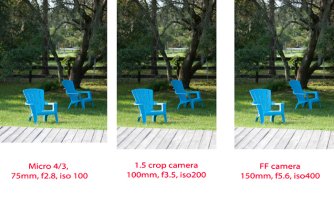
In a nutshell light density is not the same as total light in volume terms. Exposure is dictated by light density, not volume. A greater volume of light will lead to less noise.
When you magnify you lose light density. This is why the given aperture of a longer lens is larger in diameter than a shorter one, to give the same exposure. So when I said a longer focal length lens passes more light, in practice it does, unless you want a 600 mil lens that starts at f64.
This is why those who use long focal length lenses on their aps cameras are generally more content with the sensor size than those who use very short focal length lenses.
Of course this becomes more relevant in lower levels of light density - darker.
'Landscape' FF focal length lenses are still quite short, and so suffer from small diameter. This is why I find it amusing when I hear people referring to the likes of a D810 or A7r as the 'ultimate landscape camera'. It is also going to be the problem with cramming more pixels into a FF size sensor, and the reason why a lower mp count DMF sensor will run rings round a very high FF.
Upvote
0