Eos7D mk2, How EXCITED will you be if . . .?

MichaelHodges said:
On top of this, these animals come closer during crepuscular hours, and the 7D just falls flat here with noisy, rough RAW files.

I found the AF somewhat more consistent, but I absolutely agree the 7D is a good light camera. I cringed when the ISO went above 800. I barely blink when my 1D X hits ISO 6400.
 
Upvote 0
Don Haines said:
That said, I still believe that most of the time technique beats gear. It's when we are at the limits that the gear becomes truly important and most people never get that far. People like Jrista are not typical. His bird portraits are at a level where great technique and great gear are needed to get that level of shot. Myself, I am still learning and only occasionally reach the limits of my gear, and to keep things in perspective, remember that most cameras are left in program or "green box" mode. For all those people, technique is far more important than gear.

Well, thanks. :) I guess it kind of debunks my argument, but thanks. :D
 
Upvote 0
MichaelHodges said:
jrista said:
MichaelHodges said:
jrista said:
MichaelHodges said:
Don Haines said:
The point being, don't fixate on gear. Technique beats gear every time. One of the best techniques to learn in bird photography is to be slow and quiet..... although that said, I would not refuse a 1DX and a 600II if it were offered :)

Location > gear

Time spent at location > gear

I'd rather shoot with a Canon S2 in Yellowstone for a year than a high end camera and lens combo for two weeks.

I bet if I had a 1D X and a 600/4 II I'd create 100x more great photography in two weeks than you would with your Canon S2 in a year. ;) I have absolutely zero doubt, as a matter of fact.

The odds of getting truly great photographs in nature increase exponentially based on time in the field, not what gear you have.

First, you have to get out there. Second, you have to stay out there in all conditions. Then you need to apply technique, and hopefully a bit of luck will come your way, but don't count on it.

Time can be a factor, but gear is not immaterial. If I wanted to get a shot of bears, I'd much rather have a 1DX/5D III and a 600/4 + 2x TC, or a 7D and 600/4, than anything else.

I wouldn't recommend a 7D at all for bears. In fact, I'd choose a 50D and a 40D over it for our ursine friends.

LOL, sorry, but I find that completely illogical. It's also an unqualified statement...so I have to ask. WHY, in very specific terms, would you choose the 50D or 40D over the 7D for bears (or anything, for that matter)?

Technologically, while the 7D is not as advanced as some competitors today, at the time of it's release (after both of those other cameras), it was one of the best cameras on the market. It had a top of the line sensor for the times, and all the other features trounced pretty much anything else...it sat in a fairly unique spot among DSLRs with the high frame rate and pro-grade features.
 
Upvote 0
neuroanatomist said:
MichaelHodges said:
On top of this, these animals come closer during crepuscular hours, and the 7D just falls flat here with noisy, rough RAW files.

I found the AF somewhat more consistent, but I absolutely agree the 7D is a good light camera. I cringed when the ISO went above 800. I barely blink when my 1D X hits ISO 6400.

Not just the 1D X. I shot these at ISO 12800 in at-sunset/post-sunset light on the 5D III (I have to say, I was blown away by the fact that these came out as well as they did...people who complain about the 5D III, it's dynamic range, or its overall performance haven't put one through it's paces):


Upvote 0
jrista said:
LOL, sorry, but I find that completely illogical. It's also an unqualified statement...so I have to ask. WHY, in very specific terms, would you choose the 50D or 40D over the 7D for bears (or anything, for that matter)?


First, I'm not sure if you just had chocolate or a Red Bull, but chill a little bit.

I've owned all of these cameras, and filmed ursine and ungulates in crepuscular conditions. Photographing a brown bear running on a brown hillside is much different than filming a sporting event with brightly colored subjects.

In these low light, low contrast conditions, I found the 40D and 50D to simply have superior auto focus consistency with L telephoto lenses. On top of the auto focus, the 40D and 50D also seemed to have less substantial AA filters, which required less processing. The 7D RAW files also feel significantly more "rough", and require more processing all around than even my 40D. The 7D's colors appear drab compared to my 40D and 70D.

My keeper rate plunged significantly with the 7D's I used. Blue channel noise is disturbing on the 7D, even at low ISO's. AI Servo, when combined with high speed burst mode seems to be especially problematic, getting focus, then not, then getting it again.

These numerous issues combined to make unpleasant RAW files. Sure, the 7D has a beautiful build and is a joy to hold and operate. And some of the features are nice. But who cares if the files are weak?

When I compare the 7D files to my 50D, 40D, 70D, 6D, and 5DIII, I simply shake my head. They're a mess.

When you're out shooting the Bob Marshall Wilderness for a month, and you have these cameras side by side over thousands of images, its easy to see what camera can hack the conditions and what does not. Once in a while, when conditions were perfect and everything went right, the 7D really came to life. But that can be said for any cheap smart phone, too. The real test of a camera is how it does when conditions are crap.

 
Upvote 0
MichaelHodges said:
jrista said:
LOL, sorry, but I find that completely illogical. It's also an unqualified statement...so I have to ask. WHY, in very specific terms, would you choose the 50D or 40D over the 7D for bears (or anything, for that matter)?


First, I'm not sure if you just had chocolate or a Red Bull, but chill a little bit.

I've owned all of these cameras, and filmed ursine and ungulates in crepuscular conditions. Photographing a brown bear running on a brown hillside is much different than filming a sporting event with brightly colored subjects.

In these low light, low contrast conditions, I found the 40D and 50D to simply have superior auto focus consistency with L telephoto lenses. On top of the auto focus, the 40D and 50D also seemed to have less substantial AA filters, which required less processing. The 7D RAW files also feel significantly more "rough", and require more processing all around than even my 40D. The 7D's colors appear drab compared to my 40D and 70D.

My keeper rate plunged significantly with the 7D's I used. Blue channel noise is disturbing on the 7D, even at low ISO's. AI Servo, when combined with high speed burst mode seems to be especially problematic, getting focus, then not, then getting it again.

These numerous issues combined to make unpleasant RAW files. Sure, the 7D has a beautiful build and is a joy to hold and operate. And some of the features are nice. But who cares if the files are weak?

When I compare the 7D files to my 50D, 40D, 70D, 6D, and 5DIII, I simply shake my head. They're a mess.

When you're out shooting the Bob Marshall Wilderness for a month, and you have these cameras side by side over thousands of images, its easy to see what camera can hack the conditions and what does not. Once in a while, when conditions were perfect and everything went right, the 7D really came to life. But that can be said for any cheap smart phone, too. The real test of a camera is how it does when conditions are crap.

So, given the specificity...YOU personally got what sounds like a bad copy of a 7D, so you diss it at every opportunity Additionally, IF you are photographing a brown bear running down a brown hill in low light...the 50D or 40D is better. Thanks! :D (I don't actually believe that Canon's 9pt AF system was actually better finding a brown subject with zero contrast against a brown background was any better...EVERY camera on earth would have problems with that particular scenario, because there is no contrast for the camera to lock onto...)

BTW, you might want to read this, from a guy who uses nothing but the 7D and 100-400 for bird photography (in all sorts of light, if you look at his web site):

http://www.birdsasart-blog.com/2012/09/18/how-dan-cadiuex-masters-canon-eos-7d-image-files/

I used the same trick for NR with the 7D as Dan does: NR the entire image, and history-brush the subject (or in my case, mask the subject and NR the rest.) With PSCS6 or newer, it takes only about a minute to mask off the subject with the quick selection tool, so this doesn't add much to the image processing workflow. I use Topaz DeNoise 5 and/or Nik Dfine 2 for NR (both have debanding.) It's possible to use very high ISO and get extremely clean results with the 7D in VERY low light (this is about as crepuscular as it gets...dusk with cloud cover):

night-heron-at-night-1-of-1.jpg


ISO 3200, however the image was lifted fairly heavily in post (+1 full stop exposure, additional lifting to shadows and blacks), so effective ISO is higher than ISO 6400. Autofocused, through foreground reeds, in light that, to me, was nearly black darkness, with the last bits of twilight behind me showing through dark clouds. I could barely see the bird myself. This was with the 7D and 600/4 L II, so the max aperture was limited to f/4 (which means the 7D was NOT at it's best, and was unable to use the higher sensitivity capabilities of the central double-cross type AF point.)
 
Upvote 0
jrista said:
neuroanatomist said:
MichaelHodges said:
On top of this, these animals come closer during crepuscular hours, and the 7D just falls flat here with noisy, rough RAW files.

I found the AF somewhat more consistent, but I absolutely agree the 7D is a good light camera. I cringed when the ISO went above 800. I barely blink when my 1D X hits ISO 6400.

Not just the 1D X. I shot these at ISO 12800 in at-sunset/post-sunset light on the 5D III (I have to say, I was blown away by the fact that these came out as well as they did...people who complain about the 5D III, it's dynamic range, or its overall performance haven't put one through it's paces):


Those are lovely, especially the first one. And they demonstrate one thing a longer lens and greater subject distance gives you (with caveats) - a nicer background. People arguing one must get close for good photos ignore this aspect. Those bear shots further up the thread were good, but the background was nowhere near as blurred. Obviously the distance of the subject from the background is a determining factor, but assuming it's the same, a longer lens from a greater distance will blur things better than a wider-angle lens from a closer distance (I mean, I *suppose* one could try and use a really wide aperture lens like the 200 f/2 to even things out, but I still find the best blurred backgrounds are produced by the longest focal lengths - 1000mm f/10 beats 100mm f/2.8, except maybe at macro distances).
 
Upvote 0
I would fancy a 7D2 that could nicely complement my 5D3. For me this means:
- more reach due to the crop factor (and thus similar MP count)
- faster framerate (>8 )
- while having comparable AF and decent low light performance (usable pictures at ISO 3200)

nice to haves would be:
- dual card (same as 5D3)
- in camera flash RT control/trigger
- same battery as 5D3

If such camera would come at an attractive price (€ 1500-1800 / for reference, a 7D1 is about €1100-1200 over here, a 5D3 about €2700, and a 6D about €1600), I would probably buy one as a 2nd body.
 
Upvote 0
scyrene said:
Those are lovely, especially the first one. And they demonstrate one thing a longer lens and greater subject distance gives you (with caveats) - a nicer background. People arguing one must get close for good photos ignore this aspect. Those bear shots further up the thread were good, but the background was nowhere near as blurred. Obviously the distance of the subject from the background is a determining factor, but assuming it's the same, a longer lens from a greater distance will blur things better than a wider-angle lens from a closer distance (I mean, I *suppose* one could try and use a really wide aperture lens like the 200 f/2 to even things out, but I still find the best blurred backgrounds are produced by the longest focal lengths - 1000mm f/10 beats 100mm f/2.8, except maybe at macro distances).

Aye, long lenses really are a bonus from an aesthetics standpoint. They give you a decent working distance, as well...you can get close-ish to your subjects, but you don't have to get so close that you scare them off or risk being mauled by a bear. ;P I like the working distance. But it isn't just the longer lens, there are a few factors that go into getting shots like these. To Don's point, technique is key. I dress myself up like an idiot, at the very least in camo, if not in this funky light mesh outfit with leaf-shaped cutouts, all camo-colored, that slip over my clothes. The deer know I'm not a strange looking bush, but they are comfortable enough to get close.

The other two critical things are aperture and frame size. The f/4 aperture and large front element can't be ignored for boke quality, the entrance pupil is huge, and smooths things out nicer than say the Tammy 150-600, with it's f/6.3 max aperture and smaller front element, would. Second is the frame size. The 7D did well enough, especially with a 1.4x TC (840mm f/5.6), but to really get a nice background, I was actually as close to the deer as I am with the 5D III. That usually meant body shots or even head shots. With the 5D III, the full frame is nice in that you can get the deer and some surrounding landscape, and still achieve that nice, creamy boke effect.

With something like a M4/3 camera, I would have an even harder time than with the 7D getting shots with this kind of wide field and creamy boke. The frame is a lot smaller, so your forced to be farther away/use shorter lens to get the same framing. (The more square format doesn't help either...I like having more negative space on the side of my subject than above and below...the 4/3rd format doesn't lend itself to that kind of composition, not unless you put yourself even farther from the subject and from to a 2/3rd form.) Even worse, go down to a 1" or 2/3" sensor, and you have to be even farther away or use even wider lenses, and your DoF and beautiful boke end up drifting farther and farther from the ideal.

It doesn't matter how good the underlying technology gets...I will probably never give up my big, heavy gear. It isn't even so much about noise or shadow lifting ability (those are certainly nice to haves). There is just an aesthetic quality that you get from larger frames like APS-C and FF that you simply cannot get with smaller form factors, even M4/3, and certainly not compacts or cell phones. So, as I said...if I had the option of a year in Yellowstone with a small mirrorless/compact/smartphone camera, or two weeks with my current gear...I'd take the two week option, hands down, no question. I wouldn't be able to photograph every corner of the park...but I've been there a few times in the past, I know the area and I know where to find interesting wildlife and birds. I'd plan the trip, pick a single area to spend my time in, and make the most of that one location. And I KNOW the photography I'd be able to create in that short time would meet my expectations. Even if I ended up with only one great shot...if it was at least as good as the first deer shot here...I'd be pretty satisfied with that trip.
 
Upvote 0
Don Haines said:
That said, I still believe that most of the time technique beats gear. It's when we are at the limits that the gear becomes truly important and most people never get that far. People like Jrista are not typical. His bird portraits are at a level where great technique and great gear are needed to get that level of shot. Myself, I am still learning and only occasionally reach the limits of my gear, and to keep things in perspective, remember that most cameras are left in program or "green box" mode. For all those people, technique is far more important than gear.

On the contrary. I would argue that for those people, gear is more important than technique. The gear has to be good enough to take a decent shot without the photographer giving it any hints at all. Among other things, that means that its maximum usable ISO has to be pretty high so that it won't need too long an exposure when shooting moderately moving subjects in poorly lit rooms. For people who shoot in auto all the time, the gear is most critical. For people who actually know how to use all those manual and semi-manual modes, the gear matters less (except when we're being lazy).
 
Upvote 0
We have run into the better vs. best (budget vs. money-no-object) argument once more. There ain't no way of solving this. Yes, equipment matters. Yes, fieldcraft matters. Yes, technique matters. Next question?

Well, MY next question is how many of us wear ghillie suits like Jrista describes vs. just plain camo vs. blind vs. no blind and no camo? How many people use camo covers on their lenses ("Lens Coat" or other)? How many use products that claim to suppress human odors?
 
Upvote 0
NancyP said:
Well, MY next question is how many of us wear ghillie suits like Jrista describes vs. just plain camo vs. blind vs. no blind and no camo? How many people use camo covers on their lenses ("Lens Coat" or other)? How many use products that claim to suppress human odors?

A lot of my waterfowl photography is from a bright red canoe... so camo clothing is lost on me.... stay silent and move slowly while paddling on the far side of the canoe and not lifting the paddle out of the water and you are less scary... You can also paddle upstream/upwind and gently drift back....

For small bird photography I bring a chair, good book, and lots of sunflower seeds.... after you stay still for a while the lure of the food seems to overcome the fear of the human.
 
Upvote 0
NancyP said:
Well, MY next question is how many of us wear ghillie suits like Jrista describes vs. just plain camo vs. blind vs. no blind and no camo? How many people use camo covers on their lenses ("Lens Coat" or other)? How many use products that claim to suppress human odors?

Depends on what I'm trying to shoot. Some birds, like warblers or shorebirds for example, don't really care about humans at all so camo and hides aren't necessary. For waterfowl, I'll throw some camo cloth over me and just lay there quietly. For a lot of other species, a hide and water/food are almost necessary to get decent shots. I'll camo up if I'm planning on hiking around some wilderness without a specific setup location in mind.

Boats and canoes are cool too. Birds don't seem to recognize people in boats as a threat. Its kind of like shooting from a car.

edit: On topic - I would be excited about the 7DII if it was a 1D Mark V
 
Upvote 0
NancyP said:
We have run into the better vs. best (budget vs. money-no-object) argument once more. There ain't no way of solving this. Yes, equipment matters. Yes, fieldcraft matters. Yes, technique matters. Next question?

Well, MY next question is how many of us wear ghillie suits like Jrista describes vs. just plain camo vs. blind vs. no blind and no camo? How many people use camo covers on their lenses ("Lens Coat" or other)? How many use products that claim to suppress human odors?

Maybe wildlife in the UK is more used to people - I've never felt the need for camouflage gear. I did get a portable bird hide, but it's too bulky to carry along with my camera gear, so I never use it. I tend to photograph whatever birds I encounter - only going after particular species occasionally - so it's more a matter of walking miles and hoping to bump into something good.

Species vary a lot, of course. Woodpigeon are common around people, but maybe because they're a legal quarry here, they tend to fly off the moment you point a big lens at them. Other tiny birds, like goldcrests, don't seem to care even if you get within a few feet.

I'm sure mammals require more effort (staying downwind, etc), but I've never attempted to photograph them.
 
Upvote 0
scyrene said:
I'm sure mammals require more effort (staying downwind, etc), but I've never attempted to photograph them.

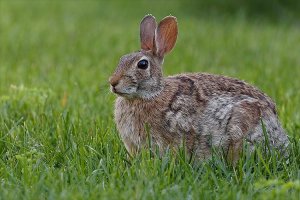
Mammals can be easy. They let you get nice and close sometimes. Just make sure any bunnies you try to take pictures aren't from Caerbannog...
 

Attachments

  • Not from Caerbannog.jpg
    Not from Caerbannog.jpg
    74.2 KB · Views: 1,098
Upvote 0
Jackson_Bill said:
Skulker said:
fragilesi said:
jrista said:
Time can be a factor, but gear is not immaterial. If I wanted to get a shot of bears, I'd much rather have a 1DX/5D III and a 600/4 + 2x TC, or a 7D and 600/4, than anything else.

Think I'd go for a helicopter first myself ;D

You wimps! ;D
...
A bit off topic, but...
Like most tourists, I don't think you understand how quickly things can go bad in the wild. Sure, black bears seem more timid than grizzlies but many animals may look quite docile and then the situation changes in a heartbeat.
Last year, one of the locals was hospitalized by a female deer. People have been attacked by groundhogs and squirrels... Ospreys are a very real threat when climbing towers at work.... even small birds like redwing blackbirds will attack if you get near the nest. Chipmunks can be nasty! If you get too close to any animal, particularly if the animal feels trapped, you don't know what is going to happen.

Bambi's mother might look cute and docile, but she has the ability to break your bones in an instant if you push things. I like long lenses.....
 
Upvote 0
ppritchett said:
neuroanatomist said:
scyrene said:
I'm sure mammals require more effort (staying downwind, etc), but I've never attempted to photograph them.

Mammals can be easy. They let you get nice and close sometimes. Just make sure any bunnies you try to take pictures aren't from Caerbannog...

It's just a rabbit!

Well, that's no ordinary rabbit! That rabbit's got a vicious streak a mile wide! It's a killer!
 
Upvote 0
Hey, I have been buzzed by hummingbirds! And it worked - once I identified the two things zipping by an inch from my ear as hummingbirds, I figured that I must have been close to a nest (not visible) which the hummingbirds had been unwise enough to put close to a hiking trail. I scooted away to let them have some peace.

Even non-aggressive large domesticated animals can do some damage if panicked. I used to have a horse, and have healthy respect for the damage a normally docile 900 pound animal can cause. What is it with these people who get out of their cars to photograph rutting elk?

I tend not to wear camo for birding in warm weather, I just wear subdued colors and sit around, conspicuously "not paying attention" most of the time. I have a camo jacket and cap for cooler weather. I have never worn a ghillie suit, maybe because I would have a hard time not laughing at myself. Yes, the ghillie suits are in the stores around here, but I don't know who buys them - turkey hunters, maybe? The "no-smell" long underwear seems to sell well, and it is never on sale. The number one hunting target locally is the deer, #2 is ducks and geese (all legal species), #3 is the turkey. Thank God for hunters - without the deer season, there would be a lot more road collisions with deer. Also, hunters are a very strong lobby in state government, and thus the MO conservation department tends to be less subject to cuts than other departments, and the parks in MO are numerous.
 
Upvote 0
neuroanatomist said:
ppritchett said:
neuroanatomist said:
scyrene said:
I'm sure mammals require more effort (staying downwind, etc), but I've never attempted to photograph them.

Mammals can be easy. They let you get nice and close sometimes. Just make sure any bunnies you try to take pictures aren't from Caerbannog...

It's just a rabbit!

Well, that's no ordinary rabbit! That rabbit's got a vicious streak a mile wide! It's a killer!
that's the most foul, cruel, and bad tempered rodent you ever set eyes on.
 
Upvote 0