FF Mirrorless Needed in 2018 -- A7-III changed the segment !

neuroanatomist said:
3kramd5 said:
neuroanatomist said:
KirkD said:
1. has at least as good in-body image stabilization as Sony ... Canon absolutely has to have this in their FF mirrorless or I'm out of here.

It's in the lens.

FWIW being in the body doesn’t preclude it being in the lens, or vice versa (nor does a lack of a patent preclude development). In fact it appears the combination of ILIS and IBIS is quite powerful. Canon may not go there soon, but I would be surprised if they rule it out entirely.

Technically, both are possible. But Canon has spent a lot of time touting the superiority of lens based IS. Of course, anything is possible...after all, Nikon touted their ED glass elements as superior to fluorite because, "Fluorite easily cracks and is sensitive to temperature changes that can adversely affect focusing." But now they've started putting fluorite elements in their supertele lenses (and it looks like they've finally updated their lens glossary to remove the knock on fluorite in the ED entry).

Yep. I hope canon is not a company which can’t or refuses to learn.

Regarding patents, the first I could find which relates to DPAF was filed in 2004, despite the technology being introduced in 2003, and the sensor fab in the EOS C100 (2012) being compatible.

This might demonstrate canon’s willingness to develop or even produce something without a hat-tipping patent. It could likewise demonstrate my inability to search for patents.
 
Upvote 0
3kramd5 said:
The aperture behavior isn’t arbitrary as far as I know. It is based on the lens used. This was Sony’s perhaps unwise approach to dealing with focus shift. Lenses which are more susceptible to it act differently than lenses which are less suceptible to it.

This was one of my big frustrations with my a7rii, and part of why I sold it when I bought a 1Dx.

Ahhhh, I see. I more or less gave up trying to figure it out, since it isn't my camera anyways; it feels random, and just doesn't work the way I expect it to.

It also feels frustrating to me -- not to mention bizarre. At the end of the day, I just want to point my camera and be able to autofocus consistently, even when it's dim.
 
Upvote 0
3kramd5 said:
neuroanatomist said:
KirkD said:
1. has at least as good in-body image stabilization as Sony ... Canon absolutely has to have this in their FF mirrorless or I'm out of here.

It's in the lens.

FWIW being in the body doesn’t preclude it being in the lens, or vice versa (nor does a lack of a patent preclude development). In fact it appears the combination of ILIS and IBIS is quite powerful. Canon may not go there soon, but I would be surprised if they rule it out entirely.

My Olympus lens + body IS combo was not nearly effective as my FF Canon lens only. Just another reason I ditched it.
 
Upvote 0
3kramd5 said:
Regarding patents, the first I could find which relates to DPAF was filed in 2004, despite the technology being introduced in 2003, and the sensor fab in the EOS C100 (2012) being compatible.

This might demonstrate canon’s willingness to develop or even produce something without a hat-tipping patent. It could likewise demonstrate my inability to search for patents.

The difference being that DPAF was a novel technology, meaning a logical reason for avoiding a hat-tipping patent. That's not the case with IBIS, where Canon would need to demonstrate a patentable difference from current implementations to avoid infringing on others' patents.

More broadly speaking, Canon certainly might implement IBIS, I just doubt it'll be anytime soon.
 
Upvote 0
When it comes to innovation, what about that Canon patent for the DSLR with the viewfinder that has both optical and LCD capability? Did they leave it in the closet or maybe, just maybe, it will be the "little surprise" we have forgotten about. After Buying the little M5 and using it for an "everyday" camera, I find the LCD viewfinder a real pleasure and asset for exposure settings.
 
Upvote 0
neuroanatomist said:
3kramd5 said:
Regarding patents, the first I could find which relates to DPAF was filed in 2004, despite the technology being introduced in 2003, and the sensor fab in the EOS C100 (2012) being compatible.

This might demonstrate canon’s willingness to develop or even produce something without a hat-tipping patent. It could likewise demonstrate my inability to search for patents.

The difference being that DPAF was a novel technology, meaning a logical reason for avoiding a hat-tipping patent. That's not the case with IBIS, where Canon would need to demonstrate a patentable difference from current implementations to avoid infringing on others' patents.

More broadly speaking, Canon certainly might implement IBIS, I just doubt it'll be anytime soon.


Yes, of course. They could however, without anyone outside knowing, develop and ready for production something using an in body stabilization system for which they have a license, or for which they have an improvement patent ready to file.

Will they soon? Yah probably not.
 
Upvote 0
By the way, one area that Sony has not "innovated" at all: remote PC shooting.

If remote PC shooting (tethering wired and wirelessly) is at all important to you....

1. You can't do it over WiFi. I don't mean it works poorly; remote tethering over WiFi doesn't exist, despite the camera having WiFi.

2. When you tether using a cable, the application is half-baked. The options compared to Canon are tiny, and if you have a high resolution laptop (like a Surface), all the icons and text are so small that you can't make them out.

3. On the bright side, USB-C is very fast, though RAW files are still slow to transfer (but JPEGs are very fast). Also, it is possible to purchase a magsafe USB C adapter, so there's that.

If you want to preview your stuff wirelessly, you're looking at an Android tablet or smartphone. I haven't verified it, as I am not an iPad/iPhone guy, but my friend cannot get his A7Riii to connect to Sony PlayMemories or whatever it's called on his iPhone.

But...

4. It works on my Galaxy S8... but disconnects once in a while for no apparent reason, forcing me to quit and restart the app. Overall, the remote shooting experience is pretty crappy compared to the Canon app.
 
Upvote 0
I was a Canon fanboy for a few years and I do still really like my 6D. Like yourself, I am hoping the A7III shakes things up a bit. I have hit the point in my career where Canon don't do a suitable camera for my needs anymore. My work is now 50/50 photo/video and Canon still don't have an appropriate hybrid camera.

The A7III has shown for $2000 you can get excellent photos with 14.7 stops of DR and excellent full frame and super35 4K video with log profiles and great codecs. That's the perfect hybrid camera for $2000.

The A7III is a much better hybrid camera than say the 5DIV which is over $1300 more expensive. Paying that $1300 also loses you video functionality, FPS, dynamic range, IBIS and more.
 
Upvote 0
The Fat Fish said:
The A7III has shown for $2000 you can get excellent photos with 14.7 stops of DR

When you successfully capture the full DR of a scene with a 14.7 EV range, do let us know. ::)

Meanwhile, drink some more of DxO's Koolaide, I hear it's tasty.
 
Upvote 0
neuroanatomist said:
The Fat Fish said:
The A7III has shown for $2000 you can get excellent photos with 14.7 stops of DR

When you successfully capture the full DR of a scene with a 14.7 EV range, do let us know. ::)

Meanwhile, drink some more of DxO's Koolaide, I hear it's tasty.

Well as you are indicating, 14.7 still isn't perfect but at least its closer right? And DxO does some great measurements. They are inline with lots of others. The only thing you need to do with DxO is to ignore the overall score.

DR was also only one thing I mentioned. I'd take the 5DIV DR if it also was a more reasonable price and had video features inline with the A7III and A7RIII. DR is much less of a concern for me than it used to be. Ignoring the overall abysmal 6DII, Canon have greatly improved there.

What Canon still don't do is offer competitive video features and that's something that I need for my work.
 
Upvote 0
The Fat Fish said:
The only thing you need to do with DxO is to ignore the overall score scores.

There, fixed it for you.

The problem with DxO is that most of the scoring is missing the most important elements of why to choose a piece of equipment. It's like choosing between 3 Harvard law graduates that graduated in the top percentile and choosing them based on the grade they received in Civil Procedure.

In the enthusiast and entry-level professional range, the reason to choose any of the current full frame cameras is which system you're more comfortable with to compose great photographs. If you can't take amazing photographs with a 6D2, it's not because it's an abysmal camera. It's you.

The reason that anyone has lackluster photographs isn't dynamic range, the resolving power of lenses under a microscope, megapixels, chromatic aberration or nearly-undetectable distortion. When they take a 40 megapixel shot of a poster and you magnify it to the top few pixels on the top corner and go, "hey, there's less noise here", it's a fun academic experiment, but it adds zero value to the quality of actual photographs, because that's not what makes photographs fantastic or not.

If you're a professional or a really specialized hobbyist, the reason you might exclude a current full frame camera system for a specific job is if it is missing some tool that's required, like a big telephoto, a tilt-shift, macro lights, or whatever.
 
Upvote 0
Talys said:
The Fat Fish said:
The only thing you need to do with DxO is to ignore the overall score scores.
...
The reason that anyone has lackluster photographs isn't dynamic range, the resolving power of lenses under a microscope, megapixels, chromatic aberration or nearly-undetectable distortion. When they take a 40 megapixel shot of a poster and you magnify it to the top few pixels on the top corner and go, "hey, there's less noise here", it's a fun academic experiment, but it adds zero value to the quality of actual photographs, because that's not what makes photographs fantastic or not.


Heresy! Heresy! Heresy! DR is King! Noise is Evil! Thee shall be banished, banished! BANISHED!!
 
Upvote 0
The Fat Fish said:
neuroanatomist said:
The Fat Fish said:
The A7III has shown for $2000 you can get excellent photos with 14.7 stops of DR

When you successfully capture the full DR of a scene with a 14.7 EV range, do let us know. ::)

Meanwhile, drink some more of DxO's Koolaide, I hear it's tasty.

Well as you are indicating, 14.7 still isn't perfect but at least its closer right? And DxO does some great measurements. They are inline with lots of others. The only thing you need to do with DxO is to ignore the overall score.

It seems you missed the point. You don't have 14.7 stops of DR, you have 13.8 stops. Sure, if you downsample to an 8 MP image, the resulting file has 14.7 stops (theoretically). But anything outside of 13.8 was clipped at capture, and downsampling won't create data from nothing.

As for the video features, not something I need, but if the a7III delivers for you, great!
 
Upvote 0
Talys said:
The Fat Fish said:
The only thing you need to do with DxO is to ignore the overall score scores.

If you can't take amazing photographs with a 6D2, it's not because it's an abysmal camera. It's you.
Wrong question: the question is whether you can take "amazing" photos of the thing you want to take amazing photos of.

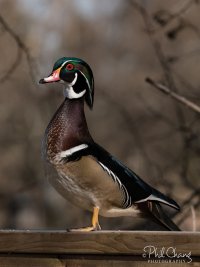
I'm generally on your side of this debate, but even as an amateur bird photographer I run into DR issues regularly...at least in summer. Getting a properly exposed photo in full light of wood duck, cormorant, raven, and others has been a fail for me. Granted, I currently use a 70D, which is nowhere near Canon's best sensor. Nevertheless, more DR is better, all things being equal. The difficulty is that all things are not equal, and we must choose a system that meets all of our needs (including budget).
 
Upvote 0
Orangutan said:
Talys said:
The Fat Fish said:
The only thing you need to do with DxO is to ignore the overall score scores.

If you can't take amazing photographs with a 6D2, it's not because it's an abysmal camera. It's you.
Wrong question: the question is whether you can take "amazing" photos of the thing you want to take amazing photos of.

I'm generally on your side of this debate, but even as an amateur bird photographer I run into DR issues regularly...at least in summer. Getting a properly exposed photo in full light of wood duck, cormorant, raven, and others has been a fail for me. Granted, I currently use a 70D, which is nowhere near Canon's best sensor. Nevertheless, more DR is better, all things being equal. The difficulty is that all things are not equal, and we must choose a system that meets all of our needs (including budget).

I certainly agree but in principle, more is better. Say you want a 500/4L IS II for bird photography, and you have $3500. Then say I give you another $200. More is better, but how much help was that really? DR can be like that.
 
Upvote 0
neuroanatomist said:
Orangutan said:
Talys said:
The Fat Fish said:
The only thing you need to do with DxO is to ignore the overall score scores.

If you can't take amazing photographs with a 6D2, it's not because it's an abysmal camera. It's you.
Wrong question: the question is whether you can take "amazing" photos of the thing you want to take amazing photos of.

I'm generally on your side of this debate, but even as an amateur bird photographer I run into DR issues regularly...at least in summer. Getting a properly exposed photo in full light of wood duck, cormorant, raven, and others has been a fail for me. Granted, I currently use a 70D, which is nowhere near Canon's best sensor. Nevertheless, more DR is better, all things being equal. The difficulty is that all things are not equal, and we must choose a system that meets all of our needs (including budget).

I certainly agree but in principle, more is better. Say you want a 500/4L IS II for bird photography, and you have $3500. Then say I give you another $200. More is better, but how much help was that really? DR can be like that.
Yes, we've been on the same side of that argument for years. I was arguing against the notion that "if you can't get a great pictures with X, then the problem is you." It's true that a good photographer can make an interesting photo with just about any gear. It's not true that a great photographer can get the desired photo of a specific subject/action with any gear. A good photographer knows the limits of the gear, and adjusts technique and expectations to match.
 
Upvote 0
Orangutan said:
Talys said:
The Fat Fish said:
The only thing you need to do with DxO is to ignore the overall score scores.

If you can't take amazing photographs with a 6D2, it's not because it's an abysmal camera. It's you.
Wrong question: the question is whether you can take "amazing" photos of the thing you want to take amazing photos of.

I'm generally on your side of this debate, but even as an amateur bird photographer I run into DR issues regularly...at least in summer. Getting a properly exposed photo in full light of wood duck, cormorant, raven, and others has been a fail for me. Granted, I currently use a 70D, which is nowhere near Canon's best sensor. Nevertheless, more DR is better, all things being equal. The difficulty is that all things are not equal, and we must choose a system that meets all of our needs (including budget).

By the way, I love wood ducks. I think they are so cool :)

If you ever have a chance to, borrow or rent a D850 or A7R3. I've tried both, and neither produces photos that are remotely close to being in the "amazing" category if poorly exposed. The ability to push shadows gives a little more color, for sure, but the problem is, the lack of light hitting the subject from a favorable angle basically gives you bland, lifeless color.

The other issue is that we're usually talking about shots taken without enough light. In this case, you can push shadows or you can get rid of high ISO graininess, but you can't do both without it looking like a watercolor painting. So practically, if you're lifting a dark area in a photo that is generally poorly exposed, you end up with a grainy photo with some color, or a something devoid of detail.

In nearly 100% of the cases, you won't get any details of the bird's eyes, and that's really important if you want a great photo, in my opinion.

And since this is a photography site, here's a wood duck from a 6DII!
 

Attachments

  • Duck-Portrait-19_RW.jpg
    Duck-Portrait-19_RW.jpg
    927.2 KB · Views: 92
Upvote 0
Orangutan said:
Yes, we've been on the same side of that argument for years. I was arguing against the notion that "if you can't get a great pictures with X, then the problem is you." It's true that a good photographer can make an interesting photo with just about any gear. It's not true that a great photographer can get the desired photo of a specific subject/action with any gear. A good photographer knows the limits of the gear, and adjusts technique and expectations to match.

There are also times, however, that the right answer is to either:

1) Come back under more favorable conditions, or
2) Augment the light with a flash or strobe

The second actually doesn't bother most the birds very much at all, and the advantage of a small bird is that even a relatively small softbox (like a rogue flashbender) can produce very nice results.
 
Upvote 0
neuroanatomist said:
The Fat Fish said:
neuroanatomist said:
The Fat Fish said:
The A7III has shown for $2000 you can get excellent photos with 14.7 stops of DR

When you successfully capture the full DR of a scene with a 14.7 EV range, do let us know. ::)

Meanwhile, drink some more of DxO's Koolaide, I hear it's tasty.

Well as you are indicating, 14.7 still isn't perfect but at least its closer right? And DxO does some great measurements. They are inline with lots of others. The only thing you need to do with DxO is to ignore the overall score.

It seems you missed the point. You don't have 14.7 stops of DR, you have 13.8 stops. Sure, if you downsample to an 8 MP image, the resulting file has 14.7 stops (theoretically). But anything outside of 13.8 was clipped at capture, and downsampling won't create data from nothing.

As for the video features, not something I need, but if the a7III delivers for you, great!

Ignoring DR, video functionality is something very few other brands are so reserved about putting in their cameras. For sure, the A7III would match my needs quite well but isn't it a shame I need to switch brands? There's lots I like about Canon and I certainly won't be alone in needing to offer video and stills on one job. Sony, Fuji, Panasonic all value hybrid stills/video and even Nikon are slowly heading that way. Can Canon not simply match them? It just seems a shame to leave what is a great system because of one feature. It just so happens it's a feature I MUST have for my work.
 
Upvote 0
The Fat Fish said:
Ignoring DR, video functionality is something very few other brands are so reserved about putting in their cameras. For sure, the A7III would match my needs quite well but isn't it a shame I need to switch brands? There's lots I like about Canon and I certainly won't be alone in needing to offer video and stills on one job. Sony, Fuji, Panasonic all value hybrid stills/video and even Nikon are slowly heading that way. Can Canon not simply match them? It just seems a shame to leave what is a great system because of one feature. It just so happens it's a feature I MUST have for my work.

If 4k video is really important to you, at the moment, your only real Canon options are 5DMk4 and 1DXII. In those cases, DPAF is much better than what the competition offers, though certainly, EVF may accomodate your style of shooting better, and Panasonic, unarguably, has some desirable video-centric features.

But I have met numerous wedding & event photographers who really dread 4k jobs and do everything they can to talk people out of it, or simply don't offer it, even though their gear supports 4k.

I would ask, do people want 4k because they really want to make substantial 4k videos, because they want to check a box on specs, or because they're trying to future-proof? At 1080p, I think that Canon has many options that are excellent, including the forthcoming and very inexpensive M50. In the space that DSLRs and MILCs appeal to, I think that MF video is less a thing, and where it comes to AF, DPAF is just so much better than the competition -- seeing the AF hunt jitters on people's wedding videos is painful.
 
Upvote 0