Getting sharp pictures with 7DII - need advice please

AlanF said:
As I mentioned earlier, the data are reproducible over shorter distances but for far they are not good because of huge DoF.

Shooting 840mm f/6.3, a distance of ~70 m gives a DoF of ~2.6 m. That's not a 'huge DoF' and I think a reported EXIF distance of 472 m is well beyond 'not good'.

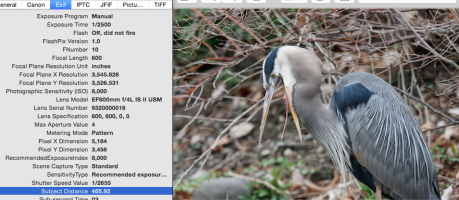
How long is the tongue of a great blue heron? In this uncropped GBH shot which EXIF shows was taken at a distance of 466 m, his tongue length is apparently 4.5 meters. Someone call Guinness Book, quick!
 

Attachments

  • Pththth.png
    Pththth.png
    549.7 KB · Views: 152
Upvote 0
Neuro,

I see in your screenshot that the "Focal plane resolution unit" states inches as the unit. What is the unit of the subject distance, I don't see it mentioned in this screenshot) ? Meter would be strange as it would mix metric and imperial units. Could it be "feet" (I know, still about 140 m) ?

Mario
 
Upvote 0
Mario said:
Neuro,

I see in your screenshot that the "Focal plane resolution unit" states inches as the unit. What is the unit of the subject distance, I don't see it mentioned in this screenshot) ? Meter would be strange as it would mix metric and imperial units. Could it be "feet" (I know, still about 140 m) ?

I presume it's meters. Exiftool reports that shot as 'Subject Distance: 465.92 m' (and reports the Focal plane resolution unit as inches, as does Preview). But it's a bit annoying – as my wife's physics teacher said, "No units, no answer."
 
Upvote 0
neuroanatomist said:
... as my wife's physics teacher said, "No units, no answer."

That's what I have been told by my teachers and that's what I tell everyone who drops numbers without units on my desk ;).

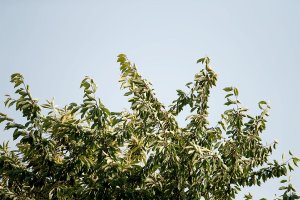
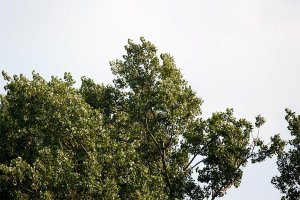
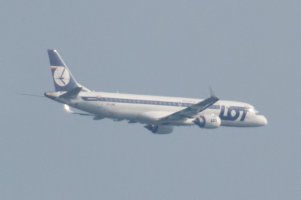
I just did a quick and dirty test. I dug up my range finder from my airgun shooting days to determine the distance and shot a few test shots (with the camera, not the airgun ;-)) at 75m, 245 m and a plane that was passing in the far distance (a few kilometres I guess, my range finder only goes to about 500 m) on its way to Brussels Airport.

75 m subject
CR2:
Focus distance upper: 77.3 m
Focus distance lower: 55.12 m

JPG:
Approximate focus distance: 65.1 m

So it's 10 m off.

245 m subject
CR2:
Focus distance upper: 435.58 m
Focus distance lower: 81.91 m

JPG:
Approximate focus distance: 254 m

Surprisingly close, didn't test repeatability

The plane in the far distance
CR2:
Focus distance upper: inf
Focus distance lower: 81.91 m

JPG:
Approximate focus distance: 4 294 967 295 m

Nope, it was not that far as Brussels Airport is about 20 km (as the crow flies) from here ;).

Mario
 

Attachments

  • Distance 75 m_1DXII011775.jpg
    Distance 75 m_1DXII011775.jpg
    273.7 KB · Views: 138
  • Distance 245 m_1DXII011776.jpg
    Distance 245 m_1DXII011776.jpg
    323.8 KB · Views: 141
  • Distance unknown_1DXII011777.jpg
    Distance unknown_1DXII011777.jpg
    277 KB · Views: 150
Upvote 0
So there a some different, but not always accurate methods to get the distance of the targets.

Is there a possibility to get an evidence how far a target has been away while shooting, when following facts are given: focal lenght, sensor size, picture size and size of the target? Is anything else needed?
 
Upvote 0
picturefan said:
So there a some different, but not always accurate methods to get the distance of the targets.

Is there a possibility to get an evidence how far a target has been away while shooting, when following facts are given: focal lenght, sensor size, picture size and size of the target? Is anything else needed?
Yes. To a good approximation (image size)/(object size) = (focal length)/(target distance) if far away.
 
Upvote 0
There was this discussion of an "ISO--shutter-speed tradeoff" when shooting wildlife with unperfected conditions, i.e. cloudy, dim light, in a forest or some distance between you and your target.
Got a test that day with opposite settings (yes, not laboratory conditions) but I think it´s worth a look for those that are interested in:
left: iso 320, 1/20 vs. right: iso 3200/180
all 7DII @ 400mm, f5.6, beanbag on a tree trunk, IS, liveview focus and out of the cam, distance approx. 40m

Imho it´s allright with the high iso, not so with sharpness of the tree trunk, but remember, the shown is not sharpened nor denoised...
 

Attachments

Upvote 0
neuroanatomist said:
There are three possible solutions:

[list type=decimal]
[*]Move closer
[*]Get a longer lens
[*]Accept that there are shots you simply will not be able to get
[/list]
My 3 best pieces of gear for bird photography are a portable hunting blind, a comfy folding chair, and a tripod. If you want a sharp bird image, get close. Heavy cropping, no matter how great your skill and gear is, just won't compare.
 
Upvote 0
Don Haines said:
neuroanatomist said:
There are three possible solutions:

[list type=decimal]
[*]Move closer
[*]Get a longer lens
[*]Accept that there are shots you simply will not be able to get
[/list]
My 3 best pieces of gear for bird photography are a portable hunting blind, a comfy folding chair, and a tripod. If you want a sharp bird image, get close. Heavy cropping, no matter how great your skill and gear is, just won't compare.

Yes, here it´s not so much about the bird, it´s more about iso and shutterspeed. Hard which way to choose.

(But, for my personal preference, the trunk is not cropped that much, isn`t it?)
 
Upvote 0
Don Haines said:
neuroanatomist said:
There are three possible solutions:

[list type=decimal]
[*]Move closer
[*]Get a longer lens
[*]Accept that there are shots you simply will not be able to get
[/list]
My 3 best pieces of gear for bird photography are a portable hunting blind, a comfy folding chair, and a tripod. If you want a sharp bird image, get close. Heavy cropping, no matter how great your skill and gear is, just won't compare.

Folding chairs are always best!

Since years I´m trying to get usable raptor shots in mountain regions. That´s when, in my case, cropping comes into play.
I rarely ever was able to approach closer than 50m. This was one strong reason to buy 7DII + 100-400 + Conv. But inbetween 50-100m distances there never were fully satisfying results. Is that s.th. you would confirm?
 
Upvote 0
picturefan said:
There was this discussion of an "ISO--shutter-speed tradeoff" when shooting wildlife with unperfected conditions, i.e. cloudy, dim light, in a forest or some distance between you and your target.
Got a test that day with opposite settings (yes, not laboratory conditions) but I think it´s worth a look for those that are interested in:
left: iso 320, 1/20 vs. right: iso 3200/180
all 7DII @ 400mm, f5.6, beanbag on a tree trunk, IS, liveview focus and out of the cam, distance approx. 40m

Imho it´s allright with the high iso, not so with sharpness of the tree trunk, but remember, the shown is not sharpened nor denoised...

It's horrible at iso 3200. Look at the tail feathers each side. If you denoise then it will lose details. If you sharpen without denoising it will exacerbate the noise.
 
Upvote 0
AlanF said:
picturefan said:
There was this discussion of an "ISO--shutter-speed tradeoff" when shooting wildlife with unperfected conditions, i.e. cloudy, dim light, in a forest or some distance between you and your target.
Got a test that day with opposite settings (yes, not laboratory conditions) but I think it´s worth a look for those that are interested in:
left: iso 320, 1/20 vs. right: iso 3200/180
all 7DII @ 400mm, f5.6, beanbag on a tree trunk, IS, liveview focus and out of the cam, distance approx. 40m

Imho it´s allright with the high iso, not so with sharpness of the tree trunk, but remember, the shown is not sharpened nor denoised...

It's horrible at iso 3200. Look at the tail feathers each side. If you denoise then it will lose details. If you sharpen without denoising it will exacerbate the noise.

Indeed it is, Alan. And it's horrible at 1/20 too (motion blur). He has got very good advice here, but doesn't seem to do much with it.

Mario
 
Upvote 0
Hi,

Interesting to read this topic. I just send mu 7DII back for the second time. Sharpness was not a problem after AFMA, but AutoISO got corrupt after a while.
It got stuck on 6400 (or whatever the highest setting was in the menu system). After turning the camera off for a while, it got reset and was working normal again. In liveview, the AutoISO worked perfect, always.

Anybody else had a problem like this before?

Both images are handheld, using the 100-400 II and TC 1.4x III.
You'll see in the second image that the ISO went up to 6400 while it should have been 800 or so. It's pretty amazing actually how much detail I could recover from this image considering how much it was blown out.

Images are processed using DxO Optics Pro.

Greetings,
Sigurd
 

Attachments

  • _S7D0416.jpg
    _S7D0416.jpg
    1.7 MB · Views: 136
  • _S7D0429.jpg
    _S7D0429.jpg
    4.4 MB · Views: 186
Upvote 0
picturefan said:
There was this discussion of an "ISO--shutter-speed tradeoff" when shooting wildlife with unperfected conditions, i.e. cloudy, dim light, in a forest or some distance between you and your target.
Got a test that day with opposite settings (yes, not laboratory conditions) but I think it´s worth a look for those that are interested in:
left: iso 320, 1/20 vs. right: iso 3200/180
all 7DII @ 400mm, f5.6, beanbag on a tree trunk, IS, liveview focus and out of the cam, distance approx. 40m

I choose neither. I suspect the ISO 3200 shot could be processed into a satisfactory image from a noise/detail standpoint, but I'd have deleted it at triage for composition reasons (the bird is looking away). As Mario points out, the 1/20 s shot has subject motion blur – as I stated previously, 1/20 s exposure + living subject just doesn't cut it.
 
Upvote 0
neuroanatomist said:
picturefan said:
There was this discussion of an "ISO--shutter-speed tradeoff" when shooting wildlife with unperfected conditions, i.e. cloudy, dim light, in a forest or some distance between you and your target.
Got a test that day with opposite settings (yes, not laboratory conditions) but I think it´s worth a look for those that are interested in:
left: iso 320, 1/20 vs. right: iso 3200/180
all 7DII @ 400mm, f5.6, beanbag on a tree trunk, IS, liveview focus and out of the cam, distance approx. 40m

I choose neither. I suspect the ISO 3200 shot could be processed into a satisfactory image from a noise/detail standpoint, but I'd have deleted it at triage for composition reasons (the bird is looking away). As Mario points out, the 1/20 s shot has subject motion blur – as I stated previously, 1/20 s exposure + living subject just doesn't cut it.

Oh get over yourself Neuro, the guy is using a beanbag and a tree stump, 1/20 should be fine, DOH! ;)

As Mario says, great advice so far, but it goes against his personal beliefs and expectations so is reluctant to let his brain acknowledge what his eyes confirm. It must be a fault of the camera, it can't be my fault.................
 
Upvote 0
neuroanatomist said:
picturefan said:
There was this discussion of an "ISO--shutter-speed tradeoff" when shooting wildlife with unperfected conditions, i.e. cloudy, dim light, in a forest or some distance between you and your target.
Got a test that day with opposite settings (yes, not laboratory conditions) but I think it´s worth a look for those that are interested in:
left: iso 320, 1/20 vs. right: iso 3200/180
all 7DII @ 400mm, f5.6, beanbag on a tree trunk, IS, liveview focus and out of the cam, distance approx. 40m

I choose neither. I suspect the ISO 3200 shot could be processed into a satisfactory image from a noise/detail standpoint, but I'd have deleted it at triage for composition reasons (the bird is looking away). As Mario points out, the 1/20 s shot has subject motion blur – as I stated previously, 1/20 s exposure + living subject just doesn't cut it.

At minimum, it doesn't provide good evidence. I suggest picturefan try a static subject at similar distance. Use artificial lighting if needed to get the shutter speed to 1/320 or faster. I.e., eliminate all other possibilities before claiming something inherent in the camera.
 
Upvote 0
I checked out more the EXIF subject distances for longer distances as I have been taking photos of a peregrine falcon at about 40-45m up the library tower from similar spots with different cameras and lenses over the years. As I recalled, these readings are very variable, unlike those for the shorter distancea of a few metres to 20-30m. I would guess it's the physical calibration of the lens at longer distances. As we all know, looking at the distance scale, the further away, the closer the distance markings get, and the EXIFs are reporting back on the mechanical readings. Maybe?
 
Upvote 0
privatebydesign said:
neuroanatomist said:
picturefan said:
There was this discussion of an "ISO--shutter-speed tradeoff" when shooting wildlife with unperfected conditions, i.e. cloudy, dim light, in a forest or some distance between you and your target.
Got a test that day with opposite settings (yes, not laboratory conditions) but I think it´s worth a look for those that are interested in:
left: iso 320, 1/20 vs. right: iso 3200/180
all 7DII @ 400mm, f5.6, beanbag on a tree trunk, IS, liveview focus and out of the cam, distance approx. 40m

I choose neither. I suspect the ISO 3200 shot could be processed into a satisfactory image from a noise/detail standpoint, but I'd have deleted it at triage for composition reasons (the bird is looking away). As Mario points out, the 1/20 s shot has subject motion blur – as I stated previously, 1/20 s exposure + living subject just doesn't cut it.

Oh get over yourself Neuro, the guy is using a beanbag and a tree stump, 1/20 should be fine, DOH! ;)

As Mario says, great advice so far, but it goes against his personal beliefs and expectations so is reluctant to let his brain acknowledge what his eyes confirm. It must be a fault of the camera, it can't be my fault.................


As I stated, these are testing pictures, so no claim to send them to competitions. Please do not evaluate the artisitc outcome. Do not evaluate the dove.
Just have a look at the tree trunk.

PBD, I´ll be curious if you find motion blur. You´ll probably argue about beanbag on tree trunk technique, which is in fact a really good DIY technique. But have you ever tried by yourself?

Please find attached a test picture (late night test. Again: no artistic claim), target ca. 7m away:
400mm, 5.6, 1s exposure, beanbag over arm of a chair - less stable than a tree trunk!).

Maybe here we can agree about sharpness (no motion blur, that´s for sure). Only to defend all the beanbags out there on this planet! ;)
 

Attachments

  • test_beanbag1.jpg
    test_beanbag1.jpg
    59.2 KB · Views: 151
Upvote 0
After we find agreement, that beanbags are fine and it´s not all about the dove in this "only used for testing"-pictures, we could continue in finding answers.

We all know that fast shutter speeds (1/500 or faster), low iso (640 and less) and close distances (around 10m) are the best options to achieve great pictures with high sharpness.

Anyway, some like PBD and Mario think that they need to explain this commonplaces, in a kind of direct wording. No, thank you!

If you want to help, what is really appreciated, please help to find out how to improve sharpness if conditions are far from optimum.

I wrote about the example of raptor-shooting in the mountains. Here we find real-life conditions!
Less or more cloudy days or dim light to avoid harsh shadows, but the need to shoot at high shutter speeds to gain sharpness with moving subjects. That is the case you find the most.
What to do?

1) stay at home, because you never get sharp pictures with your 7DII and 100-400 combo
2) be happy with mediocre sharpness and keep putting all your money in expensive photo-gear
3) find out about how others/professionals achieve higher sharpness - with this very combo (not with FF and the big whites, I don´t have them right now.)
( 4) if all requirements for sharp pictures are fullfilled, but results are not as good as they should be, get your equipment inspected)

Maybe some real pros or enthusiasts, knowing the situation, might help please.

Thank you.
 
Upvote 0
picturefan said:
Less or more cloudy days or dim light to avoid harsh shadows, but the need to shoot at high shutter speeds to gain sharpness with moving subjects. That is the case you find the most.
What to do?

1) stay at home, because you never get sharp pictures with your 7DII and 100-400 combo
2) be happy with mediocre sharpness and send more money to canon - just for nothing
3) find out about how others/professionals achieve higher sharpness - with this very combo (not with FF and the big whites, I don´t have them right now.)

Maybe some real pros or enthusiasts, knowing the situation, might help please.

Thank you.

All three are perfectly viable and it depends on what you are trying to achieve and why
Many people want a record shot of what they saw and quality is irrelevant, but will try to get as good a shot as they can. So onto your options:
1) this option is likely to be taken by detail freaks as a matter of principle
2) this suits those who are happy with record shots. Many will have 'consumer grade' lenses such as the 70-300 USM and crop where they need to and still be happy with the results knowing it is the best they could do under the circumstances
3) Professionals would probably have FF and 'big whites' so that is a sort of non-argument. I guesstimate that amateurs, who do not need to count the cost-benefit in cash terms the way the pros need to, constitute a huge part of the 'FF and big white' market, buying the combo because their pay packet means they can afford it.

If you need to use high ISOs and have images that are worthy of a centre spread then the 1D series (especially the new 1Dx2) is likely your only option.

So what you really want to know is how to make best use of what you have. If you bear in mind that even for human portraits, the recommendation is for shutter speeds above 1/60 or 1/100 sec to counteract the slight movements of even a model trying to stay still, then as has been said many times above, assessing a camera's sharpness at even lower shutter speeds is dodgy to say the least.
Capra's quote “If your pictures aren’t good enough, you’re not close enough.” is especially true for wildlife where it is tempting to subsitute cropping for field craft - and getting close also offsets some element of camera shake which gives you more latitude on shutter speed.
And if you can't get closer aim to get behavioural shots that rely less on super-duper-zoom-in-and-crop t have impact.

As for ISO, when I look at these camera comparisons it is surprising how one camera can have more noise yet show more detail. So my recently developed take on this is to use ISO get higher shutter speed, and if possible use high ISO to 'expose to the right' so that the noise is reduced in darker areas (though this is more practical where the background is consistent regards lighting).

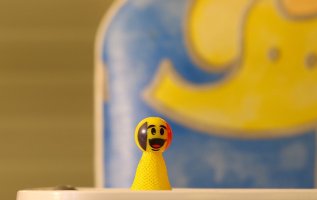
All this pointless of course if the camera ain't focussing and I think man y comments on this thread are along the lines of we have not yet seen any photos where the picture would be unambiguously sharp, nor any rigorous testing. And your picture of the little yellow fella suggests it is focusing OK.

But you have missed a 4th option which is to be outside anyway but not bother taking the photo because it will not meet their standards in the first place and without the camera to your eye just enjoy the scenery and the wildlife as nature intended.

 
Upvote 0