High ISO comparo: 5DIII vs. D800

Status
Not open for further replies.
jrista said:
I would REALLY like to hear from a broad set of editors and art directors to know if that line has even a scrap of truth in it. I don't think DR or even noise are anywhere near the top things on an editors mind when they are critiquing photographs for publication.For one, no one can even gauge the dynamic range of a photo by eyeballing it, and even if they did measure it...what are they measuring? The DR capability of the camera you used to take the shot, or your fully post-processed image that has a myriad of exposure tweaks, curve adjustments, color tweaks, noise reduction, and sharpening applied?

Of course they're not sitting there measuring the DR or noise of final edited that images submitted to them. They judge an image just like anyone else based on the immediate visual, emotional, and artistic value it captures. That said, if there are overt technical deficiencies in the image, be it excessive noise, clipped highlights, or lack of shadow detail, they're going to notice. I'd say this is the photographer's fault rather than the equipment's fault in most instances, as it's the photographer's job to know his equipment and work around its limitations.

Assuming you actually did capture a photo with 14 stops of dynamic range, does that even matter a wit for the final presentation format...in this case print?

The short answer is yes, it absolutely matters. Unfortunately, you have to accept the fact that the image you capture isn't going to reproduce in print nearly as nicely on paper as it does in it's original digital glory. Rather than say, "oh well, it's not going to reproduce anyway" and put in a half-ass effort, it means you put in even more effort to get your digital captures as good as humanly possible.

If your photos are so noisy or have such atrocious DR that an editor dumps them, then the problem is far more likely that you aren't exposing or lighting your scene properly than the fact that the camera shows a minor amount of banding noise in the lower few bits of the 14 available.

Did I ever imply that this is the case? If you can't expose an image properly, you're not going to work professionally. Case closed.

As for IQ...well, even the crummy samples Canon has offered demonstrate that the 5D III will take photos with stunning IQ when they are exposed properly (and that really is the goal).

5DII? Please. I've taken images with my 20D and 1DsIII that are indistinguishable from each other. With enough extra effort in the field and post production, you can get stunning results from lesser gear. That doesn't change the fact that spending hours of additional time in post production isn't cost effective.

There are SO many other things that make a photograph, and many more that make it art. Whether your camera is a stop or two less capable than the competitions is not going to cost you your job with that fancy magazine.

I think we're actually in agreement. My point was that regardless of how an image is used in print, the impact the digital files makes on an editor or art director on a fancy monitor is very important. A stop or two of DR or noise isn't going to be the difference between paying your bills or going broke, but to say it doesn't matter because it won't show up in print is ridiculous. The more latitude you have in your files, the greater the potential to save you time in the field and deliver a better product after the post production process.
 
Upvote 0
V8Beast said:
A stop or two of DR or noise isn't going to be the difference between paying your bills or going broke, but to say it doesn't matter because it won't show up in print is ridiculous. The more latitude you have in your files, the greater the potential to save you time in the field and deliver a better product after the post production process.

+1 .... which is why I keep the iso as low as possible and why I have become a flash fanatic
 
Upvote 0
briansquibb said:
V8Beast said:
A stop or two of DR or noise isn't going to be the difference between paying your bills or going broke, but to say it doesn't matter because it won't show up in print is ridiculous. The more latitude you have in your files, the greater the potential to save you time in the field and deliver a better product after the post production process.

+1 .... which is why I keep the iso as low as possible and why I have become a flash fanatic

You guys are missing my point. Assuming the worst case scenario, the 5D III hasn't changed. Its not better, but it also isn't worse. Millions of photographers have used the 5D II as well as cameras with much worse read noise and the same DR as offered by Canon cameras for years, and its never been a problem. Look at read noise levels for digital MF cameras, touted as offering FAR better quality than any lesser camera by professionals who use them every day for publication work. Digital MF has relatively poor QE (15-25%), high to very high read noise (15-30 electrons), limited maximum saturation relative to the likes of any current Canon or Nikon/Sony (less than half as much in more cases than not), and they all top out at around 11.5 stops of DR or less.

The Leica M9, also considered one of the best professional grade cameras on the market, has consistent read noise of about 15.5 e-, maximum saturation at lowest ISO of 30000, and maximum DR of 11.1 stops. There have been reports of banding issues with several Leica sensor designs as far back as the M7, and the M8 had particularly bad banding...but it was still considered a better camera than anything from Canon or Nikon...since banding only ever exhibited in shadows, and was relatively easily mitigated in post.

You can make the argument that better DR may make your life easier. If you regularly find yourself dragging up the shadows, then you might as well jump ship and head over to Nikon where the grass is greener. Or you could ETTR, utilize the sensor DR better (Canon does seem to have a bit more highlight headroom than Nikon by about 1/2 a stop based on DPR charts), and correct exposure at the click of a button in post (or, in the case of LR, you could simply set a negative exposure bias in the default import profile for your cameras, and never actually have to worry about it again...no time wasted whatsoever.) But the simple fact of the matter is the cameras that are literally considered THE BEST on the market by most professionals who shoot for print and publication on a daily basis, the likes of Hasselblad, Phase One, Aptus, etc. are no better or worse than anything Canon is or has been putting out. Actually, with the 1D IV, 7D, and 5D II/III, Canon is better on a technical level...although we all know that still doesn't matter a wit when it comes to producing good photographs.
 
Upvote 0
jrista said:
You guys are missing my point. Assuming the worst case scenario, the 5D III hasn't changed. Its not better, but it also isn't worse. Millions of photographers have used the 5D II as well as cameras with much worse read noise and the same DR as offered by Canon cameras for years, and its never been a problem. Look at read noise levels for digital MF cameras, touted as offering FAR better quality than any lesser camera by professionals who use them every day for publication work. Digital MF has relatively poor QE (15-25%), high to very high read noise (15-30 electrons), limited maximum saturation relative to the likes of any current Canon or Nikon/Sony (less than half as much in more cases than not), and they all top out at around 11.5 stops of DR or less.

The Leica M9, also considered one of the best professional grade cameras on the market, has consistent read noise of about 15.5 e-, maximum saturation at lowest ISO of 30000, and maximum DR of 11.1 stops. There have been reports of banding issues with several Leica sensor designs as far back as the M7, and the M8 had particularly bad banding...but it was still considered a better camera than anything from Canon or Nikon...since banding only ever exhibited in shadows, and was relatively easily mitigated in post.

You can make the argument that better DR may make your life easier. If you regularly find yourself dragging up the shadows, then you might as well jump ship and head over to Nikon where the grass is greener. Or you could ETTR, utilize the sensor DR better (Canon does seem to have a bit more highlight headroom than Nikon by about 1/2 a stop based on DPR charts), and correct exposure at the click of a button in post (or, in the case of LR, you could simply set a negative exposure bias in the default import profile for your cameras, and never actually have to worry about it again...no time wasted whatsoever.) But the simple fact of the matter is the cameras that are literally considered THE BEST on the market by most professionals who shoot for print and publication on a daily basis, the likes of Hasselblad, Phase One, Aptus, etc. are no better or worse than anything Canon is or has been putting out. Actually, with the 1D IV, 7D, and 5D II/III, Canon is better on a technical level...although we all know that still doesn't matter a wit when it comes to producing good photographs.

Perhaps we are talking at cross purpose here.

My point is to maximise the DR because that gives the best possible image with some lattitude to play with. Go for high ISO and you throw that DR away. High ISO looks very flat colourwise so why use it unless you HAVE to?
 
Upvote 0
jrista said:
I trust them because they have solid track records about being accurate and meticulous about their camera testing. The only track record I have for most of the DPR tech heads is that they like to tear up Canon raw files and complain about them...A LOT. They could claim (or literally) have 10 Ph.D's...that wouldn't change their track record.

That is interesting because the DPR tech heads have a solid track record of ISO 100 DR measurements matching up with DxO. ;) While DPR does not. ;)

They enjoy complaining about Canon DR, I won't fault them for doing what they enjoy...rather than getting out into the real world to enjoy photography...although I think they might be happier doing the latter. ;)

Some of them actually have much more extensive galleries, from around the world, than the people telling them to go out and shoot. ;)


That is pure assumption, and will be until the camera actually hits the streets and non-beta software is used to evaluate IQ.

Maybe production models will vary appreciable from the beta cams, but that has not been the case in the past.
Beta software is not being used for the DR tests. The only place people have used beta software is peeking at high ISO performance where it seems to show the 5D3 doing better than the 5D2 ;).

Even testing with a pre-production sample and beta software, we do know that Canon HAS DELIVERED several improvements with their latest sensors: two stops better Native ISO for both the 1D X and 5D III;

Yes, but two stop more native ISO is different than 2 stops better SNR in RAW. Not that is a bad thing though.
Even Canon themselves don't claim 2 stops better SNR for RAW.

elimination of fixed pattern noise leaving behind more appealing random noise;

Not at low ISO, although the horizontal banding appears to be 100% gone and even the vertical doesn't appear to show up as much at high ISO (although it hasn't been carefully tested yet). But yes it does seem that the high ISO noise will look nicer, less clumped, less giant chomra-blotched, no horizontal banding at all and potentially less objectional vertical banding (at high iso only). Certainly nice improvements, no doubt.

and 6fps on the 5D III (almost double its predecessor WITH an increase in resolution, even though it was modest.)

6.0 isn't almost double 3.9 unless the D800 as almost double the MP of the 5D3 and it does not.

That said getting to 6 is big since that is the absolute minimum where it just begins to appreciably help for sports.
I wish the 6.9fps or 7.5fps rumors had been correct though since then you'd really be talking. But 6fps will sometimes get you more than one good frame, nearly as often as not, but 7-8fps almost always will. Still it is much better than 4fps which hardly ever will and it's much better than even 5fps which will only do that from time to time.

Saying Canon has not delivered even a "single" improvement over the last four years is just flat out wrong, even in the case of DR. Canon has consistently delivered improvements to DR and low ISO noise...they have just been smaller and smaller improvements as they have approached 12 stops.

When did I say they haven't offered a single improvement? I've said that the video might be much better, the fps are up, the AF should hopefully be way better, high ISO should be somewhat better.

As for DR they really haven't improved that for 4.5 years though (at base ISO).
 
Upvote 0
briansquibb said:
Perhaps we are talking at cross purpose here.

My point is to maximise the DR because that gives the best possible image with some lattitude to play with. Go for high ISO and you throw that DR away. High ISO looks very flat colourwise so why use it unless you HAVE to?

I guess I'm confused, as I don't remember saying to go for high ISO. I agree, you should use the lowest ISO you can at all times to maximize DR. But you can do things like expose to the right at ISO 100 to make more effective use of the DR available there, correct the overexposure in post, and push down the noise floor digitally. (Certainly you may have some limitations there if your shooting lots of motion or need very deep DOF...however in those cases you are probably shooting at a much higher ISO to start with. In the case of landscapes or any kind of still scenes, your ability to ETTR is extreme.) Canon has a lot of highlight headroom (they tend to favor highlights at the cost of shadows, where as Nikon seems to generally be slightly worse on the highlights for much better shadows), and you can push exposure pretty far before you actually blow out highlights.

I'm not a working professional who regularly creates publishable work, but I have spent several years with Canon cameras exposing bright subjects in the dark. Namely the moon, where its possible to push exposure so far to the right it looks like you have nothing but a white disk, and still not blow out the highlights. You have a TREMENDOUS amount of room to recover at that point, and noise in the low frequencies is rarely a problem. Personally, I have found Canon's low ISO DR to be quite usable and very versatile when you make effective use of the highlight headroom that is available...far more usable than the worries over low ISO read noise that you get off of DPR and CR forums would seem to indicate.
 
Upvote 0
People keep touting the notion that ISO performance is increased, but DR at low ISO is not. I'm trying to understand how this is possible... is the following valid:

[list type=decimal]
[*]Increased QE due to better microlenses = increased SNR across the board. Coupled w/ lower gain, this decreases per pixel noise (shot noise is decreased). You'd think this'd also increase DR even at low ISO by decreasing noise at the lower end...
[*]No improvement in read noise means less usable data on the lower end
[/list]

So, ISO performance is increased b/c for any equivalent ISO setting on the, say, 5DII, the 5DIII is actually receiving more photons... which translates to higher SNR.

BUT, DR is only slightly improved at low ISO b/c absolute SNR increase for dark pixels is small compared to absolute SNR increase for brighter pixels (e.g. say read noise on 5DII & 5DIII is 5e-; QE is 0.5 on 5DIII vs. 0.25 on 5DII | then: for a signal of 20e- SNR of 5DIII vs 5DII would be 2 vs. 1, but for a signal of 2000e- SNR of 5DIII vs 5DII would be 200 vs. 100)?

Meaning DR is largely determined by full-well capacity, bit-depth of ADC, & read noise? Neither of which, it'd seem, have changed much for the 5DIII compared to 5DII?

(This of course leaves out practical usability of low-end due to banding, which is another issue in an of itself... less FPN = more forgiving raising of shadows since we're so sensitive to patterns).

Just trying to understand these arguments being thrown around... thanks!
 
Upvote 0
sarangiman said:
People keep touting the notion that ISO performance is increased, but DR at low ISO is not. I'm trying to understand how this is possible... is the following valid:

[list type=decimal]
[*]Increased QE due to better microlenses = increased SNR across the board. Coupled w/ lower gain, this decreases per pixel noise (shot noise is decreased). You'd think this'd also increase DR even at low ISO by decreasing noise at the lower end...
[*]No improvement in read noise means less usable data on the lower end
[/list]

So, ISO performance is increased b/c for any equivalent ISO setting on the, say, 5DII, the 5DIII is actually receiving more photons... which translates to higher SNR.

BUT, DR is only slightly improved at low ISO b/c absolute SNR increase for dark pixels is small compared to absolute SNR increase for brighter pixels (e.g. say read noise on 5DII & 5DIII is 5e-; QE is 0.5 on 5DIII vs. 0.25 on 5DII | then: for a signal of 20e- SNR of 5DIII vs 5DII would be 2 vs. 1, but for a signal of 2000e- SNR of 5DIII vs 5DII would be 200 vs. 100)?

Meaning DR is largely determined by full-well capacity, bit-depth of ADC, & read noise? Neither of which, it'd seem, have changed much for the 5DIII compared to 5DII?

(This of course leaves out practical usability of low-end due to banding, which is another issue in an of itself... less FPN = more forgiving raising of shadows since we're so sensitive to patterns).

Just trying to understand these arguments being thrown around... thanks!

Just to offer some (to our best knowledge) real numbers for the 5D II, 7D, and 1D IV, if that helps anything (from sensorgen.info, based on DXO testing):

5D II @ ISO 100
Q.E.: 33%
Pixel Size: 6.4 microns
Saturation: 64600
Read Noise: 27.8 e-
DR Stops: 11.2

7D @ ISO 100
Q.E.: 41%
Pixel Size: 4.2 microns
Saturation: 20187
Read Noise: 8.6 e-
DR Stops: 11.2

1D IV @ ISO 100
Q.E.: 44%
Pixel Size: 5.7 microns
Saturation: 48702
Read Noise: 16.6 e-
DR Stops: 11.5
 
Upvote 0
jrista said:
You can make the argument that better DR may make your life easier.

I don't mean to sound elitist, but this isn't something to be taken lightly. If you're taking photos for fun, I can see how spending 1 minute in post production to extend the DR of an image vs. spending 10 minutes isn't a big deal. However, if you're working on a tight deadline, need to process six dozen images to present to a client, and your livelihood depends on the quality of your images, out-of-camera files that "make your life easier" in post production isn't a luxury, it's a necessity.

Obviously, this doesn't only apply to DR, but also noise, sharpness, color reproduction, contrast, etc. It all adds up, and any time you can save in post production is time you can be spending behind the lens and making more money. I don't know about you, but I'd rather be shooting than staring into a computer screen and fiddling with a mouse :D

If you regularly find yourself dragging up the shadows, then you might as well jump ship and head over to Nikon where the grass is greener. Or you could ETTR, utilize the sensor DR better (Canon does seem to have a bit more highlight headroom than Nikon by about 1/2 a stop based on DPR charts), and correct exposure at the click of a button in post

I would certainly hope that anyone attempting to earn a living with Canon gear utilizes a technique as simple as ETTR :) Like you said, Canon files are incredibly good at highlight recovery, which makes ETTR a very useful tool in extending DR. My point is that over time, everyone is going to learn tricks like ETTR, or something as basic as using reflectors, fill light, multiple exposures, etc to extend DR. You're going to do that regardless of whether you shoot Canon or Nikon. Ultimately, however, a file with more latitude right "out of the box" will help you create the best image possible.

I'm not quite sure how this thread turned into a talk about DR, but DR is just one of MANY factors that determine IQ. Even if the D800 proves to have better DR than the 5DIII in the real world, I can just as easily decide that I hate it due to color reproduction, contrast, and sharpness that aren't my cup of tea. I remember the first shoot I did with the 5DC. I was blown away by the film-like image quality of the files. It was like I was shooting color slides again, and the color, contrast, and sharpness were simply stunning. I'd never seen such incredible IQ on any digital camera before. I didn't care how its DR or ISO measured on some on chart posted by some geek on the internet. The images just had that certain look and feel to them that I cherished, and at the end of the day, that's all that mattered. IMHO, that's why you have to try these things out in the real world before determining a winner.
 
Upvote 0
V8Beast said:
I'm not quite sure how this thread turned into a talk about DR, but DR is just one of MANY factors that determine IQ.

The thread is about high ISO - and I put forward the fact that high ISO significantly impacts DR

V8Beast said:
Even if the D800 proves to have better DR than the 5DIII in the real world, I can just as easily decide that I hate it due to color reproduction, contrast, and sharpness that aren't my cup of tea. I remember the first shoot I did with the 5DC. I was blown away by the film-like image quality of the files. It was like I was shooting color slides again, and the color, contrast, and sharpness were simply stunning. I'd never seen such incredible IQ on any digital camera before. I didn't care how its DR or ISO measured on some on chart posted by some geek on the internet. The images just had that certain look and feel to them that I cherished, and at the end of the day, that's all that mattered. IMHO, that's why you have to try these things out in the real world before determining a winner.

Now you know how I feel about the 1Ds3 in comparison to the 5D2
 
Upvote 0
V8Beast said:
jrista said:
You can make the argument that better DR may make your life easier.

I don't mean to sound elitist, but this isn't something to be taken lightly. If you're taking photos for fun, I can see how spending 1 minute in post production to extend the DR of an image vs. spending 10 minutes isn't a big deal. However, if you're working on a tight deadline, need to process six dozen images to present to a client, and your livelihood depends on the quality of your images, out-of-camera files that "make your life easier" in post production isn't a luxury, it's a necessity.

Obviously, this doesn't only apply to DR, but also noise, sharpness, color reproduction, contrast, etc. It all adds up, and any time you can save in post production is time you can be spending behind the lens and making more money. I don't know about you, but I'd rather be shooting than staring into a computer screen and fiddling with a mouse :D

Certainly, I don't disagree. However, if your spending that much time tweaking every single photo one at a time, your not using modern post-processing tools effectively. Lightroom, for example, supports per-camera import profiles that can automatically apply default processing to every file you import.

In the case of my 7D, it has a bit of an aggressive low-pass filter so it always needs a little sharpening, and I prefer to import with flat tone curves and the Canon Neutral profile (amongst other things.) I simply took one photo, applied my base adjustments, and created an import profile based on that images adjustments. Every image I import from my 7D gets a fairly significant set of standard adjustments that prepare my photos for a little more tweaking. I also created a couple presets named after the camera model and intention of the preset (such as "Canon 7D 1EV ETTR", "Canon 7D 2EV ETTR", etc.) which can be applied at the click of a button to apply further adjustments automatically to correct for how I may have used ETTR on any given photo. If all the photos in a set need the same preset, I can apply on import, otherwise I can apply it to a single photo, individually select any others that need the same preset, and sync settings. However the presets are applied, its always fast, and the remainder of per-photo tweaks are the same tweaks you might need to do if you had better shadow recovery built into the camera.

Just because to change your approach to utilize the capabilities of a camera better does not mean you have to spend an extra, inordinate amount of time in post "compensating" for the "deficiencies" of your gear. Just like you need to know how to use your gear, you should also know how to use your post-processing tools. If you ARE spending a tremendous amount of time in post adjusting your photos, then you can save yourself a LOT of time by learning your post-process software as well as you know your gear. So I entirely agree...minimize time spent in post; what camera you have has no bearing on that.

V8Beast said:
If you regularly find yourself dragging up the shadows, then you might as well jump ship and head over to Nikon where the grass is greener. Or you could ETTR, utilize the sensor DR better (Canon does seem to have a bit more highlight headroom than Nikon by about 1/2 a stop based on DPR charts), and correct exposure at the click of a button in post

I would certainly hope that anyone attempting to earn a living with Canon gear utilizes a technique as simple as ETTR :) Like you said, Canon files are incredibly good at highlight recovery, which makes ETTR a very useful tool in extending DR. My point is that over time, everyone is going to learn tricks like ETTR, or something as basic as using reflectors, fill light, multiple exposures, etc to extend DR. You're going to do that regardless of whether you shoot Canon or Nikon. Ultimately, however, a file with more latitude right "out of the box" will help you create the best image possible.
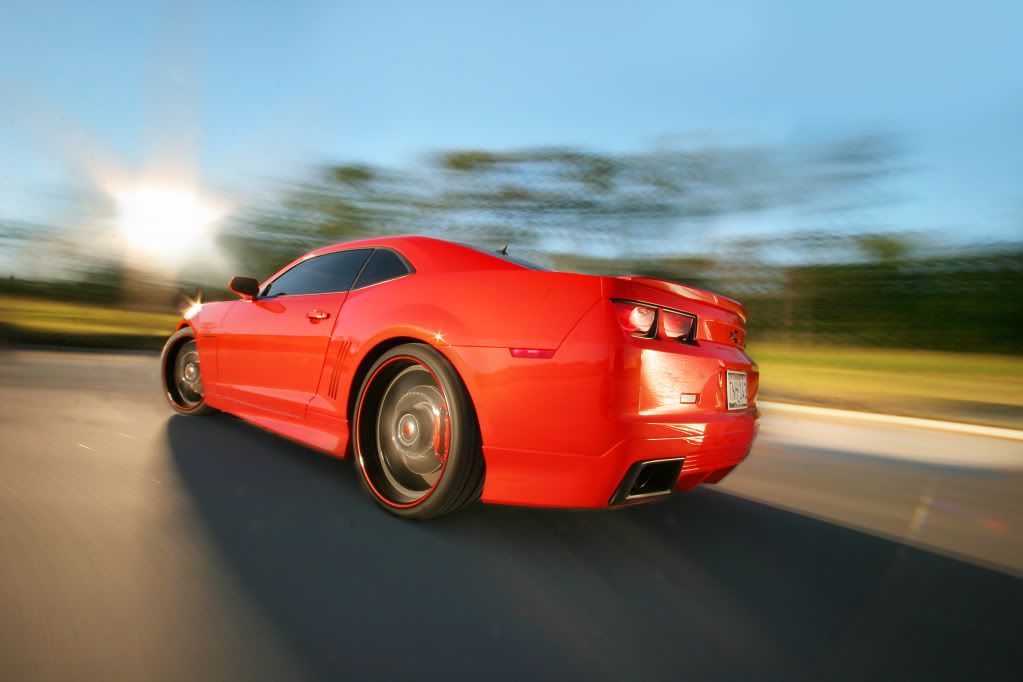
Sure, more latitude is always better. I don't think thats been the debate, though...at least, not as I've seen it. The tone here is less extreme over at DPR, but there are a lot of people who seem to literally be freaking out as thought the 5D III is a complete flop and a totally worthless excuse for a camera because of one single aspect that Nikon and Sony do better...and better only really at a low technical level...the gap is minor in terms of real-world performance. Everyone wants more DR, but 2.5 stops more on a technical level boils down to less than a stop in real-world difference, which kind of makes all the worry rather moot in the grand scheme of things. Its a lot more effective to just buy a reflector, or a fill light, or use multiple exposures, etc. than to wait a whole extra generation before upgrading, or incurring the excessive cost of switching brands. If you have DR limitations, light the scene properly, or slap on a GND.

V8Beast said:
I'm not quite sure how this thread turned into a talk about DR, but DR is just one of MANY factors that determine IQ.

Dunno...I responded to something a while back about DR. DR seems to be what people care about most. :P

V8Beast said:
Even if the D800 proves to have better DR than the 5DIII in the real world, I can just as easily decide that I hate it due to color reproduction, contrast, and sharpness that aren't my cup of tea. I remember the first shoot I did with the 5DC. I was blown away by the film-like image quality of the files. It was like I was shooting color slides again, and the color, contrast, and sharpness were simply stunning. I'd never seen such incredible IQ on any digital camera before. I didn't care how its DR or ISO measured on some on chart posted by some geek on the internet. The images just had that certain look and feel to them that I cherished, and at the end of the day, that's all that mattered. IMHO, that's why you have to try these things out in the real world before determining a winner.

+1 Couldn't agree with all of that more. We can presume to know all we want, but real-world performance is all that really matters. Regardless of how we may all feel about the low-level technical statistics...one thing has been pretty constant for all Canon, Nikon, and Sony cameras the last 4 years: they get better every time they are upgraded. Its highly doubtful the 5D III will perform worse than the 5D II, and based on the samples so far (most of which are from pre-production models), I'd be quite happy with any one of the newly released cameras (money being no object.) I don't think any of them would produce anything either me, my customers, or even an editor of a publication couldn't be happy with. Even if they were...I'd blame the photographer, not the camera. ::)
 
Upvote 0
I look at it this way, what everyone is talking about at very small differences. Overall BOTH cameras are going to produce great images in the right hands and utter rubbish in the wrong hands. For me it boils down to this.

Even if the D800 is better it will be by a marginal technical amount that will more than likely not be noticable in images and definately not noticable in print.
With so much invested in canon glass (as with alot of other people on here) changing teams would be a silly haircut to take to change to Nikon.

Sure this round Nikon win the MP Bragging rights and some numerical theoretical DR bragging right. (How many people waste all this image quality and inbuilt DR by running 9 bracket exposures at 0.5 stop through a trash compactor like photomatix etc? Can people not see how the image quality is decimated by these programs FAR beyond the miniscule differences between a D800 sensor and a 5Dmk3 Sensor, DR is becoming a crutch. Ok overprocessing fans smite away again ;) :-* )

This stuff while interesting to read about being technically minded does not mean that the differences between the cameras are going to be noticable or even measurable in real world work and deliverables.

Step back and look at the bigger picture, then go and take some enjoy the camera and the shoot, after all isnt that what most of us are here for anyway?
 
Upvote 0
jrista & LetTheRightLensIn:
5D II @ ISO 100
Q.E.: 33%
Pixel Size: 6.4 microns
Saturation: 64600
Read Noise: 27.8 e-
DR Stops: 11.2

Thanks for that reference, jrista. So while sensorgen is calculating DR from full-well capacity (in e-) & read noise (also in e-), what LetTheRightLensIn was doing in calculating the 5DIII DR was saying that:

[list type=decimal]
[*]Full-well capacity is equivalent to maximum pixel value (in a white exposure)
[*]Read noise is equivalent to stdev of lowest pixel values (in a black exposure)
[/list]

Is that correct?

You certainly do end up getting almost the same numbers as sensorgen/DXO... alluding to, but not proving, the validity of the principle.

For example, here are my numbers using IRIS & Excel to analyze black/white frames from the 5D II, 5D III, & a Nikon D7000:

5DII:
Average: 1025.616715
STDEV: 5.795391049
Dynamic Range: 11.42509592
% Variation in black: 0.565%


5DIII:
Average: 2047.064307
STDEV: 5.662172538
Dynamic Range: 11.39988832
% Variation in black: 0.2766%


D7000:
Average: 0.437679967
STDEV: 0.696348062
Dynamic Range: 14.52203144
% Variation in black: 159.1%


BUT, I just think there's something really strange about about Canon's black levels of 1024 & 2048 vs D7000's essentially 0. So for fun I just took the standard deviation in black pixels, divided it by the mean of black pixels, then multiplied by 100. That's that '% Variation in black' number you see. Notice it's down for the 5D III vs. the 5D II. Meaning a cleaner, but higher, black level. And for the D7000, the percent variation is pretty high since the actual numbers are vacillating around 0-1, with a max of 8 (black level of D7000 RAW files really seems to be 0-ish).

I don't really know what to draw from that other than that 5D III probably has cleaner blacks than 5D II. I wish someone could figure out what the higher overall black level signal in the Canon files mean, next to Nikon's near 0 black level...
 
Upvote 0
V8Beast said:
I'm not quite sure how this thread turned into a talk about DR, but DR is just one of MANY factors that determine IQ. Even if the D800 proves to have better DR than the 5DIII in the real world, I can just as easily decide that I hate it due to color reproduction, contrast, and sharpness that aren't my cup of tea. I remember the first shoot I did with the 5DC. I was blown away by the film-like image quality of the files. It was like I was shooting color slides again, and the color, contrast, and sharpness were simply stunning. I'd never seen such incredible IQ on any digital camera before. I didn't care how its DR or ISO measured on some on chart posted by some geek on the internet. The images just had that certain look and feel to them that I cherished, and at the end of the day, that's all that mattered. IMHO, that's why you have to try these things out in the real world before determining a winner.

This paragraph mirrors my sentiments exactly regrading the 5DC. Even after all these years I am amazed at the color and contrast it produces. There are many newer cameras that are better on paper and I certainly give my 7D and rented 5DIIs their fair use but I always prefer to use the 5DC when I am not in need of specific features it lacks (video for example).
 
Upvote 0
jrista said:
Certainly, I don't disagree. However, if your spending that much time tweaking every single photo one at a time, your not using modern post-processing tools effectively. Lightroom, for example, supports per-camera import profiles that can automatically apply default processing to every file you import.

I hardly spend a lot of time in post. On average, it's less than 20 seconds per image. As an old film guy, I put in enormous effort to get things right in camera. I fully understand the benefits of an efficient post production work flow, but this technique is less effective in some situations. Most of what I shoot is in natural light, which is complemented with off-camera flash, reflectors, etc. The quality of the light varies dramatically based on the time of day, weather conditions, etc. As such, it's not practical to apply a generic profile in Lightroom across a broad set of images.

The light in this image...
01-1.jpg


...is different from the light in this one...
03b.jpg


...and this one...
17.jpg


...and this one...
Speedtek_01c.jpg


...and this one....
01-2.jpg


...and this one...
07b.jpg


I could go on and on, but I'm sure you get the idea.

Just because to change your approach to utilize the capabilities of a camera better does not mean you have to spend an extra, inordinate amount of time in post "compensating" for the "deficiencies" of your gear.

It's not always about deficiencies in gear. There are certain situations in which you can't possibly expect your camera to capture the image you're picturing in your head. You just need to understand the limitations of your equipment and adjust your technique accordingly.

For instance, you can't expect any camera on earth to properly expose the range of shadows and highlights in this image...
IMG_3750.jpg


...but to get this shot to look how I envisioned it in my head, the final image was assembled with close to a dozen different exposures, fill light, reflectors, etc. If you can configure Lightroom to read my mind and assemble this image for me with some nifty presets, I'm game. Again, this has nothing to do with a deficiency of the equipment used, but more DR would have certainly reduced my time in post production
02-1.jpg


If you have DR limitations, light the scene properly, or slap on a GND

I'm not saying you're guilty of this, but just because you want to more DR doesn't mean you aren't already implementing such techniques. I sure hope anyone that wants to have a career spanning longer than two weeks would already be familiar with such basic techniques :)

Even if they were...I'd blame the photographer, not the camera. ::)

No one's blaming the gear. IMHO, the photographer always deserves the blame. Even in situations where the equipment is clearly at fault, it's the photographer's responsibility to know these issues or risks and bring the right tools to the job.
 
Upvote 0
@V8Beast: First off, damn nice photographs. Love your action shots, fantastic! Based on some of the editing, I don't think the lack of a stop worth of real-world DR is going to affect your processing time much...you do some pretty extensive and unique editing, which I would figure is what makes your work stand out, and why you have a job!

Second, we obviously don't disagree (and, btw, I was not claiming you actually don't use your gear or your software correctly.) The point I've been trying to make, which I believe you have made for me better than I could myself...is low-level differences that require poking around a raw file with open-source editors so you can see special masked off data that is only supposed to be used by code...just doesn't matter. With or without the extra DR (which, keep in mind, has only really been the case for not even three years in production DSLR's), you can still take photographs that rival or surpass what was possible with the best film in the past. Many of the advancements in digital technology have given digital a significant edge over film (such as low light photography, for which we have far better tools today to capture high quality and high detail way beyond all but the most expensive and specialized films of the past.)

Its human nature to want more, to want the best, to want everything...and at 1/10th cost. I have to wonder the cost of all the complaining, though, given the technical differences translate into marginal real-world gains/losses either way. We already have someone on this forum who posted a question asking if he was insane to dump Canon and go to Nikon...and the reason he was asking was because of all the talk about DR and noise and how atrociously horrible and nasty its going to be compared to Nikon had him worried. Thats a really sad state of affairs, to open up a discussion about something that causes your average photographer to worry that much about their gear to the point where they LITERALLY consider dumping their gear (at a guaranteed loss of some amount), jumping ship, and buying new gear. Your photos demonstrate that its possible to take fabulous photos with old gear, let alone the brand spankin new 5D III.

Its one thing to debate the technical merits of one technology or another in a forum of like-minded tech-heads who enjoy tearing things apart and figuring out how they work and how they compare on every level. Its another thing to give the average photographer (or even professionals who generally couldn't give a crap about the low-level technical specs, so long as the pictures they see it take look great and service their profession) enough worry that they waste money switching (only to find the grass really isn't that much greener on the other side, not nearly worth the cost they went through to get there), when that isn't the goal of all the tech-talk in the first place. I think the people tearing up CR2 files over on DPR to measure DR, SNR, noise, banding, etc. have failed in that respect, and done a disservice to the people who just need a tool to aid them in their profession or hobby (and really couldn't care about how the least significant 3-4 bits of Canon and Sony sensors compare.)
 
Upvote 0
jrista said:
@V8Beast: First off, damn nice photographs. Love your action shots, fantastic! Based on some of the editing, I don't think the lack of a stop worth of real-world DR is going to affect your processing time much...you do some pretty extensive and unique editing, which I would figure is what makes your work stand out, and why you have a job!

Second, we obviously don't disagree (and, btw, I was not claiming you actually don't use your gear or your software correctly.) The point I've been trying to make, which I believe you have made for me better than I could myself...is low-level differences that require poking around a raw file with open-source editors so you can see special masked off data that is only supposed to be used by code...just doesn't matter. With or without the extra DR (which, keep in mind, has only really been the case for not even three years in production DSLR's), you can still take photographs that rival or surpass what was possible with the best film in the past. Many of the advancements in digital technology have given digital a significant edge over film (such as low light photography, for which we have far better tools today to capture high quality and high detail way beyond all but the most expensive and specialized films of the past.)

Its human nature to want more, to want the best, to want everything...and at 1/10th cost. I have to wonder the cost of all the complaining, though, given the technical differences translate into marginal real-world gains/losses either way. We already have someone on this forum who posted a question asking if he was insane to dump Canon and go to Nikon...and the reason he was asking was because of all the talk about DR and noise and how atrociously horrible and nasty its going to be compared to Nikon had him worried. Thats a really sad state of affairs, to open up a discussion about something that causes your average photographer to worry that much about their gear to the point where they LITERALLY consider dumping their gear (at a guaranteed loss of some amount), jumping ship, and buying new gear. Your photos demonstrate that its possible to take fabulous photos with old gear, let alone the brand spankin new 5D III.

Its one thing to debate the technical merits of one technology or another in a forum of like-minded tech-heads who enjoy tearing things apart and figuring out how they work and how they compare on every level. Its another thing to give the average photographer (or even professionals who generally couldn't give a crap about the low-level technical specs, so long as the pictures they see it take look great and service their profession) enough worry that they waste money switching (only to find the grass really isn't that much greener on the other side, not nearly worth the cost they went through to get there), when that isn't the goal of all the tech-talk in the first place. I think the people tearing up CR2 files over on DPR to measure DR, SNR, noise, banding, etc. have failed in that respect, and done a disservice to the people who just need a tool to aid them in their profession or hobby (and really couldn't care about how the least significant 3-4 bits of Canon and Sony sensors compare.)

I just want to clear up one too though, most us did dig into for no particular reason but only after we ran into the issues in the real world more than a few times. It depends what you want to shoot, etc. I don't mean to say it will matter for everyone at all, for some it virtually never may, but it's garbage OTOH to just turn the whole thing into a big joke and laugh it and so beyond downplay it as you are and you can get a bit snide and insulting about it all.
 
Upvote 0
I have to admit I have half an academic interest in this & half a real interest in this DR debate because I also have found myself in situations where I've wanted to raise the shadows more in a landscape (where I did already control DR using Singh-Ray grad NDs) but couldn't, b/c of banding or FPN.

Therefore, I'm with LTRLI's sentiment of 'it's unfair to bash those concerned with these (esoteric?) subjects'.

LTRLI, did you get a chance to review those assumptions I posited (in my last post) you made when doing your DR analysis of the 5DIII? In the end, I think your method is valid because the per-pixel gain applied by the pixel amplifiers is probably roughly the same for low & high signals (e.g. about 4e- per DU to compress full-well capacity signal of ~65,000e- to 16,384 max for 14-bit ADC)... therefore relationship between input DR in scene (where increase in light causes a directly proportional increase in e- accumulated) and output DR in file (which you've analyzed via max pixel vs. stdev of blacks) will be maintained.

Thanks.
 
Upvote 0
LetTheRightLensIn said:
I just want to clear up one too though, most us did dig into for no particular reason but only after we ran into the issues in the real world more than a few times. It depends what you want to shoot, etc. I don't mean to say it will matter for everyone at all, for some it virtually never may, but it's garbage OTOH to just turn the whole thing into a big joke and laugh it and so beyond downplay it as you are and you can get a bit snide and insulting about it all.

I'm sorry that I disagree, but I do. I'm also sorry that I've found the growing level of...angst...in the Canon community (at least those that hang out on DPR, here, and a couple other places) to be particularly humorous. I spend a lot of time viewing other photographers work. Online, at galleries, in books. Most of it is beautiful, artful, creative, and beautifully composed. Its only at final glance that I MAY notice grain or noise...or a funky artifact tucked away in a corner somewhere, or a tiny bit of banding in some deep shadow. Those things just don't matter...the beauty, art, and creative composure are what matter...what catch my eye...what draw me in.

Comparing the capabilities of the technology that took most of those photographs to what we have today...the difference on a technological level is stunning! I'm frequently awed when I see a photograph that looks like it was taken with $60,000 worth of gear, only to find it out was something like a 350D with the cheap 18-55mm kit lens! The fact that you can get the worlds best AF system, second highest ISO capability, and one of the best viewfinders I've ever seen (not to mention the host of other improvements the 5D III has) for $3500...as compared to the $7k, $8k, or even $40-60k you might have had to spend 4 years ago for similar and even LESS CAPABLE gear...amazes me. It absolutely floors me though that so many photographers are hung up on the bottom few bits of DR and a megapixel count as the focal point upon which their world hynges.

What really boggles my mind, though, is that all that angst appears to actually be making photographers worry that they chose the wrong brand (as evidenced by @tonyp's question in this very forum.) So yes, I downplay the angst, and I intend to keep downplaying it because it really doesn't matter. People have been making awesome photographs with far lesser technology than either the 5D III or D800. People will continue making awesome photographs with far lesser technology. In five years, people will be making awesome photographs with the 5D III and D800 when they pale in comparison to the next greatest gear to hit the markets, even if that gear supports 16-bit ADC and a full four stops better DR.


It's not the gear that makes the photograph...and I just can't help but laugh when so many people are nearly up in arms over issues that are...relatively speaking...so small, and largely irrelevant in the face of talent and skill. I don't mean to be snide, I apologize if it comes off that way (I tend to argue passionately regardless of what I'm arguing), and I'll try to avoid that in the future. But my mind is truly blown...so much ruckus for such little things. ;)
 
Upvote 0
Status
Not open for further replies.