How to differentiate crop vs. FF

anthonyd said:
rs said:
jarrodeu said:
I must have misread. I was under the impression that some people were arguing that 2.8 lens let in the light of an f8 when on the micro 4/3 mount.
Jarrod
As Neuro said, two stops (f5.6), not three.

To understand this, you need to understand the difference between total amount of light, and the intensity of light. Think of a shaft of sunlight - use a magnifying glass to concentrate that light into a smaller area - you get no more light, but the intensity is increased. Just shrouding more of the light to make a narrower shaft leaves the intensity the same, and reduces the total amount.

A greater intensity of light is what's needed to make a smaller area receive the same amount of light. Simply cutting/cropping out some light, and then magnifying/enlarging what's left afterwards results in less light captured. That's otherwise known as a lower signal, which requires more amplification/enlargement, typically resulting in more noise.

rs, you might be right about light, but you are at 666 posts, so you got to post again to avoid being evil :-)
Good point. Ok, here's one to sort out the number.

The Canon 300/2.8 is about the same price as the Olympus 300/2.8, yet the Canon is smaller, and even with the extra heft of the 2x TC and bulkier FF body, lighter. Plus it doubles up as a 4/3rds equivalent of a 150/1.4

I know which I'd rather buy (not taking into account the dropped 4/3rds mount) and carry with me ;)
 
Upvote 0
ashmadux said:
Crop vs. Full frame.

As a 6d owner - my first full frame- im very unimpressed at its low iso quality. There is no 3d-ish POP that i have seen in so many 5d2/5d3 images over the years - image quality that i could easily see was not reproducible on my crop cameras.

To these ultra pixel peeping eyes, the 6d is only slightly better at dynamic range than my t2i. High Iso handling is generally FANTASTIC, which is why i figure the low iso takes an image quality hit. Low light photography is a whole other ball game compared to my crop bodies.

So while i enjoy my 6d, its nowhere close to the full frame experience i thought it would be. Still dreaming of a 5d3 and non-ancient AF. :(


-
What lenses are you using?
 
Upvote 0
3kramd5 said:
anthonyd said:
The combo will be cheaper, lighter, smaller and unless I'm shooting at dusk or dawn, the grizzlies will show the same size (and probably comparable IQ) on the same size print, or my screen.

Time of day changes magnification? :o

You didn't know that grizzlies shrink at night? :-p
I was trying to avoid responses about low light noise, but it's worded funny, you are right.
 
Upvote 0
jarrodeu said:
For canon, exposure for a 400mm 5.6 on a crop (640mm 5.6) is the SAME exposure as a 400mm 5.6 on a full frame. By using a crop sensor the aperture doesn't magically shrink. Just like taking the center section of a full frame image to give the same view as a crop sensor does not shrink the aperture.

Jarrod

No, the aperture stays the same. Aperture = 400mm/5.6 = 71.43mm. If you're going to call that a 640mm equivalent lens because of the smaller sensor, you have to call it a 640mm/71.43mm = f/9 equivalent f-stop too.
 
Upvote 0
anthonyd said:
Sure, if you are doing portraits, where DoF matters, you'll go with FF. The same holds with low light where you want to minimize noise. However, if I were going to visit Alaska or Yellowstone, I think I'd buy a MFT camera and the Zuiko 300/2.8 lens rather than the 600/5.6 for my Canon. The combo will be cheaper, lighter, smaller and unless I'm shooting at dusk or dawn, the grizzlies will show the same size (and probably comparable IQ) on the same size print, or my screen.

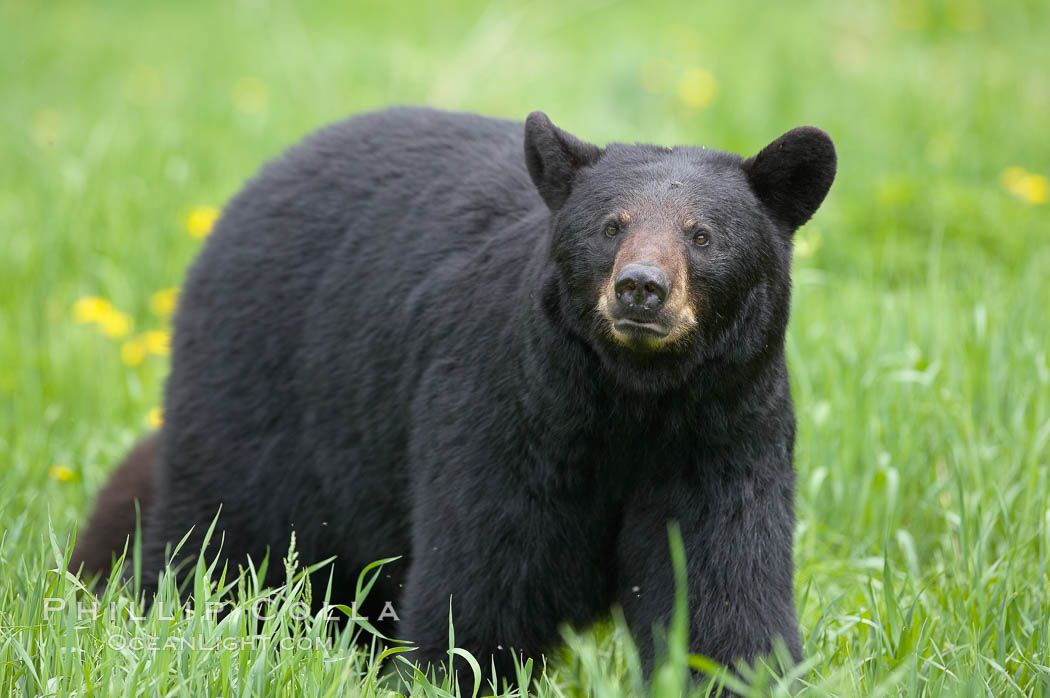
Indeed. Because we all know having deeper DoF makes for better wildlife images. For example, the first image is much better than the second, it's much better that all the distracting stuff behind the subject is decently sharp focus. :o

Black_Bear_Yearling.JPG


ursus-americanus-american-black-bear-photo-18744-226676.jpg
 
Upvote 0
Lee Jay said:
neuroanatomist said:
Lee Jay said:
anthonyd said:
Have you seen the "ZUIKO DIGITAL ED 300mm F2.8"? In FF equivalent it is a 600 f/2.8 ...

600/5.6. You don't get something for nothing.

It's always both amusing and rather sad that people don't understand the word "equivalent".

It's very odd, especially when the same people don't make the same mistake with teleconverters, which do exactly the same thing as smaller sensors (crop and enlarge).

They do the same thing. So do scissors and bandsaws. That doesn't make them the same. Optical cropping and magnifying does not equal digital cropping and up sampling. The end is likely very similar, however (although with canon's signal chain, I imagine enlarging and increasing sensitivity before digitizing is better). It would be interesting to actually test which process takes a bigger noise penalty.
 
Upvote 0
I am waiting for FF camera with 24-105 STM for $999. Then, I will start thinking about FF.
How much improvement, I am going to notice for basic family use (screen up to 1600X900, printing up to 8X10 and videos up to 1080P) with FF. Unless I need very shallow dof, am I going to notice any ISO advantage if I need to stop down with FF. What is cheapest FF alternatives for 55-250mm and 10-18mm. I can get 50mm 1.8/40mm 2.8 prime to start with.

Thanks
 
Upvote 0
neuroanatomist said:
anthonyd said:
Sure, if you are doing portraits, where DoF matters, you'll go with FF. The same holds with low light where you want to minimize noise. However, if I were going to visit Alaska or Yellowstone, I think I'd buy a MFT camera and the Zuiko 300/2.8 lens rather than the 600/5.6 for my Canon. The combo will be cheaper, lighter, smaller and unless I'm shooting at dusk or dawn, the grizzlies will show the same size (and probably comparable IQ) on the same size print, or my screen.

Indeed. Because we all know having deeper DoF makes for better wildlife images. For example, the first image is much better than the second, it's much better that all the distracting stuff behind the subject is decently sharp focus. :o

Black_Bear_Yearling.JPG


ursus-americanus-american-black-bear-photo-18744-226676.jpg

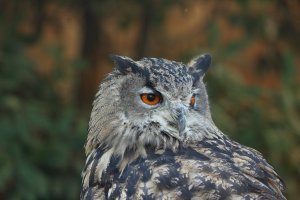
Oh c'mon neuro, DoF certainly matters, but this is a shot at 55mm with f/5.6 and a downward angle. Nobody would expect it to have a shallow DoF. If anything, this shot is an argument against the significance of sensor size, because the following shot I did with my crop sensor and it has a much nicer bokeh.
 

Attachments

  • owl_s.jpg
    owl_s.jpg
    552.8 KB · Views: 217
Upvote 0
anthonyd said:
neuroanatomist said:
anthonyd said:
Sure, if you are doing portraits, where DoF matters, you'll go with FF. The same holds with low light where you want to minimize noise. However, if I were going to visit Alaska or Yellowstone, I think I'd buy a MFT camera and the Zuiko 300/2.8 lens rather than the 600/5.6 for my Canon. The combo will be cheaper, lighter, smaller and unless I'm shooting at dusk or dawn, the grizzlies will show the same size (and probably comparable IQ) on the same size print, or my screen.

Indeed. Because we all know having deeper DoF makes for better wildlife images. For example, the first image is much better than the second, it's much better that all the distracting stuff behind the subject is decently sharp focus. :o

Black_Bear_Yearling.JPG


ursus-americanus-american-black-bear-photo-18744-226676.jpg

Oh c'mon neuro, DoF certainly matters, but this is a shot at 55mm with f/5.6 and a downward angle. Nobody would expect it to have a shallow DoF. If anything, this shot is an argument against the significance of sensor size, because the following shot I did with my crop sensor and it has a much nicer bokeh.
The amount of background blur isnt just a function of sensor size and aperture. Relative distance between camera, subject and background all play a very important part too, so that owl shot has no relevance to the bear shots with a telephoto.

I can even get some notable separation with my iPhone if I'm shooting a subject at minimum focus distance with a background at or near infinity.
 
Upvote 0
i do understand equivalence.

BUT ... most of the time, in (super-) tele situations full equivalence is not necessary, as long as exposure (brightness of image) and angle of view (AOV) are identical: even on a mFT sensored camera a 300mm lens will have "more than thin enough DOF" @ f/2.8 to sufficiently isolate virtually any subject, unless it is pressed flat against a wall. And framing, perspective, magnification and shutter speed will be identical to using a 600/2.8 on an FF sensor.

So a mFT 300/2.8 lens would be "good enough", irrespective of not being equivalent.

However, in practice they are not, since physical size of tele lenses is dictated solely by size of entry pupil ... and therefore 300/2.8 lenses are as large and heavy for mFT sensors and FF sensors alike. Unfortunately there are no "un-utilized portions of glass elements in tele-lenses" when using smaller sensors.
 
Upvote 0
ritholtz said:
I am waiting for FF camera with 24-105 STM for $999. Then, I will start thinking about FF.
How much improvement, I am going to notice for basic family use (screen up to 1600X900, printing up to 8X10 and videos up to 1080P) with FF. Unless I need very shallow dof, am I going to notice any ISO advantage if I need to stop down with FF. What is cheapest FF alternatives for 55-250mm and 10-18mm. I can get 50mm 1.8/40mm 2.8 prime to start with.
US$999 :o ??? ??? ???
Then you will have to wait a looooooong time. ::)
I agree that there are no EF lenses that compare (image quality versus price) as the great 55-250 STM and 10-18 STM.
 
Upvote 0
Personally, if I were going to Alaska or Yellowstone, I'd take the best gear I could afford.

anthonyd said:
...unless I'm shooting at dusk or dawn...

Personally, I would not go to a spectacular location to shoot wildlife and plan to bring gear I knew was not well suited for use at the great times of day for shooting wildlife.
 
Upvote 0
ashmadux said:
Crop vs. Full frame.

As a 6d owner - my first full frame- im very unimpressed at its low iso quality. There is no 3d-ish POP that i have seen in so many 5d2/5d3 images over the years - image quality that i could easily see was not reproducible on my crop cameras.

To these ultra pixel peeping eyes, the 6d is only slightly better at dynamic range than my t2i. High Iso handling is generally FANTASTIC, which is why i figure the low iso takes an image quality hit. Low light photography is a whole other ball game compared to my crop bodies.

So while i enjoy my 6d, its nowhere close to the full frame experience i thought it would be. Still dreaming of a 5d3 and non-ancient AF. :(

Really? From what I've seen, 5D2-3 and 6D images side by side look almost identical :).
 
Upvote 0
ecka said:
ashmadux said:
Crop vs. Full frame.

As a 6d owner - my first full frame- im very unimpressed at its low iso quality. There is no 3d-ish POP that i have seen in so many 5d2/5d3 images over the years - image quality that i could easily see was not reproducible on my crop cameras.

To these ultra pixel peeping eyes, the 6d is only slightly better at dynamic range than my t2i. High Iso handling is generally FANTASTIC, which is why i figure the low iso takes an image quality hit. Low light photography is a whole other ball game compared to my crop bodies.

So while i enjoy my 6d, its nowhere close to the full frame experience i thought it would be. Still dreaming of a 5d3 and non-ancient AF. :(

Really? From what I've seen, 5D2-3 and 6D images side by side look almost identical :).

If one has seen and admired a '3D-ish POP' in 5DII/III images taken by others over the years, but doesn't see that quality in one's own 6D images, I suppose "it's the camera" is one possible explanation. It's certainly a more palatable one than the far more likely and rational reason for the discrepancy.
 
Upvote 0
neuroanatomist said:
ecka said:
ashmadux said:
Crop vs. Full frame.

As a 6d owner - my first full frame- im very unimpressed at its low iso quality. There is no 3d-ish POP that i have seen in so many 5d2/5d3 images over the years - image quality that i could easily see was not reproducible on my crop cameras.

To these ultra pixel peeping eyes, the 6d is only slightly better at dynamic range than my t2i. High Iso handling is generally FANTASTIC, which is why i figure the low iso takes an image quality hit. Low light photography is a whole other ball game compared to my crop bodies.

So while i enjoy my 6d, its nowhere close to the full frame experience i thought it would be. Still dreaming of a 5d3 and non-ancient AF. :(

Really? From what I've seen, 5D2-3 and 6D images side by side look almost identical :).

If one has seen and admired a '3D-ish POP' in 5DII/III images taken by others over the years, but doesn't see that quality in one's own 6D images, I suppose "it's the camera" is one possible explanation. It's certainly a more palatable one than the far more likely and rational reason for the discrepancy.

I would blame the camera. I would recommend selling the 6D and buying a 1D X since its pictures are $5000 better. At least the pictures taken with the wife's t4i of me with the 1D X instead of a 6D hanging from my shoulder would be better.
 
Upvote 0
Jackson_Bill said:
I don't agree with this "amount of light" argument. Consider a full frame sensor and an APS-C size sensor with pixels the same size as a full frame taking photos with the same lens at the same f-stop and the same distance from the subject. The signal to noise ratio for each pixel in the APS-C sensor will be the same as the S:N ratio as the corresponding pixels in an APS-C sized area of the ff.

True, but the 2.56x greater area of the FF sensor will gather more total light. Comparing noise at the pixel level isn't the same as comparing noise at the image level.
 
Upvote 0
Jackson_Bill said:
neuroanatomist said:
Jackson_Bill said:
I don't agree with this "amount of light" argument. Consider a full frame sensor and an APS-C size sensor with pixels the same size as a full frame taking photos with the same lens at the same f-stop and the same distance from the subject. The signal to noise ratio for each pixel in the APS-C sensor will be the same as the S:N ratio as the corresponding pixels in an APS-C sized area of the ff.

True, but the 2.56x greater area of the FF sensor will gather more total light. Comparing noise at the pixel level isn't the same as comparing noise at the image level.

You lost me on the image level noise, Neuro. It seems that an APS-C sized crop of the FF image and the APS-C image in this case would be identical. The number of photons hitting each pixel is the same and assuming the downstream operations are identical, what's the difference?
I don't know about you, but as a photographer, I strive to compose correctly, and I look at the image as a whole myself. Your above scenario doesn't make a huge amount of sense as the resulting photos would be very different. I'd start off by using an appropriate focal length on each format to capture the chosen image, not to mention choosing an aperture to achieve the desired DoF, and an ISO to achieve the desired shutter speed/exposure.

If you truly do use the same length lens, settings and distance from subject with the larger format, it would require cropping in post to achieve the framing you've strived towards with the APS-C body. Now we're left with the same image as an APS-C body would have taken - just under 40% of the image. In other words, just under 40% of the light. So to enlarge this small crop up to the same viewing or printing size that you would have wanted should the whole frame of that FF body have been filled correctly, you've now magnified what signal is left by 2.56 times. And strangely enough, the noise has been magnified by that exact same amount too.

If we could just keep cropping with no enlargement penalties such as additional noise, why would anyone bother with these huge telescopes in Hawaii? Surely we can just equip the optics in an iPhone with a sensor 10,000 times smaller than the 1/3rd inch sensor they currently have? We could see the most distant galaxies with unimaginable magnification and clarity, all from a device in your pocket? After all, it is an f2.2 lens ;)
 
Upvote 0
Jackson_Bill said:
neuroanatomist said:
Jackson_Bill said:
I don't agree with this "amount of light" argument. Consider a full frame sensor and an APS-C size sensor with pixels the same size as a full frame taking photos with the same lens at the same f-stop and the same distance from the subject. The signal to noise ratio for each pixel in the APS-C sensor will be the same as the S:N ratio as the corresponding pixels in an APS-C sized area of the ff.

True, but the 2.56x greater area of the FF sensor will gather more total light. Comparing noise at the pixel level isn't the same as comparing noise at the image level.

You lost me on the image level noise, Neuro. It seems that an APS-C sized crop of the FF image and the APS-C image in this case would be identical. The number of photons hitting each pixel is the same and assuming the downstream operations are identical, what's the difference?

If you crop the FF to the crop cameras size they are identical, but that wasn't how your earlier comment was worded. If you crop the ff to the same size as the crop camera they are, effectively, the same thing, a crop sensor.

If you take your first situation and use the entire image from both cameras then the ff camera must have 2.5 times the area, if the pixels are the same size on each the FF camera must have 2.5 times as many, if they have the same number of pixels the FF cameras must be 2.5 times the size.
 
Upvote 0
Jackson_Bill said:
neuroanatomist said:
Jackson_Bill said:
I don't agree with this "amount of light" argument. Consider a full frame sensor and an APS-C size sensor with pixels the same size as a full frame taking photos with the same lens at the same f-stop and the same distance from the subject. The signal to noise ratio for each pixel in the APS-C sensor will be the same as the S:N ratio as the corresponding pixels in an APS-C sized area of the ff.

True, but the 2.56x greater area of the FF sensor will gather more total light. Comparing noise at the pixel level isn't the same as comparing noise at the image level.

You lost me on the image level noise, Neuro. It seems that an APS-C sized crop of the FF image and the APS-C image in this case would be identical. The number of photons hitting each pixel is the same and assuming the downstream operations are identical, what's the difference?

As PBD noted, you left out the 'crop the FF to APS-C FoV' bit out...
 
Upvote 0
Jackson_Bill said:
neuroanatomist said:
Jackson_Bill said:
neuroanatomist said:
Jackson_Bill said:
I don't agree with this "amount of light" argument. Consider a full frame sensor and an APS-C size sensor with pixels the same size as a full frame taking photos with the same lens at the same f-stop and the same distance from the subject. The signal to noise ratio for each pixel in the APS-C sensor will be the same as the S:N ratio as the corresponding pixels in an APS-C sized area of the ff.

True, but the 2.56x greater area of the FF sensor will gather more total light. Comparing noise at the pixel level isn't the same as comparing noise at the image level.

You lost me on the image level noise, Neuro. It seems that an APS-C sized crop of the FF image and the APS-C image in this case would be identical. The number of photons hitting each pixel is the same and assuming the downstream operations are identical, what's the difference?

As PBD noted, you left out the 'crop the FF to APS-C FoV' bit out...

The highlighted part is where I tried to cover the 'crop the FF to APS-C FoV' bit

In that case, my mistake! Thanks for clarifying...
 
Upvote 0