ND Filter system for landscape photography question

  • Thread starter Thread starter Otter
  • Start date Start date
Status
Not open for further replies.
I am looking at getting a filter system for shooting landscapes. I was looking at a Cokin filter holder. I do not know too much about filters to be honest, other then the results look very nice. I was also looking at Singh-Ray ND filters. I was unsure what people recommend. a 4 x 6 or a P series filter?
As well, I heard a good start is to get a 2 stop graduated filter.

Any advice for someone starting out in the filter department?

thanks! :)
 
Have a look at the Hitech 100x150mm graduated filter range (they have both hard and soft). Would recommend a set of 0.3, 0.6 and 0.9 (hard or soft) filters. They also have a low profile holder for wide angles, but this has less stacking possibilities than the normal one. They are a bit less expensive than Lee, but more expensive than Cokin (which may not have a complete neutral effect, causing a bit of colour cast in some situations).
 
Upvote 0
iohansen said:
Have a look at the Hitech 100x150mm graduated filter range (they have both hard and soft). Would recommend a set of 0.3, 0.6 and 0.9 (hard or soft) filters. They also have a low profile holder for wide angles, but this has less stacking possibilities than the normal one. They are a bit less expensive than Lee, but more expensive than Cokin (which may not have a complete neutral effect, causing a bit of colour cast in some situations).

I'm looking at Lee right now. The system is alittle pricey but from what I've been told, very good.
 
Upvote 0
I started using the Cokin Z series grad filters. After a while, I upgraded to Singh-Ray and then changed them all to Lee. Big expensive mistake. I advise is to go straight to the Lee. Basically - Cokin and Singh-Ray filers produce a magenta colour cast, especially when you stack them. So for instance if you stack a grad ND and an ND.

Go with Lee.

Have a look here - these are all taken with Lee filters. http://www.flickr.com/photos/stanleykozak/
 
Upvote 0
If you're willing to wait a couple months, I'd recommend the Lee filter system. You should be able to get the foundation kit and some nice resin ND filters pretty quickly. But, if you want a 10-stop ND filter, I've been on backorder for 3 months now on the Big Stopper. :(
 
Upvote 0
Thanks guys, this is somthing i've been pondering over for a while, and you have provided some useful input...

Though, and please forgive if i'm sounding like a newbe, can't you use multiple exposures and photoshop to simulate a grad ND filter? Thats what i do anyway... Surely that is one of the advantages of digital photography... take one shot then stop it down as much as you want for a second, then blend in pp? just me 2 pence! :)

That being said i do want a "big stopper" for those water scences where i just cant slow down the shutter enough! :D
 
Upvote 0
adhocphotographer said:
Thanks guys, this is somthing i've been pondering over for a while, and you have provided some useful input...

Though, and please forgive if i'm sounding like a newbe, can't you use multiple exposures and photoshop to simulate a grad ND filter? Thats what i do anyway... Surely that is one of the advantages of digital photography... take one shot then stop it down as much as you want for a second, then blend in pp? just me 2 pence! :)

That being said i do want a "big stopper" for those water scences where i just cant slow down the shutter enough! :D


ND grads i think are bought because it helps you reduce workflow, and personally I'd wanna see the output myself then and there. :D

I'm using a .9,.6 SE Lee NDG 100mm filters, they're pretty good, but i dont have the money to buy the holder atm. It's easier to hand hold than the 85mm filters on wide angles. I've also used Hitech ones and they're pretty good too :) For ND's and CPL i use Screw in filters.
 
Upvote 0
Free (almost) answer: learn how to black card.

You can pull more stops than is feasible with even the most diverse filter collection.
You can grad at any rate your heart desires.
You can even match terrain if you you're handy with a scissors.

You'll probably still want a modest collection of ND filters for when you need to adjust the overall exposure dramatically, but you wont need the grads.
 
Upvote 0
cezargalang said:
ND grads i think are bought because it helps you reduce workflow, and personally I'd wanna see the output myself then and there. :D

I'm using a .9,.6 SE Lee NDG 100mm filters, they're pretty good, but i dont have the money to buy the holder atm. It's easier to hand hold than the 85mm filters on wide angles. I've also used Hitech ones and they're pretty good too :) For ND's and CPL i use Screw in filters.

True... :) I guess i should give them a go, then i can choose! :P good idea to hand hold... i guess with that method you can "feather" the filter during the shot... Think i might buy a ND Grad minus the holder... cheers for the tip! :)

ps - here are some of my shots from a recent trip to Iceland without ND grad edited in about 5 min with photoshop (including starting PS; I timed it-ish)! :)

http://www.adhocphotographer.com/photoblog/Entries/2012/5/26_Iceland.html#2
 
Upvote 0
bvukich said:
Free (almost) answer: learn how to black card.

You can pull more stops than is feasible with even the most diverse filter collection.
You can grad at any rate your heart desires.
You can even match terrain if you you're handy with a scissors.

You'll probably still want a modest collection of ND filters for when you need to adjust the overall exposure dramatically, but you wont need the grads.

Sorry, but you've lost me there - how do you 'black card'?
 
Upvote 0
First off, for many circumstances, a 2 stop grad won't be enough, 3 stop is really the minimum and I often need to combine a 3 and a 2 stop grad. If you can only afford one filter, then a 3 stop is the one to go for first, but if shooting away from the sun, it may sometimes be too much. Whether or not you get a hard or soft grad (set) depends on what you are likely to be shooting. Hard grads are designed for scenes where the horizon (or other transition line) is straight, such as when the sun is setting over the ocean or when you have a single hill/mountain. Soft grads are designed for when the horizon isn't straight, such as when you have a mountain range, with variable heights.
As for brand, the Cokin mounts are adequate (plastic, but they do the job), but avoid their filters. I used to use Hi-Tech filters and they don't produce a noticeable cast, but they aren't in the same league as either Lee or Singh-Ray. I now use a Lee set, so my Cokin P sized reverse grad from Singh-Ray is no longer usable, but I used to use it all the time (sometmies when I shouldn't because it was so much better than my Hi-Tech filters), I never had any problems with colour cast. I keep looking at getting a larger replacment, as it is invaluable for sunsets, but the exchange rate isn't good at the moment, so they are expensive.

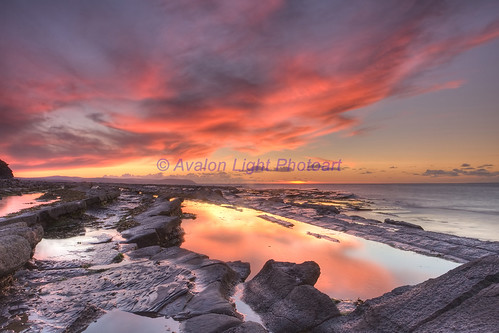
Here are some examples:

Singh-Ray 3 stop revers grad (with some HDR on the rockpool):

Fire and Water by Kernuak, on Flickr

Lee 2+3 stop:

Kilve Pill under a Mackerel Sky by Kernuak, on Flickr
 
Upvote 0
I use the Cokin P series which will go up to an 82mm filter size. I have both the triple holder as well as the single. The triple vignettes badly on my 10-20mm but the single does not. I have had good success with the Cokin brand of filters and have not had any colour cast. Cheap eBay ones do colour cast badly - which I found out the hard way. I have a Cokin ND8 grad (3 stop) that I use mostly. I'm not sure I would bother with a 2 stop as I often find the 3 stop is often not enough but maybe that's just me. Lee filters are great/ likely better but not cheap!!!
 
Upvote 0
Status
Not open for further replies.