Eldar said:
neuroanatomist said:
The point was that it's possible to shoot BIF handheld with the 600 II + 2xIII. Hit rate was ~50%, due to the difficulty of keeping the center + 4 AF points on the bird, but it can be done.
The bittern shot is cropped by about a third,...it was a gray, ugly day at the end of October, 2012. This shot from 40 minutes later that day (also with the 600 II + 2xIII) shows the rain that started falling on us, being blown nearly sideways by the strong winds…it was the outskirts of Hurricane Sandy.
I agree that it is possible, but AF is too limited. Keeper rate is low and 1200mm is difficult on anything that moves, regardless of AF functionality.
You guys must not pay much attention to professional bird photographers. Many of them use the 600II + 2xTC III. Some of them rarely ever use anything else! Most of them used the 800/5.6 before, many never removed their 1.4x TC's from it. One of the primary reasons professional bird photographers buy 1D series is for the f/8 AF, because they use it CONSTANTLY.
Keep in mind, the 1D
officially supports f/8 AF. It isn't like the makeshift f/8 AF you can get with a Kenko slapped onto a 400mm f/5.6 on a 7D, where your luck is basically a roll of the dice, and AF performance is excruciating. Nor is it even like the 5D III, which supports f/8 AF, but isn't as fast as the 1D series. I am guessing, at best, most of you calling f/8 AF slow have only used the 5D III. Try rending a 1D IV sometime, or if you know a friend with one, see if you can borrow it. When it is officially supported, especially these days with support for expansion mode (where a total of five central AF points are used in the 1D X/5D III), it is fast, accurate, and very usable.
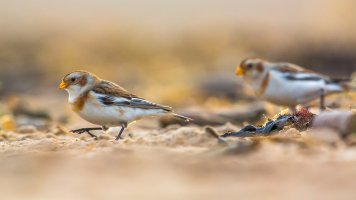
Now, granted, f/8 lenses aren't ideal for tracking birds in flight. Usually, if a bird is flying towards you or angled across your field of view, f/8 lenses, which are usually over 800mm in length, are just too long...you need something wider anyway to compose properly and leave a little room for some of that necessary cropping and straitening. So it isn't like anyone expects f/8 AF to be used to track one of the most complex and difficult subjects that you can track. That's the reason f/4 supertelephotos exist...LOT of light, FAST af...you track BIF with a 500mm or 600mm f/4. The f/8 is most frequently used for perching birds, shorebirds, waders like herons, waterfowl, distant wildlife, etc. where you don't have to bother tracking...you just point, focus, and shoot. Both the 5D III and 1D X are MORE than capable of doing that with an f/8 lens.




 Just wanted to be clear...I like my 600/4 because it is f/4...for AF. I can choose to stop down to whatever is necessary to get the DOF I need, but it will always AF at f/4. I don't want to lose that extra stop of light "for AF" first and foremost by going to something like a 300-600 f/5.6. That was what I was trying to say before.

