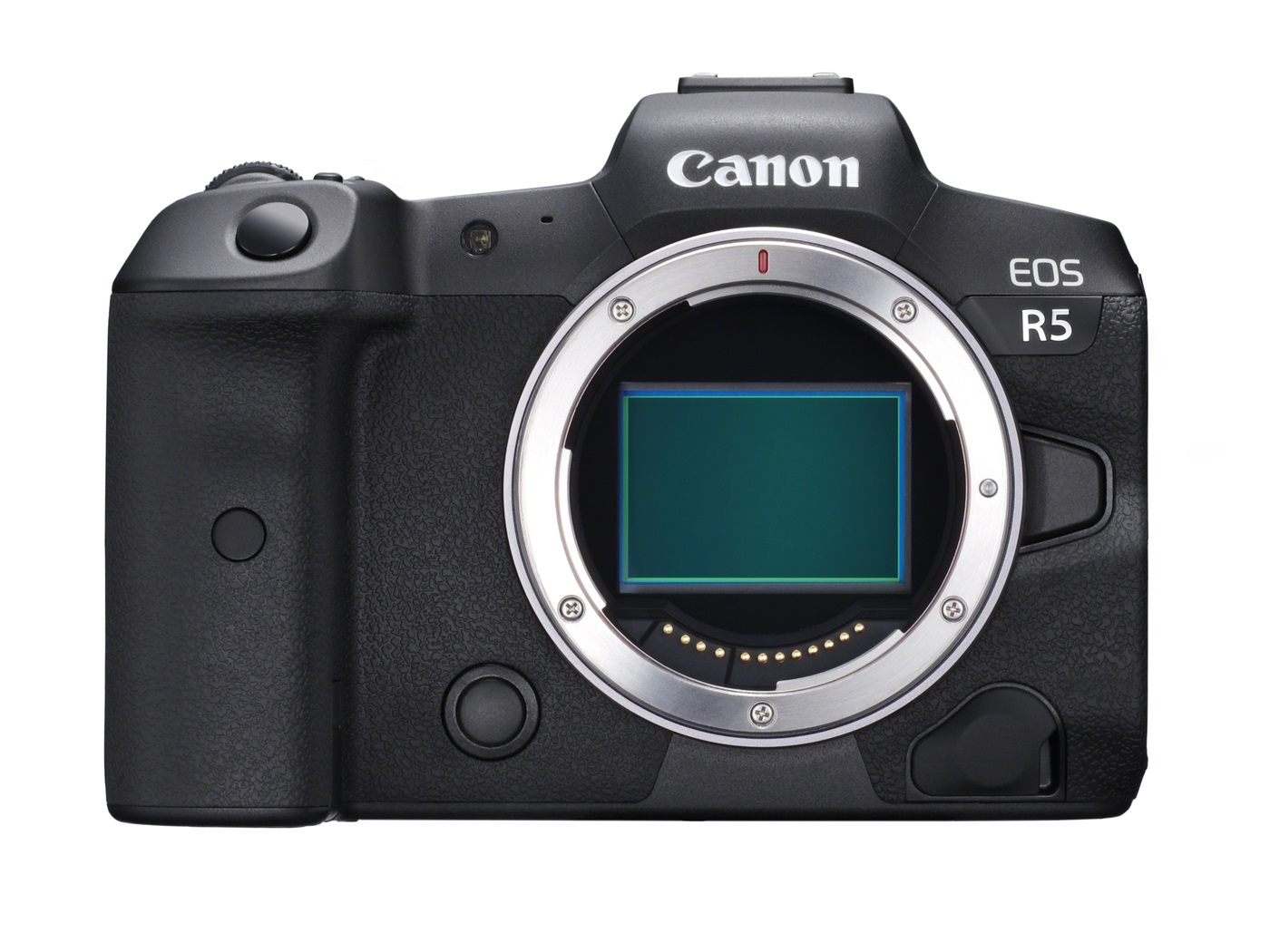
PhotonsToPhotos does the Canon EOS R5 Mark II and it’s good

Neuro, or anyone else. Please enlighten me then. Let me know if I am wrong with the following....

Camera 1: I shoot a scene (or test chart) with an object that is dark gray, let's say 75% black. My photo shows that object, and everything that is darker, to be 100% black.
Camera 2: Same scene. My photo now shows that 75% black object to be a dark gray and now objects need to be 90% black or darker show up as black in my photo.

Does camera 2 have greater DR then camera 1? I would say yes.
That sounds more like an exposure difference.
 
  • Like
Reactions: 1 user
Upvote 0
Neuro, or anyone else. Please enlighten me then. Let me know if I am wrong with the following....

Camera 1: I shoot a scene (or test chart) with an object that is dark gray, let's say 75% black. My photo shows that object, and everything that is darker, to be 100% black.
Camera 2: Same scene. My photo now shows that 75% black object to be a dark gray and now objects need to be 90% black or darker show up as black in my photo.

Does camera 2 have greater DR then camera 1? I would say yes.
That’s not really how it works. To achieve what you have just described you’d need a scene with a large EV range, let’s say 12 from the brightest highlight to the lowest lowlight. Assuming both cameras are 14 bit digital and you have taken a spot meter reading from the brightest point, overexposing from the meter reading of say 3.5 stops - the highest highlight your two cameras can record. (Aka the zone system principle).
The recording of black or grey would depend on the profile curve applied to the converted image, and if the black point on one is raised to hide electronic noise. Without that profile they’d both record the grey, but the one with “lower DR” ( think say Canon 5DII vs Sony A7) would include some rather unpleasant blotchy colour noise. The higher DR camera would also include colour noise, but it would be finer and less obvious, and so people shout hallelujah and claim greater dynamic range. Also that kind of noise is easier to eliminate with NR and so some people said, in 2012, we’re all going to switch to Sony and Canon will never sell another camera.
So all these cameras have the same dynamic range, it just depends on where you draw the line with acceptable shadow noise, and how much that can be cleaned up - look at Canon now applying subtle NR to deep lowlights to gain a higher “DR rating” and everyone is over the moon.
If you want to see real dramatic dynamic range try shooting modern negative film. Here you can correctly expose for the shadows, and so keep optimal tonality, and allow the highest highlights to be 8 stops over a reflected 18% meter reading ! Now that is a significant increase in dynamic range.
So to go back to your original piece; if the limitations of a sensor means that the black point has to be lifted to hide colour noise then assuming the brightest highlights are in the image too, you’re going to have full white to black contrast in a more compressed range, and tonality may suffer compared with a sensor where the black point can be much further down the range of the 14 bit sensor.
I should add; all these DR arguments have been basically over lifting black, hence the craze around 2012 for taking pictures with the lens cap on, and then lifting the image to see what it looked like. So pretty much any camera I can think of from the past and present would be able to define your grey, unless you were taking a purposely underexposed image, and even then the points I made above would be relevant.

 
Last edited:
  • Like
Reactions: 1 users
Upvote 0
Neuro, or anyone else. Please enlighten me then. Let me know if I am wrong with the following....

Camera 1: I shoot a scene (or test chart) with an object that is dark gray, let's say 75% black. My photo shows that object, and everything that is darker, to be 100% black.
Camera 2: Same scene. My photo now shows that 75% black object to be a dark gray and now objects need to be 90% black or darker show up as black in my photo.

Does camera 2 have greater DR then camera 1? I would say yes.
I believe you are asserting more DR = less contrast because you are not considering HDR displays but only standard displays with a limited dynamic range.

If you want to show all of the detail in a high contrast and high dynamic range scene on a standard 8 bit display… In that scenario yes, the overall image will have less contrast if you tone map the details to the standard 255 brightness points of an 8-bit display. In this scenario, the brightest whites and darkest shadows will be reduced to fit within this tonal range. The high DR of the sensor will just allow those details to be enhanced, mapped and displayed cleanly for that limited brightness range. Ultimately the display has become the limiting factor for the level of ‘contrast’ that can be displayed - not the sensor.

Now once you factor in a proper HDR display with a correctly processed HDR image or footage, the dynamic range of the original scene could be captured and then displayed with the same high contrast between dark and light brightness values but with the detail maintained cleanly.

As HDR screens and camera sensors get better and better we will be able to display higher dynamic range scenes in a more ‘lifelike’ way and with much higher contrast between light and shadow areas.

Example - a patch of sunlight on the grass in a landscape photo could be displayed 10x brighter than the shadow areas of the grass, but both would still have a level of detail more similar to what we see with our eyes in real life. A great, high DR sensor would be able display these details cleanly / minimal introduced noise.

The DR of a sensor is really how much of the extreme brights and extreme darks can be captured in a single exposure cleanly. The way you then display them then ultimately determines the contrast ratio between those bright and dark values.

It would be more accurate to say more DR = a more flexible raw file. A higher DR sensor captures more detail in a scene with a higher contrast ratio in brightness values.

It is never a negative to have more flexible files.
 
  • Like
Reactions: 3 users
Upvote 0
I own an R5ii and owned an R5 before I sold it. My thoughts are that if you shoot fast action (sports and or wildlife), the R5ii is far superior to the R5 and pretty comparable to the Sony A1. The upgrade from the R5 to the R5ii is will worth it for this scenario.

If you shoot, landscapes, weddings, portraits or product photography, I believe you will not need an upgrade as the original R5 is a superb camera and comparable to the R5ii for this scenario.

Canon, Sony and Nikon all have excellent cameras. The days of changing systems are hard to justify in 2025.
 
  • Like
Reactions: 1 users
Upvote 0
I own an R5ii and owned an R5 before I sold it. My thoughts are that if you shoot fast action (sports and or wildlife), the R5ii is far superior to the R5 and pretty comparable to the Sony A1. The upgrade from the R5 to the R5ii is will worth it for this scenario.

If you shoot, landscapes, weddings, portraits or product photography, I believe you will not need an upgrade as the original R5 is a superb camera and comparable to the R5ii for this scenario.

Canon, Sony and Nikon all have excellent cameras. The days of changing systems are hard to justify in 2025.
The R5 is actually superior to the R5ii for landscapes etc. The R5 is still superb for action work but the R5ii is even better, the AF is faster and it recognises birds at even greater distances. And it has pre-capture. I am sure Canon could have done a firmware upgrade on the R5 but it chose not too to make the R5ii more attractive.
 
  • Like
Reactions: 1 user
Upvote 0
The R5 is actually superior to the R5ii for landscapes etc. The R5 is still superb for action work but the R5ii is even better, the AF is faster and it recognises birds at even greater distances. And it has pre-capture. I am sure Canon could have done a firmware upgrade on the R5 but it chose not too to make the R5ii more attractive.
Both the R6iii or R5ii are terrific cameras, easily the finest that Canon have ever made. Really, it comes down to price point, lower noise at higher iso vs sensor read out speed.
I think the AF improvements in the R5ii are a big jump over the R5, as well as the stacked sensor, the R6iii is less of a drastic improvement over the R6ii, but very much over the original R6 or even the Eos R.
I’ve enjoyed my short time with the R5, however, the weaker AF is irritating me a bit. I might save for a R5ii later in 2026.
I have a few lenses I need to purchase in 2026, so for me…lenses first, camera bodies 2nd.
 
Upvote 0
Both the R6iii or R5ii are terrific cameras, easily the finest that Canon have ever made. Really, it comes down to price point, lower noise at higher iso vs sensor read out speed.
I think the AF improvements in the R5ii are a big jump over the R5, as well as the stacked sensor, the R6iii is less of a drastic improvement over the R6ii, but very much over the original R6 or even the Eos R.
I’ve enjoyed my short time with the R5, however, the weaker AF is irritating me a bit. I might save for a R5ii later in 2026.
I have a few lenses I need to purchase in 2026, so for me…lenses first, camera bodies 2nd.
The R5ii, R6ii and R6iii have the same noise and DR at high iso when viewed at the same size.
 

Attachments

  • Screenshot 2025-12-29 at 13.17.17.png
    Screenshot 2025-12-29 at 13.17.17.png
    241.5 KB · Views: 11
Upvote 0
The R5ii, R6ii and R6iii have the same noise and DR at high iso when viewed at the same size.
AlanF, yes i'm very aware of those figures. However, we all make a choice of where on that scale we choose to buy into the MP density scale. For me, I prefer the lower noise in my final images and post production file handling of the R6ii and I'm not seeing a massive amount over extra fine detail in my images from my R5. It's there but nit as much as I was expecting.

If we are talking about printing to the same size equivelence, then why isn't the R7 more popular?

A number of professional Youtube influenceres (such as Duade Paton and Jan Wegener have made comments on how the R5ii is a slight step backwards over the R5 (in low light post image processing) and sometimes prefers the lower light capability of the R1. His results speak for themselves. I have other less noisy pro friends who use the R5 and R5ii professionally who have commented similarly. But they all take the "rough with the smooth" because now they have a workable 30fps ES.
We can argue charts and labs, but at the end of the day, it's the end results that speak for themselves. We all choose where we want to place our money and on which sensor.
If we take into consideration of the sensor resolution tests of https://www.optyczne.pl/testy_aparatów.html, (thank you AlanF for showing them to me), then the sensor's resolution should also become a consideration as well as DR and ISO ability. It seems that not all 24mp or 45mp sensor are equal in terms of clarity or detail rendition even with the same brand. I think this is what Jan and others ahve found. There is a slight trade off with Canon's stacked sensor designs and it's an area I'm sure Canon will improve upon in future releases.
In the modern era of Lightroom (and other) raw editors, there's a huge ability to tweek slightly softer or lower resolving images to match the higher resolving sensors....however, our sensor and lens resolution is our base line.
 
Upvote 0
AlanF, yes i'm very aware of those figures. However, we all make a choice of where on that scale we choose to buy into the MP density scale. For me, I prefer the lower noise in my final images and post production file handling of the R6ii and I'm not seeing a massive amount over extra fine detail in my images from my R5. It's there but nit as much as I was expecting.

If we are talking about printing to the same size equivelence, then why isn't the R7 more popular?
The R7 is very popular with me and with other birders here like @Dragon as we do squeeze out extra detail compared with cropping FF to the same image sensor size with the same lens on both. Equivalence is for when you blow up the whole of the sensor to the same output size, using a shorter focal length lens for the smaller sensor.

According to the optyczne site you referred to, the R5 resolves up to 28% more detail in good light with a wide lens. Whether or not you see or need this extra resolution depends on what you are photographing. If it's a jumbo jet you don't have the fine detail to resolve. If it's a bird too far away that the feather detail is not resolved by both the R5 and R6ii then you won't see much difference in resolution. If the bird is so close that both can fully resolve the details on the feathers, then it doesn't make much difference. If you have a coke bottle for a lens and it is in deep shade, then you won't see much difference. But, if there is a bird that is in the range of distances where it is just beyond the resolution of the R6ii but enters the resolution of the R5 that can see its feathers, then it does make a difference. It's roughly equivalent to having a 640mm lens vs a 500mm lens. And, if the image is such that I have to crop the FF image, which is usuaI for me, and I want to squeeze out another 20% or so, I grab the R7.

 
  • Like
Reactions: 1 users
Upvote 0