Review - Canon 85mm f/1.8

dilbert said:
Of course. So it is just a coincidence that it is both faster and better.

Not necessarily a coincidence, it's a case-by-case thing. But it is certainly not true that faster lenses are always better, nor are they considered to be so, even according to the all-knowing Internet. For example, it is pretty well acknowledged that the 70-200mm f/4L IS is sharper than the 70-200mm f/2.8L IS (and slightly sharper than the f/2.8 non-IS, despite the latter being a stop faster.

dilbert said:
Yes, but the 135mm f/2L isn't an 85mm lens and therefore shouldn't be compared to it.

Why not? They're both "classic" portrait lenses, and in reality if you ignore perspective, only a couple of steps separate the angle of view at portrait distances. Plus, the 85L on APS-C is equivalent to the 135L on FF, and despite being slower and costing half as much, in that comparison the 135L wins, hands down.
 
Upvote 0
Has anyone come across the CN-E lenses being used for still photography ? The prices are not so outrageous when compared with the Zeiss Otus. I'd love to see a comparison of the CN-E 85 1.3 and the EF 85 1.2 L.

But in the meantime I'll keep using the 85/1.8. ;)
 
Upvote 0
Sporgon said:
Has anyone come across the CN-E lenses being used for still photography ? The prices are not so outrageous when compared with the Zeiss Otus. I'd love to see a comparison of the CN-E 85 1.3 and the EF 85 1.2 L.

I haven't seen such a comparison, but to be honest there may actually not be that much difference. The resolution requirements for (even 4K) are much lower than current still photography resolutions, meaning any additional benefit in terms of sharpness is not realized with video.

Rather, the optical benefits have to do with things like focus breathing, which is not really an issue for still photography (except perhaps macro), but is a huge problem when focus pulling during cinematography. Likewise, the mechanical improvements are centered around things like distance scales that are actually accurate and reproducible when using them to set focus, consistency across the entire series of lenses in terms of size (so accessories all fit), focus backlash (or lack thereof), etc.
 
Upvote 0
Re: Agree with Rey

mackguyver said:
Points before
...

You can either buy right once, or buy cheap, buy cheap again, then buy right. Read Thom Hogan's tripod article for reference: http://bythom.com/support.htm

Back to the original topic, the 85 1.8 and 1.2 are two totally different lenses and really shouldn't be compared for anything other than portraits. The 1.8 is a nice lens and is better at nearly everything else, but the 1.2 is clearly the best portrait lens. For some it's worth the extra money for the seemingly small gains (or not so small as neuro's sample's show), for others, the 1.8 is more than sufficient. The 1.8 in a talented photographer's hands will beat the 1.2 in a rookie's hands, but give that same person a 1.2 and they will never want to go back to the 1.8, at least for portraits.
I agree with the points you made before, those things are all also considerations. I'll only quickly comment on them: I own a few of the Samyang lenses and I've used the rest. The build quality is generally very good. Samyang is a reliable company in Korea, you only need to contact them in Korea. Samyang covers their lenses. Samyang also licenses their lenses to other companies (Samyang manufactures them always, no other company is allowed to manufacture them, but other companies put their brand on the lenses, so you have Bower, Rokinon and many others) and if you buy the Bower or Rokinon lenses, you can contact Bower USA or Rokinon USA for warranty issues, they seem to both offer warranty.

If you want AF, go Canon or Sigma (don't listen to the focus issue scare, never had a problem with Sigma AF. My Sigmas are perfect copies and from what I've heard, not that many people actually have issues, the ones that do just talk the loudest. Anyway, Sigma will fix them for you if they're miscalibrated). If you don't need AF, most of the Samyangs are just as good an option in terms of IQ, buildQ and warranty. There are lens profiles for all of them that correct the distortion perfectly, but if you want a less distorted image to begin with, you're better off going with Canon on the 14 and 24mm.

Now for the rest of it: I agree that the f/1.2 can give you a little more than the 1.8, the question is if you really need/want more. The 1.8 is perfectly capable of delivering great results in the right hands which you admitted. If I didn't already have more than one great 85mm portrait lens and if I didn't need the faster AF for capturing action (meaning I can't replace the 1.8, I'd have to add to it) maybe I'd consider it, but the fact is that at the moment I'm trying to sell some of my lenses, not buy more. I have some 20 primes that are mostly redundant, so I have no room for more lenses before I clean up my "lens collection".
 
Upvote 0
flowers, thanks for some good discussion and 20 primes, wow, I thought I had a problem ;)! The only thing I'm going off of in regards to Samyang is what I have read from Roger over at Lensrentals. He has said that their warranty service and repairs are so bad that you might as well throw away the lens if it breaks, at least here in the US. I see he's updated his last post about this to remove that language, but that's pretty much what he had said (http://www.lensrentals.com/blog/2013/08/lensrentals-repair-data-2012-2013). I know one thing, though, those lenses can't be beat for astrophotography - Canon's fast lenses (other the the 24-70 2.8II) all have horrible coma issues in the corners.
 
Upvote 0
mackguyver said:
flowers, thanks for some good discussion and 20 primes, wow, I thought I had a problem ;)! The only thing I'm going off of in regards to Samyang is what I have read from Roger over at Lensrentals. He has said that their warranty service and repairs are so bad that you might as well throw away the lens if it breaks, at least here in the US. I see he's updated his last post about this to remove that language, but that's pretty much what he had said (http://www.lensrentals.com/blog/2013/08/lensrentals-repair-data-2012-2013). I know one thing, though, those lenses can't be beat for astrophotography - Canon's fast lenses (other the the 24-70 2.8II) all have horrible coma issues in the corners.
Oh wow, I did not know that. I've never had an issue with my Samyangs yet, so going on hope! But as someone pointed out, in some cases even two Samyangs don't make the price of one Canon/Sigma, so if both of the two lenses last for a long time... togther they might outlive the competition! But in complete seriousness, if the warranty doesn't work and the Samyangs start to need servicing often, I'll look to Canon or Sigma. Luckily I haven't had any Samyangs need any servicing yet. He did write this though: "I can give you a simple generalization, though: If you want to buy a lens that will last decades, then you want a completely mechanical prime lens." Based on that you've got little to worry about with the manual focus, manual aperture Samyangs!

Ps. Lensrentals seems to have removed the bit about Rokinon/Samyang/Bower lenses because Rokinon chose to lie to him about Rokinons being different. If you don't believe me, you (or Roger) can contact Samyang directly and ask them! The lenses are the exact same lenses as the Samyang, just rebranded.
 
Upvote 0
slcparche said:
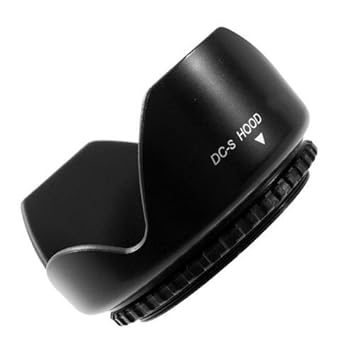
Does anyone know a manufacturer that can make a Tulip shape lens hood for the EF 85 f/1.8 or EF 100 f/2?
Any lens hood with 58mm thread can be fitted to the 85mm F1.8 or 100mm F2. However, the protection of a lens hood tulip type is lower because these are designed for wide-angle lens (28 to 35mm on full frame) and allow the sun's rays reach the lens, causing flare.
41HbKsFAK8L._SY355_.jpg
 
Upvote 0
Marsu42 said:
noncho said:
I know I can easily remove it during post-processing, but I don't wanna see it on the camera screen.

Um, on newer digic5 and later camera bodies there is the in-camera CA correction to take care of this, isn't it?

On Page 150 of the 5D3 manual it says:
If you play back a RAW image shot with the chromatic aberration corrected, the image will be displayed on the camera without the chromatic aberration correction applied.
 
Upvote 0