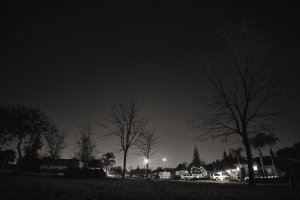
Review: Sigma 20mm f/1.4 DG Art by TDP

Canon Rumors

Who Dey
Canon Rumors Premium
Jul 20, 2010
12,848
5,687
279,596
Canada
www.canonrumors.com
HTML:
<p>Bryan at The-Digital-Picture has completed his review of Sigma’s unique 20mm f/1.4 DG Art series lens. This is the widest f/1.4 lens you can get for your full frame DSLR.</p>
<p>As always with third party lenses on Canon cameras, there is some autofocus inconsistencies that may arise. However, your experience may differ from the reviewers depending on what your style of shooting is.</p>
<p>From TDP:</p>
<blockquote><p>Invite the sun to set and turn down the lights – this lens has no fear of the dark. As of review time, the Sigma 20mm f/1.4 DG HSM Art Lens has a wider aperture than any lens wider than 24mm. With this unique tool in your kit, freeze action in low light situations calling for a wide angle of view.</p>
<p>I can’t discount some AF inconsistency encountered, but this lens overall is a very good one. The lens design, the build quality, the image quality and the price all come together to make the 20mm f/1.4 DG HSM Art Lens another great addition to the Art lens lineup for Sigma. <a href="http://www.the-digital-picture.com/Reviews/Sigma-20mm-f-1.4-DG-HSM-Art-Lens.aspx" target="_blank">Read the full review</a></p></blockquote>
<p>Sigma 20mm f/1.4 DG HSM Art: <a href="http://www.bhphotovideo.com/c/product/1191178-REG/sigma_20mm_f_1_4_art_lens.html/BI/2466/KBID/3296/DFF/d10-v21-t1-x678532" target="_blank">B&H Photo</a> | <a href="http://amzn.to/1NkFcIH" target="_blank">Amazon</a></p>
<span id="pty_trigger"></span>
 
From the same review:

"AF accuracy performance testing is always a high priority for me. Exhausting AF scenarios is not realistic, but I'm not especially excited about the AF accuracy consistency this lens has delivered in the variety of scenarios I've subjected it to. Performance has been reasonable, but not completely reliable. The center point has been delivering better AF accuracy than some of the peripheral points I tested. Interesting is that I've found that center focus point accuracy is best when the lens is focused to a slightly farther focus distance than the subject prior to autofocusing."

Also, he clearly pegs the lens as having some coma to fight through for astro, yet he still lands on "Still, this is one of the best night sky lenses available as of review time." Interesting. I don't shoot astro, but I heard the collective internet breathe a sigh of disappointment when LensTip first reported its coma testing with this lens.

- A
 
Upvote 0
ahsanford said:
Also, he clearly pegs the lens as having some coma to fight through for astro, yet he still lands on "Still, this is one of the best night sky lenses available as of review time." Interesting. I don't shoot astro, but I heard the collective internet breathe a sigh of disappointment when LensTip first reported its coma testing with this lens.
The best lens can not be something that only lives in our desire. It is necessary that it truly exists.

A lens that has coma at F1.4 and improved in F2.8, seems like a good option, and it serves well for events in indoor places as well.
 
Upvote 0
ajfotofilmagem said:
ahsanford said:
Also, he clearly pegs the lens as having some coma to fight through for astro, yet he still lands on "Still, this is one of the best night sky lenses available as of review time." Interesting. I don't shoot astro, but I heard the collective internet breathe a sigh of disappointment when LensTip first reported its coma testing with this lens.
The best lens can not be something that only lives in our desire. It is necessary that it truly exists.

A lens that has coma at F1.4 and in F2.8 is free, seems like a good option, and it serves well for events in indoor places as well.

Agree. Coma free + f/1.4 + wider than 24mm seems nigh impossible.

Again, I don't shoot astro, but those who do often choose an f/2.8 lens that is coma free over an f/1.4 lens that is not, correct? (i.e. I thought coma-free performance was a bigger need than f/1.4 for them, but please correct me if I'm mistaken.)

- A
 
Upvote 0
ahsanford said:
ajfotofilmagem said:
ahsanford said:
Also, he clearly pegs the lens as having some coma to fight through for astro, yet he still lands on "Still, this is one of the best night sky lenses available as of review time." Interesting. I don't shoot astro, but I heard the collective internet breathe a sigh of disappointment when LensTip first reported its coma testing with this lens.
The best lens can not be something that only lives in our desire. It is necessary that it truly exists.

A lens that has coma at F1.4 and in F2.8 is free, seems like a good option, and it serves well for events in indoor places as well.
Agree. Coma free + f/1.4 + wider than 24mm seems nigh impossible.

Again, I don't shoot astro, but those who do often choose an f/2.8 lens that is coma free over an f/1.4 lens that is not, correct? (i.e. I thought coma-free performance was a bigger need than f/1.4 for them, but please correct me if I'm mistaken.)
Astro photography is not my specialty, but I see Sigma 20Art as a lens dual function: indoor events, and astro. If someone does not intend to use this lens for indoor events, there are other options but none with so attractive price.

Yes, there is the Samyang 14mm but not very good sharpness in the corners and vignetting at F2.8.
 
Upvote 0
I've been shooting with this thing for the last week and it is truly awesome.

I also went into buying this thing with the understanding that it wouldn't be perfect at 1.4 as this would be even larger of a optical feat. When you put this into perspective, this is one of a kind. No other lens goes this wide and this fast. So to expect it to be better at aberration corrections than other lenses that are not as fast or as wide makes no logical sense.

So far, I have appreciated the additional field of view along with the speed. Been shooting it adapted to the A7R2 so I have been able to get plenty of shots walking around handheld between 1/2 - 1/5th of a second without issue which makes this thing priceless (for me).
 
Upvote 0
dilbert said:
ahsanford said:
From the same review:

"The center point has been delivering better AF accuracy than some of the peripheral points I tested. Interesting is that I've found that center focus point accuracy is best when the lens is focused to a slightly farther focus distance than the subject prior to autofocusing."
...

Sigh. Sounds like a case for AFMA correction. It is a good thing that we don't pay reviewers for this.
It's been deadly accurate for me so far ;D

I definitely would be more worried about it if AFMA had to be part of the equation though.
 
Upvote 0
dilbert said:
ahsanford said:
From the same review:

"The center point has been delivering better AF accuracy than some of the peripheral points I tested. Interesting is that I've found that center focus point accuracy is best when the lens is focused to a slightly farther focus distance than the subject prior to autofocusing."
...

Sigh. Sounds like a case for AFMA correction. It is a good thing that we don't pay reviewers for this.

Not at all. Bryan Carnathan is a detail nut -- there's no chance he did not calibrate the lens with their USB dock before reviewing it. So I don't think Carnathan's is saying his copy is front or back focused -- he's saying the AF accuracy is a function of which direction the AF needs to move to attain focus. That's a nutty, obscure sort of observation.

I still lament the lack of folks performing AF testing on lenses. AF is 'reviewed' in every AF lens review I've read, but folks describe it wildly broadly -- usually with adjectives ("reliable", "fast", etc.) -- and not with numbers or hard testing.

AF speed is an easy enough thing to test (LensTip crudely measures it), but with third party lenses, hit rate studies would be so helpful. Forget servo / challenging scenarios -- just calibrate it, put it on a rig on a tripod, give it good light, set a random starting focus and shoot the same thing with the same AF point 10-20 times. How often does it miss? Rinse and repeat for outer focus points.

We know the Sigmas are sharp as all get out. We know there is a USB dock for corrections for front/back focusing. What we don't know is how consistently the AF delivers, which is something you cannot tweak/tune/improve after purchase.

- A
 
Upvote 0
JohnDizzo15 said:
dilbert said:
ahsanford said:
From the same review:

"The center point has been delivering better AF accuracy than some of the peripheral points I tested. Interesting is that I've found that center focus point accuracy is best when the lens is focused to a slightly farther focus distance than the subject prior to autofocusing."
...

Sigh. Sounds like a case for AFMA correction. It is a good thing that we don't pay reviewers for this.
It's been deadly accurate for me so far ;D

I definitely would be more worried about it if AFMA had to be part of the equation though.

John....I have the lens, too. I just LOVE the 20-21mm focal length. It has always called to me. I had The Canon 16-35mm f/2.8II but bought a Zeiss 21mm f/2.8 to compliment it and to get edge to edge sharp wide shots.
I did not like the soft edges of the Canon zoom so I decided to sell it when the Canon 16-35mm f/4L IS came out. I was not disappointed with that zoom. As a matter of fact I could not believe that it was a zoom. The sharpness of the zoom and the AF lead me to stop using (carrying around) the Zeiss. I decided to sell it as that was a lot of money sitting there....I winched at letting that incredible prime go in my favorite focal length.
And...then....low and behold ...Sigma surprisingly announced the 20mm f/1.4 Art. I do not shoot astro so coma is not something that I ever think about. I have the 35mm and 50mm Art lenses and after returning one and carefully setting the AF up on the Sigma Dock they have been incredible, affordable lenses for my style of shooting on my 5DIII. I decided to by the lens because I find that when I go out with my favorite focal length prime that it helps me to "find" images that work with it. I like working in that constraint. Ad to that the fact that f/1.4 on a 20mm give a completely unique isolation opportunity with as superwide lens. It is a new way of seeing that I am still adjusting to and exploring artistically, which for me is what makes photography exciting.
I had to make some very slight adjustments on the Sigma Dock...and as you describe..my lens has been spot on whether I focus with center or peripheral focus points. The lens is a real joy for my style of shooting and my interests. (I did not read the whole TDP review...does Bryan set his lens up on the Sigma Dock for HIS camera? That is a must in my experience). The fact that this lens is so reasonably priced and for me it was a total surprise release as the next in the Art Series, (I am sure many were disappointed for this focal length). This lens has put a smile on my face like no other in recent years. Now my Canon 16-35mm f/4L IS sits in my bag more often. Fun stuff!!!!!!!
Glad you are enjoying yours!!! :D For me the Sigma Dock is a very cheap and vital tool for all Art lenses. This lens took quite a bit less adjustment than my 35mm and my 50mm.
 
Upvote 0
Its weird to me that you have to turn to somewhat of an off-brand (Samyang) if you want the best coma correction. I'm pretty sure nothing beats the Samyang 35 or even 24 when it comes to coma, but despite lack of coma aberrations those lenses are not that sharp wide open from what I've seen....

So its sort of a disappointment with the Sigma 24 and now the 20, as they both made coma correction a major marketing point, yet the results were not that "stellar". lol

I have not invested in a night sky lens yet so I'm curious to know if people would take the Samyang over the Sigma's if night sky is the main purpose?
 
Upvote 0
infared said:
John....I have the lens, too. I just LOVE the 20-21mm focal length. It has always called to me. I had The Canon 16-35mm f/2.8II but bought a Zeiss 21mm f/2.8 to compliment it and to get edge to edge sharp wide shots.
I did not like the soft edges of the Canon zoom so I decided to sell it when the Canon 16-35mm f/4L IS came out. I was not disappointed with that zoom. As a matter of fact I could not believe that it was a zoom. The sharpness of the zoom and the AF lead me to stop using (carrying around) the Zeiss. I decided to sell it as that was a lot of money sitting there....I winched at letting that incredible prime go in my favorite focal length.
And...then....low and behold ...Sigma surprisingly announced the 20mm f/1.4 Art. I do not shoot astro so coma is not something that I ever think about. I have the 35mm and 50mm Art lenses and after returning one and carefully setting the AF up on the Sigma Dock they have been incredible, affordable lenses for my style of shooting on my 5DIII. I decided to by the lens because I find that when I go out with my favorite focal length prime that it helps me to "find" images that work with it. I like working in that constraint. Ad to that the fact that f/1.4 on a 20mm give a completely unique isolation opportunity with as superwide lens. It is a new way of seeing that I am still adjusting to and exploring artistically, which for me is what makes photography exciting.
I had to make some very slight adjustments on the Sigma Dock...and as you describe..my lens has been spot on whether I focus with center or peripheral focus points. The lens is a real joy for my style of shooting and my interests. (I did not read the whole TDP review...does Bryan set his lens up on the Sigma Dock for HIS camera? That is a must in my experience). The fact that this lens is so reasonably priced and for me it was a total surprise release as the next in the Art Series, (I am sure many were disappointed for this focal length). This lens has put a smile on my face like no other in recent years. Now my Canon 16-35mm f/4L IS sits in my bag more often. Fun stuff!!!!!!!
Glad you are enjoying yours!!! :D For me the Sigma Dock is a very cheap and vital tool for all Art lenses. This lens took quite a bit less adjustment than my 35mm and my 50mm.
I absolutely am enjoying mine. My general feelings and findings that I previously posted on DPR. Figured I'd save myself some redundant typing.

I always felt like my 24mm primes were a bit close to 35mm so I always felt conflicted about which to use for some scenarios. With the 20, that extra 4mm field of view is significant and gives me the significant departure from 35mm that I was looking for. Combine that with a fast aperture and superb optics and you can just about take all my money.

My initial findings are:
-sharp across most of the frame wide open
-absurdly sharp in the center wide open
-coma does exist, but it is not noticeably worse than the Canon 24II that I had.
-distortion is there, but acceptable for my uses and personal taste
-flaring is amazingly well controlled
-focuses really well across all available points with the metabones IV T
-I don't like the bulbous front element (but I can live with it)
-no weather sealing (for this type of lens, I would have really appreciated it)
-ergonomically feels about the same as the 50 Art mounted on the same setup
-Able to get clean results handheld down to 1/2 second with IBIS

While the coma may bother night sky photogs, I generally am shooting night sky landscapes which isn't exactly the same. And so far, it has performed perfectly for my uses.
 
Upvote 0
Solar Eagle said:
Its weird to me that you have to turn to somewhat of an off-brand (Samyang) if you want the best coma correction. I'm pretty sure nothing beats the Samyang 35 or even 24 when it comes to coma, but despite lack of coma aberrations those lenses are not that sharp wide open from what I've seen....

So its sort of a disappointment with the Sigma 24 and now the 20, as they both made coma correction a major marketing point, yet the results were not that "stellar". lol

I have not invested in a night sky lens yet so I'm curious to know if people would take the Samyang over the Sigma's if night sky is the main purpose?
I agree with you regarding the 24 Art as it is a traditional FL. But it is unfair to compare the 20 as it is a completely different lens....one that has never been done before so there is no comparison.
 
Upvote 0
JohnDizzo15 said:
-coma does exist, but it is not noticeably worse than the Canon 24II that I had and it is easily corrected

While the coma may bother night sky photogs, I generally am shooting night sky landscapes which isn't exactly the same. And so far, it has performed perfectly for my uses.

How is coma corrected? I've never heard of this. lol

I'm looking for a lens to do nighttime landscapes. When using my 35 IS @ f2 people have commented on the coma in the corners and thought they were circular star trails.
 
Upvote 0
Solar Eagle said:
JohnDizzo15 said:
-coma does exist, but it is not noticeably worse than the Canon 24II that I had and it is easily corrected

While the coma may bother night sky photogs, I generally am shooting night sky landscapes which isn't exactly the same. And so far, it has performed perfectly for my uses.

How is coma corrected? I've never heard of this. lol

I'm looking for a lens to do nighttime landscapes. When using my 35 IS @ f2 people have commented on the coma in the corners and thought they were circular star trails.
You're absolutely right. Good catch. Mixing things up in my head as I'm typing. Was thinking of CA. Disregard. Can't correct tails on stars. Lol.
 
Upvote 0
infared said:
JohnDizzo15 said:
-focuses really well across all points with metabones IV T-

So you are using the lens on a Sony body? :-X
Unfortunately (and fortunately), I am. The temptation was too strong with the A7R2 so I gave Sony another try a few months back only to find out that it was the real deal (for me) this time. I say unfortunately because my wish would have been to not look that way again at all. But I figured I wouldn't be seeing anything from Canon with that specific feature set for a long time (if ever).

Again, fortunately (and unfortunately), Sony FE lenses have proven to not be up to par (for me) which involved me being sorely disappointed with the 35/1.4 and returning it. The fortunate part (from my convoluted perspective) is that that experience pushed me back in the direction of filling all of my glass needs with EF mount stuff. Enter Sigma Art 20 and 50. Both are superb and operate beautifully adapted. The IBIS has allowed me to take a lot of handheld shots I wouldn't have attempted before since I generally don't like carrying a tripod around.
 
Upvote 0
JohnDizzo15 said:
infared said:
JohnDizzo15 said:
-focuses really well across all points with metabones IV T-

So you are using the lens on a Sony body? :-X
Unfortunately (and fortunately), I am. The temptation was too strong with the A7R2 so I gave Sony another try a few months back only to find out that it was the real deal (for me) this time. I say unfortunately because my wish would have been to not look that way again at all. But I figured I wouldn't be seeing anything from Canon with that specific feature set for a long time (if ever).

Again, fortunately (and unfortunately), Sony FE lenses have proven to not be up to par (for me) which involved me being sorely disappointed with the 35/1.4 and returning it. The fortunate part (from my convoluted perspective) is that that experience pushed me back in the direction of filling all of my glass needs with EF mount stuff. Enter Sigma Art 20 and 50. Both are superb and operate beautifully adapted. The IBIS has allowed me to take a lot of handheld shots I wouldn't have attempted before since I generally don't like carrying a tripod around.

This may be the best way to use Sigma ART lenses, period, as it circumvents a lot of the focus issues. Even DPAF is a very poor replacement, unfortunately.
 
Upvote 0
TWI by Dustin Abbott said:
This may be the best way to use Sigma ART lenses, period, as it circumvents a lot of the focus issues. Even DPAF is a very poor replacement, unfortunately.

So far, that is precisely why I am so happy with the setup. While the optics of the Sigma Art lenses has been nothing short of amazing (to my eye), I had really bad AF experiences with 3 copies of the 35 when I was shooting the 6D. But when it hit, the results were awesome. The 20 and the 50 so far have been exactly as you would expect on a mirrorless body with regard to AF. Insanely accurate, consistent, and I haven't noticed a speed difference from when I had the 35 Art on the 6D and 5D3. For my shooting needs, the adaptation is plenty fast with the more important factor (to me) being that it is always dead on accurate. The 50 Art performance on the Sony is actually why I decided to sell off the 50L.
 
Upvote 0
JohnDizzo15 said:
TWI by Dustin Abbott said:
This may be the best way to use Sigma ART lenses, period, as it circumvents a lot of the focus issues. Even DPAF is a very poor replacement, unfortunately.

So far, that is precisely why I am so happy with the setup. While the optics of the Sigma Art lenses has been nothing short of amazing (to my eye), I had really bad AF experiences with 3 copies of the 35 when I was shooting the 6D. But when it hit, the results were awesome. The 20 and the 50 so far have been exactly as you would expect on a mirrorless body with regard to AF. Insanely accurate, consistent, and I haven't noticed a speed difference from when I had the 35 Art on the 6D and 5D3. For my shooting needs, the adaptation is plenty fast with the more important factor (to me) being that it is always dead on accurate. The 50 Art performance on the Sony is actually why I decided to sell off the 50L.

Thanks for all the info John. I have had good results with the 35mm, 50mm and now the 20mm Art Lenses on my 5DIII....I carefully calibrated them on the Sigma Dock...Perhaps it is just my shooting style that causes me to seem to have more consistent results than others...not sure. I just want a Canon Camera to function like the Sony.....Really do not want to get into buying the Sony A7RII , adapter etc...but clearly at this point it has some great advantages. Glad you are having such a great experience with it.!!! For now I will limp along with my 5DIII. :P
 
Upvote 0