Rokinon 14mm vs 24mm for night photography

Jan 11, 2013
105
12
5,792
I was thinking about upgrading to 6d from my current 60d + Rokinon 16mm f2 for astro. I have rented the 6d and attached the 16mm to it but the vignette is to much...which leads me to my dilemma...I have heard good things about the 14mm 2.8, and a good price point. But with the 24mm 1.4 I can utilize my Lee Foundation kit and big stopper for other than night shots, where as with 14mm's bulbulous lens I can not utilize filters. But is the 24mm wide enough for night astro on the 6d? I don't want to purchase the 24 1.4 and wish I had wider....words of wisdom please....
 
a bit more than simple math, but just to give you an idea:
14mm @ 500 = 35 seconds of exposure before star trails showing up (uou could use 600 but might not work)
24mm @ 500 = 20 seconds

http://www.eveningphotography.com/night-photography-500-rule/
http://www.davidkingham.com/blog/2012/11/how-to-avoid-star-trails

or
http://www.clarkvision.com/articles/barn.door.tracking.mount/
http://www.ioptron.com/index.cfm?select=category&cid=91af533f-b0e2-4dd6-92eb-681025cbb317
http://blog.photoshelter.com/2012/05/six-standout-night-photography-tips-to-help-you-master-the-craft/
http://intothenightphoto.blogspot.com/2013/02/overcoming-coma-aberration-part-2.html
http://www.borrowlenses.com/blog/2013/05/the-best-lenses-for-night-photography-a-case-for-rokinon-primes/

Obviously, you will have to account more light at 1.4 vs 2.8, and in neither case I would shot fully wide open.

Not sure if indeed the Rokinon 24mm is as good as the 24mm minimizing coma distortions

You have the 24-105mmm - use it @24 to get an idea of FOV

....and then you have the Tokina 11-16mm 2.8 (this time you do the google search)
 
Upvote 0
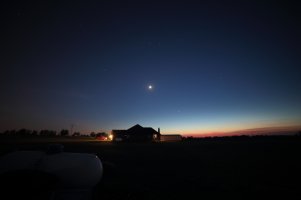
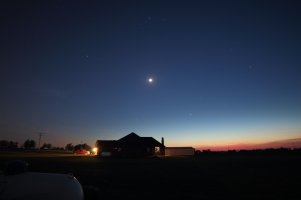
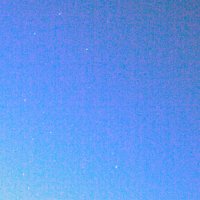
Here is a 30 sec upper rt corner with the 14@ 2.8 on a 5DIII . This was due west @ 35 deg lat, so a little elongation but no coma, it's a very nice lens for the money.
 

Attachments

  • 14mm 30sec urt corner.JPG
    14mm 30sec urt corner.JPG
    869.4 KB · Views: 367
Upvote 0
I'm using the 6D with Rokinon 14mm and so far have no complaints about the aperture size for stars - which if I'm reading your post correctly, is your bigger concern. As NWPhil said... probably not shooting it wide open so it's a bit of a moot point. As far as shooting with filters - you nailed it - not a great lens for potential filter use. I've usually used my 17mm lens for that sort of thing without any real complaint about reduced field of view vs the 14 - most of the time my use of filters is for architecture (to remove people with slow shutter speed) or to blur a waterfall etc - for architecture the 14mm gives a mustache-shaped distortion which isn't impossible to correct but it's not perfect for architecture (straight lines are usually a goal) either.

I don't have access to my files from work, but if I can remember when I get home, I'll upload a sample or two from the 14mm.

I don't have many good astro examples as it's been colder than a penguin's buttocks lately and only recently started using the 14mm for stars.
 
Upvote 0
Something to remember when you hear people talking about star trails forming after so many seconds at a focal length...you really may not want to trust them, since they likely don't know what they're talking about. It really depends on where in the sky you are shooting. You'll get more star trails shooting perpendicular to Polaris at 17mm than you will shooting directly towards or away from Polaris at 24mm. Don't put a figure in your head, because you'll be disappointed when it turns out it's not necessarily true. Even at 14mm, which is really wide, you can start to see the stars beginning to trail if you're shooting east or west at 30 seconds.

That being said, I believe the 14mm is amazing for night photography. It's a sharp lens on it's own. It's relatively fast. I like the 14mm over 24mm focal length for night photography because I can include more stars in the scene while still having an interesting foreground. You can, of course, do night photography at 24mm, and I've done it, but I personally just like to be able to include more of the sky than 24mm allows. It really depends on how you shoot. Besides night photography, the 14mm is stellar (roflmao, get it?) during the day too. It's true that it's not easy to put a filter system on it, but I've found little use to do so. There have been a few cases where I would have liked to use an ND filter, but in the end, I just whipped out my 16-35mm. I've also, with some success, although a lot more post processing, placed my already existant 77mm ND filter in front of the 14mm in several different spots to cover the image, and gotten a series of images I can blend together which is in essence one shot from the 14mm. This doesn't work with every scene, obviously, but it is one of those last-resort options that you should be aware of.

 
Upvote 0
SoullessPolack said:
Something to remember when you hear people talking about star trails forming after so many seconds at a focal length...you really may not want to trust them, since they likely don't know what they're talking about. It really depends on where in the sky you are shooting. You'll get more star trails shooting perpendicular to Polaris at 17mm than you will shooting directly towards or away from Polaris at 24mm. Don't put a figure in your head, because you'll be disappointed when it turns out it's not necessarily true. Even at 14mm, which is really wide, you can start to see the stars beginning to trail if you're shooting east or west at 30 seconds.

That being said, I believe the 14mm is amazing for night photography. It's a sharp lens on it's own. It's relatively fast. I like the 14mm over 24mm focal length for night photography because I can include more stars in the scene while still having an interesting foreground. You can, of course, do night photography at 24mm, and I've done it, but I personally just like to be able to include more of the sky than 24mm allows. It really depends on how you shoot. Besides night photography, the 14mm is stellar (roflmao, get it?) during the day too. It's true that it's not easy to put a filter system on it, but I've found little use to do so. There have been a few cases where I would have liked to use an ND filter, but in the end, I just whipped out my 16-35mm. I've also, with some success, although a lot more post processing, placed my already existant 77mm ND filter in front of the 14mm in several different spots to cover the image, and gotten a series of images I can blend together which is in essence one shot from the 14mm. This doesn't work with every scene, obviously, but it is one of those last-resort options that you should be aware of.

Hey SP,
please re-read the post again - "a bit more than simple math" .
Besides I am not passing gas - just some broad information; it's up to the OP to dig/search a bit more, and to trust in learned lessons rather than assumed teachers/KIA.
Not all nightscenes can/should/must be pointed at polaris, and many can be shot with FLs way above 24... in many cases only if a tracking gizmo is used
The new 16-40 does a somewhat better job with coma, but still not much better or good enough IMO

DROB: there are filter mounting kits for the Rokinon 14mm:
http://www.fredmiranda.com/forum/topic/1268432
https://www.fotodioxpro.com/catalogsearch/result/index/?essential_lens=246&q=rokinon+14mm
Not sure if the Lee FK can be attched on the Rokinon 14mm - maybe you should email them directly and ask, as you have the system already
 
Upvote 0