Click said:Menace said:New Zealand Dotterel (Charadrius obscurus )
Lovely shot Menace.
Thank you Click

Upvote
0
Click said:Menace said:New Zealand Dotterel (Charadrius obscurus )
Lovely shot Menace.
2n10 said:Beautiful shots Eldar and Hank.
scyrene said:A bird I have been after for years - so common and yet so skittish - the (European) goldfinch! Pleased with this
1000mm, f/10.
jrda2 said:As others have said, it's a horned grebe. It isn't a duck at all.
Thanks - guess that is why I didn't find it. I am trying to learn more about birds all the time and enjoy bird photography. Here are a few others from this spring, including an Great Horned Owl, American Kestrel, and a pheasant.

Thanks Click.Click said:Eldar said:Next day, at it again
1DX, 600mm f4L IS II
1/5000s, f6.3, ISO1250
I really like this shot Eldar.

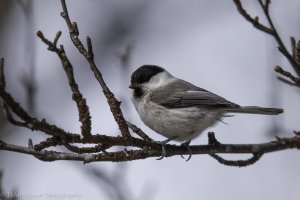
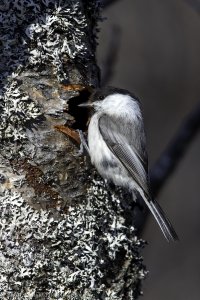
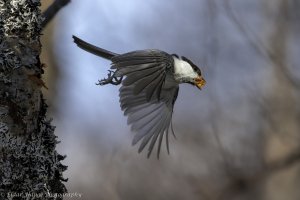
Eldar said:Willow tit, taking a break from nest building.
1DX, 600mm f4L IS II, 1.4xIII extender
1/1000s, f8,0, ISO200

Thanks Macguyver! This is the only tit shooting I´m allowed to do ...mackguyver said:Eldar, that's a great pair of tit shots ;D. Sorry, but someone had to say it.
In all seriousness, the lighting, composition, and head angle on the second one is really nice.

Thanks Hank. Yours is a great shot. How do you manage to get so close, without scaring off the bird?HankMD said:Eldar said:Willow tit, taking a break from nest building.
1DX, 600mm f4L IS II, 1.4xIII extender
1/1000s, f8,0, ISO200
Very nice series of a lovely bird, Eldar. It's always fun when people follow up on a bird.
Below is what I've been following for the past few days. As I have neither the skill nor the inclination for doing camo shots, I've been shooting from what I hope is a respectful distance of about 3 meters. This does mean I don't get to see the inside of the nest but it's the perspective we humans usually get anyway. I for one am just happy to see it at all.
Flickr: Japanese White-eye & New Brood
6D+Tammy f/6.3 600 1/1000 ISO 4000
Eldar said:Thanks Hank. Yours is a great shot. How do you manage to get so close, without scaring off the bird?
That explains it. The willow tit lives in the high mountain birch forrest and can live its entire life without being close to any human being, so they are easier scared off.HankMD said:Eldar said:Thanks Hank. Yours is a great shot. How do you manage to get so close, without scaring off the bird?
Thanks, Eldar. It helps A LOT that the Japanese White-eye is well-adapted to the urban park environment, and that the particular tree is right next to a walkway with people coming and going pretty much throughout the day. To them I was probably just another guy with a stick (monopod) standing next to a park bench...for a long time. My concern was less with disturbing the nest than attracting attention from passersby.