
You are using an out of date browser. It may not display this or other websites correctly.
You should upgrade or use an alternative browser.
You should upgrade or use an alternative browser.
Show your Bird Portraits
- Thread starter 1982chris911
- Start date

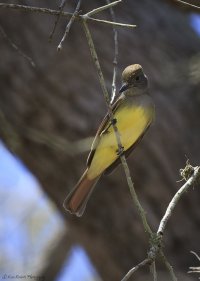
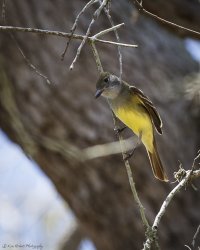
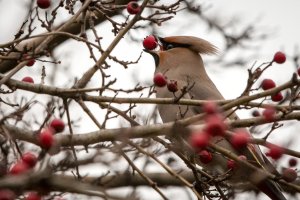
Krob78 said:BW, that's really a beautiful bird. I looked at your flicker image, I've got a lot of birds in that awkward spot! No worries, I'm even more impressed with it's beauty now! Do you know where those type of Vultures are from?bwfishing said:Krob78 said:Wow, that's huge as well. I must say, this is one of my favorite "portrait" images of Avian, mostly as it's so unusual, ugly and fantastically beautiful all in one! Do you have any images with the whole body?bwfishing said:Krob78 said:Wow, that's a pretty awesome looking bird!bwfishing said:Sarcoramphus papa (King Vulture)
Thanks Ken! Yeah, you should see the wingspan on this guy, it has to be something like 7 feet across.
Ken, it's one of my favorites for the same reason's too ;D
Yes, well I have one other posted on my flickr account. I was in a hurry to change the settings because I thought the King Vulture was preparing for flight, but changed to jumping down to the ground. Pretty silly looking capture, but I like it anyway. Here is the link, as this thread is for portraits and did not want to post that image here...
http://www.flickr.com/photos/77724886@N06/8656034062/#in/photostream/
From my understanding the geographical range: Mexico and Venezuela, through to Argentina. I'm headed towards Venezuela fairly soon so maybe I'll get a chance to see more...
That look that the Flycatcher has in the second one is priceless. Looking at the camera as if to say what is that?
Upvote
0

Looks like a Great Blue Heron to me as well.... I see them all over the place (Eastern Ontario, Canada) and there is one that regularly feeds at the end of my yard.... I never get tired of seeing them.Krob78 said:Nice image Hannes! I'm pretty certain this is a breeding aged Great Blue Heron however. Unless you are from overseas somewhere, I'm not aware of any "Grey Heron" in the US... I could be wrong but I'm fairly certain. Nice image, none the less!Hannes said:I came across a grey heron the other day in the local park being very tolerant of the people and dogs walking past
Upvote
0

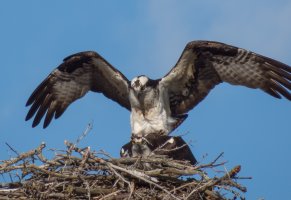

Love Osprey! I think years ago people used to also call them "Fish Eagles". They're one of my favorite, I never get tired of pursuing the "money shot" with Osprey!Don Haines said:A breeding pair of Ospreys.... breeding!
Shot with SX-50, F8.0, ISO100, 1/400 sec, 1200mm equivalent focal length.
Upvote
0
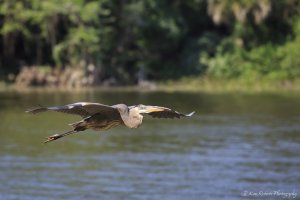
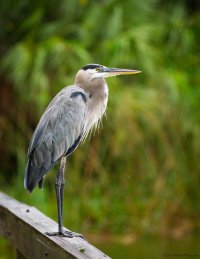
Here's one or two for comparison... *The little white marks in the 2nd image isn't dust, it's rain! Just starting to come down when the image was taken...Don Haines said:Looks like a Great Blue Heron to me as well.... I see them all over the place (Eastern Ontario, Canada) and there is one that regularly feeds at the end of my yard.... I never get tired of seeing them.Krob78 said:Nice image Hannes! I'm pretty certain this is a breeding aged Great Blue Heron however. Unless you are from overseas somewhere, I'm not aware of any "Grey Heron" in the US... I could be wrong but I'm fairly certain. Nice image, none the less!Hannes said:I came across a grey heron the other day in the local park being very tolerant of the people and dogs walking past
Attachments
Upvote
0


Krob78 said:Nice image Hannes! I'm pretty certain this is a breeding aged Great Blue Heron however. Unless you are from overseas somewhere, I'm not aware of any "Grey Heron" in the US... I could be wrong but I'm fairly certain. Nice image, none the less!Hannes said:I came across a grey heron the other day in the local park being very tolerant of the people and dogs walking past
Thanks! This is however fairly central London, UK (Battersea park) where there is at least one pair but probably more herons nesting
I suppose it might be a blue but that'd be pretty rare in Europe as far as I've understood it. Magnificent bird none the less
Upvote
0

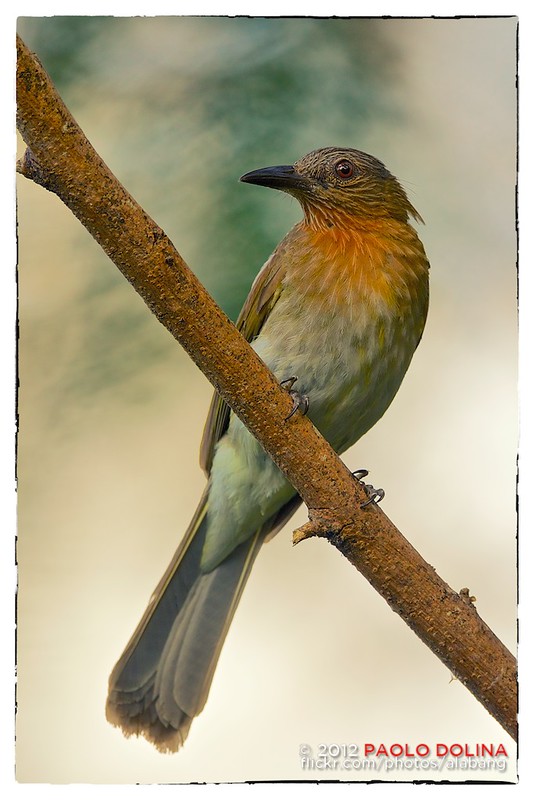
Philippine Bulbul (Hypsipetes philippinus) by alabang, on Flickr
The Philippine Bulbul (Hypsipetes philippinus) is a songbird species in the bulbul family (Pycnonotidae). It is often placed in the genus Ixos, but is better retained in Hypsipetes as long as this is not entirely merged into Ixos, as it is quite closely related to the type species of Hypsipetes, the Black Bulbul (H. leucocephalus).[1]
It is endemic to the Philippines. Its natural habitats are subtropical or tropical moist lowland forests and subtropical or tropical moist montane forests; on Mount Kitanglad on Mindanao for example it is abundant in any kind of primary forest at least between 500 and 2,250 m ASL.[2]
Fledglings of the Philippine Bulbul were recorded on Mindanao in late April, but the breeding season seems to be prolonged as females with ripe ovarian follicles were still found in April and May. Territorial songs are heard at lower altitudes as late as May, while further upslope the birds are silent at that time of year and presumably engaged in breeding activity. The Besra (Accipiter virgatus) has been recorded as a predator of young Philippine Bulbuls, and this or other goshawks might also catch adult birds.[3]
A common and adaptable bird as long as sufficient forest remains, it is not considered a threatened species by the IUCN.[4]
Source: http://en.wikipedia.org/wiki/Philippine_Bulbul
Taken: http://en.wikipedia.org/wiki/Ternate,_Cavite
Upvote
0
I'm not sure about the border or not, but I love this image Dolina!dolina said:
Philippine Bulbul (Hypsipetes philippinus) by alabang, on Flickr
The Philippine Bulbul (Hypsipetes philippinus) is a songbird species in the bulbul family (Pycnonotidae). It is often placed in the genus Ixos, but is better retained in Hypsipetes as long as this is not entirely merged into Ixos, as it is quite closely related to the type species of Hypsipetes, the Black Bulbul (H. leucocephalus).[1]
It is endemic to the Philippines. Its natural habitats are subtropical or tropical moist lowland forests and subtropical or tropical moist montane forests; on Mount Kitanglad on Mindanao for example it is abundant in any kind of primary forest at least between 500 and 2,250 m ASL.[2]
Fledglings of the Philippine Bulbul were recorded on Mindanao in late April, but the breeding season seems to be prolonged as females with ripe ovarian follicles were still found in April and May. Territorial songs are heard at lower altitudes as late as May, while further upslope the birds are silent at that time of year and presumably engaged in breeding activity. The Besra (Accipiter virgatus) has been recorded as a predator of young Philippine Bulbuls, and this or other goshawks might also catch adult birds.[3]
A common and adaptable bird as long as sufficient forest remains, it is not considered a threatened species by the IUCN.[4]
Source: http://en.wikipedia.org/wiki/Philippine_Bulbul
Taken: http://en.wikipedia.org/wiki/Ternate,_Cavite
Upvote
0
Similar threads
- Replies
- 118
- Views
- 99K
