
You are using an out of date browser. It may not display this or other websites correctly.
You should upgrade or use an alternative browser.
You should upgrade or use an alternative browser.
Show your Bird Portraits
- Thread starter 1982chris911
- Start date


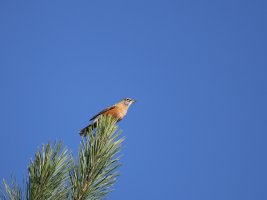
Got this Double Crested Cormorant and American Robin, they were both out of my truck window and further away then I like! Taken with my Canon R8 and RF 600mm f11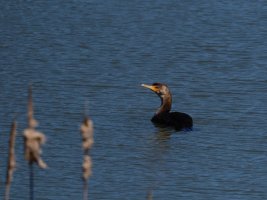
Upvote
0

Just Gray Heron: at this exposure the thighs of the Great Blue should be much darker. Off course Del Paso can easily solve the problem if he tells us where he took the photo. If he say's Americas I have to shoot myself (Great Blue is rare vagrant to Europe!) He should make it faster because I'm holding Pfeifer Zeliska .600 Nitro Express - so heavy for a long holdingVery nice Great Blue Heron. (or Grey heron) Well done, Del Paso.
 )!
)!
Upvote
0


Don't the great blue herons also have some areas of warm colors on their neck?Just Gray Heron: at this exposure the thighs of the Great Blue should be much darker. Off course Del Paso can easily solve the problem if he tells us where he took the photo. If he say's Americas I have to shoot myself (Great Blue is rare vagrant to Europe!) He should make it faster because I'm holding Pfeifer Zeliska .600 Nitro Express - so heavy for a long holding
Upvote
0

Yes, they do and in the Del Paso's photo the bird has a darker color on the neck that may go as a "warm" (warmer colors underexposed are looking dark, no?) but you MUST look at the entire picture and think what is what. I'm pretty sure if you increase the exposure of that photo in PP that will go off.Don't the great blue herons also have some areas of warm colors on their neck?
Upvote
0
Australian Reed-Warbler
View attachment 226538
View attachment 226537
(edited to re-post first picture)
View attachment 226538
View attachment 226537
(edited to re-post first picture)
Last edited:
Upvote
0

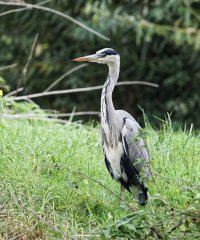
Just shot this Grey Heron a few minutes ago. They are very common here and I see them most days, so just posting this one to illustrate.(R5ii/800mm).Yes, they do and in the Del Paso's photo the bird has a darker color on the neck that may go as a "warm" (warmer colors underexposed are looking dark, no?) but you MUST look at the entire picture and think what is what. I'm pretty sure if you increase the exposure of that photo in PP that will go off.
Upvote
0
Upvote
0
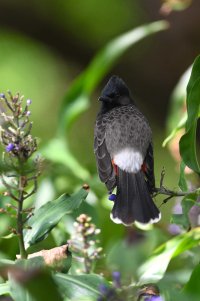
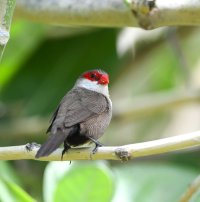
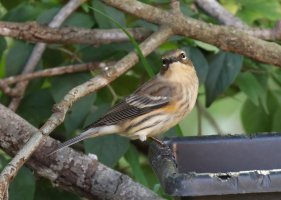
What’s the name of the gray and black bird? Also, fantastic photosThese are from today (another hot for the season day at ~31C and with the humidity, despite of the strong winds, it feels even worst!). Still without DxO PL...
View attachment 226532View attachment 226533View attachment 226534View attachment 226535

Upvote
0

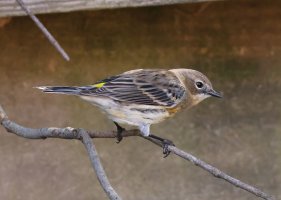
Male and female yellow rumped warblers (I think)
Both prettied up (Topaz Photo) images obtained with R5II and 200-800 @ 800; ISO 4K and 5K; 1/250s
Learning from this forum and a bit elsewhere, I think I've figured out the following:
What I originally knew as Topaz Photo (and its perpetual license) was renamed (awhile ago?) as Topaz Photo AI.
I presume the perpetual license for the AI version will remain perpetual (for Photo AI) but not be included in any future updates.
What is now 'Topaz Photo' is supposedly new-and-better, and using the new Topaz Photo will require a subscription.
With my current Topaz Photo one-year 'membership' (which was due for renewal next month), I have now been granted access to the new Topaz Photo (presumably until my renewal date...at which time I will have to decide whether I want to subscribe to the new Topaz Photo).
PLEASE IF I HAVE THIS WRONG DO NOT HESITATE TO POST
It appears that the subscription rate for the new Topaz Photo is $199 per year.
As posted here in this thread, that is a steep, steep price. Too steep.
On the other hand...
...I have found the product very, very useful at times...in fact, almost indispensable for certain tasks. And it can be kind of fun to use!
Apparently currently paid-up users will be offered some sort of discount; I will need to see the amount of that discount, and will think long-and-hard about the subscribing/renewing possibilities; I stuck with a legacy non-subscription Photoshop for well over a decade...(well, I'm almost embarrassed to say how long).
=====
Earlier in this thread, I was encouraged to 'put my camera away' after the Golden Hour in that nothing good happens with images obtained with so little light.
I'm sure that is (sort of) right...but part of why I read this forum is to see how people get the most out of their gear (especially hand-held) and their software, so that I can do the same.
At that time of day I'm usually outside grilling...looking out for (and occasionally imaging) backyard birds gives me something to do...while I'm burning dinner.
So I will continue shooting in the early evening, which, sadly, gets earlier and earlier this time of year...(and then the shock of Standard Time arrives).
Both prettied up (Topaz Photo) images obtained with R5II and 200-800 @ 800; ISO 4K and 5K; 1/250s
Learning from this forum and a bit elsewhere, I think I've figured out the following:
What I originally knew as Topaz Photo (and its perpetual license) was renamed (awhile ago?) as Topaz Photo AI.
I presume the perpetual license for the AI version will remain perpetual (for Photo AI) but not be included in any future updates.
What is now 'Topaz Photo' is supposedly new-and-better, and using the new Topaz Photo will require a subscription.
With my current Topaz Photo one-year 'membership' (which was due for renewal next month), I have now been granted access to the new Topaz Photo (presumably until my renewal date...at which time I will have to decide whether I want to subscribe to the new Topaz Photo).
PLEASE IF I HAVE THIS WRONG DO NOT HESITATE TO POST
It appears that the subscription rate for the new Topaz Photo is $199 per year.
As posted here in this thread, that is a steep, steep price. Too steep.
On the other hand...
...I have found the product very, very useful at times...in fact, almost indispensable for certain tasks. And it can be kind of fun to use!
Apparently currently paid-up users will be offered some sort of discount; I will need to see the amount of that discount, and will think long-and-hard about the subscribing/renewing possibilities; I stuck with a legacy non-subscription Photoshop for well over a decade...(well, I'm almost embarrassed to say how long).
=====
Earlier in this thread, I was encouraged to 'put my camera away' after the Golden Hour in that nothing good happens with images obtained with so little light.
I'm sure that is (sort of) right...but part of why I read this forum is to see how people get the most out of their gear (especially hand-held) and their software, so that I can do the same.
At that time of day I'm usually outside grilling...looking out for (and occasionally imaging) backyard birds gives me something to do...while I'm burning dinner.
So I will continue shooting in the early evening, which, sadly, gets earlier and earlier this time of year...(and then the shock of Standard Time arrives).
Upvote
0

Just a few from August, sorting through the shots of multiple coveys of CA quail and others visiting the rapidly depleting seep.
One of the pair of surviving juvenile CA Thrashers who consider the seep part of its area.

Only one juvenile Steller's Jay this year.

Juvenile CA Quail male molting slowly.

This trio of juvenile CA Quail were navigating through the boulders.

A CA Quail crossing the 'bridge'. Always find it interesting how the feathers develop.

One of the pair of surviving juvenile CA Thrashers who consider the seep part of its area.
Only one juvenile Steller's Jay this year.
Juvenile CA Quail male molting slowly.
This trio of juvenile CA Quail were navigating through the boulders.
A CA Quail crossing the 'bridge'. Always find it interesting how the feathers develop.
Upvote
0
These photos need bigger screen (magnification!) to be seen properly! Really great shots.Just a few from August, sorting through the shots of multiple coveys of CA quail and others visiting the rapidly depleting seep.
One of the pair of surviving juvenile CA Thrashers who consider the seep part of its area.
Only one juvenile Steller's Jay this year.
Juvenile CA Quail male molting slowly.
This trio of juvenile CA Quail were navigating through the boulders.
A CA Quail crossing the 'bridge'. Always find it interesting how the feathers develop.
Upvote
0

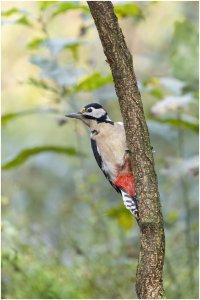
Canon EOS R5 Mark II
EF100-400mm f/4.5-5.6L IS II USM
Shot at 400mm with f/5.6, ISO 2500, 1/500
Distance: 6.9 meter
EF100-400mm f/4.5-5.6L IS II USM
Shot at 400mm with f/5.6, ISO 2500, 1/500
Distance: 6.9 meter
Upvote
0
Fine shots as usual!Just a few from August, sorting through the shots of multiple coveys of CA quail and others visiting the rapidly depleting seep.
One of the pair of surviving juvenile CA Thrashers who consider the seep part of its area.
Only one juvenile Steller's Jay this year.
Juvenile CA Quail male molting slowly.
This trio of juvenile CA Quail were navigating through the boulders.
A CA Quail crossing the 'bridge'. Always find it interesting how the feathers develop.
Upvote
0
Similar threads

- Replies
- 118
- Views
- 99K
