Show your Bird Portraits

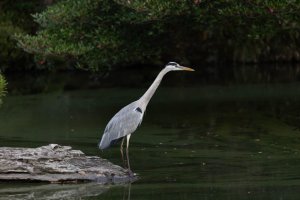
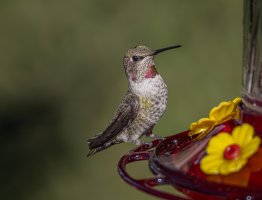
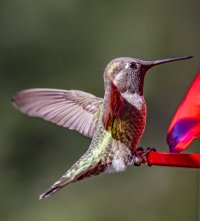
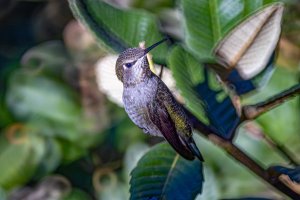
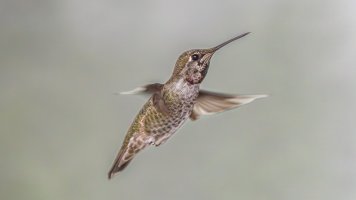
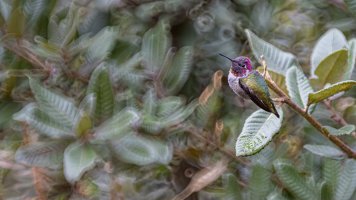
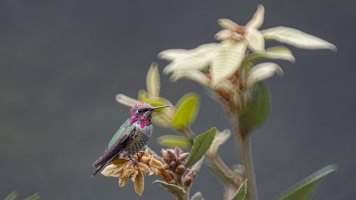
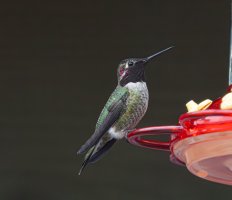
Fun with an old lens. R7 + Nikon 1000mm mirror lens. A lot of junk images, and DOF is paper thin, but if you nail focus the lens is remarkably sharp. Not as good as the 200-800, but certainly usable with enough patience.


View attachment 226620View attachment 226621
As it is an experiment for fun, I hope you don't mind my commenting. It has a certain sharpness about it in terms of lines on feathers, but there is an overall softness and some artefacts at he pixel peeking leve.
 
Upvote 0
As it is an experiment for fun, I hope you don't mind my commenting. It has a certain sharpness about it in terms of lines on feathers, but there is an overall softness and some artefacts at he pixel peeking leve.
Don't mind at all. All the mirrors are pretty soft compared to a good refractor. The Nikon 1000 is one of the better ones that I have, but MFD is about 30 ft, so to get decent magnification for the hummers, I need to use the R7 and that is pushing the lens very hard. The lens is much happier with A FF body (even the R5) and best with a 20-24 MP body like an R6 or R8. I have a Tamron 500mm that will focus very close, so when I get another nice sunny day, I will give that a try with the R5 as my hummers are pretty friendly, so I can get closer if the lens will focus closer. I have a Perkin-Elemer 800mm solid Cat (same as the Vivitar) and it is not quite sharp enough to light up the focus peaking on the R7, and also does not focus close enough to use FF on hummers, so it dropped out of the experiment. I have a 600mm Vivitar Solid Cat arriving in the next couple of days and will see if that is better than the 800 (yes, I do collect mirrors). Will also try the 500mm Canon FD, which is in the same league with the Nikon. The catch with the mirrors is that the center hole flattens the airy disc and makes the point of peak focus very hard to find and also narrows the usable DOF quite a bit compared to a refractor. BTW, the artifacts are thanks to my being a bit over aggressive with Topaz.
 
  • Like
Reactions: 1 user
Upvote 0
Don't mind at all. All the mirrors are pretty soft compared to a good refractor. The Nikon 1000 is one of the better ones that I have, but MFD is about 30 ft, so to get decent magnification for the hummers, I need to use the R7 and that is pushing the lens very hard. The lens is much happier with A FF body (even the R5) and best with a 20-24 MP body like an R6 or R8. I have a Tamron 500mm that will focus very close, so when I get another nice sunny day, I will give that a try with the R5 as my hummers are pretty friendly, so I can get closer if the lens will focus closer. I have a Perkin-Elemer 800mm solid Cat (same as the Vivitar) and it is not quite sharp enough to light up the focus peaking on the R7, and also does not focus close enough to use FF on hummers, so it dropped out of the experiment. I have a 600mm Vivitar Solid Cat arriving in the next couple of days and will see if that is better than the 800 (yes, I do collect mirrors). Will also try the 500mm Canon FD, which is in the same league with the Nikon. The catch with the mirrors is that the center hole flattens the airy disc and makes the point of peak focus very hard to find and also narrows the usable DOF quite a bit compared to a refractor. BTW, the artifacts are thanks to my being a bit over aggressive with Topaz.
The Vivitar solid cat is a legendary lens, I’m sure you will enjoy it. I guessed it was Topaz with the combed look to the fear
 
Upvote 0
The Vivitar solid cat is a legendary lens, I’m sure you will enjoy it. I guessed it was Topaz with the combed look to the fear
The 600 is due in Friday. The 800 I have is branded Perkin-Elmer, which is the company that made the solid cats for Vivitar. I don't know if they sold them alongside Vivitar or if the one I have is prior to the Vivitar deal. It is a pretty cool lens, but not as sharp as some of the other mirrors I have. Interested to see if the 600 is sharper as it was billed as being in excellent condition. The interesting thing about all the solid cats is how short they are due to most of the optical path being in glass with a higher refractive index than air. Heavy, but short.
 
Upvote 0
The 600 is due in Friday. The 800 I have is branded Perkin-Elmer, which is the company that made the solid cats for Vivitar. I don't know if they sold them alongside Vivitar or if the one I have is prior to the Vivitar deal. It is a pretty cool lens, but not as sharp as some of the other mirrors I have. Interested to see if the 600 is sharper as it was billed as being in excellent condition. The interesting thing about all the solid cats is how short they are due to most of the optical path being in glass with a higher refractive index than air. Heavy, but short.
Reputedly much more robust than the conventional, which is supposedly why commissioned by the US forces from Perkin-Elmer.
 
Upvote 0
Jeepers...Perkin-Elmer! I had no idea...


My own experience with Perkin-Elmer is here:


...a reason to check on and read CR--the surprises!

=====

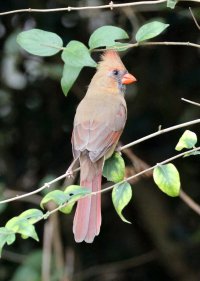
Nice (dark) background for this female Northern Cardinal--R5II + 200-800 @ 800; 1/500; ISO 3200; some Topaz fiddling


K41A3062 picasa crop-topaz2-denoise-sharpen picasa fix.JPG
 
  • Like
Reactions: 6 users
Upvote 0
More fun with mirrors. This time with the R5 and a Tamron BBAR 500mm. This lens has an MFD around 6 ft, and it stays sharp up close, so in many ways the best of the mirrors for this kind of work.

This is a 100% crop. (no scaling)

2W4A8458-Edit.jpg


This shows the focus challenge when up close with mirror. Only about half the bird is in focus.

2W4A8412-Edit.jpg


The last two are at about 15-18 ft in the brush. Focus is easier at this distance

2W4A8495-Edit.jpg

2W4A8480-Edit.jpg
 
  • Like
  • Love
Reactions: 6 users
Upvote 0
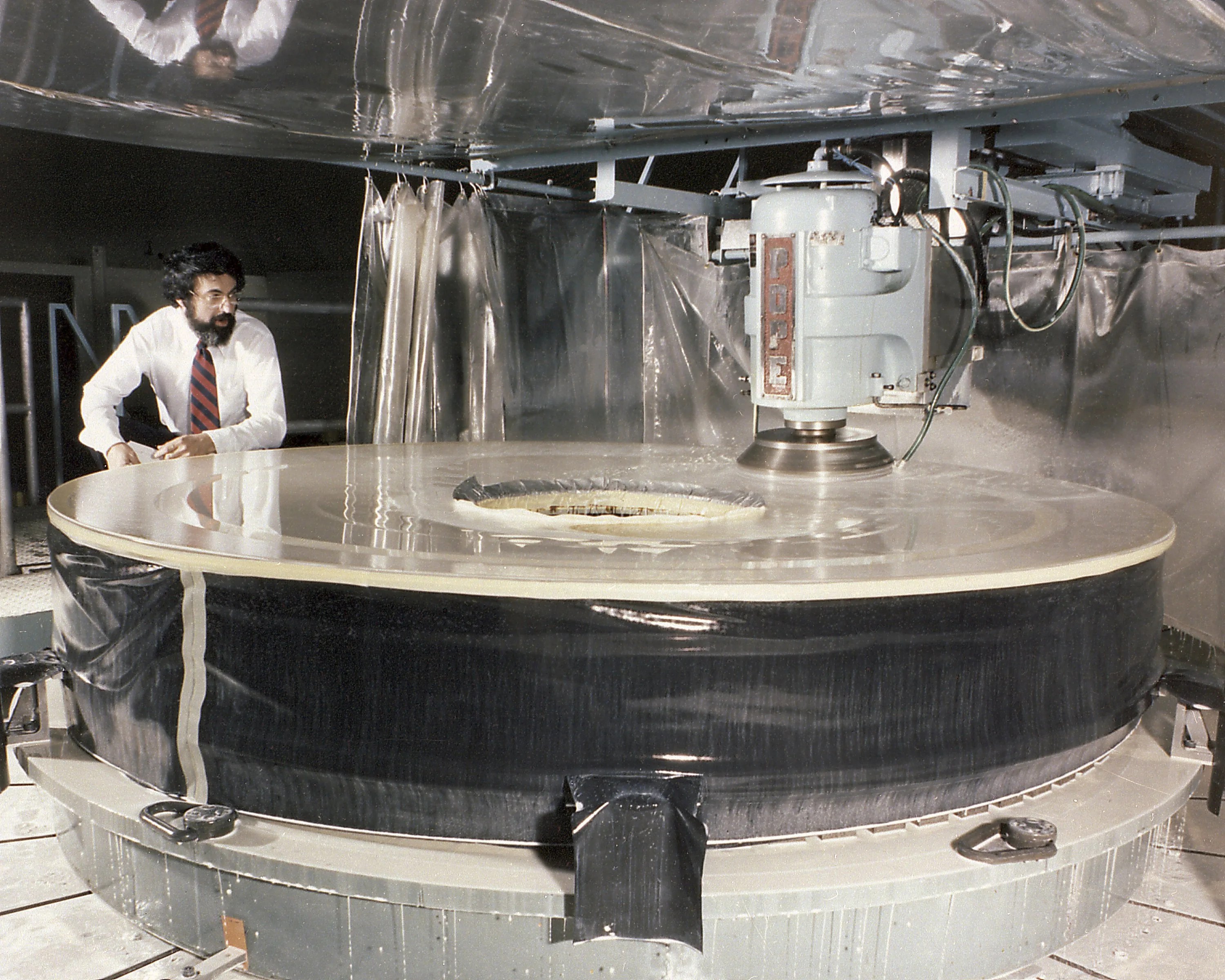
Perkin Elmer ground the Hubble mirror, and screwed it up. They had to send up a corrective lenses.
Thanks so much for the link.

That the Hubble was imperfect...I remembered.

I did not know why, and did not know that Perkin-Elmer was involved.

=====

As part of my graduate studies, I utilized IR spectroscopy on a regular basis.

The existing device (1980) in our lab was very old...and its innards were very much analog. I cannot find anything online that looks like what I remember...they were wide and tall and heavy.

Our lab had two of them. Finally, they both broke down at the same time.

About 1981 or 1982, we replaced them with a single Perkin-Elmer IR spectrometer, a new design...all electronic.

PE had trouble with these, and their service personnel were in the dark as far as repairs were concerned.

It turns out, across town, that my wife was employed in a chemistry lab at that same time, and they too had these new PE IR spectrometers in her labs.

And the devices in her labs were also problematic.

Her repairman was the same guy that worked on ours (Rodney), the recollection of whom causes both my wife and I to smile.

Remember, this was 45 or so years ago.

And you know how Rodney attempted (often successfully) to repair these electronic IR spectrometers, in both of our labs?

He literally swapped circuit boards...in-and-out...one at a time.

The way you put a graphics card into a PC!

=====

My camera at that time?

A Polaroid and a Minolta, I think.

 
Upvote 0
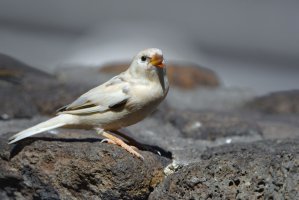
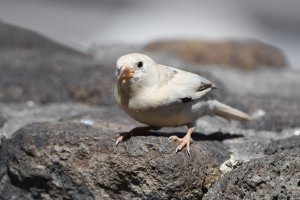
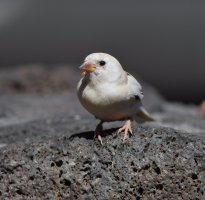
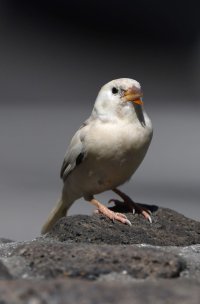
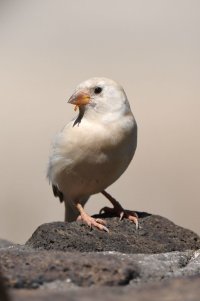
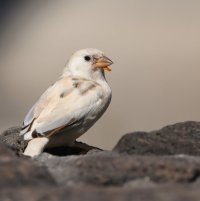
I'm sure you guys have already full mouth of this leucistic House sparrow but at 70+ I have no idea when I will see something like it again (if at all - huh, most probably not!). So, I'm going there once of a week and take what I can... On other hand there are not much birds around that I have no photos of (right now may be two but on a places that you shoot to document, not for really good photo...).
BTW: sometimes I really want to grab and clean little bit the bird but you know....

DSC_2103.jpgDSC_2112.jpgDSC_2146.jpgDSC_2199.jpgDSC_2228.jpgDSC_2253.jpg
 
  • Like
Reactions: 8 users
Upvote 0
Thanks so much for the link.

That the Hubble was imperfect...I remembered.

I did not know why, and did not know that Perkin-Elmer was involved.

=====

As part of my graduate studies, I utilized IR spectroscopy on a regular basis.

The existing device (1980) in our lab was very old...and its innards were very much analog. I cannot find anything online that looks like what I remember...they were wide and tall and heavy.

Our lab had two of them. Finally, they both broke down at the same time.

About 1981 or 1982, we replaced them with a single Perkin-Elmer IR spectrometer, a new design...all electronic.

PE had trouble with these, and their service personnel were in the dark as far as repairs were concerned.

It turns out, across town, that my wife was employed in a chemistry lab at that same time, and they too had these new PE IR spectrometers in her labs.

And the devices in her labs were also problematic.

Her repairman was the same guy that worked on ours (Rodney), the recollection of whom causes both my wife and I to smile.

Remember, this was 45 or so years ago.

And you know how Rodney attempted (often successfully) to repair these electronic IR spectrometers, in both of our labs?

He literally swapped circuit boards...in-and-out...one at a time.

The way you put a graphics card into a PC!

=====

My camera at that time?

A Polaroid and a Minolta, I think.
Minolta? They made the the first mass produced AF cameras as I recall (after Konica). Later it was Konica-Minolta and now just Sony...
 
Upvote 0
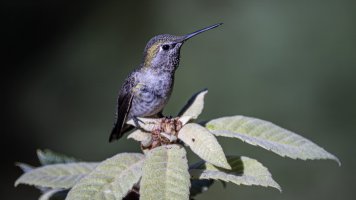
Continued reflections of hummingbirds. This time a more contemporary lens. This is a TT artisan 250mm f/5.6 Reflex, which is pretty much a clone of the somewhat rare and expensive Minolta of the same dimensions. I have often been curious about the Minolta but never was willing to choke up the asking price, so when this came along, I thought I would give it a try. Not bad for the money. Today was very dark and grey, so shots only possible due to the faster f stop, but still most are at ISO 6400, so some loss of low contrast detail due to noise reduction since cats are pretty low contrast to begin with. First two shots from the R5 and the remainder from R7 as not enough reach for most of the brush shots with the R5. The Vivitar 600mm Solid Cat just arrived and it appears to be identical to the 800 I already have except for one extra magnification element in the 800, so MFD is the same with less focal length. Not useful for my little birds, but the lens in in pristine shape.

2W4A8531-Edit.jpg


2W4A8546-Edit-2.jpg


E57A5034-Edit-2.jpg


E57A4963-Edit.jpg
 
Last edited:
  • Like
Reactions: 7 users
Upvote 0