De Bello Gallico was written by Caesar in 51-52 BC. The Normans invaded Britain in 1066. I can still translate De Bello and also Virgil's Aeneid, but I would find having learned German or Spanish far more useful. My Latin teacher would answer when asked why we should learn Latin that it was to give him a job. My daughter's teacher made the same reply.Ah, but William the Conqueror sailed in from Gaul, and even though the Normans were arguably more Viking than French, I suspect a "few" Celtic (in Caesar's term) descendants came along for the ride to help populate England. To the original point, in spite of the fact that it is hard to find any schools that teach it anymore, Latin is still useful for so many disciplines.
My experience was that Latin made learning other (particularly Indo-Germanic) languages much easier. BTW, that Obelix looks pretty toughDe Bello Gallico was written by Caesar in 51-52 BC. The Normans invaded Britain in 1066. I can still translate De Bello and also Virgil's Aeneid, but I would find having learned German or Spanish far more useful. My Latin teacher would answer when asked why we should learn Latin that it was to give him a job. My daughter's teacher made the same reply.
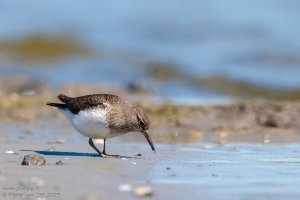
Common sandpiper (Actitis hypoleucos) having a small snack.
View attachment 229389
R5 Mk II with EF 600mm f4 II + 1.4 extender, cropped in post production.
This name is from a general taxonomic reference (I keep track of my observations on inaturalist.org, for example). I don't know the exact and correct names of birds in other languages (English, German, Japanese, etc.), and I might make a mistake with a translator. But the Latin name is always the same everywhere.Why do you always use the Latin name? I belong to several serious bird organizations and no one ever uses the Latin even in formal occasions or mostly even knows the Latin name. The beauty of bird names is that they are often descriptive of the bird, and easy to remember and discuss in conversation or writing. This bird is a Bluethroat, and it is obvious to anyone what it is and everyone can remember what name it has. OK, a German speaker, for example, will use the German in Germany but do they know or use the Latin name when speaking to each other?
The website https://avionary.info/ translates bird names from Latin to English and between most languages. Not many know or use the Latin name and it might as well be written in Mandarin or Cyrillic for most and so we individually have to look it up. If you translate it then it saves everyone else having to do so.This name is from a general taxonomic reference (I keep track of my observations on inaturalist.org, for example). I don't know the exact and correct names of birds in other languages (English, German, Japanese, etc.), and I might make a mistake with a translator. But the Latin name is always the same everywhere.
I use wikipedia: The Dutch wikipedia for the Latin name and then use the Latin name to lookup the English name in the English wikipedia. And copy/ paste these names into the CR forum.This name is from a general taxonomic reference (I keep track of my observations on inaturalist.org, for example). I don't know the exact and correct names of birds in other languages (English, German, Japanese, etc.), and I might make a mistake with a translator. But the Latin name is always the same everywhere.
Much appreciated. I used to post on nedpix.nl, where the forthright Dutch mods taught me a huge amount for which I am most grateful. But, I annoyed them by only knowing English!I use wikipedia: The Dutch wikipedia for the Latin name and then use the Latin name to lookup the English name in the English wikipedia. And copy/ paste these names into the CR forum.