
You are using an out of date browser. It may not display this or other websites correctly.
You should upgrade or use an alternative browser.
You should upgrade or use an alternative browser.
Show your Bird Portraits
- Thread starter 1982chris911
- Start date


Usually the time of day and the right combo of shutter speed/aperture/iso... Time of day helps totally early morning or early evening, usually morning on some of these. I also look for the blue skies, if they are already blue, they usually stay blue... unless there's a cloud behind them...rpt said:Lovely! What do you do to get these blue shades in the water and the sky. In my pics it goes to whiteKrob78 said:Great Blue Heron, Inner Reflection..
The only other thing I sometimes do is if the sky isn't looking quite right, sometimes I'll change the style setting in post to landscape to help bring out some colors in the sky, and pull back some of the saturation that may get on the subject if it's too much. It doesn't always work but we have a lot of blue skies here in Florida, it's usually a pretty color in early morning...
Thanks RPT, I appreciate your comments!
Upvote
0

yes, Sweet! I used to get Black Capped Chickadees to do that when I was a kid, living in New England! Great job!Click said:bjd said:Great Tit.
Awesome.
Upvote
0

Lovely tits! 
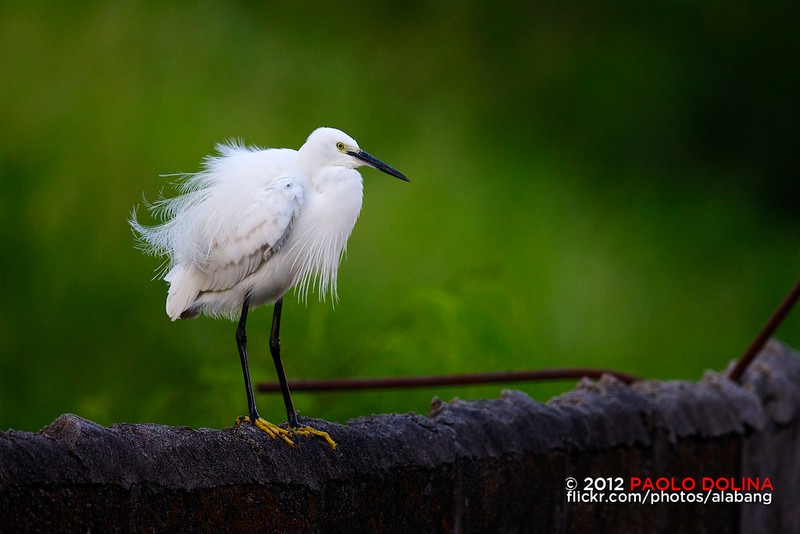
Little Egret (Egretta garzetta) by alabang, on Flickr
The Little Egret is more delicate-looking than any other heron-like bird which occurs in Britain. It is much smaller than a Grey Heron, with snowy white plumage, a long pointed black bill and black legs with strikingly yellow feet.
Habitat
Feeds by the edges of lakes, reservoirs, rivers, brackish lagoons and saltpans. Breeds in waterside trees and bushes.
Behaviour
The plumes which are present in spring serve to emphasise the threat and appeasement gestures given at the nest.
Migration
Most of the European population migrates west and south, mostly to north Africa but also, to an increasing degree, to the european side of the Mediterranean and the Atlantic coasts. After fledging, juveniles disperse almost randomly from July to September. This movement is presumably governed by prevailing feeding conditions.
Source: http://www.birdguides.com/species/species.asp?sp=20023
Location: http://en.wikipedia.org/wiki/Muntinlupa
EXIF: http://www.flickr.com/photos/alabang/8573613369/#meta/
Philippine birds
Little Egret (Egretta garzetta) by alabang, on Flickr
The Little Egret is more delicate-looking than any other heron-like bird which occurs in Britain. It is much smaller than a Grey Heron, with snowy white plumage, a long pointed black bill and black legs with strikingly yellow feet.
Habitat
Feeds by the edges of lakes, reservoirs, rivers, brackish lagoons and saltpans. Breeds in waterside trees and bushes.
Behaviour
The plumes which are present in spring serve to emphasise the threat and appeasement gestures given at the nest.
Migration
Most of the European population migrates west and south, mostly to north Africa but also, to an increasing degree, to the european side of the Mediterranean and the Atlantic coasts. After fledging, juveniles disperse almost randomly from July to September. This movement is presumably governed by prevailing feeding conditions.
Source: http://www.birdguides.com/species/species.asp?sp=20023
Location: http://en.wikipedia.org/wiki/Muntinlupa
EXIF: http://www.flickr.com/photos/alabang/8573613369/#meta/
Philippine birds
Upvote
0

Upvote
0

dolina said:Lovely tits!
Little Egret (Egretta garzetta) by alabang, on Flickr
The Little Egret is more delicate-looking than any other heron-like bird which occurs in Britain. It is much smaller than a Grey Heron, with snowy white plumage, a long pointed black bill and black legs with strikingly yellow feet.
Habitat
Feeds by the edges of lakes, reservoirs, rivers, brackish lagoons and saltpans. Breeds in waterside trees and bushes.
Behaviour
The plumes which are present in spring serve to emphasise the threat and appeasement gestures given at the nest.
Migration
Most of the European population migrates west and south, mostly to north Africa but also, to an increasing degree, to the european side of the Mediterranean and the Atlantic coasts. After fledging, juveniles disperse almost randomly from July to September. This movement is presumably governed by prevailing feeding conditions.
Source: http://www.birdguides.com/species/species.asp?sp=20023
Location: http://en.wikipedia.org/wiki/Muntinlupa
EXIF: http://www.flickr.com/photos/alabang/8573613369/#meta/
Philippine birds
That is one gorgeous image. The color is just fabulous!
Upvote
0
Thank you Dustin. ALso saw your comment on my flickr. It was suggested I clone out the rusted metal bars. Will do so in the future.
ALso saw your comment on my flickr. It was suggested I clone out the rusted metal bars. Will do so in the future.TWI by Dustin Abbott said:dolina said:Lovely tits!
Little Egret (Egretta garzetta) by alabang, on Flickr
The Little Egret is more delicate-looking than any other heron-like bird which occurs in Britain. It is much smaller than a Grey Heron, with snowy white plumage, a long pointed black bill and black legs with strikingly yellow feet.
Habitat
Feeds by the edges of lakes, reservoirs, rivers, brackish lagoons and saltpans. Breeds in waterside trees and bushes.
Behaviour
The plumes which are present in spring serve to emphasise the threat and appeasement gestures given at the nest.
Migration
Most of the European population migrates west and south, mostly to north Africa but also, to an increasing degree, to the european side of the Mediterranean and the Atlantic coasts. After fledging, juveniles disperse almost randomly from July to September. This movement is presumably governed by prevailing feeding conditions.
Source: http://www.birdguides.com/species/species.asp?sp=20023
Location: http://en.wikipedia.org/wiki/Muntinlupa
EXIF: http://www.flickr.com/photos/alabang/8573613369/#meta/
Philippine birds
That is one gorgeous image. The color is just fabulous!
Upvote
0
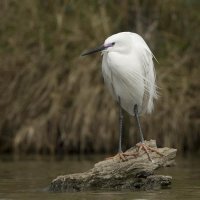
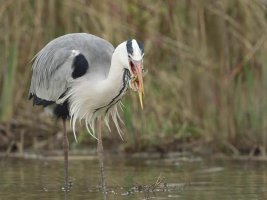

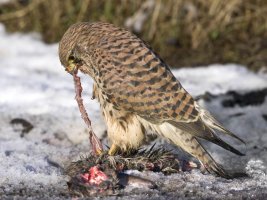
Mick said:I just love Raptors. My fav is the Kestrel, sat on some road kill, this female must have been starving as it rips the guts out of the dead rabbit. And no, its not set up either, its a wild bird.
It is a dead bird, not rabbit. Nice shot though.
Upvote
0
Outstanding! Really beautiful...dolina said:Thank you Dustin.
TWI by Dustin Abbott said:dolina said:Lovely tits!
Little Egret (Egretta garzetta) by alabang, on Flickr
The Little Egret is more delicate-looking than any other heron-like bird which occurs in Britain. It is much smaller than a Grey Heron, with snowy white plumage, a long pointed black bill and black legs with strikingly yellow feet.
Habitat
Feeds by the edges of lakes, reservoirs, rivers, brackish lagoons and saltpans. Breeds in waterside trees and bushes.
Behaviour
The plumes which are present in spring serve to emphasise the threat and appeasement gestures given at the nest.
Migration
Most of the European population migrates west and south, mostly to north Africa but also, to an increasing degree, to the european side of the Mediterranean and the Atlantic coasts. After fledging, juveniles disperse almost randomly from July to September. This movement is presumably governed by prevailing feeding conditions.
Source: http://www.birdguides.com/species/species.asp?sp=20023
Location: http://en.wikipedia.org/wiki/Muntinlupa
EXIF: http://www.flickr.com/photos/alabang/8573613369/#meta/
Philippine birds
That is one gorgeous image. The color is just fabulous!
Upvote
0
In the first image anyway, a bird. The second doesn't look like a bird at all... And it's a different bird, He said that one is the female Kestrel. I think that's what he was saying anyway... ???IslanderMV said:Mick said:I just love Raptors. My fav is the Kestrel, sat on some road kill, this female must have been starving as it rips the guts out of the dead rabbit. And no, its not set up either, its a wild bird.
It is a dead bird, not rabbit. Nice shot though.
Upvote
0
Hey thanks for the kind words, and thanks to the others that commented too.rpt said:
You're very kind.
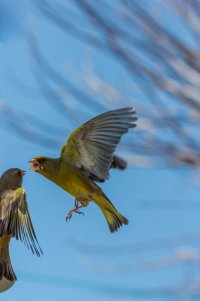
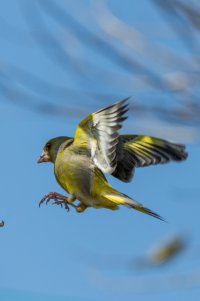
Here's a Greenfich squabble.
Attachments
Upvote
0
THanks Krob78 and Dustin.
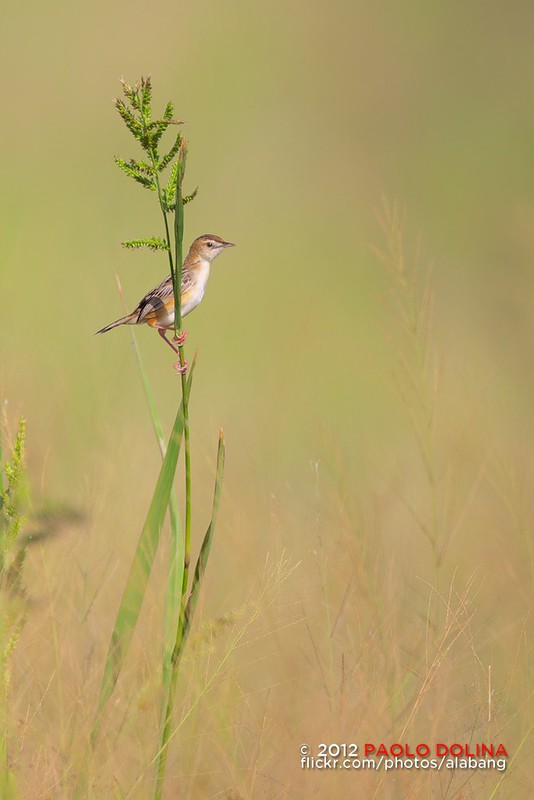
Streaked Fantail Warbler (Cisticola juncidis) by alabang, on Flickr
The Zitting Cisticola or Streaked Fantail Warbler (Cisticola juncidis), is widely distributed Old World warbler whose breeding range includes southern Europe, Africa (outside the deserts and rainforest), and southern Asia down to northern Australia. A small bird found mainly in grasslands, it is best identified by its rufous rump, lacks any gold on the collar and the brownish tail is tipped with white. During the breeding season, males have a zigzagging flight display accompanied by regular "zitting" calls that has been likened to repeated snips of a scissor. They build their pouch nest suspended within a clump of grass.
Source: http://en.wikipedia.org/wiki/Zitting_Cisticola
Location: http://en.wikipedia.org/wiki/International_Rice_Research_Institute
Philippine birds
Streaked Fantail Warbler (Cisticola juncidis) by alabang, on Flickr
The Zitting Cisticola or Streaked Fantail Warbler (Cisticola juncidis), is widely distributed Old World warbler whose breeding range includes southern Europe, Africa (outside the deserts and rainforest), and southern Asia down to northern Australia. A small bird found mainly in grasslands, it is best identified by its rufous rump, lacks any gold on the collar and the brownish tail is tipped with white. During the breeding season, males have a zigzagging flight display accompanied by regular "zitting" calls that has been likened to repeated snips of a scissor. They build their pouch nest suspended within a clump of grass.
Source: http://en.wikipedia.org/wiki/Zitting_Cisticola
Location: http://en.wikipedia.org/wiki/International_Rice_Research_Institute
Philippine birds
Upvote
0
dolina said:Lovely tits!
Little Egret (Egretta garzetta) by alabang, on Flickr
The Little Egret is more delicate-looking than any other heron-like bird which occurs in Britain. It is much smaller than a Grey Heron, with snowy white plumage, a long pointed black bill and black legs with strikingly yellow feet.
Habitat
Feeds by the edges of lakes, reservoirs, rivers, brackish lagoons and saltpans. Breeds in waterside trees and bushes.
Behaviour
The plumes which are present in spring serve to emphasise the threat and appeasement gestures given at the nest.
Migration
Most of the European population migrates west and south, mostly to north Africa but also, to an increasing degree, to the european side of the Mediterranean and the Atlantic coasts. After fledging, juveniles disperse almost randomly from July to September. This movement is presumably governed by prevailing feeding conditions.
Source: http://www.birdguides.com/species/species.asp?sp=20023
Location: http://en.wikipedia.org/wiki/Muntinlupa
EXIF: http://www.flickr.com/photos/alabang/8573613369/#meta/
Philippine birds
+1 on this fantastic capture!
Upvote
0
I've only recently started but here's a few of mine. All hand-held, 7D, usually ISO 800 or 1600, no idea of the other settings.
Geese Flying (100-400 L)

IM130780.jpg by sm_carey, on Flickr
Swans Flying (100-400 L):

IM131697.jpg by sm_carey, on Flickr
Wren (70-300 L):

IM132508.jpg by sm_carey, on Flickr
Swans Fightling (100-400 L)

IM131916.jpg by sm_carey, on Flickr
Starlings (70-300 L)

IM132740.jpg by sm_carey, on Flickr
Blackbird (70-300 L)

IM133941.jpg by sm_carey, on Flickr
Geese Flying (100-400 L)
IM130780.jpg by sm_carey, on Flickr
Swans Flying (100-400 L):
IM131697.jpg by sm_carey, on Flickr
Wren (70-300 L):
IM132508.jpg by sm_carey, on Flickr
Swans Fightling (100-400 L)
IM131916.jpg by sm_carey, on Flickr
Starlings (70-300 L)
IM132740.jpg by sm_carey, on Flickr
Blackbird (70-300 L)
IM133941.jpg by sm_carey, on Flickr
Upvote
0
The pairs are great!scarey83 said:I've only recently started but here's a few of mine. All hand-held, 7D, usually ISO 800 or 1600, no idea of the other settings.
Geese Flying (100-400 L)
IM130780.jpg by sm_carey, on Flickr
Swans Flying (100-400 L):
IM131697.jpg by sm_carey, on Flickr
Wren (70-300 L):
IM132508.jpg by sm_carey, on Flickr
Swans Fightling (100-400 L)
IM131916.jpg by sm_carey, on Flickr
Starlings (70-300 L)
IM132740.jpg by sm_carey, on Flickr
Blackbird (70-300 L)
IM133941.jpg by sm_carey, on Flickr
Upvote
0
Similar threads
- Replies
- 118
- Views
- 99K
