
You are using an out of date browser. It may not display this or other websites correctly.
You should upgrade or use an alternative browser.
You should upgrade or use an alternative browser.
Show your Bird Portraits
- Thread starter 1982chris911
- Start date

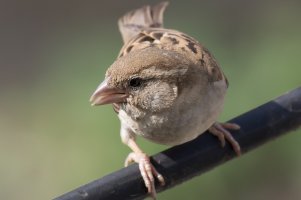
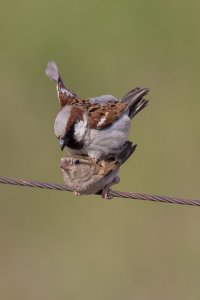

Thanks bjd and bwfishing. Lovely images scarey. Wicked shots JR.

Brown Shrike (Lanius cristatus) by alabang, on Flickr
The Brown Shrike is a migratory species and ringing studies show that they have a high fidelity to their wintering sites, often returning to the same locations each winter.[17][18][19] They begin establishing wintering territories shortly on arrival and their loud chattering or rattling calls are distinctive. Birds that arrive early and establish territories appear to have an advantage over those that arrive later in the winter areas.[20][21] The timing of their migration is very regular with their arrival in winter to India in August to September and departure in April.[22] During their winter period, they go through a premigratory moult.[17] Their song in the winter quarters is faint and somewhat resembles the call of the Rosy Starling and often includes mimicry of other birds. The beak remains closed when singing and only throat pulsations are visible although the bird moves its tail up and down while singing.[5][23]
The breeding season is late May or June and the breeding habitat includes the taiga, forest to semi-desert where they build a nest in a tree or bush, laying 2-6 eggs.[24]
They feed on mainly on insects, especially lepidoptera.[25] Like other shrikes, they impale prey on thorns. Small birds and lizards are also sometimes preyed on.[26] A white-eye (Zosterops) has been recorded in its larder.[5] They typically look out for prey from a perch and fly down towards the ground to capture them.[27]
Source: http://en.wikipedia.org/wiki/Brown_Shrike
Taken: http://en.wikipedia.org/wiki/Ternate,_Cavite
Brown Shrike (Lanius cristatus) by alabang, on Flickr
The Brown Shrike is a migratory species and ringing studies show that they have a high fidelity to their wintering sites, often returning to the same locations each winter.[17][18][19] They begin establishing wintering territories shortly on arrival and their loud chattering or rattling calls are distinctive. Birds that arrive early and establish territories appear to have an advantage over those that arrive later in the winter areas.[20][21] The timing of their migration is very regular with their arrival in winter to India in August to September and departure in April.[22] During their winter period, they go through a premigratory moult.[17] Their song in the winter quarters is faint and somewhat resembles the call of the Rosy Starling and often includes mimicry of other birds. The beak remains closed when singing and only throat pulsations are visible although the bird moves its tail up and down while singing.[5][23]
The breeding season is late May or June and the breeding habitat includes the taiga, forest to semi-desert where they build a nest in a tree or bush, laying 2-6 eggs.[24]
They feed on mainly on insects, especially lepidoptera.[25] Like other shrikes, they impale prey on thorns. Small birds and lizards are also sometimes preyed on.[26] A white-eye (Zosterops) has been recorded in its larder.[5] They typically look out for prey from a perch and fly down towards the ground to capture them.[27]
Source: http://en.wikipedia.org/wiki/Brown_Shrike
Taken: http://en.wikipedia.org/wiki/Ternate,_Cavite
Upvote
0

Just went out and did some bird photography for the first time in a good while. My EF 100-400mm lens was dropped, and I had to get it repaired. Finally got it back (although there is a story about that, resulting in the lens getting dropped AGAIN, which affected IQ, but not enough to be a huge problem.) Anyway, first time I've ever photographed an American Avocet. BEAUTIFUL BIRDS! They are rather large for a shore bird, with a slightly up-curved bill, with a beautiful rusty-colored head and white-ringed eyes. A fairly large group, at leas 12 strong at my highest count, was distributed along the sandy shore and mud flats of Cherry Creek Reservoir, in a wetland reserve area along the south east shore. This was one of the last few shots of the day, when the sun finally came out and was in the perfect position behind my, nicely illuminating the bird:

See more at my site (including the story about my lens).
See more at my site (including the story about my lens).
Upvote
0

Nice one J. I haven't caught one of these yet either. I was just thinking today that I need to put it on my list. They really are beautiful!jrista said:Just went out and did some bird photography for the first time in a good while. My EF 100-400mm lens was dropped, and I had to get it repaired. Finally got it back (although there is a story about that, resulting in the lens getting dropped AGAIN, which affected IQ, but not enough to be a huge problem.) Anyway, first time I've ever photographed an American Avocet. BEAUTIFUL BIRDS! They are rather large for a shore bird, with a slightly up-curved bill, with a beautiful rusty-colored head and white-ringed eyes. A fairly large group, at leas 12 strong at my highest count, was distributed along the sandy shore and mud flats of Cherry Creek Reservoir, in a wetland reserve area along the south east shore. This was one of the last few shots of the day, when the sun finally came out and was in the perfect position behind my, nicely illuminating the bird:
See more at my site (including the story about my lens).
Upvote
0
Love the pairs Scarey! :-Xscarey83 said:I've only recently started but here's a few of mine. All hand-held, 7D, usually ISO 800 or 1600, no idea of the other settings.
Geese Flying (100-400 L)
IM130780.jpg by sm_carey, on Flickr
Swans Flying (100-400 L):
IM131697.jpg by sm_carey, on Flickr
Wren (70-300 L):
IM132508.jpg by sm_carey, on Flickr
Swans Fightling (100-400 L)
IM131916.jpg by sm_carey, on Flickr
Starlings (70-300 L)
IM132740.jpg by sm_carey, on Flickr
Blackbird (70-300 L)
IM133941.jpg by sm_carey, on Flickr


Upvote
0
scarey83 said:I've only recently started but here's a few of mine. All hand-held, 7D, usually ISO 800 or 1600, no idea of the other settings.
Geese Flying (100-400 L)
IM130780.jpg by sm_carey, on Flickr
Swans Flying (100-400 L):
IM131697.jpg by sm_carey, on Flickr
Those first two images are great! That synchronous flight is amazing!
Upvote
0
bjd said:Blue Tit, Bearded Tit, ZZ-Tit or just a very orthodox one?
It just looks like its molting. Every bird has two primary molts a year...one for breeding plumage, and one for winter plumage. When they are in the middle of a molt, or just about to molt, they can look a bit raddy and their colors/patterns aren't quite standard. This looks like a Blue Tit to me. Definitely not a Bearded.
Upvote
0
dolina said:
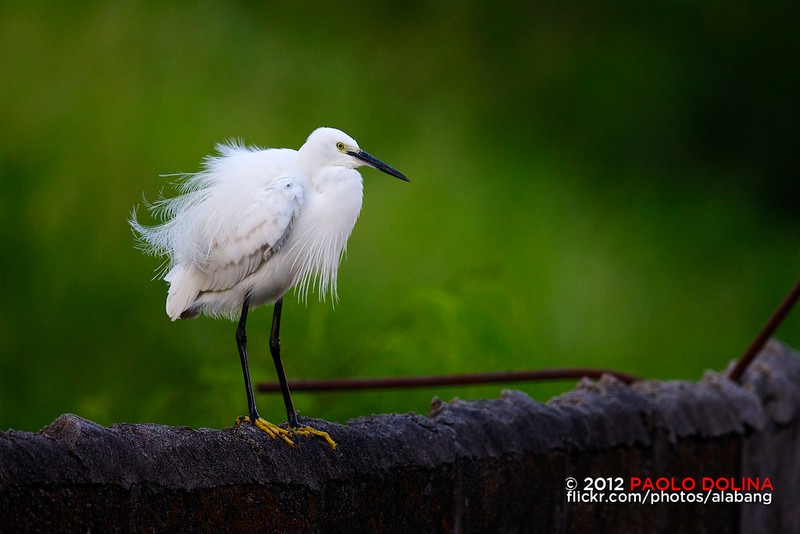
That is an excellent shot! Love the green background, really enhances the white feathers without overwhelming it.
Upvote
0
Mick said:A few more from a recent trip.
Is that a giant tadpole the GBH has? It doesn't look like a fish...
Upvote
0

jrista said:scarey83 said:I've only recently started but here's a few of mine. All hand-held, 7D, usually ISO 800 or 1600, no idea of the other settings.
Geese Flying (100-400 L)
IM130780.jpg by sm_carey, on Flickr
Swans Flying (100-400 L):
IM131697.jpg by sm_carey, on Flickr
Those first two images are great! That synchronous flight is amazing!
Totally agree. That second image is stunning. Heading over to Flickr now to give it a fave!
Upvote
0
Ooops, it was meant as a joke, due to the mouthfull of dog hair that it has in its beak........ :-\jrista said:bjd said:Blue Tit, Bearded Tit, ZZ-Tit or just a very orthodox one?
It just looks like its molting. Every bird has two primary molts a year...one for breeding plumage, and one for winter plumage. When they are in the middle of a molt, or just about to molt, they can look a bit raddy and their colors/patterns aren't quite standard. This looks like a Blue Tit to me. Definitely not a Bearded.
When we brush our dog, in the springtime the hairs go into the feeder shown so birds can take them as nesting material.
Cheers Brian
Upvote
0
Its really hard to tell, maybe a crab or crawfish? Maybe a closeup at full resolution would tell?jrista said:Mick said:A few more from a recent trip.
Is that a giant tadpole the GBH has? It doesn't look like a fish...
Cheers Brian
Upvote
0

That's an idea! It is summer now and both dogs will start shedding soon!bjd said:Ooops, it was meant as a joke, due to the mouthfull of dog hair that it has in its beak........ :-\jrista said:bjd said:Blue Tit, Bearded Tit, ZZ-Tit or just a very orthodox one?
It just looks like its molting. Every bird has two primary molts a year...one for breeding plumage, and one for winter plumage. When they are in the middle of a molt, or just about to molt, they can look a bit raddy and their colors/patterns aren't quite standard. This looks like a Blue Tit to me. Definitely not a Bearded.
When we brush our dog, in the springtime the hairs go into the feeder shown so birds can take them as nesting material.
Cheers Brian
Upvote
0

Grey Wagtail (Motacilla cinerea) by alabang, on Flickr
The Grey Wagtail (Motacilla cinerea) is a small member of the wagtail family, Motacillidae. The species looks similar to the Yellow Wagtail but has the yellow on its underside restricted to the throat and vent. Breeding males have a black throat. The species is widely distributed, with several populations breeding in Europe and Asia and migrating to tropical regions in Asia and Africa. They are usually seen on open marshy ground or meadows where they walk solitarily or in pairs along the ground, capturing insects that are disturbed. Like other wagtails, they frequently wag their tail and fly low with undulations and they have a sharp call that is often given in flight.
Source: http://en.wikipedia.org/wiki/Grey_Wagtail
Taken: http://en.wikipedia.org/wiki/Los_Ba%C3%B1os,_Laguna
EXIF: http://www.flickr.com/photos/alabang/8640426224/#meta/in/photostream
Upvote
0

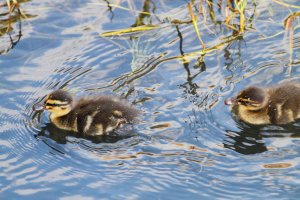
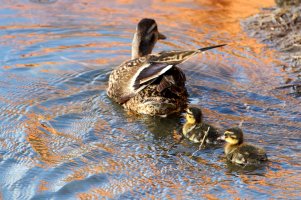
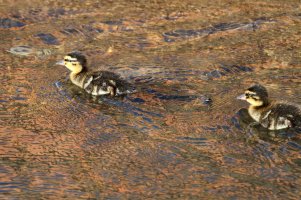
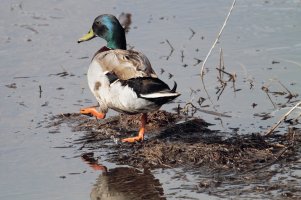
Baby ducklings are back. 
Four weeks ago, a pair of baby ducks and their parents appeared in the drainage ditch by my house and I posted a few photos of them. The following night, the ducklings seemed to be abandoned and were frantically crying for their parents. Next morning there was no sign of the duck family. I thought that the herons here might have taken them. Today, they were back and I took some more photos.
Four weeks ago, a pair of baby ducks and their parents appeared in the drainage ditch by my house and I posted a few photos of them. The following night, the ducklings seemed to be abandoned and were frantically crying for their parents. Next morning there was no sign of the duck family. I thought that the herons here might have taken them. Today, they were back and I took some more photos.
Attachments
Upvote
0
Similar threads
- Replies
- 118
- Views
- 99K
