
You are using an out of date browser. It may not display this or other websites correctly.
You should upgrade or use an alternative browser.
You should upgrade or use an alternative browser.
Show your Bird Portraits
- Thread starter 1982chris911
- Start date


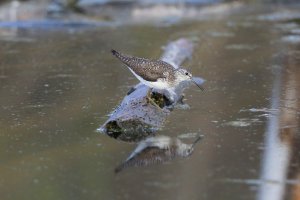
AlanF said:Jack Douglas said:Ah, since we're on the topic here's one I shot in April I thought was a lesser yellowlegs but I'm being told it's not. Any idea?
It's a fair sized bird maybe about the size of a Canadian robin.
Jack
Jack
It's a green sandpiper. I took a photo of one with a little egret and a dragonfly on Sunday. Guess which is which?
Alan, your sandpiper is actually a bit different than Jack's. His is definitely a Solitary Sandpiper, as evidenced by the spots on its back (which your sandpiper lacks...indicating it is in non-breeding plumage, while solitaries maintain their spots in non-breeding plumage.) Additionally, I do not believe Green Sandpipers visit North America, and as Jack is from Canada, that lends more credence to the id being a Solitary Sandpiper.
Upvote
0

jrista said:AlanF said:Jack Douglas said:Ah, since we're on the topic here's one I shot in April I thought was a lesser yellowlegs but I'm being told it's not. Any idea?
It's a fair sized bird maybe about the size of a Canadian robin.
Jack
Jack
It's a green sandpiper. I took a photo of one with a little egret and a dragonfly on Sunday. Guess which is which?
Alan, your sandpiper is actually a bit different than Jack's. His is definitely a Solitary Sandpiper, as evidenced by the spots on its back (which your sandpiper lacks...indicating it is in non-breeding plumage, while solitaries maintain their spots in non-breeding plumage.) Additionally, I do not believe Green Sandpipers visit North America, and as Jack is from Canada, that lends more credence to the id being a Solitary Sandpiper.
You are most probably right, but the green sandpiper usually does have spots on its back, mine is a juvenile bird - see Wikipedia:
"This species is a somewhat plump wader with a dark greenish-brown back and wings, greyish head and breast and otherwise white underparts. The back is spotted white to varying extents, being maximal in the breeding adult, and less in winter and young birds. The legs and short bill are both dark green.
It is conspicuous and characteristically patterned in flight, with the wings dark above and below and a brilliant white rump. The latter feature reliably distinguishes it from the slightly smaller but otherwise very similar Solitary Sandpiper (T. solitaria) of North America." Canada is part of the Commonwealth, spelling such words as colour correctly so you never who might be visiting from here.

Upvote
0
Great horned owl taken in a park in Québec city

1DlV + 800mm F5.6
Visit my gallery: http://www.pbase.com/pbon/birds__oiseaux&page=all
1DlV + 800mm F5.6
Visit my gallery: http://www.pbase.com/pbon/birds__oiseaux&page=all
Upvote
0
AlanF said:jrista said:AlanF said:Jack Douglas said:Ah, since we're on the topic here's one I shot in April I thought was a lesser yellowlegs but I'm being told it's not. Any idea?
It's a fair sized bird maybe about the size of a Canadian robin.
Jack
Jack
It's a green sandpiper. I took a photo of one with a little egret and a dragonfly on Sunday. Guess which is which?
Alan, your sandpiper is actually a bit different than Jack's. His is definitely a Solitary Sandpiper, as evidenced by the spots on its back (which your sandpiper lacks...indicating it is in non-breeding plumage, while solitaries maintain their spots in non-breeding plumage.) Additionally, I do not believe Green Sandpipers visit North America, and as Jack is from Canada, that lends more credence to the id being a Solitary Sandpiper.
You are most probably right, but the green sandpiper usually does have spots on its back, mine is a juvenile bird - see Wikipedia:
"This species is a somewhat plump wader with a dark greenish-brown back and wings, greyish head and breast and otherwise white underparts. The back is spotted white to varying extents, being maximal in the breeding adult, and less in winter and young birds. The legs and short bill are both dark green.
It is conspicuous and characteristically patterned in flight, with the wings dark above and below and a brilliant white rump. The latter feature reliably distinguishes it from the slightly smaller but otherwise very similar Solitary Sandpiper (T. solitaria) of North America." Canada is part of the Commonwealth, spelling such words as colour correctly so you never who might be visiting from here.
"and less in winter and young birds"
"Winter" and "non-breeding" plumage are basically the same thing, so yeah, Wikipedia and I are on the same page. ;P
Fair enough about word spelling, though.

Upvote
0
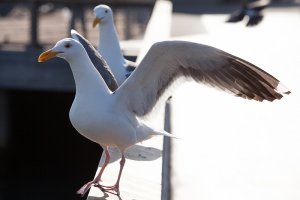
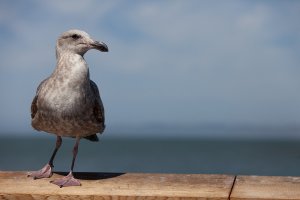
fyah5dmarkiii said:Gulls from the bay. Taken with 5dmark ii and 70-200 2.8 ii.
Great shots! I think gulls are a bit under-appreciated in the birding world, but they make excellent subjects, especially for practice.
Upvote
0
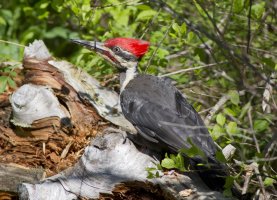
Assuming I correctly get the attachment loaded, here's a Pileated Woodpecker from late spring in Maine. Equipment was a 5D3, 400mm f/5.6 with a Kenko Pro 1.4x. The 5D3 and the 1.4x are new for me (upgraded from a 20D), the 400 has been with me since my 20D. C&C always welcome.
Thanks,
Dave
Thanks,
Dave
Attachments
Upvote
0

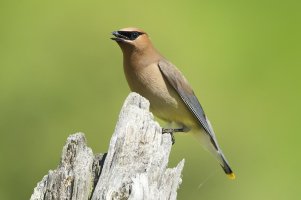
Well his mother thinks he's beautiful and so do I. I'd be quite happy to take credit for that shot, very nice. Around here an opportunity like that would come maybe in two or three years if you're lucky. I find it kind of novel how all of us get different opportunities that the other would practically die for. I never imagined I'd be sick and tired of shooting Cedar Waxwings at the pond.
So here's another of my waxwings.
300 X2 1600th F10 ISO 3200
Jack
I'd be quite happy to take credit for that shot, very nice. Around here an opportunity like that would come maybe in two or three years if you're lucky. I find it kind of novel how all of us get different opportunities that the other would practically die for. I never imagined I'd be sick and tired of shooting Cedar Waxwings at the pond. So here's another of my waxwings.
300 X2 1600th F10 ISO 3200
Jack
Attachments
Upvote
0


Jack Douglas said:Ah, since we're on the topic here's one I shot in April I thought was a lesser yellowlegs but I'm being told it's not. Any idea?
It's a fair sized bird maybe about the size of a Canadian robin.
Jack
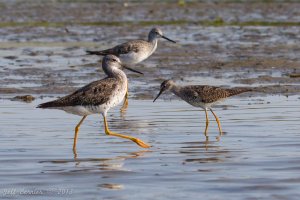
Here is a comparison shot of a Greater and Lesser Yellowlegs. ( taken today )
Attachments
Upvote
0
Thanks IslanderMV, it looks like the birds I have up here are Solitary Sandpipers since the Lesser Yellowlegs appears to have a much more yellow leg. Otherwise it could get confusing for sure.
Nice shot of both - great illustration.
Jack
Nice shot of both - great illustration.
Jack
Upvote
0
I noticed some folks are using Wikipedia for bird ID. Thats fine, but another great online source is the Cornell Lab of Ornithology online bird site,
http://www.allaboutbirds.org/guide/browse.aspx
For Avian photographers another source for identifying birds is a book called: "The Crossley ID Guide". It features really amazing full color photographs which are easy to match to your photos.
http://www.allaboutbirds.org/guide/browse.aspx
For Avian photographers another source for identifying birds is a book called: "The Crossley ID Guide". It features really amazing full color photographs which are easy to match to your photos.
Upvote
0
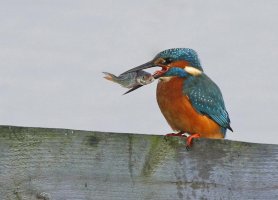
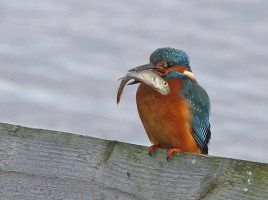

AlanF said:Kingfisher taken on Canon 7D with 300mm f/2.8 + 2xTC. 100% crop.
Really nice shots, Alan. The fish in the first shot looks like he's thinking.."uh..ooh, I'm toast" ;D
Upvote
0
This might seem dumb but I'm new to all this and don't fully understand the terminology relative to cropping percentages. DPP has 50%, which seems to double the subject height, for example??
AlanF says 100% crop meaning?? You get the gist of my uncertainty, someone please fill me in on the normal way of describing cropping.
Jack
AlanF says 100% crop meaning?? You get the gist of my uncertainty, someone please fill me in on the normal way of describing cropping.
Jack
Upvote
0
Jack Douglas said:This might seem dumb but I'm new to all this and don't fully understand the terminology relative to cropping percentages. DPP has 50%, which seems to double the subject height, for example??
AlanF says 100% crop meaning?? You get the gist of my uncertainty, someone please fill me in on the normal way of describing cropping.
Jack
Thanks for asking that. I don't understand crop percentages either.
Upvote
0
Similar threads
- Replies
- 118
- Views
- 99K
