
You are using an out of date browser. It may not display this or other websites correctly.
You should upgrade or use an alternative browser.
You should upgrade or use an alternative browser.
Show your Bird Portraits
- Thread starter 1982chris911
- Start date


jrda2 said:trstromme said:Any comments or critique, good or bad, is highly welcome.
Nice set, but my favorite is the Siberean Jay - beautiful earth rust tones of the bird against the snow.
+1!
Rodor's Common Redpoll - Auðnutittlingur is also pretty amazing.
Below is a Tree Sparrow from a few days ago (6D + Tammy 1/160s f/8 600mm ISO 640):
 via Flickr
Upvote
0
dolina said:
Naked-faced Spiderhunter (Arachnothera clarae) by alabang, on Flickr
The Naked-faced Spiderhunter (Arachnothera clarae) is a species of bird in the Nectariniidae family. It is endemic to the Philippines.
Its natural habitat is subtropical or tropical moist lowland forests.
Source: http://en.wikipedia.org/wiki/Naked-faced_Spiderhunter
Location: http://en.wikipedia.org/wiki/La_Mesa_Ecopark
Settings: 1/250 f/8 800mm ISO 800
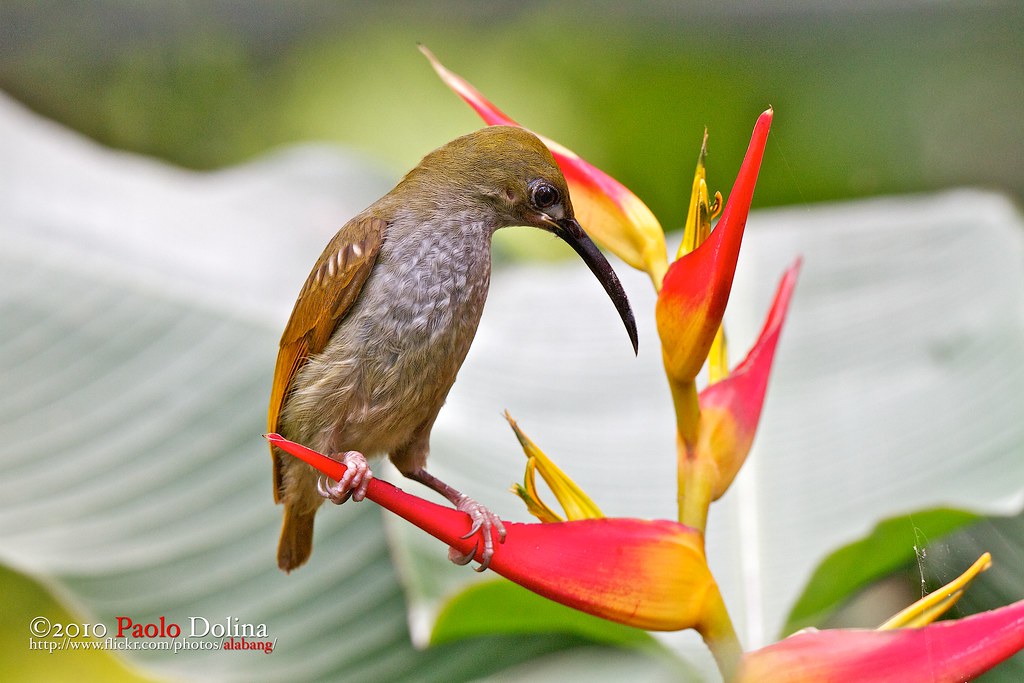
Dolina, as a fan of your work I hope one day you'd share with us how you go about getting your shots. One thing I do know is you don't go camo in order to avoid getting shot
 Here in Taiwan, though, it's something of a fashion statement for hardcore bird photogs to wear full or semi-camo. Anyway, please keep posting!
customCropped said:
Yes, scratch right there. Feels so good.
Creative perspective with fantastic details -- that it makes me think of Angry Bird is an unfortunate distraction :-[
Upvote
0

Hank thank you!HankMD said:Dolina, as a fan of your work I hope one day you'd share with us how you go about getting your shots. One thing I do know is you don't go camo in order to avoid getting shot
If you want to stay in one piece you do not use camo while in the Philippines. I can explain it to you fully but I'd probably offend one set of people or another.
What is important to keep in mind are the basics. These are namely food, water and shelter. If you figure that out then you're set.
Knowing animal behaviour is key as well. Like people they are creatures of habit and have routines.
Practice, practice and more practice. If you have a background as a hunter or poacher then you're a far better birder than I will ever be. I used to go birding every week when I first started but recently I only go birding once a month if I am lucky.
Having a network of birding friends helps whether they be bird watchers or bird photographers. Being a member of a birding org helps but it isn't a prerequisite.
A lot of foreign birders find Philippine birds the most challenging to enjoy the hobby/sport. Through hard learned experience Philippine birds know to avoid Filipinos as my countrymen often have no source of livelihood but to hunt and eat the birds or else go hungry, poach the birds for pet collectors and traditional medicines. Habitat loss due to illegal loggers who just clear cut tropical rainforest to try to satisfy the demand for fresh lumber.
In a nutshell the Philippine birds are doomed to be only found in zoos, museums or in my photos.
Upvote
0

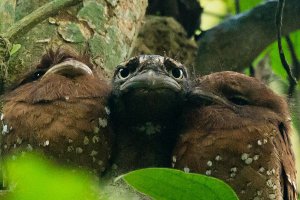

I believe these are young Caprimulgus/nightjars. In Norway we call them Night Ravens. Very cool birds and a very cool image!JPAZ said:Little guys in a tree in the Tiger Preserve in Peryar (Southern India). Taken with a 5diii, 200mm, 1/50, f/7.1, iso 5000. Don't know what they were (species) but it looked pretty cool. This is a crop form a larger image.
Upvote
0

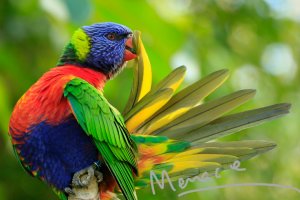


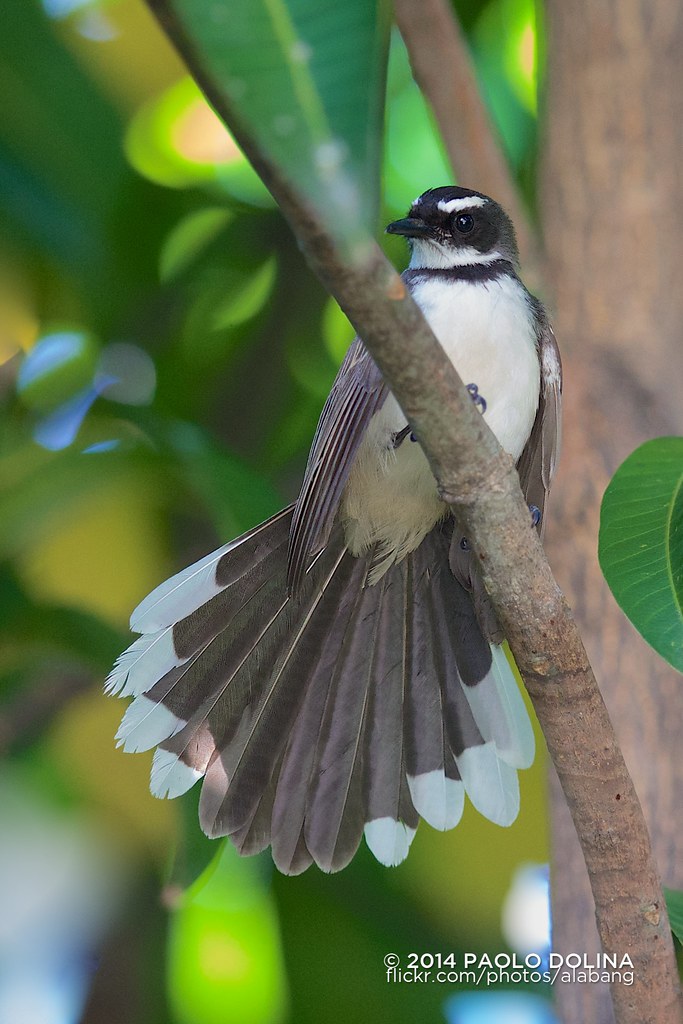
Philippine Pied Fantail (Rhipidura nigritorquis) by alabang, on Flickr
Settings: 1/800 f/4.5 600mm ISO 6400
Upvote
0

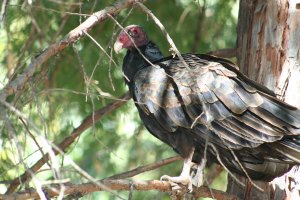
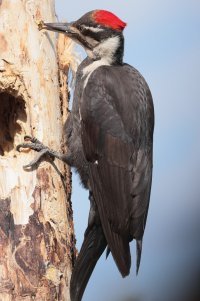
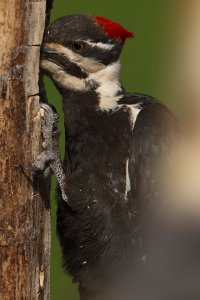
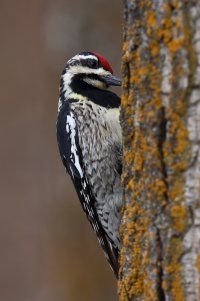
Love all the shots of late. We're just getting leaves out now so I'm looking forward to more birds but there still isn't much. However, I did get this vistor to my deck a few minutes ago so it helped make my day.
6D 300 II 640th F9 ISO 800
Jack
6D 300 II 640th F9 ISO 800
Jack
Attachments
Upvote
0
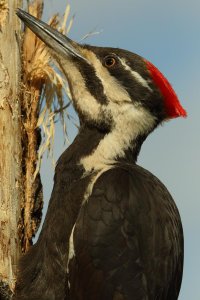
Awesome closeup Jack.

Buff-banded Rail (Gallirallus philippensis) by alabang, on Flickr
The Buff-banded Rail (Gallirallus philippensis) is a distinctively coloured, highly dispersive, medium-sized rail of the family Rallidae. This species comprises several subspecies found throughout much of Australasia and the south-west Pacific region, including the Philippines (where it is known as Tikling), New Guinea, Australia, New Zealand (where it is known as the Banded Rail or Moho-pereru in Māori),[2] and numerous smaller islands, covering a range of latitudes from the tropics to the Subantarctic.
It is a largely terrestrial bird the size of a small domestic chicken, with mainly brown upperparts, finely banded black and white underparts, a white eyebrow, chestnut band running from the bill round the nape, with a buff band on the breast. It utilises a range of moist or wetland habitats with low, dense vegetation for cover. It is usually quite shy but may become very tame and bold in some circumstances, such as in island resorts within the Great Barrier Reef region.[3]
The Buff-banded Rail is an omnivorous scavenger which feeds on a range of terrestrial invertebrates and small vertebrates, seeds, fallen fruit and other vegetable matter, as well as carrion and refuse. Its nest is usually situated in dense grassy or reedy vegetation close to water, with a clutch size of 3-4. Although some island populations may be threatened, or even exterminated, by introduced predators, the species as a whole appears to be safe and its conservation status is considered to be of Least Concern.
Philippine Birds
Source: http://en.wikipedia.org/wiki/Buff-banded_Rail
Location: http://en.wikipedia.org/wiki/Candaba,_Pampanga
Settings: 1/500 f/5.6 800mm ISO 160
Retina Display: http://500px.com/photo/70801899/buff-banded-rail-(gallirallus-philippensis)-by-paolo-dolina
Buff-banded Rail (Gallirallus philippensis) by alabang, on Flickr
The Buff-banded Rail (Gallirallus philippensis) is a distinctively coloured, highly dispersive, medium-sized rail of the family Rallidae. This species comprises several subspecies found throughout much of Australasia and the south-west Pacific region, including the Philippines (where it is known as Tikling), New Guinea, Australia, New Zealand (where it is known as the Banded Rail or Moho-pereru in Māori),[2] and numerous smaller islands, covering a range of latitudes from the tropics to the Subantarctic.
It is a largely terrestrial bird the size of a small domestic chicken, with mainly brown upperparts, finely banded black and white underparts, a white eyebrow, chestnut band running from the bill round the nape, with a buff band on the breast. It utilises a range of moist or wetland habitats with low, dense vegetation for cover. It is usually quite shy but may become very tame and bold in some circumstances, such as in island resorts within the Great Barrier Reef region.[3]
The Buff-banded Rail is an omnivorous scavenger which feeds on a range of terrestrial invertebrates and small vertebrates, seeds, fallen fruit and other vegetable matter, as well as carrion and refuse. Its nest is usually situated in dense grassy or reedy vegetation close to water, with a clutch size of 3-4. Although some island populations may be threatened, or even exterminated, by introduced predators, the species as a whole appears to be safe and its conservation status is considered to be of Least Concern.
Philippine Birds
Source: http://en.wikipedia.org/wiki/Buff-banded_Rail
Location: http://en.wikipedia.org/wiki/Candaba,_Pampanga
Settings: 1/500 f/5.6 800mm ISO 160
Retina Display: http://500px.com/photo/70801899/buff-banded-rail-(gallirallus-philippensis)-by-paolo-dolina
Upvote
0


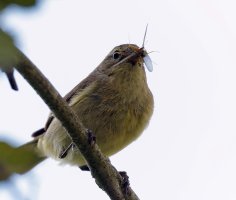
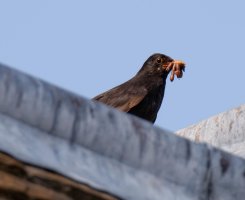
I like to see birds eating well at their equivalent of Michelin 3 star restaurants. The first taken yesterday on the 5DIII + 300/2.8 2xTC at 600mm f/5.6 iso640 is a Chiffchaff in the woods. The second was taken a few minutes ago of a blackbird high up on the roof, taken with the Tammy 150-600 at f/8 using the 70D at iso 320. Remarkably both of them could sing with their mouths full.
Both hand held and 100% crops. Whatever anyone says to the contrary, the Tammy on a crop is pretty good.
Both hand held and 100% crops. Whatever anyone says to the contrary, the Tammy on a crop is pretty good.
Attachments
Upvote
0
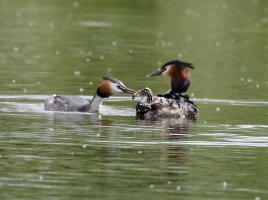
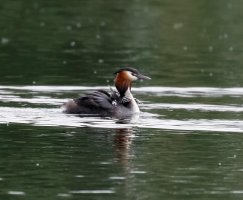
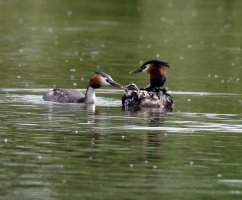
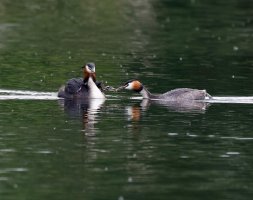
I use the telephoto lenses as telescopes for most of the time rather than a 'scope on a tripod or a pair of binoculars. Yesterday I was studying a pair of great crested grebes far away on a lake. My wife thought there were chicks on the back of one, see through binoculars. When I looked through the blow-up on the 5DIII screen (300/2.8 x2) I could just make out the chicks and see they were being fed with small fish. These are not publication quality photos but they are great for bird spotting.
These are tiny 100% crops
These are tiny 100% crops
Attachments
Upvote
0
Similar threads
- Replies
- 118
- Views
- 99K
