Show your Bird Portraits

Thanks Eldar, I know what you mean. If you can just find a tree that shows signs of really heavy abuse then chances are you'll have them returning and get the shot. They seem so shy but when they are intent on searching for insects I've found that one can creep up on them. Of course the key is to find an area where they frequent in the first place. Post what you have even if it's poor so I can compare.

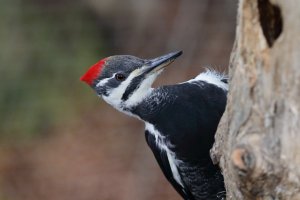
One mid afternoon I was surprised to hear the neighbor hamering on what sounded like a shed under construction - until I spotted the Pileated on a tree! A lot louder than a flicker for sure.

Jack
 
Upvote 0
dominodude, that's an interesting woodpecker for sure, would be nice to see more if you've got any. So, where is "here"?

I'm intrigued by the similarities between all the woodpeckers, things like the fact that it's often/usually red that's up top even though there are huge size differences. Birds are fascinating and our world wouldn't be the same without them.

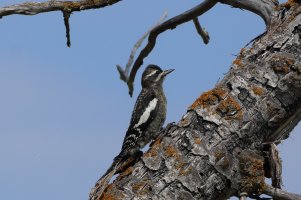
Not a great shot but here's a 3 toed woodpecker we have from last year. Haven't seen it but the male is supposed to have yellow on its head. Natives have a legend about this bird.

Jack
 

Attachments

  • AmericanThreeToedWP_15963.JPG
    AmericanThreeToedWP_15963.JPG
    1.6 MB · Views: 157
Upvote 0
It's embarrassed me for years that I didn't know the pronunciation of pileated so today I Googled and (this is how I've tended to pronounced it) according to one individual it makes sense, although admittedly it's not the most common choice, and then again - who cares! :)

"I suspect that the three-syllable pronunciation is from a user who has not seen the (forgive me) proper division of the word into its four syllables. Since the Latin root is pileus, I will always pronounce it pill-e-a-ted."

Jack
 
Upvote 0
Jack Douglas said:
dominodude, that's an interesting woodpecker for sure, would be nice to see more if you've got any. So, where is "here"?

I'm intrigued by the similarities between all the woodpeckers, things like the fact that it's often/usually red that's up top even though there are huge size differences. Birds are fascinating and our world wouldn't be the same without them.

Not a great shot but here's a 3 toed woodpecker we have from last year. Haven't seen it but the male is supposed to have yellow on its head. Natives have a legend about this bird.

Jack

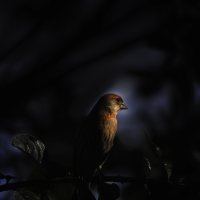
Sadly I don't have much more with the Black Woodpecker - even this shot was taken at almost dark hours at way too high ISO. I'm always looking for woodpeckers when I'm out, so if I spot any they will likely get posted. "Here" would in this particular case be the southern parts of Sweden, but Black Woodpeckers can be seen throughout all of Sweden (except the extreme north and the mountains there), and it should be fairly common in the rest of Europe in forest areas where there are a good mix of pine trees and aspen (those are preferred when it comes to making holes for the nest, holes that will later on become homes for other, smaller, birds). One thing I've learned about them is that they have an appetite for ants and can quite often be seen on the ground looking for ants in anthills or in rotten stumps of trees (like this one above).

Yepp, the Eurasian Three-toed (Picoides tridactylus) is the only one here in Europe that has yellow where others would have some sort of redish/pink colours. (Colourblind species perhaps? ;) ) In fact, it doesn't have any red at all in the plumage. I haven't managed to see any in the wild yet, but a solid tip for finding them is to visit areas that have seen recent forest fires. They only nest in such forests.
 
Upvote 0
Eastern Spinebill feeding in the callistemon (Bottle Brush) today.

378A1862_Eastern_Spinebill_bottlebrush.jpg
 
Upvote 0