Show your Bird Portraits

Thanks click. Grafox, thanks for the comments. I didn't realize that HSS was available and that one was not limited to, in the case of the 6D, 180th sec. This opens a new world to me with the telephoto. That Canon flash is certainly nice and being slightly used I only paid $400. Now, this brings me to another item. Some folk have mention a Better Beamer. How important is this to a 300 or is the 200 zoom limitation of the 600 EX adequate?

Jack
 
Upvote 0
Hi Jack.
Very nice shots, I think the flash is serving to enable a shot that would otherwise be for you, at an unacceptable ISO, therefore it really doesn't matter that much about the slightly flat flash lighting.
I'm sure someone will correct me if I'm wrong, but I think if you are within the reach distance of the flash, it matters very little about the focal length of the lens, perhaps the flash light is a little more spread with respect to the area covered by the lens, but I think the ETTL will take pretty good care of that.
Do the birds come to basically the same spot? Could you move the flash closer, cheap lead or not so cheap RT remote trigger?

Cheers, Graham.


Jack Douglas said:
Those of you who are long time regulars may remember me showing up on CR not quite 2 years ago after purchasing my 6D. I had shot one year with a Nikon D5100 and was really getting the bug. I felt insanely uneasy having just spent $7k on the 300 2.8 II.

Uneasiness is long gone and I don't have any regrets on my purchases for sure and am enjoying learning.
Yesterday, I decided to buy a 600 EX- RT but I haven't used flash for 20 years. I liked the idea of fill flash for wildlife and some of you have previously advised me in that direction. So, now I need to come up to speed and am reading and experimenting.

Being late November here in Alberta it gets pretty dark around 4 PM and to boot it's been cloudy. The result is that often I get shots from my observatory on the barn with natural light, at ISO 12800, which I don't really like. It's just occurring to me that to have fill flash you have to have good natural light in the first place.

Anyway, that's the background and here are shots at sundown, 6D 70-200 F2.8 II X1.4 (HSS) that I'd appreciate feedback on. Would these be considered acceptable or is the flash creating too much artificiality and if so any suggestions to correct that. I might be able to rig up some kind of reflector for bounce but being outdoors it's not that easy, not to mention winter winds and snow. Plain honest commentary is fine! :)

Jack
 
Upvote 0
jrjr99, like the heron shot.

Graham, you're right. I just feel short changed at ISO 12800 so the flash is a step up, regardless of the negatives. However, if the result is not appreciated by whomever, that takes away the enjoyment. In time I'll be able to gauge that.

Now, if I could afford another 600 EX-RT, yes I could position it to catch return visitors to the area I'm shooting towards, although that's a little challenging, unlike the on-camera flash. It's a clump of trees that many birds love and close enough to get decent shots, like 10 - 20 feet. I also have a couple props that are attracting some customers and they are closer and would be easy to roughly aim a second flash at.

Jack
 
Upvote 0
Jack, as this is in the backyard, have you considered a full time lighting source? In a largely controlled environment shooting from a fixed position, it might be be the answer you are looking for, plus much easier to meter. You can also have the light in the exact color cast and diffused as desired. This also moves the light reflection to another part of the eye, rather than centered.

Awesome shot of the Pileated! I'm hoping to catch some during Christmas with the folks as two pairs reside on the homestead.
 
Upvote 0
Thanks ERHP,

BTW, the Pileated almost always announce themselves with that flicker like call that is pretty loud.

Your suggestions are worthy but what is happening is a brainwave that was to take maybe a day to implement is turning into MANY days, while of course I was supposed to be doing various jobs, not playing! ;)

Never the less, I think this one needs to be taken advantage of based on the possibilities. One is macro shots of birds admiring themselves in the see-through mirror - well more likely they'll be fighting themselves. :)

For anyone thinking of a blind, I highly recommend a slightly pricey see-through mirror as opposed to the film that can be applied to glass or acrylic. My 1/4" thick 6 X 16 piece cost me around $30. Having such a window makes life so much easier.

Jack
 
Upvote 0
Flight of the Sunset Geese


An odd event occurred this evening. At least a thousand geese, all at once, some within feet of me and others apparently from the surrounding region, all took flight at once and flew north, apparently to the same location. It was kind of incredible...and quite beautiful.


Canon EOS 5D Mark III
Canon EF 600mm f/4 L II + 1.4x TC III
Handheld (w/ IS)


sunset-geese-1.jpg


flight-of-the-sunset-geese-1.jpg


flight-of-the-sunset-geese-6.jpg


flight-of-the-sunset-geese-5.jpg


See more at my blog.
 
Upvote 0

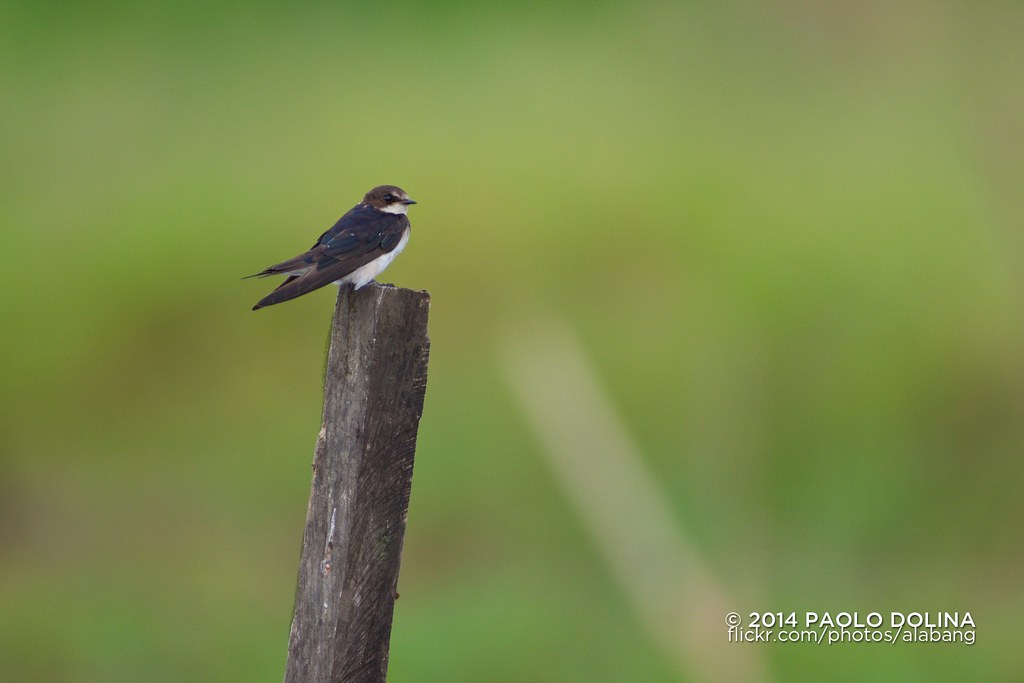
Barn Swallow (Hirundo rustica) by alabang, on Flickr

The barn swallow (Hirundo rustica) is the most widespread species of swallow in the world. It is a distinctive passerine bird with blue upperparts, a long, deeply forked tail and curved, pointed wings. It is found in Europe, Asia, Africa and the Americas. In Anglophone Europe it is just called the swallow; in Northern Europe it is the only common species called a "swallow" rather than a "martin".

There are six subspecies of barn swallow, which breed across the Northern Hemisphere. Four are strongly migratory, and their wintering grounds cover much of the Southern Hemisphere as far south as central Argentina, the Cape Province of South Africa, and northern Australia.[2] Its huge range means that the barn swallow is not endangered, although there may be local population declines due to specific threats.

The barn swallow is a bird of open country which normally uses man-made structures to breed and consequently has spread with human expansion. It builds a cup nest from mud pellets in barns or similar structures and feeds on insects caught in flight.[4] This species lives in close association with humans, and its insect-eating habits mean that it is tolerated by man; this acceptance was reinforced in the past by superstitions regarding the bird and its nest. There are frequent cultural references to the barn swallow in literary and religious works due to both its living in close proximity to humans and its annual migration.[5] The barn swallow is the national bird of Austria and Estonia.

Source: http://en.wikipedia.org/wiki/Barn_swallow

Location: http://en.wikipedia.org/wiki/International_Rice_Research_Institute

Philippine Birds

Camera Canon EOS 7D Mark II
Exposure 0.006 sec (1/160)
Aperture f/5.6
Focal Length 560 mm
ISO Speed 160
Lens Canon EF 200-400mm f/4L IS USM Extender 1.4X
 
Upvote 0
Juvi Red-Tailed Hawk

I think. There are so many varieties of red-tailed hawks in Colorado, it is often difficult to tell. Add in the juvi morphs, and you have dozens of hawks that look radically different, and yet are all the same general species. :P Anyway...he a beauty...totally wild. He seemed unphased by my presence. I was hoping to get some flight shots...but he sat there forever. I eventually got up to find other birds, and he jumped off his branch, swooped right over my head...maybe a foot away. Guess he was just telling me: "Yup! I see everything, including you! :P "


At 840mm, he got too close to get a shot within about two seconds, so I still didn't get any flight shots.

Canon EOS 5D Mark III
Canon EF 600mm f/4 L II + 1.4x TC III
Handheld, ISO 800, 1/400th f/8

rJ5OKit.jpg
 
Upvote 0
jrista said:
Juvi Red-Tailed Hawk

...
At 840mm, he got too close to get a shot within about two seconds, so I still didn't get any flight shots.

Canon EOS 5D Mark III
Canon EF 600mm f/4 L II + 1.4x TC III
Handheld, ISO 800, 1/400th f/8
...

Great bird, and in a great composition with good light!
Next time you'll land The Flight Shot - and I'm looking forward to it.
 
Upvote 0
Golden-crowned Kinglet
Canon EOS 7D Mark II
Canon EF 100-400 f/4.5 - f/5.6 IS USM L
ISO 6400, 1/500, f/8


Ruby-crowned Kinglet
Canon EOS 7D Mark II
Canon EF 100-400 f/4.5 - f/5.6 IS USM L
ISO 320, 1/1000 f/5.6


Cedar Waxwing
Canon EOS 7D Mark II
Canon EF 100-400 f/4.5 - f/5.6 IS USM L
ISO 500, 1/1000 f/8

 
Upvote 0