Good ideaIt's couple of hours before (yet another) snowstorm, so... time for some New World summerbirds:

I especially like the heron and its water reflection.
Upvote
0
Good ideaIt's couple of hours before (yet another) snowstorm, so... time for some New World summerbirds:
Looking at the banding, is that a wild eagle or is it held in a falconry or else?White-tailed eagle with snowy background.
All animals which I photograph are wild animals. I do not accept keeping animals in captivity.Looking at the banding, is that a wild eagle or is it held in a falconry or else?
Thanks in advance for your reply.


I am sorry but I am not familiar with the banding system. Now that You brought it up I checked some of my ospry shots and found also there birds with rings on both legs. Perhaps it is some procedure practiced in my country (Finland).I couldn't tell with my limited knowledge of eagles the species in the older shot that was more face on. It's interesting they are both ringed on both legs. Is there a special reason for this?
Birds kept in captivity do need banding. They are not going anywhere. Banding is used by ornithologists to register and keep the track of wild birds.Looking at the banding, is that a wild eagle or is it held in a falconry or else?
Thanks in advance for your reply.
Sorry, but I know from a Eurasian black vulture (aegypius monachus) held in a Franconian falconry doing air shows and escaped.Birds kept in captivity do need banding. They are not going anywhere. Banding is used by ornithologists to register and keep the track of wild birds.
... It's interesting they are both ringed on both legs. Is there a special reason for this?
Hi guys!I am sorry but I am not familiar with the banding system. Now that You brought it up I checked some of my ospry shots and found also there birds with rings on both legs. Perhaps it is some procedure practiced in my country (Finland).
I support the ringing for science and conservation but not for photography!Hi guys!
Maybe I can help here a little bit.
I asked a friend of mine here in Germany, who is doing bandings on both eagles and hawks, as well as songbirds.
He told me that banding of one or both talons depends on the species and its size. Since 2005 here in Germany, several birds of prey get bandings on both talons. One with the "standard" number, one with a number that can be read from distance with a spyglass or spotting scope.
Of course, the bird must be big enough for a big enough banding ring. Otherwise, you cannot read it. Songbirds are too small for that.
And wading birds, like herons and storks, get even bigger plastic plates above their joints.
Additional information could be found e.g. here
EURING
euring.org
European colour-ring Birding | cr-birding
cr-birding.org

Thanks for the information. Very interesting practice. Seems we could (as humans) find a way to do more with less.Hi guys!
Maybe I can help here a little bit.
I asked a friend of mine here in Germany, who is doing bandings on both eagles and hawks, as well as songbirds.
He told me that banding of one or both talons depends on the species and its size. Since 2005 here in Germany, several birds of prey get bandings on both talons. One with the "standard" number, one with a number that can be read from distance with a spyglass or spotting scope.
Of course, the bird must be big enough for a big enough banding ring. Otherwise, you cannot read it. Songbirds are too small for that.
And wading birds, like herons and storks, get even bigger plastic plates above their joints.
Additional information could be found e.g. here
EURING
European colour-ring Birding | cr-birding
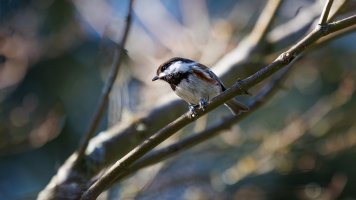
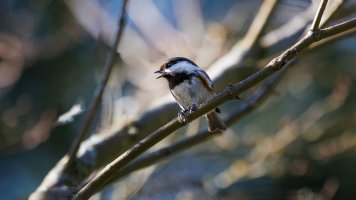
Some shots of a Chestnut Backed Chickadee. Nothing crazy but the lighting was good this day and the birds were friendly. Shot with R5 and RF 70-200 @ 200mm f/3.5 1/2000th

I have seen rather big number of banded birds on Oahu - some sea birds and migratory birds but also some native birds. Some of the Bristle-thighed curlews for example are equipped not only with bands, they have also small antennas (probably a project to track their migration routes). By that way actually it was proven that they fly nonstop from Alaska to Hawaii!!!I support the ringing for science and conservation but not for photography!
Thanks Alan! Perfectly still water, not a blade of grass moving...The reflection is beautifully sharp - the eye is very good.
Thanks Maximilian, herons can be motionless for so long...Good idea
I especially like the heron and its water reflection.
Indeed! Citation from Wikipedia: "The first leg of the migration includes a nonstop 4,000 km flight from Alaska to Laysan. They can make non-stop flights in excess of 6,000 km."WOW. Very impressive. That's over 3,000 miles.
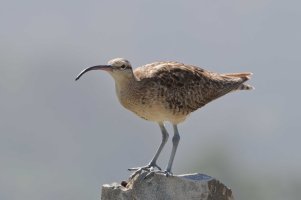
I like the ground level shot. Nicely done, Cog.
Click, MaximilianReally nice how it is looking at you.
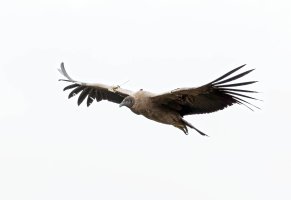
Like this Condor I got in the Andes.I have seen rather big number of banded birds on Oahu - some sea birds and migratory birds but also some native birds. Some of the Bristle-thighed curlews for example are equipped not only with bands, they have also small antennas (probably a project to track their migration routes). By that way actually it was proven that they fly nonstop from Alaska to Hawaii!!!