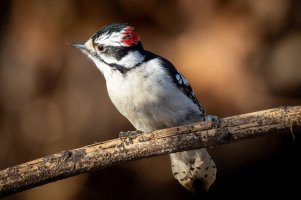
Show your Bird Portraits

If you have never been to the Sax-Zim Bog in northern Minnesota, it is a must go in the winter for those 2 owl species alone. It is a black spruce bog and covers almost 20 square miles. You basically drive around from sunrise to sunset and hope to find owls, with other birds mixed in between. Each day I would drive 70-140 miles, pretty much up and down the same roads, slowly looking for birds. It gets old after a while, especially when you go stretches without seeing anything. Once you spot an owl though, those feelings reset! There are boardwalk spots to walk through the bogs and you CAN hike anywhere you want in the bog. I don't typically hike, as you can't cover much ground that way.

The Northern Hawk Owl has been very consistent lately and was seen daily at the same place, sometimes flying to within 20' of people, landing on sticks or posts before going down and catching a vole through the snow. It is incredible to watch! The Great Gray Owls can be found anywhere in the bog. That being said, they can be very difficult to find. I was able to find 1 and photograph 2 others in the 7 days I was there. Seeing just one makes it worth it. There are feeders spread sporadically throughout the bog as well, helping with some of the other birds, like Boreal Chickadee, Canada Jay, Evening Grosbeaks, Pine Grosbeaks, Common/Hoary Redpolls, Pine Siskins and the other common ones. Pine Martens and Ermines come as well. There are several species of grouse as well as hawks too. It has become quite popular in the last few years and there is always 20+ people driving around at any given time now. The Telegram app is used to report sightings and help get the word out faster. This year for me, weather was probably close to record highs. One day it was 47 degrees F and sunny. In '18 when I was there, it was -36 degrees F, just the temp! In '20 when I was there, one day got down to -30 degrees F! I was very happy to have the 60-70 degree swing in temps from what I'm used to. Hope that is the info you were looking for.

Jeremy
That should make @docsmith feel better :ROFLMAO:
 
  • Haha
  • Like
Reactions: 2 users
Upvote 0
Pretty much have my comparison of 100-400 II, 100-500, and 200-800 done. Short of it, 100-500 and 200-800 are well above the 100-400 II, to the point I am wondering if something is off...but I've tested it on test charts and those look good.

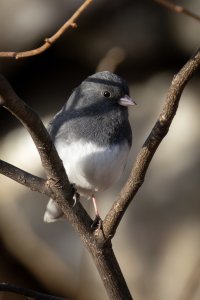
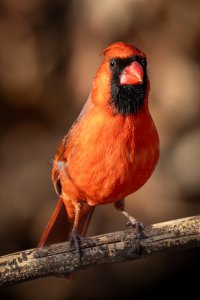
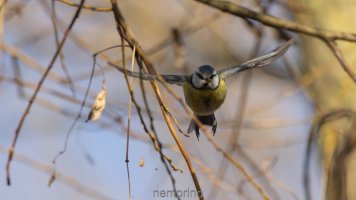
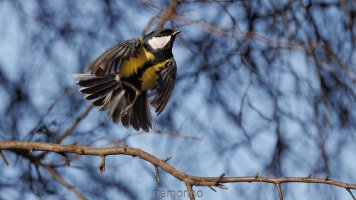
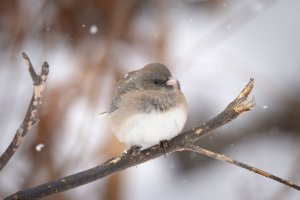
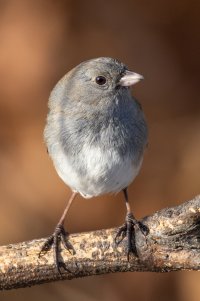
But, in the mean time...., I liked these two shots....both with the 200-800 w1.4TC at 990 mm.
200-800 14TC @990-.jpg200-800 14TC @990--2.jpg
 
  • Like
Reactions: 14 users
Upvote 0
Love the junco pic. To me the branches and shadows add to the story, not just cataloging.
Thanks dood and click....

The other subtle thing about the photo that is exciting to me is that it is from shrubs to behind my feeder. I am still playing around with it, but the 200-800 seems to be letting me extend my reach a bit. But yes, I picked that photo largely due to the shadows and the placement of the Junco's feet.
 
  • Like
Reactions: 1 users
Upvote 0
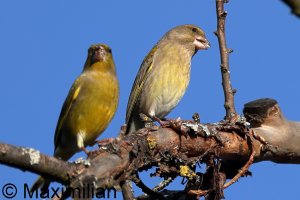
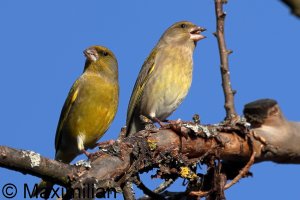
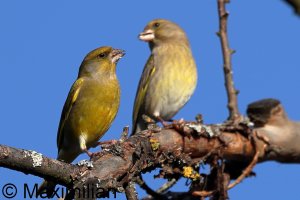
These greenfinches taught me something:
Focal plane and DOF. Because only one of those is sharp.
Luckily, the AF system did choose alternately both.
These are 1:1 crops from FF@500mm
R6m2@500mm, f/8, 1/800, ISO320
When I'm out, I don't do detailed maths.
f/8@500 mm @about 15 to 20 m distance should give me 50 to 75 cm.
And I think those two birds weren't sitting further apart than 20 to 30 cm.
Am I wrong here?

greenfinch_2024_01.JPGgreenfinch_2024_02.JPGgreenfinch_2024_03.JPG
 
  • Like
Reactions: 7 users
Upvote 0
These greenfinches taught me something:
Focal plane and DOF. Because only one of those is sharp.
Luckily, the AF system did choose alternately both.
These are 1:1 crops from FF@500mm
R6m2@500mm, f/8, 1/800, ISO320
When I'm out, I don't do detailed maths.
f/8@500 mm @about 15 to 20 m distance should give me 50 to 75 cm.
And I think those two birds weren't sitting further apart than 20 to 30 cm.
Am I wrong here?

View attachment 214904View attachment 214905View attachment 214906
Your calculations seem reasonable to me.
Lovely photos though!
 
Upvote 0
These greenfinches taught me something:
Focal plane and DOF. Because only one of those is sharp.
Luckily, the AF system did choose alternately both.
These are 1:1 crops from FF@500mm
R6m2@500mm, f/8, 1/800, ISO320
When I'm out, I don't do detailed maths.
f/8@500 mm @about 15 to 20 m distance should give me 50 to 75 cm.
And I think those two birds weren't sitting further apart than 20 to 30 cm.
Am I wrong here?

View attachment 214904View attachment 214905View attachment 214906
Depth of field becomes far more complicated when you are cropping images like that. Depth of field calculations depend on the size of the circle of confusion. When you crop, you enlarge the circle of confusion if you view at a larger size. For the bird on which it is focussed, the circle may still be sufficiently small that the bird is acceptably sharp, but the one that is slightly out of focus becomes more noticeably blurred. Also, even without cropping, what the traditional depth of field counts as acceptable in a landscape isn't for fine details of a bird plumage. We know that from practical experience.
 
  • Like
Reactions: 1 users
Upvote 0
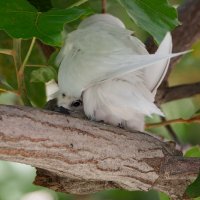
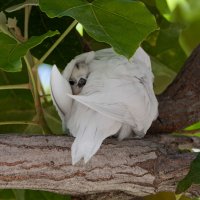
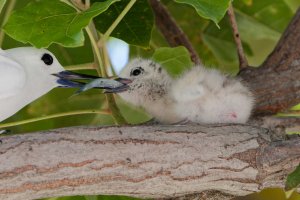
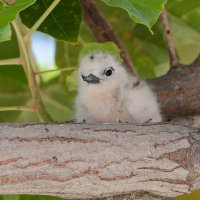
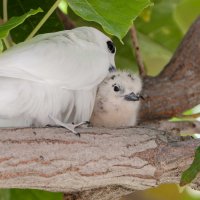
And my story from today: 3 weeks ago I noticed a White Tern sitting on the same spot of branch of small (really young and thin!) Kukui Nut Tree. Obviously incubating an egg! Started checking it few times a day (easy task - it's just 1-1.5 minutes from my work office :)). Feb. 6 afternoon there was no indication of hatched chick but on Feb. 7 ~10am there was a small troublemaker sitting on the same spot, no adults, they came about 10 minutes after me when I and some colleagues starting watching the kid - both parents! and both of them with small fish!!!
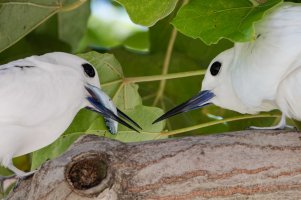
Today I went there with a camera. Found the kid slightly aside from the adult and started pulling out my camera - just to see it going under the "tent" provided by the parent but still looking at me (love from first glance must exist:p!). After that the things developed very fast: the second parent come with fish (I was ready to wait for such a moment 1-2 hours!!!) and I got the opportunity to catch all the process. Once fed the kid was suppose to go under the "tent" provided by the adult but it was still checking on me and refusing to sleep and I decided to let them alone! On my way back from the lab the chick was completely covered by the adult!
Photo #3 should be some kind of quality control of the fish :LOL:!

DSC_0386_DxO.jpgDSC_0419_DxO.jpgDSC_0424_DxO.jpgDSC_0429_DxO.jpgDSC_0457_DxO.jpgDSC_0511_DxO.jpgDSC_0532_DxO.jpg
 
  • Like
  • Love
Reactions: 14 users
Upvote 0
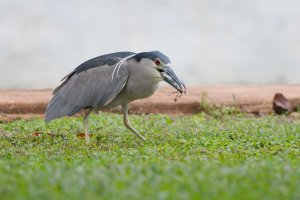
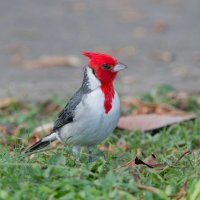
And the rest of the day: after the White Terns I went for my routine walk in the nearby park - just to see another fishermen and something similar (what? if you can't catch a fish the moth is good too!). And one Red-crested cardinal pop up from nowhere! The last photo is from yesterday evening and I'm posting it because as a photo it's better than my photos above but there is no (even short ;););)) story behind of it!

DSC_0561_DxO.jpgDSC_0577_DxO.jpgDSC_0586_DxO.jpgDSC_0382_DxO.jpg
 
  • Like
Reactions: 12 users
Upvote 0
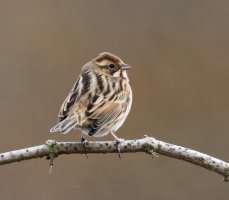
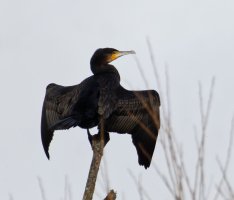
Out on a very miserable day yesterday, armed with the 200-800mm at 1600mm with the 2xTC on the R5, to two locations where there is a chance of seeing some birds but they are far away. The processing was DxO PL with global sharpening + 2 and the microcontrast and contrast up a small amount. A Reed Bunting, and then for amusement a Cormorant looking like Dracula.309A5716-DxO_Reed_Bunting_1600mm_mc_LS+2.jpg309A5768-DxO_Cormorant_1600mm_mc_LS+2.jpg
 
  • Like
Reactions: 14 users
Upvote 0
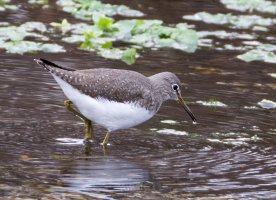
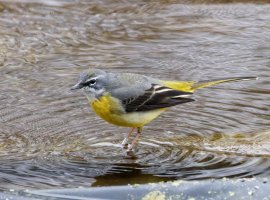
The second was very dark and required isos being 16k and 26k. Green Sandpiper and Grey Wagtail. As with the previous, these are both crops of 1px = 1px of original.

309A5840-DxO_Green_Sandpiper_1600mm_iso16k_mc_-lsss.jpeg309A5862-DxO_Grey_Wagtail_1600mm_iso25k_mc_LS+2.jpg
 
  • Like
Reactions: 12 users
Upvote 0