A
AdamJ
Guest
rs said:So you agree that a larger enlargement makes noise more visible? If so, it seems like we're agreeing on this, but arguing about semantics.AdamJ said:OK, now I know you're trolling. You failed to quote the part of my post that answers this:
AdamJ said:The reasons why FF sensors typically produce less noisy images in practice than APS-C sensors are that a) the (usually) bigger individual pixels produce a better signal-to-noise ratio, and b) the native image requires less enlargement when printing.
From my point of view, amplification and magnification amount to one and the same thing. Take two different sized sensors with the same number of MP (1D X and 7D for example), then the smaller sensor clearly has smaller pixels. Each pixel receives less light, so in order to give the same electrical signal to create a calibrated ISO 100, it has to amplify to a greater level the smaller signal created from the smaller number of photons collected at its smaller pixel. However, take two sensors of different size with pixels of the same density (eg 1Ds mk III and 30D, or D800 and D7000), and on a pixel level, each pixel is the same size, so it collects the same number of photons, creates the same strength electrical signal and requires the same amount of amplification. But it is magnified less from that larger sensor (each pixel, together with its noise is a less significant part of the whole image), so it's noise has a lower effect on the whole image. Not all FF and crop comparisons fall into one of these two convenient categories, so it's usually a combination of amplification and magnification differences between the two. But one thing is for sure - take the whole image, and the bigger sensor will be less noisy. And all things being equal (same generation technology etc), you'll find the noise ratio is directly in line with the area ratio.
Similarly speaking, a 1.6x crop of FF is no different from a 1.6x crop sensor. The exposure doesn't differ with different sized sensors. The noise does. Bigger area to capture light equals more light captured. That equals lower noise. Or you can turn it around by bumping up the ISO and create the same noise with greater sensitivity. That is what makes an f2.8 lens on FF equal to an f1.75 lens on 1.6x crop.
You were previously arguing that noise is directly related to the area of the sensor itself (i.e. APS-C needs 2.56x more signal amplification than FF) which is, of course, nonsense.
Are you still standing by the points below?
rs said:A FF sensor behind an f2.8 FF lens gathers 2.56x as much light as an f2.8 lens does on a 1.6x crop sensor due to the sensors 2.56x bigger surface area. If you only capture a fraction of all that FF f2.8 light by cropping it, well, the obvious happens from the light gathering point of view. The reason why using an f1.8 lens wide open on crop gives a brighter image than f2.8 on FF (when both are at the same ISO and shutter speed) is the amplification of the crop cameras sensor is 2.56x greater, at the expense of noise at any given ISO rating.
rs said:...surely you can see the 1.6x crop gives just over a stop less light gathering than a full frame sensor - making f1.8 on crop equal in light capturing terms to an aperture 1.6x smaller on FF - f2.88.
rs said:...to compare the 18-35/1.8 to the 24-70/2.8 on FF we'd need to set them both to a focal length to give an equal field of view. So for the sake of this example, lets use the long end of the Sigma's zoom - set the 18-35/1.8 to 35mm, which is equivalent of 56mm on the 24-70. We get the following:
56mm 1.0x [FF] @ f/2.8 aperture = 20mm diam pupil
35mm 1.6x [APSC] @ f/1.8 aperture = 19.4mm diam pupil
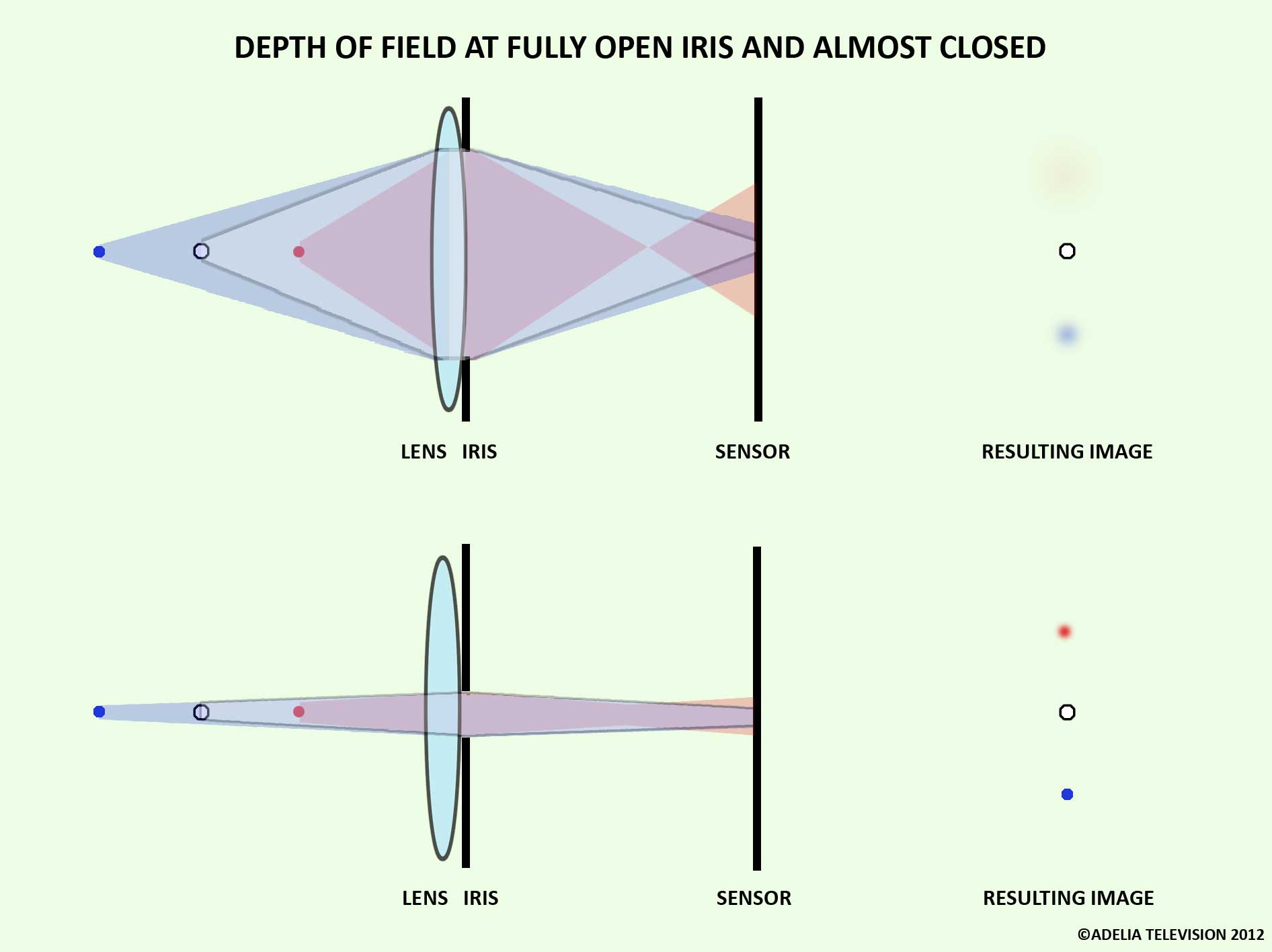
So, vaguely less light gathering from the new Sigma lens, as well as a vaguely wider DoF.
rs said:Or think about it like this - imagine a photo taken with a FF lens and a FF sensor. Now you take that same photo and you crop out just the centre 40% - you've taken away 60% of the image - which is also 60% of the light that passed through that FF lens. You're left with only 40% of the light. That's what crop does. You need a faster lens on crop to make it capture the same amount of light in that smaller area.
rs said:...the 24-70 on FF goes wider, longer, is capable of a vaguely narrower DoF and capturing vaguely more light.
My argument is simply the total quantity of light a system can capture is more than just aperture - it is a combination of aperture and sensor size.
Upvote
0