Sigma Announces 18-35 f/1.8 DC HSM Art for APS-C

Status
Not open for further replies.
I was so excited when I saw this lens. Then so let down when I saw it was APS-C.

After I cooled off a bit, I still realize, this is a very impressive lens. I am so impressed with the way Sigma is going. Can't wait to see this thing tested, though I doubt I will ever buy it. My next 35mm will be the Sigma though for sure, and that's saying alot as I typically don't like buying anything non-canon.

Also, Sigma better have their patent lawyers ready. I hope they don't need them, but if Sigma keeps going the way they are, I wouldn't be surprised to see Canon copying some of this stuff and maybe even put out a firmware update that is coincidentally not compatible with these lenses.
 
Upvote 0
TrumpetPower! said:
The difference, though, is that there will be more noise / grain in the crop version, and the math works out such that the APS-C camera with a 30mm lens at f/1.8 @ 1/30 @ ISO 100 and the 135 camera with a 50mm lens at f/2.8 @ 1/30 @ ISO 260 will give you not only the same exposure, but also the same depth of field but still with less noise and more resolution (assuming the same film stock or pixel pitch).

True, but the full frame camera in this scenario also probably costs 3x more than the crop camera did. :P

That's why I think this lens is a big deal... Full frame will always be better for sure, but if crop lenses start getting so good that you can get low-light results that are pretty close to a full frame and spend a lot less money, you have a bigger reason to stay with crop.
 
Upvote 0
Wildfire said:
TrumpetPower! said:
The difference, though, is that there will be more noise / grain in the crop version, and the math works out such that the APS-C camera with a 30mm lens at f/1.8 @ 1/30 @ ISO 100 and the 135 camera with a 50mm lens at f/2.8 @ 1/30 @ ISO 260 will give you not only the same exposure, but also the same depth of field but still with less noise and more resolution (assuming the same film stock or pixel pitch).

True, but the full frame camera in this scenario also probably costs 3x more than the crop camera did. :P

That's why I think this lens is a big deal... Full frame will always be better for sure, but if crop lenses start getting so good that you can get low-light results that are pretty close to a full frame and spend a lot less money, you have a bigger reason to stay with crop.

No argument there!

APS-C is a wonderful format. Not one I personally use, but it's a great balance of quality, price, size, weight, and the rest.

Unless your printer takes paper by the three-foot-wide roll and ink by the gallon, there's little need for anything bigger than APS-C. And even then, an APS-C camera is capable of some very impressive results, even if it's pushing its limits.

Cheers,

b&
 
Upvote 0
roadrunner said:
I was so excited when I saw this lens. Then so let down when I saw it was APS-C.

After I cooled off a bit, I still realize, this is a very impressive lens. I am so impressed with the way Sigma is going. Can't wait to see this thing tested, though I doubt I will ever buy it. My next 35mm will be the Sigma though for sure, and that's saying alot as I typically don't like buying anything non-canon.

Also, Sigma better have their patent lawyers ready. I hope they don't need them, but if Sigma keeps going the way they are, I wouldn't be surprised to see Canon copying some of this stuff and maybe even put out a firmware update that is coincidentally not compatible with these lenses.
FF would have been good indeed... perhaps they'll shoot one out sometime soon, maybe just a tad wider?? I really love from 16mm and up for my FF and my APS-C...
 
Upvote 0
Pi said:
Very limited range. The crop shooters might be better off with two smaller and faster primes.

That depends on what the price will be upon the release of this 18-35mm lens.

Going the cheap route, the new Sigma 30mm f/1.4 Art is $499. Alternatively there is the option of the 35mm f/1.4 for $899. Another prime in the neighborhood of 15-20mm, specifically a quality one will be a minimum of $1000 (L lens territory). One may be able to get away with a Rokinon or Samyang in this range for $500 perhaps but a person would lose auto-focus. :)

On a side note I see this one coming in at a minimum of $899.
 
Upvote 0
SpartanII said:
Pi said:
Very limited range. The crop shooters might be better off with two smaller and faster primes.

That depends on what the price will be upon the release of this 18-35mm lens.

Going the cheap route, the new Sigma 30mm f/1.4 Art is $499. Alternatively there is the option of the 35mm f/1.4 for $899. Another prime in the neighborhood of 15-20mm, specifically a quality one will be a minimum of $1000 (L lens territory). One may be able to get away with a Rokinon or Samyang in this range for $500 perhaps but a person would lose auto-focus. :)

On a side note I see this one coming in at a minimum of $899.

What I meant is - since Sigma has the 30/1.4, they could have released an APS-C prime in the 15-18 range. An f/1.8 zoom of this sort could be a big compromise optically.
 
Upvote 0
Kudos to Sigma for the invention of the first lens f/1.8 zoom lens. ;) I've been waiting for such innovation for so long! Well done - and I would hope that the overall image quality is still very good (sharp, contrasty, low vignetting, reasonable distortions, etc).

While the zoom range (18-35) is nothing 'fabulous' on a APS-C, the fact that there is a zoom of this range at f/1.8 is nothing to be sneared at. (And I must say I like the look of the lens even). I'd prefer it to have a wider zoom range (eg 15mm wide end, and 50mm tele-end) - but I'm very aware of the physical limitations (& size, cost, optical challenges) of that.

Back several years ago, I used my 18-55mm kit lens with my Canon 350D (and I occasionally still use this as a light-as-I-can-DSLR 'travel kit'). I'm not 100% sure what I'd rather have: a 18-35mm f/1.8 or a 24-50mm f/1.8 for APS-C, both would be useful. I hope that other manufacturers will sit up (or already are!) and technological improvements can continue.

Yay yay yay! 8)

Paul
 
Upvote 0
Pi said:
SpartanII said:
Pi said:
Very limited range. The crop shooters might be better off with two smaller and faster primes.

That depends on what the price will be upon the release of this 18-35mm lens.

Going the cheap route, the new Sigma 30mm f/1.4 Art is $499. Alternatively there is the option of the 35mm f/1.4 for $899. Another prime in the neighborhood of 15-20mm, specifically a quality one will be a minimum of $1000 (L lens territory). One may be able to get away with a Rokinon or Samyang in this range for $500 perhaps but a person would lose auto-focus. :)

On a side note I see this one coming in at a minimum of $899.

What I meant is - since Sigma has the 30/1.4, they could have released an APS-C prime in the 15-18 range. An f/1.8 zoom of this sort could be a big compromise optically.

Ah I understand.

I did come across an old non fisheye 15mm produced by Sigma on ebay. Cannot recall if it was a FF issue or not.
 
Upvote 0
This lens looks very tempting for me to get - it depends on what the end price is. My primary photography subject is pro wrestling, usually taken ringside. I currently use a Sigma 17-70 lens and a flash, but I know I take a large chunk of my shots out at the wide end of the zoom. Case in point, I had 285 "keepers" at the most recent show and 213 of them were taken at 35 or lower. What excites me is the possibility of marrying this lens with a 7D (or more likely the 7D2 whenever it's announced) and be able to ditch the flash altogether...
 
Upvote 0
Mantanuska said:
Wildfire said:
rs said:
The reason why using an f1.8 lens wide open on crop gives a brighter image than f2.8 on FF (when both are at the same ISO and shutter speed) is the amplification of the crop cameras sensor is 2.56x greater, at the expense of noise at any given ISO rating.

What? That's wrong.

A crop f/1.8 lens and a full frame f/1.8 lens will provide exactly the same exposure when used at the same shutter speed and ISO. The full frame exposure WILL NOT be brighter.

You're right about an FF f/2.8 lens having more light gathering ability than a crop f/1.8 lens, but all that light it gathers is spread over a larger sensor, which makes the exposure more than a full stop darker than if you had used an f/1.8 lens.

So in terms of exposure, a f/1.8 lens is brighter than an f/2.8 lens, regardless of sensor size. Sensor size does affect depth of field, but that's a different story.

Exactly. Try it for yourself on a crop body and FF. f1.8 at 1/30 sec at 100 ISO will give you the same exposure on both cameras. FF will not be brighter.
Hey guys, read what I wrote. I said f1.8 on crop is brighter than f2.8 on full frame when both have the same shutter speed and ISO, then you start telling me that I'm wrong to say FF is brighter when they're both at f1.8 and the same shutter speed and ISO. I didn't say that, so what gives? I went to great lengths to explain that at the same aperture, shutter speed and ISO, they both expose the same due to the different light gathering of the format being compensated for by the amplifiers being set different. If you can look past that same exposure settings between formats and start to use the higher ISO's with lower noise levels this lower amplification of FF rewards you with, you'll find the true nature of the light gathering of FF lenses on FF sensors.

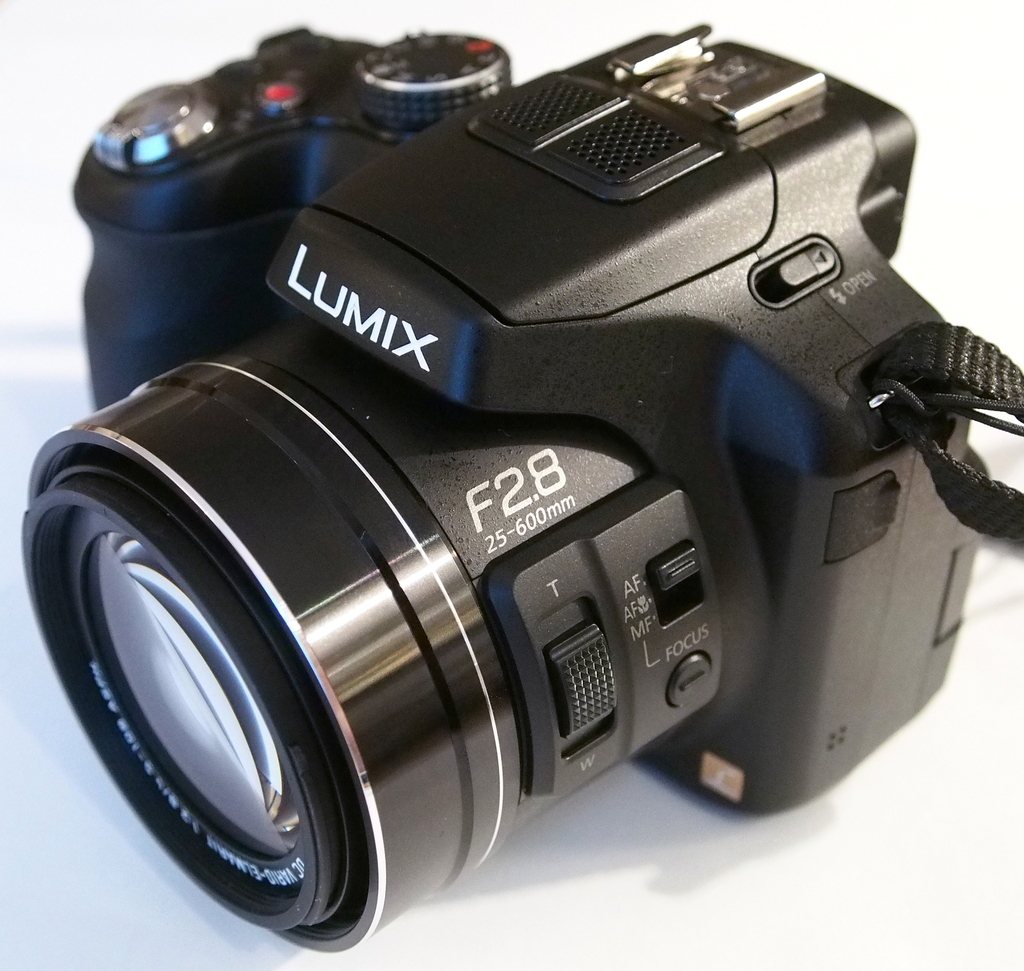
If you really think you can freely quote focal lengths in 35mm equivalent without quoting apertures in 35mm equivalents, then you're sounding very much like the Panasonic marketing department:
highres-panasonic-lumix-fz200-8-1342452955.jpg

Surely you know that taking this small sensor, large aperture thing to extremes like this does not result in this Panasonic FZ200 having a lens equivalent of a 600mm f2.8 at full zoom, as Panasonic would like you to think? In terms of framing, yes. In terms of exposure due to ISO tweaking of the sensor, yes. In terms if DoF, no. In terms if light gathering, no! There's no way that a 'slow' Canon 600/4 II on a 1D X as a package gathers less light than that 'f2.8' lens/sensor combo of the Panasonic. Yes, both at f4, 1/1000th of a sec, they'll both have to use an identical ISO to expose the same, but look past using the same rated ISO and guess which combo would work best to get clean images at high shutter speeds in low light?

If you can understand that, then surely you can see the 1.6x crop gives just over a stop less light gathering than a full frame sensor - making f1.8 on crop equal in light capturing terms to an aperture 1.6x smaller on FF - f2.88.

 
Upvote 0
ahsanford said:
I was flummoxed when I heard that this thing is APS-C only. Why?! If this is a premium lens aimed at serious shooters, why go crop? This is not a screaming need for the relatively few APS-C guys who spend big money on glass (i.e. birders, sports guys), so I can't make heads or tails of this.

Why not push for (idk) a 24-50 F/2 for the FF guys? That would likely have a larger interest level.

- A

You have to wait. Something tells me that if they can do it in APS-C, they'll soon do it for FF.
 
Upvote 0
rs said:
Surely you know that taking this small sensor, large aperture thing to extremes like this does not result in this Panasonic FZ200 having a lens equivalent of a 600mm f2.8 at full zoom, as Panasonic would like you to think? In terms of framing, yes. In terms of exposure due to ISO tweaking of the sensor, yes. In terms if DoF, no. In terms if light gathering, no! There's no way that a 'slow' Canon 600/4 II on a 1D X as a package gathers less light than that 'f2.8' lens/sensor combo of the Panasonic. Yes, both at f4, 1/1000th of a sec, they'll both have to use an identical ISO to expose the same, but look past using the same rated ISO and guess which combo would work best to get clean images at high shutter speeds in low light?

If you can understand that, then surely you can see the 1.6x crop gives just over a stop less light gathering than a full frame sensor - making f1.8 on crop equal in light capturing terms to an aperture 1.6x smaller on FF - f2.88.

Aperture is just a way to measure the diameter of the iris blade. It's connected to, but it doesn't measure, the real amount of light gathered. This is why T-stops were invented.
 
Upvote 0
TWI by Dustin Abbott said:
I'm really excited about this lens, and I don't even own a crop body. I'm excited about the implications for the future. If this lens can be produced and has good optics (which will be the real issue), it raises so many interesting implications for the future.

A 27-55mm, or even 27-50mm f/1.8 FF lens would be absolutely amazing if it had good optics. Once the technology is out there, reverse engineering means that this advance will soon be in the hands of other manufacturers. The very nature of putting out an APS-C only lens means that the price has got to be somewhat reasonable, as there are not (to my knowledge) many APS-C lenses over a thousand dollars US.

+1
My complaint is, it should have simply been a full frame lens. It still would have been relatively affordable, even if its street price was just under $2k. Why? Because if Canon made a full frame lens like this, it would be closer to $3k or even above 3k, and (very likely) not much better, if any.

I can certainly see why it's not full frame. The smaller pixels and sensor, benefit greatly from a faster lens...because they are starved for light by the nature of their size.

I have been calling for a fast zoom, myself. Perhaps Tamron will do the full frame version? I want something bigger and more exotic though, and by the time it ever got designed and hit the market...I will probably be able to afford one: 90-150mm f/0.9 with..."OS"...It's just a fantasy of mine, not realistic that anything like this will ever exist. Perhaps by 2017 or so, someone will build something...
 
Upvote 0
Albi86 said:
Aperture is just a way to measure the diameter of the iris blade. It's connected to, but it doesn't measure, the real amount of light gathered. This is why T-stops were invented.
T-stops are a measured version of light as opposed to f stops which are theoretical - so they take into account the transmission of light, including effects such as reflections and tinting of glass. However, even T-stops don't take into account the size of the imaging circle or the size of the sensor. That's why a 24-70/2.8 II on FF is more than a worthy rival to this 18-35/1.8 on crop, yet if you mount the same 24-70/2.8 II on crop, it is not.
 
Upvote 0
Status
Not open for further replies.