Sony Announces the Sony A7 V

Today, Sony announced the Sony A7 V, the latest in the long line of prosumer full-frame mirrorless cameras from Sony, going back to 2013 with the release of the A7. The Sensor and Stuff The Sony Alpha A7 V features a new 33 megapixel BSI sensor and a BIONZ XR2 processor. The sensor's ISO range […]

See full article...
Hey Richard,
can you add the AF possibility to focus in the "dark"? (xx -EV)
I mean, If I remember correctly, Canon > Nikon > Sony?!
 
Upvote 0
There are a few lenses on my radar over on the Sony "E" mount: Sirui 85mm f/1.4 ($440 USD) and the Sirui 35mm f/1.4 ($550), mostly just curious about the quality to price ratio. The Tamron 35-150 f/2-2.8 ($1,600) for its versatility. Then there are the Sony FE 50-150 f/2 ($4,000) and the Sony FE 28-70 f/2 ($3,350). The only lens that Canon has on this list to directly compete on a dollar for spec basis is the 28-70 f/2 (the "OG"), but Sony managed to get the weight down by 1.15 pounds then they went and extended the same fixed focal length to 150mm in their next lens, the FE 50-150 f/2, leapfrogging our own "OG" lens, twice really. Traditionally Sony falls a few bucks more expensive on a lens to lens comparison of "G-Master" to "L" lenses, and Sony had to go and rub salt in the wound by charging a few bucks less for the 1.15 lb lighter FE 28-70 f/2 as well. Its nice that Canon is making a 45mm f/1.2 lens for only $470 (we need kids to have a reason to climb the Canon ladder. I don't want to die being the only Canon shooter around). But I would like to see Canon working on some mid-range to high end lenses too.
Exactly, if Canon wants my money give me the shiny toys that are currently only available for Sony's shooters.
I wonder how long we will have to wait for these new f2.0 zooms. I hope to see one in 2026 and one in 2027 but maybe I'm too optimistic.
 
  • Like
Reactions: 2 users
Upvote 0
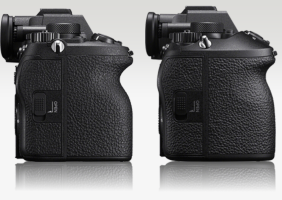
The A9III and A1II are Sony flagships. That body is one of the signature features of the flagsships... Similar to how to the R1 has a larger "Pro" body.
I mean, a couple of mm of width and the hump under the shutter button don’t seem to be remotely comparable to a gripped big body like the R1. The R5II is the camera stacking up to the A1II and has the same proportions as the R6 line.

In my view, it’s pretty ridiculous, because such a small change improves handling a lot making those “flagship” cameras usable - still subpar but I don’t see any significant cost implications in the shape difference:

1765183154718.png
 
  • Like
Reactions: 1 user
Upvote 0
I mostly agree, whereas I would never define anything by Sony as luxury, as they target high tech feature and not image (like Leica or Hasselblad) and they seem to disregard attractive design completely.
Premium may be a better description.
As for Chinese luxury, Hasselblad is already here to stay.
This is a bit tricky. Simply buying a compnay doesn't make it "Chinese". They are still designed and made in Sweden. If the Chinese were to switch production to China they'd lose quality and the Luxury label. At that price you are paying for perceived craftmenship. Even if they were able to the Chinese to learn the skill over a period of time most Hasselblad owners wouldn't pay for a Chinese made Hasselblad.

More than likely they'll use the info learned to compete with another midrange brand.
 
Upvote 0
Not if your business is selling lenses.
That is part of my argument. We are essentially at the point where multiple companies are making cameras that are reaching the limit of what the majority people need. Concurrently the Chinese are increasing their capabilities of making quality lenses (and lower tier cameras) that are more affordable than first party. Both are greatly reducing the potential profitability moving into the future.

If Camera makes slow down advancements and convince people to upgrade more to newer bodies with minimal advancements that extends that runway. Similar to Apple trying to sell a new iphone every year.

The Sony A7V is a great example of this. The sensor does 7k, the can easily do open gate and it make the grip similar to the A1II. OR they can update the A7V to just enough to get by, charge $100 more than Canon and then add those features to the A7VI as a reason to uprade then.

Canon went from the R6 at $2500 to the R6mii also at $2500 to now the R6miii at $2800. During the same time Sony went from the A7III priced at $2000 when they were ahead in specs, up to match canon at $2500 for the A7IV when they were still slightly ahead and now are charging more at $2800 when Canon now has better specs.

See my previous comments on Canon and Sony. Canon is more focused on leading the Camera industy, protecting market share as the premeir make of said cameras. Sony is looking to maximize profits and position themselves as the premium option ahead of the potential headwinds.
 
  • Like
Reactions: 1 user
Upvote 0
This is a bit tricky. Simply buying a compnay doesn't make it "Chinese". They are still designed and made in Sweden. If the Chinese were to switch production to China they'd lose quality and the Luxury label.
Sorry, my bad: I wasn't aware that Hasselblad is actually manufactured in Sweden, I thought the new designs (X series) were a Chinese product line using the branding - pretty big oversight on my part!

Although the marketing is for sure in Chinese hands, the website is riddled with nonsensical sentences :D
 
Upvote 0
In my view, it’s pretty ridiculous, because such a small change improves handling a lot making those “flagship” cameras usable - still subpar but I don’t see any significant cost implications in the shape difference:

View attachment 227060

That is exactly the point. Why leave our features that imrove the camera if they don't const much, if anything to implement them? If you have a customer base that is locked into your ecosystem (again think Apple) then you roll out those updates as slowly as possible.

So for the A7V they gave them the 4 axis screen but not the better grip. When the A7VI comes out the better grip will be an additional minor upgrade that when added to others is part of their argument to get another new camera.

A large part of the Sony customer base isn't hobbyist like what you see here. Their base is comprized of content creators and Youtuber's using their cameras to try and make a living. You have a smaller group of people buying and selling camera over and over again. Before the main reason to upgrade was video features as this was the main content people are making money from. Now that video specs have hit a plataeu, they have to find other ways to play the game.
 
  • Like
Reactions: 1 user
Upvote 0
A large part of the Sony customer base isn't hobbyist like what you see here. Their base is comprized of content creators and Youtuber's using their cameras to try and make a living.
Do you have any data to back up that statement? Sony had a 28.5% market share of camera’s sold in 2024. That is about 2.33 million camera’s……

Source: The Nikkei Industry Map 2026 via Sony Alpha Rumors.
 
Upvote 0
A large part of the Sony customer base isn't hobbyist like what you see here. Their base is comprized of content creators and Youtuber's using their cameras to try and make a living.
I think this is very far from reality :)

Sony had a 28.5% market share of camera’s sold in 2024. That is about 2.33 million camera’s
Many of those are 5-to-9 joes like me and some random people with moderate to high interest in photography.
 
  • Like
Reactions: 1 user
Upvote 0
Do you have any data to back up that statement? Sony had a 28.5% market share of camera’s sold in 2024. That is about 2.33 million camera’s……

Source: The Nikkei Industry Map 2026 via Sony Alpha Rumors.
While it's unlikely that he will provide such data, even if he does I'd take it with a grain of salt.

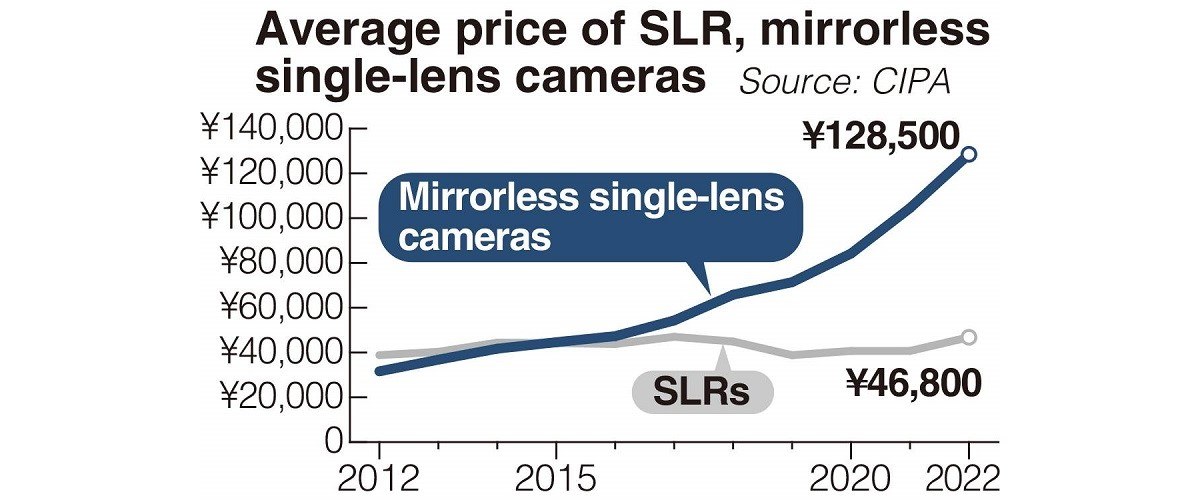
Earlier this year, @CJaurelius provided some data to back up his statement that MILC prices were 'exploding'. He conveniently stopped at 2022, and left out the data for 2023 and 2024 that showed prices had flattened (they are still essentially flat through the latest CIPA data from October, 2025).

 
  • Like
Reactions: 1 user
Upvote 0
While it's unlikely that he will provide such data, even if he does I'd take it with a grain of salt.

Earlier this year, @CJaurelius provided some data to back up his statement that MILC prices were 'exploding'. He conveniently stopped at 2022, and left out the data for 2023 and 2024 that showed prices had flattened (they are still essentially flat through the latest CIPA data from October, 2025).

As usual you try to pick out one item and ignore the overall argument as it was more nuanced.
I think it's clear that the prices of individual cameras haven't tripled. The reason the average unit price is going up so fast is becuase mix of cameras sold each year is skewing toward more expensive cameras. If you sell 3 R50's and 1 R1 then the next year you sell 2 R50's and 2R1's the unit price jumps 50% even if they sell for the same price each year.

As I mentioned before it's not really just the price point but the actual type of camera. The bottom of the market is continuing to be eroded to competition. Cameras are getting more specialized to differentiate and compete. The market is become more niche by the day.

Even the fixed lens point and shoot crowd is moving upstream. The Powershot V1 cost more than an R50. If point and shoots are nearing $1k I think the trend line is a bit faster than you think.

And I think the point I was making still stands today. Right now the latest CIPA report shows the value of all cameras shipped up on a price per unit year to date. The next couple months will be telling.

The companies financial statements reflect the same. Canon's sales revenue for example is going up faster than units sold indicating the price per unit is going up. Fuji's latest quarter revnue was up an insane 25% but not sure about their sales yet. However I doubt they grew sales by as much and instead sold a lot of higher priced cameras.

The outlier seems to be Nikon. They are taking the value approach in an effort to claw back market share. It will be interesting to see if that works.
 
Upvote 0
As usual you try to pick out one item and ignore the overall argument as it was more nuanced.

And I think the point I was making still stands today. Right now the latest CIPA report shows the value of all cameras shipped up on a price per unit year to date. The next couple months will be telling.
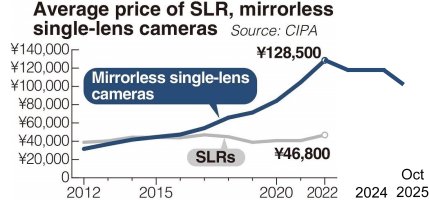
Your overall argument that the bottom of the market is eroding and cameras are moving upmarket is based on your assertion that MILC prices are 'exploding'. The data show that assertion to be false. It was true through 2022, but in 2023 the MILC average unit price fell from its 2022 peak down to ~$800, and it remained flat for 2024. For the first 10 months of 2025, it was ~$750 but factoring in the difference in relative currency adjusts that to...wait for it...$800.

Ignoring the Data corrected.jpg

"The next couple months will be telling." LOL, so now you're asserting that even though the average unit price has been flat for the past 34 months, the next two months will prove you right. Really?

But speaking of ignoring things, the topic of this thread is a Sony camera, and about Sony's camera sales you stated, "A large part of the Sony customer base isn't hobbyist like what you see here. Their base is comprized of content creators and Youtuber's using their cameras to try and make a living." You were asked by @P-visie to provide data to support that assertion (who, you may notice, provided a source for their own data), and you ignored that request (but proceeded to double down on your previous, failed attempt to support a point with data).

I will repeat my closing line from that previous thread:

You keep playing, but you’re not very good at this.

Edit: I made a mistake in the original plot. While the average MILC unit price was flat into 2025 based on correction for the yen-to-USD exchange rate, the plot itself is in yen, and while the price dropped to ¥120K in 2023 and stayed there for 2024, it has dropped to ¥110K for the first 10 months of this year. The revised plot reflects that (and further emphasizes how incorrect it would be to conclude that MILC prices are 'exploding').
 
Last edited:
  • Like
Reactions: 1 user
Upvote 0
That is exactly the point. Why leave our features that imrove the camera if they don't const much, if anything to implement them?

I forget where I heard it, but someone said that for Sony to do 7K / Open Gate would require codec modifications and that was a possible reason why Sony didn't want to do it.

Don't take that as gospel though, seems odd that Sony would have such a brittle codec.
 
Upvote 0
Your overall argument that the bottom of the market is eroding and cameras are moving upmarket is based on your assertion that MILC prices are 'exploding'. That data show that assertion to be false. It was true through 2022, but in 2023 the MILC average unit price fell from its 2022 peak down to ~$800, and it remained flat for 2024. For the first 10 months of 2025, it was ~$750 but factoring in the difference in relative currency adjusts that to...wait for it...$800.

View attachment 227065

"The next couple months will be telling." LOL, so now you're asserting that even though the average unit price has been flat for the past 34 months, the next two months will prove you right. Really?

But speaking of ignoring things, the topic of this thread is a Sony camera, and about Sony's camera sales you stated, "A large part of the Sony customer base isn't hobbyist like what you see here. Their base is comprized of content creators and Youtuber's using their cameras to try and make a living." You were asked by @P-visie to provide data to support that assertion (who, you may notice, provided a source for their own data), and you ignored that request (but proceeded to double down on your previous, failed attempt to support a point with data).

I will repeat my closing line from that previous thread:

I'm pretty sure that the unit % was growing more than the value % in the last CIPA numbers as well, but I didn't really get into them - I will wait until the entire year is done to get all pretty with graphs - but this is a good one to hightlight next jan when we have the full year data.

I'll start filling in the historical data so we can get into this more. thanks for the info and idea.
 
Upvote 0
Your overall argument that the bottom of the market is eroding and cameras are moving upmarket is based on your assertion that MILC prices are 'exploding'. That data show that assertion to be false. It was true through 2022, but in 2023 the MILC average unit price fell from its 2022 peak down to ~$800, and it remained flat for 2024. For the first 10 months of 2025, it was ~$750 but factoring in the difference in relative currency adjusts that to...wait for it...$800.
The average sale price in a given year mainly reflects the mix of cameras sold, not the pricing trend of individual models. If a company sells a higher proportion of entry-level bodies one year and more premium bodies the next, the average price will naturally shift—even if individual model prices are rising.

Nikon’s own financial statements make this point clear:

"Despite projections of mid-to-long-term strength in the DCIL market, a downward shift in product mix, effects from priceincreases due to tariffs, and signs of slowing growth in certainemerging markets are currently observed."

In other words, Nikon is selling more lower-end models in high volume—specifically the Z5 II, which sells for $1,850, compared to the original Z5’s $1,400 launch price. The individual model price increased by $450, but because Nikon isn’t currently moving high volumes of Z8s or Z9s, the average price per unit still drops.

You see the same trend with Sony and Canon:

  • Sony’s A7 III launched in 2018 at $2,000.
  • Canon’s R6 launched in 2020 at $2,500, and Sony followed with the A7 IV in 2021 at $2,500.
  • Today, the R6 Mark III is $2,800 and the A7 V is $2,900.
Other bodies show the same pattern:

  • Canon’s R5 launched at $3,900; the R5 Mark II launched at $4,300.
  • Sony’s ZV-E10 launched at $700; the ZV-E10 II launched at $1,000, and tariffs later pushed it to $1,200.

Economic conditions have been soft, and at the same time manufacturers have raised prices across most individual models. That combination means consumers gravitate toward more affordable bodies—where the year-to-year price increases are smaller—causing the average sale price to remain flat or fall even though the actual prices of individual cameras are going up.

"The next couple months will be telling." LOL, so now you're asserting that even though the average unit price has been flat for the past 34 months, the next two months will prove you right. Really?

If you look at the CIPA numbers the average value of units shipped varys considerably from month to month. WIth Both Canon and Sony releasing their very popular middle of the road camera it will be interesting to see what happens in the upcoming months.
 
Upvote 0