Technique...

J.R. said:
I know I am going to sound like a pedant but there are too many people with poor posture while taking photos.

I see this all the time while attending photowalks. People tend to shoot like overgrown bats with elbows away from their bodies. Bad posture results in too many OOF shots that people can possibly imagine.

My system is simple, elbows tucked in, balance body against anything that is available (if possible) and don't breathe while taking a shot.

Hi J.R.
I'll give you a +1 on that, I love the people that zoom in or out by leaning rather than take a step. Sometimes they lean so far that you can see the muscle tremors from the strain as wall as the bad posture sway. Must be a miracle if they get in focus pics.

Cheers Graham.
 
Upvote 0
Valvebounce said:
J.R. said:
I know I am going to sound like a pedant but there are too many people with poor posture while taking photos.

I see this all the time while attending photowalks. People tend to shoot like overgrown bats with elbows away from their bodies. Bad posture results in too many OOF shots that people can possibly imagine.

My system is simple, elbows tucked in, balance body against anything that is available (if possible) and don't breathe while taking a shot.

Hi J.R.
I'll give you a +1 on that, I love the people that zoom in or out by leaning rather than take a step. Sometimes they lean so far that you can see the muscle tremors from the strain as wall as the bad posture sway. Must be a miracle if they get in focus pics.

Cheers Graham.

Actually, slowly and smoothly exhaling while firing the shutter gets less motion than holding the breath. 2 second handheld shots on my Hasselblad doing this!
 
Upvote 0
docholliday said:
Valvebounce said:
J.R. said:
I know I am going to sound like a pedant but there are too many people with poor posture while taking photos.

I see this all the time while attending photowalks. People tend to shoot like overgrown bats with elbows away from their bodies. Bad posture results in too many OOF shots that people can possibly imagine.

My system is simple, elbows tucked in, balance body against anything that is available (if possible) and don't breathe while taking a shot.

Hi J.R.
I'll give you a +1 on that, I love the people that zoom in or out by leaning rather than take a step. Sometimes they lean so far that you can see the muscle tremors from the strain as wall as the bad posture sway. Must be a miracle if they get in focus pics.

Cheers Graham.

Actually, slowly and smoothly exhaling while firing the shutter gets less motion than holding the breath. 2 second handheld shots on my Hasselblad doing this!

Not when you have tucked in your elbows into your beer belly... No sir.

That reminds me, I need to get back in shape. :P :-[
 
Upvote 0
Now that you've learned about the "rule" of thirds. Do your best to forget it!

Unfortunately, a great quote by Edward Weston has often been bastardized to emphasize the importance of "good" composition. But, doing so requires that the quote be misquoted, taken out of context and used to justify the very thing Weston opposed.

Here's what you may have read: "Composition is the strongest way of seeing."

Here is what Weston actually wrote:

...Now to consult rules of composition before making a picture is a little like consulting the law of gravitation before going for a walk. Such rules and laws are deduced from the accomplished fact; they are the products of reflection and after-examination, and are in no way a part of the creative impetus. When subject matter is forced to fit into preconceived patterns, there can be no freshness of vision. Following rules of composition can only lead to a tedious repetition of pictorial cliches.

Good composition is only the strongest way of seeing the subject. It cannot be taught because, like all creative effort, it is a matter of personal growth... [the photographer's] greatest asset is the directness of the process he employs. But this advantage can only be retained if he simplifies his equipment and technique to the minimum necessary, and keeps his approach free from all formula, art-dogma, rules, and taboos...
 
Upvote 0
unfocused said:
Now that you've learned about the "rule" of thirds. Do your best to forget it!

Unfortunately, a great quote by Edward Weston has often been bastardized to emphasize the importance of "good" composition. But, doing so requires that the quote be misquoted, taken out of context and used to justify the very thing Weston opposed.

Here's what you may have read: "Composition is the strongest way of seeing."

Here is what Weston actually wrote:

...Now to consult rules of composition before making a picture is a little like consulting the law of gravitation before going for a walk. Such rules and laws are deduced from the accomplished fact; they are the products of reflection and after-examination, and are in no way a part of the creative impetus. When subject matter is forced to fit into preconceived patterns, there can be no freshness of vision. Following rules of composition can only lead to a tedious repetition of pictorial cliches.

Good composition is only the strongest way of seeing the subject. It cannot be taught because, like all creative effort, it is a matter of personal growth... [the photographer's] greatest asset is the directness of the process he employs. But this advantage can only be retained if he simplifies his equipment and technique to the minimum necessary, and keeps his approach free from all formula, art-dogma, rules, and taboos...

an·ar·chy \ˈa-nər-kē, -ˌnär-\
: a situation of confusion and wild behavior in which the people in a country, group, organization, etc., are not controlled by rules or laws...

Merriam Webster
 
Upvote 0
Here are a few tips for beginners:
[list type=decimal]
[*]Don't be afraid of using a flash. Instead, get comfortable with using a flash on/off camera and learn how to shape light within a given scene. Remember when incorporating a flash you need to keep in mind that you are making adjustments for 2 separate exposures within the same shot. The first for the ambient light and the second for the amount of light you want to output from your flash(es).
[*]After you've become comfortable using a flash, explore the basic types of lighting for portraiture. Paramount, loop, split, rembrandt, and profile. This will provide enough knowledge and experience to help you customize your own setup to illustrate your vision.
[*]Every lens has a sweet spot. Gain an understanding of the specific limitations and advantages of every lens you use. This will help you understand what type of lens you should use given environmental conditions, distance to subject, desired depth of field, and creative vision.
[/list]
 
Upvote 0
brad-man said:
unfocused said:
Now that you've learned about the "rule" of thirds. Do your best to forget it!

Unfortunately, a great quote by Edward Weston has often been bastardized to emphasize the importance of "good" composition. But, doing so requires that the quote be misquoted, taken out of context and used to justify the very thing Weston opposed.

Here's what you may have read: "Composition is the strongest way of seeing."

Here is what Weston actually wrote:

...Now to consult rules of composition before making a picture is a little like consulting the law of gravitation before going for a walk. Such rules and laws are deduced from the accomplished fact; they are the products of reflection and after-examination, and are in no way a part of the creative impetus. When subject matter is forced to fit into preconceived patterns, there can be no freshness of vision. Following rules of composition can only lead to a tedious repetition of pictorial cliches.

Good composition is only the strongest way of seeing the subject. It cannot be taught because, like all creative effort, it is a matter of personal growth... [the photographer's] greatest asset is the directness of the process he employs. But this advantage can only be retained if he simplifies his equipment and technique to the minimum necessary, and keeps his approach free from all formula, art-dogma, rules, and taboos...

an·ar·chy \ˈa-nər-kē, -ˌnär-\
: a situation of confusion and wild behavior in which the people in a country, group, organization, etc., are not controlled by rules or laws...

Merriam Webster

Hurray for anarchy. It makes for much more interesting art.
 
Upvote 0
David_in_Seattle said:
Here are a few tips for beginners:
[list type=decimal]
[*]Don't be afraid of using a flash. Instead, get comfortable with using a flash on/off camera and learn how to shape light within a given scene. Remember when incorporating a flash you need to keep in mind that you are making adjustments for 2 separate exposures within the same shot. The first for the ambient light and the second for the amount of light you want to output from your flash(es).
[*]After you've become comfortable using a flash, explore the basic types of lighting for portraiture. Paramount, loop, split, rembrandt, and profile. This will provide enough knowledge and experience to help you customize your own setup to illustrate your vision.
[*]Every lens has a sweet spot. Gain an understanding of the specific limitations and advantages of every lens you use. This will help you understand what type of lens you should use given environmental conditions, distance to subject, desired depth of field, and creative vision.
[/list]

+1

Don't underestimate lighting. Position and type of lighting, continuous, spot or flash lighting make all the difference. Don't rely on your cameras ability to work under low light, a camera body is only 1/3rd of the technological aspect of taking the picture or video. The other 2/3rds are lens and lighting, people remember the lens, but forget lighting. Even if you get all 3 parts, it depends on how artistic you get with them.

Invest in lights, instead of bodies and you will see the difference. Learn 3 point lighting (master, key and back lighting).

After you learn about lighting. Play around with lighting too... learn what works and what doesn't... you might like shadows in certain parts of your subject and/or other parts of the frame.
 
Upvote 0
Along these lines, rule of thirds and such, I once heard a thing where they, who ever "they" are, studied what our eye is attracted to and in what order.
It went something like: Brightness, Color then Dark.
So our eyes tend to took at the brightest thing/area then the most colorful thing/area then the darker thing/area. And if we can compose the shot around that we can keep the eye moving around the picture thus making a compelling photo.
Like I said it went SOMETHING LIKE THAT.

Is anyone familiar with this and am I even close in my recollection?
 
Upvote 0
Waterdonkey said:
Along these lines, rule of thirds and such, I once heard a thing where they, who ever "they" are, studied what our eye is attracted to and in what order.
It went something like: Brightness, Color then Dark...
From my point of view the most contrasty area on a scene attracts eyes. Here are sample pictures:

l_f_51a8de540b81f.jpg


l_f_51cd15cb4f8e4.jpg


l_f_5211d3e902a11.jpg


mkabi said:
I'm sure given that many of the members here are professional photographers. I was hoping that you can share a technique or two with the forum? Unless you think that what you do is a trade secret.
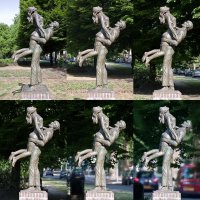
If you want to add some art to you photography, you should try multiple exposures and glass reflections:

l_f_525bdfcfdfd93.jpg


l_f_526509c0a333a.jpg


l_f_526509c3868a4.jpg


l_f_525bdfca32c28.jpg
 
Upvote 0