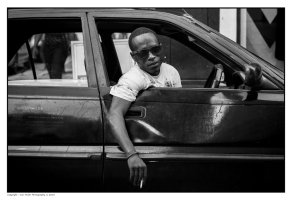
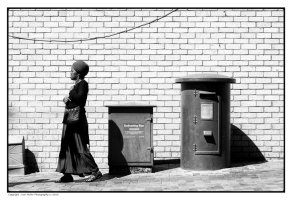
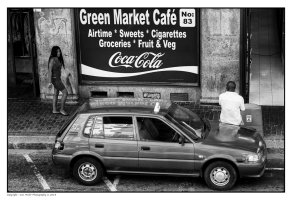
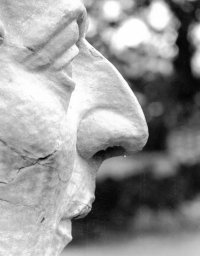
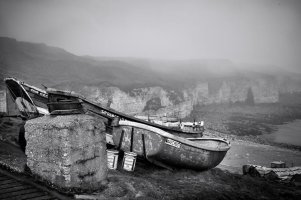
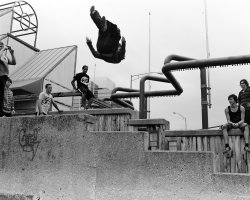
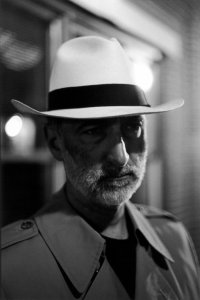
The TRI-X 'look'...

Oct 25, 2011
361
54
8,061

Attachments

  • IvanM-0251-TXs.jpg
    IvanM-0251-TXs.jpg
    328.9 KB · Views: 1,653
  • Ivan-M--1224-TXs.jpg
    Ivan-M--1224-TXs.jpg
    455.1 KB · Views: 1,681
  • Ivan-M--1299-TXs.jpg
    Ivan-M--1299-TXs.jpg
    447.2 KB · Views: 1,665
I shot and developed many, many rolls of Tri-X 'back in the day'...

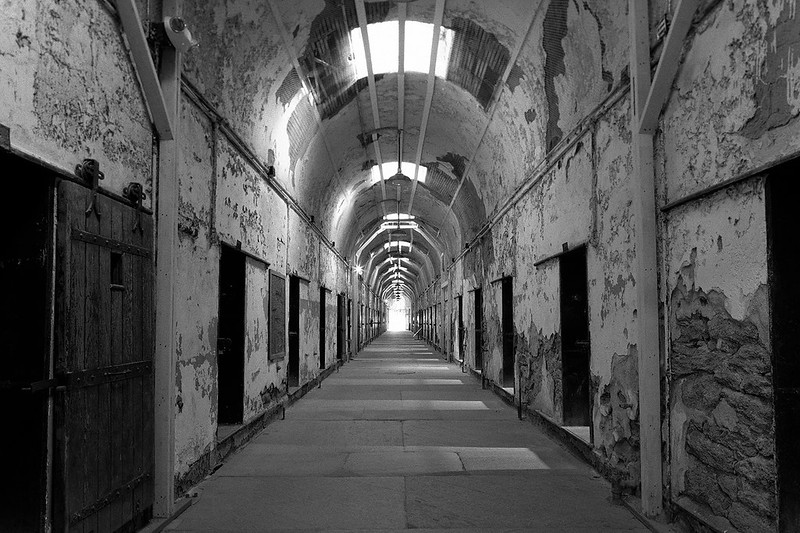
Here's a shot I took at the Eastern State Penitentiary in Philadelphia:

"Toward the Light"

EOS 1D X, TS-E 24.0mm f/3.5L II, 3.2 s, f/14, ISO 100 (Processed as Tri-X with DxO FilmPack)
 
Upvote 0
Then again, you could also post a photograph made with Tri-X....

Gilgal gardens,shot in the rain, Salt Lake City, UT. Canon Elan 7, Tri-X, Ilford Multigrade lV paper
 

Attachments

  • Tri-X 400, RC Paper.jpg
    Tri-X 400, RC Paper.jpg
    566.4 KB · Views: 1,724
Upvote 0
When I got married, I found a photographer who was willing to give me the film, which I had developed and then scanned myself. I had her shoot our whole wedding in Tri-X because I love the look, too, and like to use it in DxO Filmpack. If you're a big fan, check out Genesis by Sebastião Salgado - it's an amazing large format book of landscapes, wildlife, and portraits all shot on Tri-X or converted to Tri-X using Filmpack from 1Ds III files.
 
Upvote 0
The good old days, shooting Tri-X and doing my own processing in a friend's darkroom. I know DxO Filmpack has a Tri-X option but did you , Ivan Muller, use another way to get the look? Would you be willing to share that recipe?

Thanks.

JP
 
Upvote 0
Its quite simple really... In LR4 I reduce contrast a bit so to ensure my highlights are protected. Then open file in Nik silver efex2 and just click on the Tri-x option...if needed I will play around with the colour filters and structure and contrast sliders...and thats it. More fully discussed here with some samples :
http://thelazytravelphotographer.blogspot.com/

I image DXO is pretty similar except it hasnt got a structure sliders, which can get abused sometimes...


JPAZ said:
The good old days, shooting Tri-X and doing my own processing in a friend's darkroom. I know DxO Filmpack has a Tri-X option but did you , Ivan Muller, use another way to get the look? Would you be willing to share that recipe?

Thanks.

JP
 
Upvote 0
I tweak about in PS to get my B&Ws, but they always look more like 'Ilford HP5' rather than 'Kodak Tri-X'. The latter gave fantastic tones when exposed / processed / printed well.
 

Attachments

  • Waiting for the Tide.jpg
    Waiting for the Tide.jpg
    55.9 KB · Views: 1,768
Upvote 0
Ah you guys are bringing me back!

Tri-X 320 with D76 1:1 was my go to combo back in film days. I have actually gotten bit by the nostalgia bug recently and am dusting off a few film cameras. I ran a roll of film through a kodak stereo camera a couple of weeks ago (another recent fancy of mine) and processed for the first time in close to 8 years. It felt really good to get back to my roots!

Additionally, I have discovered that using my 100mm macro to photograph my negatives gives really phenomenal results over straight scanning. You actually retain the grain structure in the negative rather than the weird pixel/grain hybrid look you get from scanning.

Thx for this thread....I feel the stars aligning for me!
 
Upvote 0
Awesome thread.

I usually shot Ilford Delta 3200 for low-light club stuff in my T90 (which is most of what I shot with it), & HP5 and Superia 400 for outdoor work. It blows people's minds when I tell them I got into photography with digital in 1999 using a Powershot S20 and then switched to a fantastic manual-focus film SLR so that I could learn what the h*ll I was doing & get some good shots in music venues (which was basically impossible with the compact digitals of the day as anything over ISO100 was "boosted" & looked like cr*p).

Tri-X is lovely stuff though :-)
 
Upvote 0
agierke said:
Additionally, I have discovered that using my 100mm macro to photograph my negatives gives really phenomenal results over straight scanning. You actually retain the grain structure in the negative rather than the weird pixel/grain hybrid look you get from scanning

Really??
That's very interesting, I'd love to know more about your setup for that please.
I considered getting an old FD slide duplicator (I already have an FD/eos adapter) but a quick Google put me off the idea at the time.

Regards
 
Upvote 0
drmikeinpdx said:
You guys are making me rethink my vow to never go back in the darkroom! ;D

Darkroom = kitchen+ blackout sheets
There are times when I really miss my dads big old enlarger the smell of chemicals and the magic of an image developing.

Meh nostalgia, it was a pain in the ass setting it up ;D
 
Upvote 0
zim said:
Meh nostalgia, it was a pain in the ass setting it up ;D

One nice thing about being in science is there's always a darkroom. Up through my grad school days, they were set up for printing - enlargers, automatic print developers, etc. Composite photos for scientific publications (and my dissertation) meant making small prints, labeling them with transfer lettering, mounting them on foam core, then photographing the composite and printing that. Takes ~5 minutes in Photoshop, now. ;)

We still have darkrooms, mainly for X-ray films and dipping emulsions used for autoradiography. If I really wanted to, I could bring in trays and chemicals for printing...but I'll pass, thanks.
 
Upvote 0
zim said:
agierke said:
Additionally, I have discovered that using my 100mm macro to photograph my negatives gives really phenomenal results over straight scanning. You actually retain the grain structure in the negative rather than the weird pixel/grain hybrid look you get from scanning

Really??
That's very interesting, I'd love to know more about your setup for that please.
I considered getting an old FD slide duplicator (I already have an FD/eos adapter) but a quick Google put me off the idea at the time.

Regards

It was actually a forehead slapping moment for me.

It started with me acquiring a 1904 stereo viewer and the idea that I would like to produce my own stereocards. Picked up the kodak stereo camera soon after and shot the test roll. Then came the frustrations of trying to get decent scans out of my epson 3200 with the odd format of the stereo negatives. Back when I got the thing I felt that I got some decent results scanning 120 frames but with the slight curl of 35mm format coupled with the paired images being separated by three frames it was a complete nightmare getting anything remotely acceptable.

After a couple hours scouring the internet for different solutions, I ran across some guys blog expressing the same frustrations about direct scanning that I had and that his solution was to photograph his negatives with his macro lens. This was the forehead slap moment. Brilliance is often so simple...

Anyway, I use a simple light box (same one I used in art school for tracing stuff and viewing print files of negatives). I place the negative emulsion up and place a cleaned piece of glass over it. The guy from the blog suggested taking 4 sections of the negative and merging them in PS to maximize detail and resolution but as I was already shooting a smaller format and just doing a quick handheld shot I just did a single frame at the largest RAW setting.

Works brilliantly! I did have to do a perspective crop in PS as it was hand held my edges weren't perfectly straight and you do have to invert the image to get a positive but the results were CLEAN. Totally beats even the results I used to get scanning 4x5s on a Flex scanner.

Additionally, I used to have to do dupes when I worked at the lab and I always was surprised how much was lost in that process. I would say this process beats those results by a long shot as well.

If you have the 100mm L you should give it a try. I doubt you'd be disappointed. I'm sure the non L would yield superior results as well.

 
Upvote 0
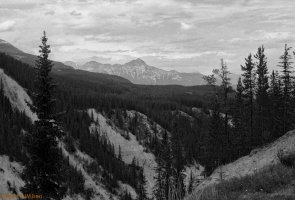
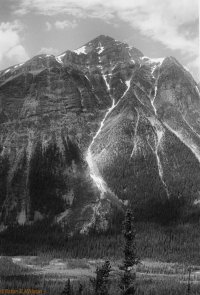
Real Tri-X from a 1989 trip to the Canadian Rockies. (Maybe not profound shots but they do give the feel.) Scanned with a Plustek Optifilm 7400.
 

Attachments

  • Canada1989 (12).jpg
    Canada1989 (12).jpg
    780.4 KB · Views: 779
  • Canada1989 (8).jpg
    Canada1989 (8).jpg
    831.1 KB · Views: 788
Upvote 0