*UPDATE* EOS 70D is Coming, The Future of Pro APS-C Will Change

Status
Not open for further replies.
eyeland said:
jrista said:
if you use high quality glass designed to resolve enough detail for high resolution sensors (i.e. any EF Mark II generation L-series lens), you'll utilize the 7D to its fullest
Don't mean to go further off topic, but I was wondering how one identifies said glas? Could you dish out some rough MTF estimates to go by?
The best glas I have atm is the 50mm 1.4 and I was thinking of getting the Tamron 24-70 VC.

As far as MTF's go, effectively "perfect"...all factors measured at nearly 1.0 (>0.97) almost right through the corners. Corner performance should only drop off a few points, around 0.7 or greater. Just look at the MTF's of any of Canon's new Mark II Telephoto and Supertelephoto primes. Every single one has a near-perfect MTF, even wide open.
 
Upvote 0
Mikael Risedal said:
jrista said:
I guess I should clarify that in my sharpness examples with the 7D, I was not trying to say that the 7D is a better camera than the 5D III or 1D X. I just wanted to make it clear that the 7D sensor is most definitely not a bad sensor. It gets a lot of bad rap, but in my experience more of the "issues" with the 7D have to do with the lens, more so than with the sensor. The considerable complaints about 7D softness, and as a byproduct of the softness its noise, in my opinion, are really more complaints about the 7D revealing flaws with ones gear.

My ultimate point was that if you use high quality glass designed to resolve enough detail for high resolution sensors (i.e. any EF Mark II generation L-series lens), you'll utilize the 7D to its fullest. It is not a great high ISO performer, but at all the ISO settings it does perform well at, the overall IQ should be no different in real terms than what you may get out of any better camera. You will, however, find that the 7D's limitations are greater than that of newer Canon cameras. It falters at higher ISO settings where the 5D III and 1D X shine. It's AF system lacks the consistency and accuracy of the new 61pt AF system.


Sharp detail eats noise for breakfast; Noise eats softness for breakfast, lunch, and dinner.

Maximize sharpness with high quality glass, and noise will quickly become a background issue with the 7D. Use inferior glass, and the limitations of both the glass and the 7D will even more quickly become readily apparent.

define what you mean by a good or less good sensor?
signal / noise and DR.

You have some kind of innate need to prove that Canon sensors "suck", Mikael. Because of that, you always miss the point. Before you dive off into some inane discussion about how a few points difference in DR or SNR at high ISO actually matters, you really need to read every post of this entire thread. Maybe read it a few times, and really get all the details into your brain. Relatively, speaking only about the sensor, Canon sensors are a few percent...yes, JUST A FEW PERCENT, worse than Sony sensors. However the real-world examples of IQ from the 7D clearly show it it is a highly capable CAMERA. So, read the entire thread, detail for detail, a few times...and SEE what we are SAYING:

Photography is about THE CAMERA...not the sensor. In that respect, the 7D is an extremely capable camera.
 
Upvote 0
Mikael Risedal said:
jrista said:
I guess I should clarify that in my sharpness examples with the 7D, I was not trying to say that the 7D is a better camera than the 5D III or 1D X. I just wanted to make it clear that the 7D sensor is most definitely not a bad sensor. It gets a lot of bad rap, but in my experience more of the "issues" with the 7D have to do with the lens, more so than with the sensor. The considerable complaints about 7D softness, and as a byproduct of the softness its noise, in my opinion, are really more complaints about the 7D revealing flaws with ones gear.

My ultimate point was that if you use high quality glass designed to resolve enough detail for high resolution sensors (i.e. any EF Mark II generation L-series lens), you'll utilize the 7D to its fullest. It is not a great high ISO performer, but at all the ISO settings it does perform well at, the overall IQ should be no different in real terms than what you may get out of any better camera. You will, however, find that the 7D's limitations are greater than that of newer Canon cameras. It falters at higher ISO settings where the 5D III and 1D X shine. It's AF system lacks the consistency and accuracy of the new 61pt AF system.


Sharp detail eats noise for breakfast; Noise eats softness for breakfast, lunch, and dinner.

Maximize sharpness with high quality glass, and noise will quickly become a background issue with the 7D. Use inferior glass, and the limitations of both the glass and the 7D will even more quickly become readily apparent.

define what you mean by a good or less good sensor?
signal / noise and DR.

Why does everything have to be defined/quantified and brought back to the Canon vs Nikon D800/D7000 etc etc argument? jrista said it is 'not a bad sensor'. He did not compare nor try to compare it to anything else in the quoted post. Here we go again. What I believe he was trying to say was that the 7D is capable to deliver very good results when used correctly. Maybe not as good as some other cameras in certain areas but there is more to it than that. So if you care to quote me or ask me to provide evidence or figures or to substanciate my claims, know that I am not interested in justifying myself nor responding to you any further on this matter. I am just sick of this whole 'Nikon is better' thing, which you insist on bringing into (virtually) everything. Nikon may utilise 'better' sensors at the present time, regarding sensors ONLY, but there is more to a picture than your DR and signal noise graphs. When the D800 and D7000 sensors are old technology and have been surpassed and outclassed by newer technology, does that mean we can slate them for being rubbish?
 
Upvote 0
AlanF said:
jrista said:
AlanF said:
WildBill said:
I must be doing something wrong because I continue to take gorgeous pictures with my 7D. After reading this thread, and several others on this forum, I'm now convinced my camera is a piece of junk. I hope I can figure out what I'm doing wrong so my pictures will match my camera's abilities and I can move on to FF where all real photographers belong. I appreciate any help you guys can give me.
No one is saying that. Quite the opposite: in good light, the 7D is the equal of the 5D III in many circumstances at a fraction of the price. But, the 5D III is better at high iso and has more consistent and faster focus. I have taken great photos and will continue so to do with my 7D. But, the 5D III loses very little if anything by having 1.6 times less reach.

I think he was being sarcastic. ;) That said, you get a few feet from your subject, and even the "lowly" 100-400mm L lens on the 7D will do you justice:

u6ri4JY.jpg


A Killdeer in late fall/early winter, taken with the 7D, 100-400mm @ 400mm, 1/1000s, f/7.1, ISO 200. The 7D can certainly take great photos, even with "crappy" glass like the 100-400 L (although I will say, I really kind of hate the boke from the 100-400...really NOT of any great quality). For those who miss WildBill's sarcasm...keep in mind, we've been comparing the 7D to the likes of the 5D III and 1D X. Arguably two of the best DSLRs the world has ever seen...

Here are the reasons why I have spent a fortune on bodies and lenses. I first started bird photography for the sheer fun of taking photos and identifying the birds, using the 7D and the 100-400mm L. I should have stopped there but a really good Dutch photographer uploaded one of my best photos to a Dutch website www.birdpix.nl. Then, I got hooked on getting more good photos uploaded. It proved to be difficult because they have a team of moderators who reject for the slightest of reasons: too noisy; not sharp enough; oversharpened etc etc. My initial rate of acceptance was about 50% of those shots that were in focus (the 7D is a bit erratic). Here is a photo of a Killdeer I took last year in New Hampshire - it is not much worse than yours but it was rejected as not being sharp enough. In order to get acceptable photos I had to get reasonably close. So, I upgraded the 100-400 to a 300mm f/2.8 II plus extenders (ouch). This doubled or maybe tripled the distance away I needed to get to take sharp photos because of the additional focal length (600 mm) and lens sharpness. Still, I was having too many photos rejected because they were too noisy or if I lowered the noise they became too soft. So, I bit the bullet and bought the 5D III for its lower noise and better focus. Now, this has increased again the number of photos I can sneak past those picky moderators. The unexpected bonus of the 5D III that the loss of crop has not significantly altered the range of distance it covers.

The "rejected" Killdeer photo, also taken with Canon 7D and 100-400mm L.

Hi Alan. I understand the feel of rejection, I've had that occur all too frequently as well. That said, there are some things I've learned recently about my bird photography that have opened my eyes to the difference between a truly artistic bird photograph, executed not only with technical prowess but also style. The photo of your killdeer is not bad in any technical sense. It is a well executed shot.

If I was critiquing that shot for a well-known magazine, online or paper, I would look beyond just the technical execution, though. For what it is, it is brightly lit, clearly focused for the subject size and distance, and well exposed. Artistically, however, it makes a few of the same mistakes I was making for the bulk of 2012. Here are a few tips:

[list type=decimal]
[*]Aim for engaging photos.
  • An engaging photo is one in which the viewer is drawn to and able to virtually engage with the key subject or subjects.
  • Extraneous elements beyond the subject tend to just be distractions, so follow the rule of subtraction whenever possible.
  • Eye contact with the subject is engaging.
  • Interaction between multiple subjects is engaging.
[*]Watch the perspective.
  • Very low, almost ground-level angles are best for shorebirds. That minimizes DOF just around the bird, and really blurs out the background to nicely isolate the subject.
[*]Watch the pose.
  • You want the bird's body to be either broadside to the camera, or pointed at a slight angle toward it.
  • Other angles tend to be less engaging...possibly even off-putting.
[*]Watch the head angle.
  • You want the bird to be looking strait at the camera in the best case.
  • Birds looking out, up, or elsewhere are less engaging, except when another subject is involved.
  • When two or more subjects are involved in some activity, say a parent sharing with its offspring, head angle should fit the activity, and need not be directly engaging with the viewer.
[*]Watch the lighting.
  • Direct, flat lighting tends to eliminate the visibility of detail, even if the detail is resolved by the lens.
  • You want the sun behind you, not overhead, preferably to a slight angle to one side.
  • A sun phase angle of a few degrees, over the shoulder where the bird is pointing is usually preferable for ideal shading to bring out the most in resolved detail.
[*]Fill the frame!
  • The amount, and sharpness, of detail really boils down to getting as many pixels on subject as possible.
  • When a pixel is a small fraction of the size of the smallest element of resolved detail, you've achieved the holy grail of IQ.
  • High density sensors definitely help to get more pixels on subject, but larger/lower density sensors with longer lenses or closer subject distances do just as well, if not better (i.e. 18mp APS-C vs. 22.3mp FF...the FF will ultimately be capable of packing on more pixels for the same subject size in frame).
[/list]

You've done fairly well with #1 & very well with #4. The photo is fairly engaging, although the body angle is a little off-putting. The key issues are with the lighting (much too flat and harsh, almost as though it was flashed or came out of a snoot), and with the rest of the composition...perspective, subject size, environment, etc. The bird is a beauty, but the environment it is in is kind of boring, dull, and because there is a fair amount of only slightly blurred detail, a little distracting. The same bird in its element, wading along a shore somewhere with a creamy water backdrop and possibly a creamy soft sandy or muddy foreground, with the bird either broadsize or angled slightly towards the camera, would make for a much more artistically and aesthetically pleasing, less distracting, and engaging photo.

I should point out, I've received several critiques on the killdeer photo I posted here. It has its own problems. The head angle is not ideal...the bird is actually looking slightly up, not directly at my camera. The depth of field is a bit too deep, I probably should have been at f/5.6, maybe f/4, however I was using the 100-400mm lens, and an f/5.6 or f/6.3 aperture would have softened a lot of the detail. The perspective is not ideal...it could have been a bit lower, helping to blur more of the foreground and more of the background, softening the somewhat distracting highlight boke in the background.

Well...sorry for the OT! I guess we could copy this to another thread if necessary....

 
Upvote 0
Re: EOS 70D is Coming, The Future of Pro APS-C is Unknown

neuroanatomist said:
chauncey said:
Would you all be so enthusiastisc about FF bodies if that new 7D ends up have 22MP, with comparable stats of course?

Probably yes. Going back to jrista's accurate statement, "I would say the lens is the most important IQ factor. The AF system and frame rate are second. The image sensor is third," you could use the same lens on the 7DII, but it would depend on the 7DII's AF system, frame rate, and high ISO performance. A 7DII with a 1D X/5DIII-like AF system (say, 40-ish points with 20+ crosses), 10 fps, and a new sensor fab yielding a stop or more of real (i.e. RAW, not JPG-engine based) lower noise...that I would be enthusiastic about.

Neuro's nailed it on the head. Sensor should really be the third-highest consideration, not the first...at least not in all cases. There are some obvious issues with the current 7D sensor, namely banding at low ISO in the shadow tones and high noise at ISO settings above 1600. Those should really be fixed. But, assuming they are not...if we get all the other features Nero mentioned like 10fps and a 40pt AF system with better AF drive firmware and a more powerful battery in the 7D II....I'd probably still buy one. The other features would overpower the negative of sensor noise for me, and it would certainly be a step up from the 7D I have now.
 
Upvote 0
Great thread :D
Was waiting for the 6D to drop in price or the 70D to be announced.
As I probably just landed my first properly paid photo-job however, I am on the verge of caving and getting another 60D or a 7D and a 24-70VC. (probably a 7D since the price difference is small here - 750$ vs 1100$)
Sure, I'd love to be on the frontline of new tech, but I am sure that the 18mp beater will serve me well until I can afford to go FF or 7Dmk2. This thread might just have been the last push I needed.

Just wanted to express my appreciation for all the stuff I learn here :) - Neuro, Jrista and AlanF, I appreciate your eloquent explanations alot!
 
Upvote 0
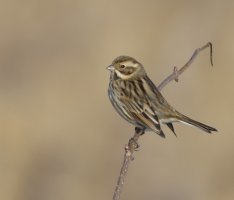
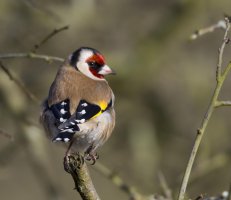
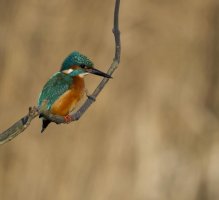
Thanks Jrista for those useful tips. I am used to rejections (from Nature, Science, Cell etc). But, I have learned a lot from the rejections and criticisms and have improved my technique significantly since last year. Here is a kingfisher taken with my 7D and a reed bunting on my first outing with the 5D III - I love both cameras - both are 100% crops), and higher resolution closer up of a goldfinch last week on the 5D III.
 

Attachments

  • KingfisherOnPerchCrop.jpg
    KingfisherOnPerchCrop.jpg
    92.3 KB · Views: 1,341
  • ReedBuntingN.jpg
    ReedBuntingN.jpg
    421.6 KB · Views: 1,345
  • GoldFinch1200.jpg
    GoldFinch1200.jpg
    337.8 KB · Views: 1,379
Upvote 0
AlanF said:
Thanks Jrista for those useful tips. I am used to rejections (from Nature, Science, Cell etc). But, I have learned a lot from the rejections and criticisms and have improved my technique significantly since last year. Here is a kingfisher taken with my 7D and a reed bunting on my first outing with the 5D III - I love both cameras - both are 100% crops), and higher resolution closer up of a goldfinch last week on the 5D III.

One other recommendation. Ease up on the NR a bit (or even a lot). If those are full frame crops, you are either decimating your detail via NR, or something is wrong with your lens. On both cameras, if you were able to get the birds that large in the frame, you should be getting as much detail as I did in my orange morph house finch shot (if not more).
 
Upvote 0
Have you guys seen this?
http://panasonic.co.jp/corp/news/official.data/data.dir/2013/02/en130204-6/en130204-6.html

I haven't read up on it much but my initial thoughts are; "Looks awesome; should provide great lowlight and dynamic... Diffraction?! Won't that hurt sharpness?"

Also Mikael is right, Canon sensors are lagging a bit, but have you tried using a Nikon (or a Sony for that matter)? IMHO, what Canon lacks in their senors, is more than made up for in their ergonomics (and third party support). Also (referring to that graph) wouldn't you expect a 15MP and 16MP senor to have better Dynamic Range to an 18MP sensor? Everything's a trade off
 
Upvote 0
jrista said:
AlanF said:
Thanks Jrista for those useful tips. I am used to rejections (from Nature, Science, Cell etc). But, I have learned a lot from the rejections and criticisms and have improved my technique significantly since last year. Here is a kingfisher taken with my 7D and a reed bunting on my first outing with the 5D III - I love both cameras - both are 100% crops), and higher resolution closer up of a goldfinch last week on the 5D III.

One other recommendation. Ease up on the NR a bit (or even a lot). If those are full frame crops, you are either decimating your detail via NR, or something is wrong with your lens. On both cameras, if you were able to get the birds that large in the frame, you should be getting as much detail as I did in my orange morph house finch shot (if not more).

The two small ones have the birds only 500 pixels high as they were os far way (40 yards through a 600 mm lens). When it closer, I can do much better. Here is a 1596x1260 crop from the centre of the 5760x3840.
 

Attachments

  • Greenfinch1235.jpg
    Greenfinch1235.jpg
    268.5 KB · Views: 774
Upvote 0
Mikael Risedal said:
OK
You can try to down load raw 2 files, one from 5dmk2 and one from d800, sun set, both cameras exposed the same regarding time/f-stop and 100iso and exposure after the high lights, to reproduce the high lights intact , then Im adjusting the lower levels / shadows with the same parameters in camera raw , and later the same adjustments in photoshop with lifting the lower levels / shadows : look at https://picasaweb.google.com/106266083120070292876/5dmk2AndD800DRSunSet


here is the raw files
link https://drive.google.com/#my-drive

and the results looks like this with the same parameters regarding high lights and shadows , nikon d800 to the left and 5dmk2 at the right

well... that is not a appropriate link. that kinda link will link to home drive of whoever has gmail account ("#my-drive".
 
Upvote 0
Mikael Risedal said:
and the results look like this if I lift the shadows even more. Nikon d800 to the left and 5dmk2 to the right
THIS IS the results of 14 stops DR with clean shadows in lower levels and compared to 11 stops Canon DR with banding and pattern noise.

once again...

1. yeah we do all care about dynamic range. BUT noise in low light is what we care the most.
2. if we want more dynamic range, we would perform hdr shots
3. most of us do not want details of the sunny sky at noon, except you

note: if you are that good, then please explain why mr. micheal freeman shot a landscape with f/32, shutter .5 second and 20mm focal lengh (probably somewhere in page 15-20 of his book). AND STOP TALKING ABOUT THE "DR" THING SINCE MOST OF PEOPLE IN THIS FORUM WILL PROBABLY NOT LISTEN NOR RESPECT YOU BASED ON GIVEN INFO.
 
Upvote 0
Could a mod move all the Mikael Canon vs. Nikon stuff to some separate, dedicated thread for that topic? I would really prefer we don't destroy ANOTHER thread with the same old debate. People HAVE been asking for Mikaels original RAW files, but that discussion really doesn't belong in this topic. It belongs elsewere, isolated, in its own little world where the debate that will inevitably rage on won't ruin any other peaceful discussions.
 
Upvote 0
Mikael Risedal said:
ishdakuteb said:
Mikael Risedal said:
and the results look like this if I lift the shadows even more. Nikon d800 to the left and 5dmk2 to the right
THIS IS the results of 14 stops DR with clean shadows in lower levels and compared to 11 stops Canon DR with banding and pattern noise.

once again...

1. yeah we do all care about dynamic range. BUT noise in low light is what we care the most.
2. if we want more dynamic range, we would perform hdr shots
3. most of us do not want details of the sunny sky at noon, except you

note: if you are that good, then please explain why mr. micheal freeman shot a landscape with f/32, shutter .5 second and 20mm focal lengh (probably somewhere in page 15-20 of his book). AND STOP TALKING ABOUT THE "DR" THING SINCE MOST OF PEOPLE IN THIS FORUM WILL PROBABLY NOT LISTEN NOR RESPECT YOU BASED ON GIVEN INFO.

one again -you have more options with 14 stops DR, you can handheld the camera and take one picture and develop
the raw file after high lights and shadows and put them together , with out tripod and static motive, not moving motive
what you then are writing you must explain to me, is it you who not understand the benefits of large DR or do you speak for all all people here at CR that they do not think large DR or small DR with banding and pattern noise are a issue

what do you mean

i careless about that one since canon offer good low light iso. like i said if i want to get more detail then i am using hdr *bracketing" and yes, i can manage myself to handheld up to 1/5s. my images are mostly snapshot but it probably look better than yours and your friend "Aglet".

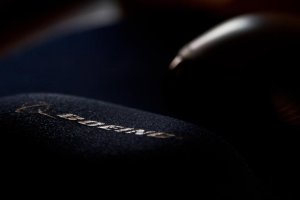
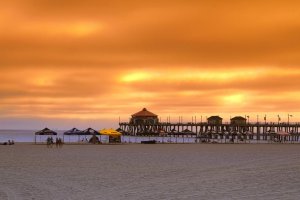
these images: one was taken with my mouse pad to test handheld (at 1/5s) ability (turned off all light in my room, the only available source light was from my notebook. taken with my canon 7d). another one is the only one of my snapshot landscape with cokin graduate filter (taken after 4 months of using dslr).

note: i am traveling for work; therefore, i download these images back from my personal site...
 

Attachments

  • mouse pad.jpg
    mouse pad.jpg
    27.4 KB · Views: 677
  • huntington beach.jpg
    huntington beach.jpg
    67.6 KB · Views: 690
Upvote 0
privatebydesign said:
jrista said:
Could a mod move all the Mikael Canon vs. Nikon stuff to some separate, dedicated thread for that topic? I would really prefer we don't destroy ANOTHER thread with the same old debate. People HAVE been asking for Mikaels original RAW files, but that discussion really doesn't belong in this topic. It belongs elsewere, isolated, in its own little world where the debate that will inevitably rage on won't ruin any other peaceful discussions.
+as many as I am allowed. He is destroying the fun of being here.......
agreed
 
Upvote 0
Mikael Risedal said:
you do not understand the difference, I can use what ever shutter speed . f-stop I want with one exposure, tell me how can you do the same with the camera on a tripod and taking 2 or more exposure. ? a example: running people in front of the camera and sunset behind, or fast running cars or what ever

1. yes, those posted images were taken only one exposure and no repeat shot
2. with tripod or without tripod, you can take hdr depending on you iso and skill, want to learn? learn yourself from jay maisel.
3. people in my picture were not my subject, therefore, i was careless. however, i consider that as a lucky thing since it is add more live to the image (imo)

sigh... i am getting tired of talking to old guy like you...
 
Upvote 0
Mikael Risedal said:
ishdakuteb said:
Mikael Risedal said:
you do not understand the difference, I can use what ever shutter speed . f-stop I want with one exposure, tell me how can you do the same with the camera on a tripod and taking 2 or more exposure. ? a example: running people in front of the camera and sunset behind, or fast running cars or what ever

1. yes, those posted images were taken only one exposure and no repeat shot
2. with tripod or without tripod, you can take hdr depending on you iso and skill, want to learn? learn yourself from jay maisel.
3. people in my picture were not my subject, therefore, i careless. however, i consider that as a lucky thing since it is add more live to the image (imo)

sigh... i am getting tired of talking to old guy like you...

and ? Nikon has still 14 stops DR and Canon 5dmk2 11 including pattern noise . 6D has 11.5 stops DR and less pattern pattern noise than 5dmk2 , what is it you do not understand?

did i say that i am careless about that one and i do care about clean noise at high iso, not full of color noise like nikon? if you care, keep it for yourself since number of us in here have shown no appreciation about what you are talking about. why making noise, nikon hire you to say that in here?
 
Upvote 0
Mikael Risedal said:
ishdakuteb said:
Mikael Risedal said:
you do not understand the difference, I can use what ever shutter speed . f-stop I want with one exposure, tell me how can you do the same with the camera on a tripod and taking 2 or more exposure. ? a example: running people in front of the camera and sunset behind, or fast running cars or what ever

1. yes, those posted images were taken only one exposure and no repeat shot
2. with tripod or without tripod, you can take hdr depending on you iso and skill, want to learn? learn yourself from jay maisel.
3. people in my picture were not my subject, therefore, i careless. however, i consider that as a lucky thing since it is add more live to the image (imo)

sigh... i am getting tired of talking to old guy like you...

and ? Nikon has still 14 stops DR and Canon 5dmk2 11 including pattern noise . 6D has 11.5 stops DR and less pattern pattern noise than 5dmk2 , what is it you do not understand?
and that picture you show has no DR at all, flat and rather ugly ( and remember that is my personal view on your picture)

those images are better than yours though... i am not that stupid to pay for that much money per month even though my pay rate is more than double (if i do not want to say triple) the shown amount per year...
 
Upvote 0
Mikael Risedal said:
yes Im paid 40000USD / month + what ever gears I want.
ugly? Im showing the different sensors characteristics, I have aspirations to make the picture quite

yep, those are ugly. not those images in here. i am saying those images that you have taken for universities and images that you have posted on you facebook (if they are all the right one).

REALLY, SHOW ME YOUR BEST OF BEST IMAGE AND DO NOT GO OUT THERE AND JUST STEAL LIKE YOU HAVE DONE AIITE... I DO NOT JUDGE IT MYSELF BUT I WILL LET SCOTT KELBY (A PHOTOSHOP MASTER AND NIKON SHOOTER) JUDGE IT...
 
Upvote 0
Status
Not open for further replies.