*UPDATED* Canon EOS 5D Mark IV Specifications & Image

Re: Canon EOS 5D Mark IV Specifications & Image

Tbh i was highly anticipating for the 1080p 120fps, and i am a bit dissapointed.

ofc i cannot know if this is due to lack of CFast or there are also other hardware limitations (i assume that if it was as simple as CFast it would be implemented, so i guess there are a lot more needed for that). So i dont care for the debate of CFast or not.

Yes this is a primarly a still camera, and blah blah blah, but why then wouldnt that make a bigger point than pixel pipping ISO 6400, to see if shadows are a bit clearer or not? Everything has reached a good plataeu already, and this imho does make a clear improvement.

Also i am always impressed , how, after 10 years of the same discussion, people think tha more MP = more noise.
 
Upvote 0
Re: Canon EOS 5D Mark IV Specifications & Image

deorum said:
Also i am always impressed , how, after 10 years of the same discussion, people think tha more MP = more noise.

So, you're impressed that people believe something that's true (at least in some cases)? Ok, then...

When comparing sensors of the same size, more MP = smaller pixels, and smaller pixels have lower SNR, which in practical terms means more noise. That's just basic physics (albeit with some underlying assumptions). But I guess it is somewhat impressive that many people do seem to grasp that concept.

One of the oft-cited reasons for more MP is more ability to crop, and if you compare an image from a 20 MP FF sensor to an image from a 50 MP FF sensor cropped down to 20 MP (not downsampled), the image from the 20 MP sensor will have less noise. So in what, for some, is a common use case (same focal length but shot from further away becuase more MP allows more cropping) it is indeed true that more MP = more noise.

5320803-impressive_vader.jpg
 
Upvote 0
Re: Canon EOS 5D Mark IV Specifications & Image

neuroanatomist said:
One of the oft-cited reasons for more MP is more ability to crop, and if you compare an image from a 20 MP FF sensor to an image from a 50 MP FF sensor cropped down to 20 MP (not downsampled), the image from the 20 MP sensor will have less noise. So in what, for some, is a common use case (same focal length but shot from further away becuase more MP allows more cropping) it is indeed true that more MP = more noise.
But in this case the higher number of pixels is not the REASON for the higher noise. If people shot with a higher pixel density camera the same way as with a lower pixel density camera (of same-generation sensor tech, same distance to subject, same lens, same framing etc.) and downsampled the high-res image to the size of the low-res image, then the resulting noise would be essentially identical. The higher noise in this example comes from a changed shooting style where people rely on the higher pixel density for being able to crop. But just like in the camera shake discussion this is comparing apples with oranges. So the blame should not really be on the higher pixel density but on people trying to take maximum advantage of a single one of a camera's technical capabilities while ignoring a potential degradation in others.

So (apart from file sizes, transfer speeds etc.) I don't quite get why people would complain about higher pixel densities using the argument that it increases noise or makes the images more susceptible to camera shake or the like. When in fact they can still shoot the same way they always have getting the same noise and the same blurriness when shaking the camera. But they ADDITIONALLY get some more options. If they don't use those additional option wisely and in full knowledge that some other parameters may become worse in that case, then that's their problem, but not a problem that the higher pixel density causes.
 
Upvote 0
Re: Canon EOS 5D Mark IV Specifications & Image

neuroanatomist said:
deorum said:
Also i am always impressed , how, after 10 years of the same discussion, people think tha more MP = more noise.

So, you're impressed that people believe something that's true (at least in some cases)? Ok, then...

When comparing sensors of the same size, more MP = smaller pixels, and smaller pixels have lower SNR, which in practical terms means more noise. That's just basic physics (albeit with some underlying assumptions). But I guess it is somewhat impressive that many people do seem to grasp that concept.

One of the oft-cited reasons for more MP is more ability to crop, and if you compare an image from a 20 MP FF sensor to an image from a 50 MP FF sensor cropped down to 20 MP (not downsampled), the image from the 20 MP sensor will have less noise. So in what, for some, is a common use case (same focal length but shot from further away becuase more MP allows more cropping) it is indeed true that more MP = more noise.

5320803-impressive_vader.jpg

i dont want to get in the debate if MP=noise or not.
you seem to agree with me, but for some reason you mention a "semantic" way that this statament is true (if you crop the 50mp image to 20mp, it will have more noise)

which is pointless, since your are comparing then on different basis the same camera (what if you crop to the same %% the 20mp sensor, that would be fair).
"same focal lenght but further away..."
This is so pointless, as if saying just because you can shoot iso 3200, but its worse than iso 100, since iso 100 is clearer.
Essentially you are saying the same thing. More MP is more noiser, if you shot further away with same FL, and then crop, than a proper shot, with lower MP.

You can always exchange some more detail for less noise, but not the opposite.

As i said, im still impressed that people think that newer cameras are sacrificing SNR because MPs go higher.
 
Upvote 0
Re: Canon EOS 5D Mark IV Specifications & Image

deorum said:
i dont want to get in the debate if MP=noise or not.
you seem to agree with me, but for some reason you mention a "semantic" way that this statament is true (if you crop the 50mp image to 20mp, it will have more noise)

which is pointless, since your are comparing then on different basis the same camera

It is less about 'comparing them on a different basis' as how you use the camera.
Photographing small animals the chances are a vast majority of your images will be cropped whether you are using full frame or APS-C. In that situation, per-pixel noise is important.
If you are a landscape photographer the chances are that cropping will be less important and the summation of more, but smaller, pixels will cancel out the quality of the large pixel.
 
Upvote 0
Re: Canon EOS 5D Mark IV Specifications & Image

I cross posted my feelings on DPR, but I must say that I am a bit disappointed in the feature set given that the 5D2 really set the benchmark for DSLR video. It is surprising that the 5D4 is looking like it will again forgo basic features like focus peaking, zebra lines, log color. It doesn't offer 1080@120p and if the HDMI is like the 1DX2, it will be limited to 1080p which means no 4K external recording.

There are a lot of shooters like myself that have recognized that video production is a viable revenue stream to complement stills work and rather than investing in completely independent tools, are finding hybrid tools a better option to bridge both worlds. I used to do 80/20 stills/video, but these days I'm closer to 30/70 stills/video and while I keep my entire complement of Canon lenses, I honestly can't remember the last time it wasn't on a speedbooster sitting in front of a Blackmagic, Panasonic or Sony body.

I realize that Canon may still be wanting to keep the 5D body stills centric, but I would say I am not in the minority here and those that haven't already jumped to other platforms will do so if Canon continuously disappoints.
 
Upvote 0
Re: Canon EOS 5D Mark IV Specifications & Image

neuroanatomist said:
deorum said:
Also i am always impressed , how, after 10 years of the same discussion, people think tha more MP = more noise.

So, you're impressed that people believe something that's true (at least in some cases)? Ok, then...

I have to admit, as a non-technical person (I just take the pictures, I don't design the cameras) I find this all a bit confusing. Perhaps people can answer some simple questions?

At ISO 6400, which image will have less noise? One from a 20 mp full frame sensor or one from a 50 mp full frame sensor?

At ISO 6400, while image will have less noise? One from a 20 mp full frame sensor or one from a 20 mp APS-C sensor?

This discussion seems to be running contrary to everything I've ever read or experienced. Because what I have experienced is that my old 22 mp 5D III always seemed to have less noise at ISO 6400 than my 7DII, even though my 7DII was newer generation sensor. (Admittedly, it was not a huge difference, but certainly noticeable.)

And, now, my 20 mp 1Dx II also seems to have less noise at ISO 6400 than my 7DII. Yet, many people here seem to be insisting that a 5D s (which is similar to a 7DII scaled up, except without DPAF) will perform as well at ISO 6400 as the 1Dx II.

Yet, when I look at review sites and use their comparison tools, that doesn't appear to be the case.

If it were the case, I have to wonder, why would Canon, Nikon and Sony all use fewer megapixels on their low-light, high ISO cameras? Should someone clue them in that they've been doing it wrong all these years?
 
Upvote 0
Re: Canon EOS 5D Mark IV Specifications & Image

unfocused said:
At ISO 6400, which image will have less noise? One from a 20 mp full frame sensor or one from a 50 mp full frame sensor?
The pixel-per-pixel noise on the 50MP sensor will be higher. When images from the 50 MP sensor are downsampled to 20 MP however, then the noise is identical. Meaning: downsampling has (essentially) the same effect as enlarging pixels and reducing pixel density in the first place, because downsampling is essentially averaging over a number of pixels and therefore has the same effect as larger pixels.
At ISO 6400, while image will have less noise? One from a 20 mp full frame sensor or one from a 20 mp APS-C sensor?
the APS-C-sensor will have more noise.
This discussion seems to be running contrary to everything I've ever read or experienced. Because what I have experienced is that my old 22 mp 5D III always seemed to have less noise at ISO 6400 than my 7DII, even though my 7DII was newer generation sensor. (Admittedly, it was not a huge difference, but certainly noticeable.)
that's as expected. Larger sensor area and (almost) same number of pixels -> higher area per pixel -> less noise.
And, now, my 20 mp 1Dx II also seems to have less noise at ISO 6400 than my 7DII. Yet, many people here seem to be insisting that a 5D s (which is similar to a 7DII scaled up, except without DPAF) will perform as well at ISO 6400 as the 1Dx II.

Yet, when I look at review sites and use their comparison tools, that doesn't appear to be the case.

If it were the case, I have to wonder, why would Canon, Nikon and Sony all use fewer megapixels on their low-light, high ISO cameras? Should someone clue them in that they've been doing it wrong all these years?
 
Upvote 0
Re: Canon EOS 5D Mark IV Specifications & Image

Mikehit said:
deorum said:
i dont want to get in the debate if MP=noise or not.
you seem to agree with me, but for some reason you mention a "semantic" way that this statament is true (if you crop the 50mp image to 20mp, it will have more noise)

which is pointless, since your are comparing then on different basis the same camera

It is less about 'comparing them on a different basis' as how you use the camera.
Photographing small animals the chances are a vast majority of your images will be cropped whether you are using full frame or APS-C. In that situation, per-pixel noise is important.
If you are a landscape photographer the chances are that cropping will be less important and the summation of more, but smaller, pixels will cancel out the quality of the large pixel.

+1 - not pointless at all, to any bird/wildlife shooter.

For example, if you have a 5DIII and a 400mm lens, and you need to get more pixels on your subject (the tiny bird in the middle of the frame), should you get a 5DsR or a 600/4 + 1.4xIII? Getting the 5DsR and cropping will mean more noise than getting the 600+1.4x and using your 5DIII, and also better overall IQ...but it's also a lot more expensive. Smaller pixels don't mean a free lunch.

OTOH, if you're filling the frame with your subject, there are advantages to smaller pixels with no meaningful disadvantage.
 
Upvote 0
Re: Canon EOS 5D Mark IV Specifications & Image

unfocused said:
I have to admit, as a non-technical person (I just take the pictures, I don't design the cameras) I find this all a bit confusing. Perhaps people can answer some simple questions?

At ISO 6400, which image will have less noise? One from a 20 mp full frame sensor or one from a 50 mp full frame sensor?

At ISO 6400, while image will have less noise? One from a 20 mp full frame sensor or one from a 20 mp APS-C sensor?

When comparing sensors of different sizes (your second question), the larger sensor will have lower noise becuase it gathers more total light, and image noise is proportional to total light gathered. There are per-pixel noise effects, too, but those are overwhelmed by the difference in total light gathered.

When comparing sensors of the same size (your first question), the differences are more subtle. The sensor with the smaller pixels (which is the same as more MP, but it's the size not the number that matters), if you downsample the 50 MP sensor to 20 MP, the noise will be the same. If you evaluate both at 100%, the 50 MP image will appear noisier (but bigger). If you crop the 50 MP image down to 20 MP, it will be noisier than the image shot at 20 MP.
 
Upvote 0
Re: Canon EOS 5D Mark IV Specifications & Image

neuroanatomist said:
unfocused said:
I have to admit, as a non-technical person (I just take the pictures, I don't design the cameras) I find this all a bit confusing. Perhaps people can answer some simple questions?

At ISO 6400, which image will have less noise? One from a 20 mp full frame sensor or one from a 50 mp full frame sensor?

At ISO 6400, while image will have less noise? One from a 20 mp full frame sensor or one from a 20 mp APS-C sensor?

When comparing sensors of different sizes (your second question), the larger sensor will have lower noise becuase it gathers more total light, and image noise is proportional to total light gathered. There are per-pixel noise effects, too, but those are overwhelmed by the difference in total light gathered.

When comparing sensors of the same size (your first question), the differences are more subtle. The sensor with the smaller pixels (which is the same as more MP, but it's the size not the number that matters), if you downsample the 50 MP sensor to 20 MP, the noise will be the same. If you evaluate both at 100%, the 50 MP image will appear noisier (but bigger). If you crop the 50 MP image down to 20 MP, it will be noisier than the image shot at 20 MP.
Some conjecture on my part...
I wonder how much of a difference lens sharpness makes. Noise is most obvious in dark pixels. Where there is true subject detail, a sharper lens would more successfully separate light into adjacent pixels. It would dump more light into an adjacent bright pixel leading to a high SNR for that pixel. At the same time the darker pixel would be significantly darker so a bit of noise would still be masked by lower output brightness perhaps?
 
Upvote 0
Re: Canon EOS 5D Mark IV Specifications & Image

StudentOfLight said:
Some conjecture on my part...
I wonder how much of a difference lens sharpness makes. Noise is most obvious in dark pixels. Where there is true subject detail, a sharper lens would more successfully separate light into adjacent pixels. It would dump more light into an adjacent bright pixel leading to a high SNR for that pixel. At the same time the darker pixel would be significantly darker so a bit of noise would still be masked by lower output brightness perhaps?

An interesting thought, but given that people worrying about such things are seriously into image quality and will have a stable of high quality lenses already. But overall I very much doubt that even with the best lenses you are talking black/white cut-off of illuminated/not illuminated. You are more likely talking about degree of fading and considering that the difference in pixel pitch between the 5D3 (6.4um) and the 5DSR (4.14um) is so small you are unlikely to see the difference in the illumination to that extent.
Also, the focus is only absolutely accurate in the centre part at the precise plane of focus. As soon as you move even a millimeter from the plane of focus you are starting to blur the image and 'Depth of field' refers only to 'acceptably sharp' not sharp in absolute terms - these would probably override (or even swamp) any tightness of illumination due to whether a specific pixel is illuminated or not.
 
Upvote 0
Re: Canon EOS 5D Mark IV Specifications & Image

kevl said:
StudentOfLight said:
Some conjecture on my part...
I wonder how much of a difference lens sharpness makes. Noise is most obvious in dark pixels. Where there is true subject detail, a sharper lens would more successfully separate light into adjacent pixels. It would dump more light into an adjacent bright pixel leading to a high SNR for that pixel. At the same time the darker pixel would be significantly darker so a bit of noise would still be masked by lower output brightness perhaps?

Before the Canadian price increases I finally sold my 70-200 2.8L and bought the 2.8L IS II. The difference in noise performance on my 5D3 is about a stop. Not because the lens makes the camera better in low light... but because it resolves so much more information and is noticeably sharper. I still try not to, but now I can deliver images at ISO 3200 to clients.

For years I thought the only noticeable difference between the lenses would be IS and figured since I had a tripod I didn't need it. I was soooooooooooo soooo very wrong. It really is night & day.

I'd like to see actual side by side images that illustrate that.
 
Upvote 0
Re: Canon EOS 5D Mark IV Specifications & Image

kevl said:
StudentOfLight said:
Some conjecture on my part...
I wonder how much of a difference lens sharpness makes. Noise is most obvious in dark pixels. Where there is true subject detail, a sharper lens would more successfully separate light into adjacent pixels. It would dump more light into an adjacent bright pixel leading to a high SNR for that pixel. At the same time the darker pixel would be significantly darker so a bit of noise would still be masked by lower output brightness perhaps?

Before the Canadian price increases I finally sold my 70-200 2.8L and bought the 2.8L IS II. The difference in noise performance on my 5D3 is about a stop. Not because the lens makes the camera better in low light... but because it resolves so much more information and is noticeably sharper. I still try not to, but now I can deliver images at ISO 3200 to clients.

For years I thought the only noticeable difference between the lenses would be IS and figured since I had a tripod I didn't need it. I was soooooooooooo soooo very wrong. It really is night & day.

ISO Noise is the same, regardless if the image is soft or sharp. Iso noise is the same in out of focus areas or in focus areas. Iso noise is not effected in any way by the lens. So mention you IS enabled less is irrelevant to any discussion regarding iso noise.
 
Upvote 0
Re: Canon EOS 5D Mark IV Specifications & Image

neuroanatomist said:
...if you downsample the 50 MP sensor to 20 MP, the noise will be the same. If you evaluate both at 100%, the 50 MP image will appear noisier (but bigger). If you crop the 50 MP image down to 20 MP, it will be noisier than the image shot at 20 MP.

Thanks Neuro,

But this still leaves me wondering why Canon and Nikon keep their flagship models to the lowest pixel count and why Sony offers a camera with low pixel count for high ISO performance. And...why review sites consistently rate these lower mp models better at low light/high ISO.
 
Upvote 0
Re: Canon EOS 5D Mark IV Specifications & Image

GMCPhotographics said:
kevl said:
StudentOfLight said:
Some conjecture on my part...
I wonder how much of a difference lens sharpness makes. Noise is most obvious in dark pixels. Where there is true subject detail, a sharper lens would more successfully separate light into adjacent pixels. It would dump more light into an adjacent bright pixel leading to a high SNR for that pixel. At the same time the darker pixel would be significantly darker so a bit of noise would still be masked by lower output brightness perhaps?

Before the Canadian price increases I finally sold my 70-200 2.8L and bought the 2.8L IS II. The difference in noise performance on my 5D3 is about a stop. Not because the lens makes the camera better in low light... but because it resolves so much more information and is noticeably sharper. I still try not to, but now I can deliver images at ISO 3200 to clients.

For years I thought the only noticeable difference between the lenses would be IS and figured since I had a tripod I didn't need it. I was soooooooooooo soooo very wrong. It really is night & day.

ISO Noise is the same, regardless if the image is soft or sharp. Iso noise is the same in out of focus areas or in focus areas. Iso noise is not effected in any way by the lens. So mention you IS enabled less is irrelevant to any discussion regarding iso noise.

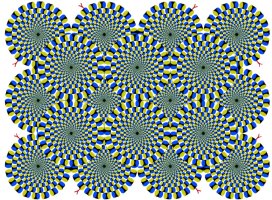
Technically true...but the quantitative amount of noise in various regions of an image is not the same as the visual perception of noise in those same regions of an image. Noise is better perceived in OOF areas of an image than in areas where there are crisp details.

What's relevant for a discussion of photographic images is the perception of noise, not the technical quantitation of that noise. Technically, the image below is static. But that's not how it's perceived.
 

Attachments

  • Perception.jpg
    Perception.jpg
    589.1 KB · Views: 166
Upvote 0