What can tilt-shift lenses do that post-production cannot?

Status
Not open for further replies.
agierke said:
you can effectively increase the angle of view (or coverage) from the 24mm TS so that it can be used in tighter spaces.

simply orient the lens so that the movement becomes a rise/fall and shoot two frames. first frame should be the top most composition of the scene and then second the lower portion of the scene. you then copy and paste the two frames on top of each other, reposition, and erase the overlap. this also works in a vertical orientation though i personally found it much easier to work as a horizontal. a fairly simple work around that increases the usability of an already fantastic lens.

2 immediate benefits to this technique is that you are effectively increasing the field of view without expanding the spacial relationship of the background/foreground (something the 17mmwould certainly increase significantly). second, you are also increasing the resolution of your final image to roughly 1.5x (depending on your execution of the technique) the native camera resolution.

the only thing you have to be mindful of is that you do encounter a bit of parallax in the upper portion of the composition so overlapping and erasing should be done with care. also, you need to be mindful of the limits of the image circle and not push the rise/fall to its extreme or you will encounter vignetting in the center portion of your final merged composition. i guess another consideration is that you are changing the final aspect ratio away from the 8x12 native full frame format so some additional cropping of the final composition isnt uncommon if a more common output size is required (ie an 8x10).

does this technique negate the need for the 17mm T/S? no...but if you already have the 24mm T/S you may find that you can get by without dropping another 2k.

^^You raise some good points.

I too, find the ultra wide focal range to be less useful, in general. But something about the 17mm gets me excited, and I think it's the prospect of getting ultra-wide shots with more control over distortion/perspective. The 24mm length on both my 16-35mm and 24-105mm are satisfactory for my purposes. They are great. I don't feel like I need to spend $2k to improve my 24mm shots. It's close enough. Obviously, I wouldn't mind having all the 24mms, but my budget isn't unlimited.

The reason I started this thread is that I'm not very enthused about the 16mm length on my 16-35mm. And I think it's the distortion/perspective. Who knows... maybe it's all in my head. But I've seen lots of 17mm TS-E shots that look more "realistic" to me than anything I can get with my 16-35mm. I really enjoy wide-angle photography, but the wide end of my 16-35mm has me wanting more. And so that leaves me with either the 14mm or the 17mm TS-E.
 
Upvote 0
if its distortion that you wish to avoid then any TSE lens is the way to go. when properly used, they are designed to minimize disortion. im not sure the 14mm wont suffer from the same distortion you find displeasing in the 16-35mm. i'm not certain as i haven't used the 14mm but i am very aware of the 16-35mm characteristics.
 
Upvote 0
agierke said:
if its distortion that you wish to avoid then any TSE lens is the way to go. when properly used, they are designed to minimize disortion. im not sure the 14mm wont suffer from the same distortion you find displeasing in the 16-35mm. i'm not certain as i haven't used the 14mm but i am very aware of the 16-35mm characteristics.

You will still see distortion in the 14mm. I've tried it, and it's definitely there. It mostly can be corrected with LR's lens correction, but still probably not as great as a good tilt-shift lens like the 17mm or 24mm.
 
Upvote 0
Actionpix said:
The only function I use with TS is tilting the focal plane. Making a landscape without passing diffraction limits? Even better, have the heads of flowers in a landscape in focus and lower parts blurrier. Like this: http://static.nationalgeographic.nl/pictures/genjUserPhotoPicture/original/57/35/33/tulpen-84-333557.jpg

That's fantastic, man!... just the sort of unique effect I'm looking for. I'm thinking the same effect could be done with a herd of animals (including people) or anything else that is grouped closely and evenly like that.
 
Upvote 0
Drizzt321 said:
agierke said:
if its distortion that you wish to avoid then any TSE lens is the way to go. when properly used, they are designed to minimize disortion. im not sure the 14mm wont suffer from the same distortion you find displeasing in the 16-35mm. i'm not certain as i haven't used the 14mm but i am very aware of the 16-35mm characteristics.

You will still see distortion in the 14mm. I've tried it, and it's definitely there. It mostly can be corrected with LR's lens correction, but still probably not as great as a good tilt-shift lens like the 17mm or 24mm.

Sort of.... Lens correction profiles exist for 14L II, but not for TS-Es. The body doesn't know how much the lens has been tilted, shifted and rotated, and light fall off and distortion increase the larger the adjustments are made from the center position.
 
Upvote 0
Random Orbits said:
Drizzt321 said:
You will still see distortion in the 14mm. I've tried it, and it's definitely there. It mostly can be corrected with LR's lens correction, but still probably not as great as a good tilt-shift lens like the 17mm or 24mm.

Sort of.... Lens correction profiles exist for 14L II, but not for TS-Es. The body doesn't know how much the lens has been tilted, shifted and rotated, and light fall off and distortion increase the larger the adjustments are made from the center position.

I think the point was that the TS-E will natively produce results better than an LR-corrected shot with the 14mm lens (not about correcting the TS-E shots with LR).
 
Upvote 0
neuroanatomist said:
Random Orbits said:
Drizzt321 said:
You will still see distortion in the 14mm. I've tried it, and it's definitely there. It mostly can be corrected with LR's lens correction, but still probably not as great as a good tilt-shift lens like the 17mm or 24mm.

Sort of.... Lens correction profiles exist for 14L II, but not for TS-Es. The body doesn't know how much the lens has been tilted, shifted and rotated, and light fall off and distortion increase the larger the adjustments are made from the center position.

I think the point was that the TS-E will natively produce results better than an LR-corrected shot with the 14mm lens (not about correcting the TS-E shots with LR).

Ah, didn't realize that you couldn't really correct (unless you do it manually and correctly) TS-E lenses. But From my understanding I agree with neuro, the TS-E's will likely produce a much better result than even a corrected 14mm.
 
Upvote 0
neuroanatomist said:
Random Orbits said:
Sort of.... Lens correction profiles exist for 14L II, but not for TS-Es. The body doesn't know how much the lens has been tilted, shifted and rotated, and light fall off and distortion increase the larger the adjustments are made from the center position.

I think the point was that the TS-E will natively produce results better than an LR-corrected shot with the 14mm lens (not about correcting the TS-E shots with LR).

I agree that the TS-E would produce better results at zero-settings. At large tilt and shift settings, the image degrades at the edges/corners closest to the edge even after stopping down. I was trying to remark that fixing that type of distortion is difficult because there are no automatic software settings or profiles. Granted, the image is no longer the same as a non-tilt/shifted image, but I'm imagining it could be concern if you're interested in panoramas (i.e. a lateral 360 from a canyon floor or in a city's downtown).

Disclaimer: I have zero experience with panoramas/photo stitching but hope to start sometime this year.
 
Upvote 0
crasher8 said:
IN CAMERA! It's all about getting it as best as can be in camera. Post………go ahead and rely on post, if you like that sort of thing.

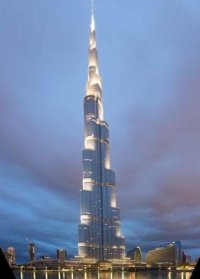
You cannot achieve the same effect that a TS lens can do for you in PP. Depending on the amount of shift there are cases where you can get somewhat close, but a TS lens is the only real solution. For details on why go back to the first page of this thread and see my post with the Burj Khalifa.
 
Upvote 0
crasher8 said:
IN CAMERA! It's all about getting it as best as can be in camera. Post………go ahead and rely on post, if you like that sort of thing.

When shooting something like architecture I don't think getting it right in camera is an absolute requirement (fewer shots, while heavily pp'ing thousands of shots of an event is a pita). You can also use focus stacking to get a large dof while keeping the lens at the sharpest aperture, you're most likely on tripod anyway.

kirispupis said:
You cannot achieve the same effect that a TS lens can do for you in PP. Depending on the amount of shift there are cases where you can get somewhat close, but a TS lens is the only real solution.

+1 - though recent software like the new dxo viewpoint gives much better results than bare lr and fixes horizontal/vertical lines, but it cannot reproduce the main advantage of a ts-lens: If doing it in software you're massively loosing resolution if correcting more than just a bit - and you need to shoot with much more space to avoid clipped parts (see sample processed from low-res source).

But in my recent, limited experience when shooting for smaller output resolutions and correcting for some angles software is just fine, even a t/s lens doesn't move your camera so the point of view is often feels a bit unnatural to me.
 

Attachments

  • 7171238572_6809f81958_o_pp.jpg
    7171238572_6809f81958_o_pp.jpg
    18.5 KB · Views: 1,108
Upvote 0
You can also do video and see the effect. I think PBS's Frontline television show uses this effect. I've tried it, but it doesn't work quite as good since I have the 17mm and I bet they use the 24mm or 45mm.
 
Upvote 0
kirispupis said:
The 14L and TS-E 17 are completely different lenses. While others have already mentioned that tilt is not possible through the 14L + PP, you cannot replicate shift strictly through PP. Here is an example.

All of these images were taken with the TS-E 17 and I have not yet processed them. The first was taken unshifted. In order to get all of the building in the shot, I needed to pan up. While the Burj Khalifa does not look too bad because I centered it, you can see that the other buildings' verticals are majorly screwed up.


No shift, panned up by CalevPhoto, on Flickr

You could imagine that with a 14L, the Burj Khalifa would be quite a bit smaller on the shot as 14mm is a lot wider than 17mm.

The following shot is the same building from the same location, but this time shifted. With this shot I have leveled the camera.


Shifted but not panned up by CalevPhoto, on Flickr

The obvious difference is the verticals are now correct. Unfortunately the entire building is not within view. In order to have improved on that, I would have had to gain more height, which I was unable to do. Still, you can see that no amount of PP is going to get the second image from the first. You may be able to correct the verticals in the smaller buildings at its sides, but you will not get the same perspective in the Burj Khalifa.

Now you could argue that the two images aren't completely the same, as one of them was taken with the camera level (thus missing the top of the building) while the other was not. Here is the same view taken with the lens fully shifted and the camera panned up slightly to get the top.


Shifted and panned up by CalevPhoto, on Flickr

As you can see between the two images, the Burj Khalifa is about 30% taller on this image than on the first one. The verticals on the smaller buildings are off but not nearly as badly as in the first shot. You are not going to be able to stretch the first shot to match this one without a very noticeable quality drop. Note that a 14L would be even more severe as the Burj Khalifa would be smaller - requiring even more stretching.

I have a number of other shots that demonstrate this but from the above you can see one reason why any serious architectural photographer makes heavy use of TS lenses. The 14L is a very useful lens for extremely wide spaces (I do not own a copy, but have used one) but it has a completely different purposes from the TS-E 17 and the TS-E 24 II.
Well explained ... well done!
 
Upvote 0
ontarian said:
I really should post more sample images taken with this lens, I've been kind of busy working on other adapters and playing with other lenses I'm working on making conversion kits for
IMG_4959.jpg by Ontarian, on Flickr

Other adapters I sell include
http://www.ebay.ca/itm/170785828179?ssPageName=STRK:MESELX:IT&_trksid=p3984.m1555.l2649#ht_1681wt_1385
http://www.ebay.ca/itm/180871581032?ssPageName=STRK:MESELX:IT&_trksid=p3984.m1555.l2649#ht_1948wt_1385
and
http://www.ebay.ca/itm/180855493584?ssPageName=STRK:MESELX:IT&_trksid=p3984.m1555.l2649

I'd try to dig some up from my flickr photostream but I'm just out the door on a family errand right now.

I was looking at the super tele's at the bottom and couldn't help but notice... Whats holding them up? There's no shelf.... Like $$$$$ in tele's just floating there... :o
 
Upvote 0
bjd said:
So I guess one really should use a tripod with TS for optimal results. How would one work as a walkabout lens?
Cheers brian

It works fine if you don't mind manual focus -- they're also a bit bulkier/heavier than non TS lenses. Shifts can also be done handheld and tilts for miniature effects too. It's when you need to precisely aline the focal plane with live view precisely that tripods are necessary.
 
Upvote 0
Status
Not open for further replies.