What's Not Coming in 2018?

Orangutan said:
I certainly use AF near the edge for flower photography. I like to photograph groups of wildflowers, and often compose with the primary focus near the edge, hoping to create a trail through the frame. It often doesn't work, but I've been happy when it does. I typically use liveview for those shots, but I can certainly imagine someone attempting something similar at a faster pace using PDAF.

That strikes me as the kind of relatively static situation in which I would manually focus on the particular flower I wanted to be the sharpest, use AV mode, and use the DOF preview button to help me decide on the aperture that gives me the look I want for the rest of the picture.

I know when I'm shooting out into the woods with a longish lens, and I want the dogwood blossoms, say, to be the sharpest things in the picture, I will switch to manual focus so that the AF doesn't pick the branch just closer. On a windy day, I might have to favor the shutter speed to keep the blowing blossoms sharp. Dogwoods are tricky in terms of exposure, since you don't want to lose detail in the white blossoms, so I bracket exposure and still use highlight recovery in ACR.

I did use autofocus when shooting crocuses earlier in the year with my 100mm macro. I wanted the camera almost on the ground, so I was shooting handheld and looking at the flippy screen, rather than my lying in the mud. If I had focused manually, the camera would have moved just enough in my hands to make the subject less sharp. I did try it some both ways. And even with AF, the camera didn't always read my mind sufficiently as to the main subject. But it hit the mark more consistently than I could manually.
 
Upvote 0
stevelee said:
...what I was really hoping beyond the responses I have received thus far are examples that demonstrate when you need outlying focus points...

A shortstop throwing the ball to first base, a volleyball player spiking the ball, a golfer hitting the ball out of a sand trap...In each case, I know which direction the ball will travel. The closer I can put the subject to the opposite edge, the better the chance of getting the ball in the picture and in the case of most sports pictures, if the ball isn't in the picture you don't have a picture.

But, you are missing the point. If you can't think of any time when you might encounter the need for a wider spread of autofocus points, then you don't need a wider spread. That's fine. What I object to is that others want to dictate that no one else might need a wider spread.

And, even more offensive, are fools who think that classic rules of composition are the only way to compose a picture. I fall in the Edward Weston camp: (paraphrasing) – composition is simply the strongest way of seeing (which does NOT mean that following rules of composition makes an image stronger. In fact, Weston's point was just the opposite: focus on the strongest way of seeing an object and that will be good composition, regardless of what the rules say.
 
Upvote 0
unfocused said:
stevelee said:
...what I was really hoping beyond the responses I have received thus far are examples that demonstrate when you need outlying focus points...
But, you are missing the point. If you can't think of any time when you might encounter the need for a wider spread of autofocus points, then you don't need a wider spread. That's fine. What I object to is that others want to dictate that no one else might need a wider spread.

And, even more offensive, are fools who think that classic rules of composition are the only way to compose a picture. I fall in the Edward Weston camp: (paraphrasing) – composition is simply the strongest way of seeing (which does NOT mean that following rules of composition makes an image stronger. In fact, Weston's point was just the opposite: focus on the strongest way of seeing an object and that will be good composition, regardless of what the rules say.

Well said!

Sometimes there is nothing in the middle to AF on.... you need the sides...…

And sometimes, you really don't care about the classic rule of thirds and want to move the subject off to the side.

Rules are only guidelines, go out and violate them and create!
 

Attachments

  • D18A4824.jpg
    D18A4824.jpg
    1.1 MB · Views: 85
  • IMG_0181.jpg
    IMG_0181.jpg
    1.5 MB · Views: 86
Upvote 0
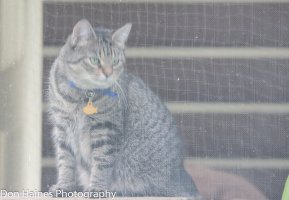
Without my drawing lines, to me the cat picture appears to be an illustration of the rule of thirds. And most of the cat would seem to fit in the autofocus area of a 6D2.

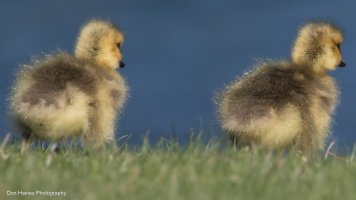
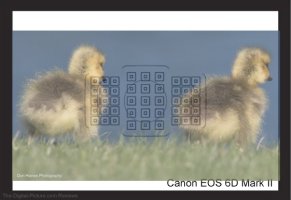
The ducklings or whatever they are should fit sufficiently within the edges of autofocus not to present a problem, as my memory of the lines serves me at the moment. It might be a stronger picture if it included just one of them instead of a lot of empty space, unless the negative space itself creates something like a vase from two faces. With both of them, I would have probably zoomed out a bit.
 
Upvote 0
stevelee said:
The ducklings or whatever they are should fit sufficiently within the edges of autofocus not to present a problem,

I doubt that.

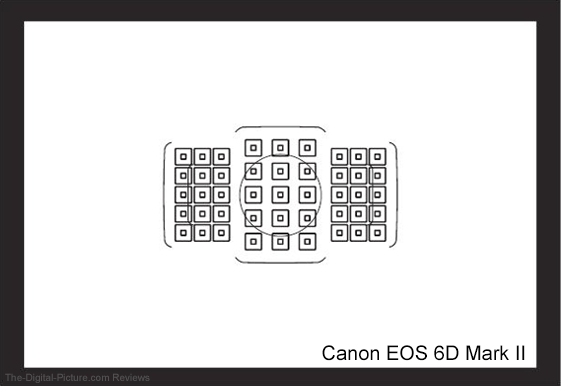
Canon-EOS-6D-Mark-II.gif
 
Upvote 0
unfocused said:
dak723 said:
...What you are missing here is that people will complain about anything, find something wrong with anything, and have little idea about how to take a photo and what a good composition is.

You are quite correct, you don't need AF points anywhere near the edge of the frame. And probably none outside of the 1/3rds points...

It's nice to know that there are experts on this forum who can decide for the rest of the world what other people need and what constitutes good composition because I guess we all know that if you follow rigid rules of composition it will guarantee a good picture.

Maybe if you read my entire quote you would understand that I am deciding NOTHING about what people need, nor did I suggest that anyone needs to follow any rules of composition. As an art instructor for many years, I have always taught that there are no rules of composition. Of course, apparently, you chose to quote ( and possibly read) only what you wanted so that you could make YOUR POINT.

The rest of my quote should be self-explanatory:

From what I understand, points farther away from the center are less reliable, as well - and if you need to focus beyond the range of the camera's points, you should be close enough to the outer AF points so that you can focus and recompose with no issues.
 
Upvote 0
dak723 said:
unfocused said:
dak723 said:
...What you are missing here is that people will complain about anything, find something wrong with anything, and have little idea about how to take a photo and what a good composition is.

You are quite correct, you don't need AF points anywhere near the edge of the frame. And probably none outside of the 1/3rds points...

It's nice to know that there are experts on this forum who can decide for the rest of the world what other people need and what constitutes good composition because I guess we all know that if you follow rigid rules of composition it will guarantee a good picture.

Maybe if you read my entire quote you would understand that I am deciding NOTHING about what people need, nor did I suggest that anyone needs to follow any rules of composition. As an art instructor for many years, I have always taught that there are no rules of composition. Of course, apparently, you chose to quote ( and possibly read) only what you wanted so that you could make YOUR POINT.

The rest of my quote should be self-explanatory:

From what I understand, points farther away from the center are less reliable, as well - and if you need to focus beyond the range of the camera's points, you should be close enough to the outer AF points so that you can focus and recompose with no issues.

I think I get what you're trying to say, but it still comes across a bit like the arguments I've heard against higher MPs; people don't 'need' more than say 10 megapickles, or that you don't need more dynamic range, 4k video, dual cards etc etc. Some people like having more of X, and that it can often improve certain situations quite a lot/makes shooting easier and more enjoyable. Or have I missed what you were meaning altogether?

Going back to the AF points, I know that the spread on my 6d can be very frustrating, which often means I'll manual focus or recompose, but that quite often means missed shots. Would I get all those shots if the af spread was better? No, but I'd likely have a few more keepers in there
 
Upvote 0
Isaacheus said:
Going back to the AF points, I know that the spread on my 6d can be very frustrating, which often means I'll manual focus or recompose, but that quite often means missed shots. Would I get all those shots if the af spread was better? No, but I'd likely have a few more keepers in there


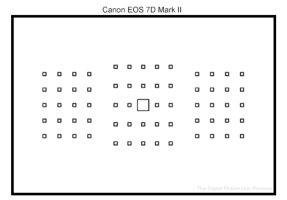
This is one of the reasons that I reach for the 7D2 when going after quick or erratically moving objects.... Sometimes crop does beat FF.....
 

Attachments

  • 7d2 af.jpg
    7d2 af.jpg
    53.3 KB · Views: 105
Upvote 0
Thanks to all who replied to my question with various perspectives. It does look like that unlike being the central problem in Western Civilization at the moment, as it would appear from reading the internet, the lack of focus points near the edges is not likely to affect me enough to worry about. But it is good to know there are not some gotchas lurking out there.

Examples were given that I think would be situations when I'd prefer manual focus anyway, as well as sports(which I had already mentioned), and ducklings. If presented with cute ducklings to photograph, I'll let you know how I handle it.

As for sports, if the weather cooperates, I am thinking about taking my 6D2 and new 100-400mm II to a baseball game vs. the University of Dayton later in the week. I usually sit behind home plate, so maybe I could get some good shots of the pitcher as he releases the ball, maybe trying continuous shooting. Parking is not very convenient, so I may decide not to lug that with me, but take the 24-105mm instead. The AF might try focusing on the fence between me and the field, however, so I'm guessing that manual focus will work best.
 
Upvote 0