Which canon macro lense 60mm, 100mm, 100mmIS, 180mm

  • Thread starter Thread starter webexpert
  • Start date Start date
Status
Not open for further replies.
W

webexpert

Guest
I like macro prhotography and until now I have some nice photos of flowers and insects that move slowly (spiders) using an 60mm canon efs macro lense. I want to go full frame so I would like to hear your suggestions. Is it worth going for the 100mm IS which is the double price from the non IS? I am also considering the 180mm but although is an L lense is not IS. Do I need IS in order to take a moving subject (i.e. a bee, a flower under wind) without a tripod with these magnifications. If so why the 180 lense is not IS and is the most expensive? Also what about image quality?
Please I would love to hear the expert advise.
Thank you
 
IS is definitely useful, but not mandatory, and it will definitely depend on your shooting style.

Have a look at your shots taken with the EF-S 60mm, and look at the EXIF data to see the shutter speed.
Under normal conditions (ie, shooting people and big things), the general rule of thumb is that you should try to stay above 1/60s with a 60mm lens, 1/100s with a 100mm lens, to get rid of *your* shake.
Get down to macro sizes, and all of that gets thrown out the window. You're probably looking more at needing 1/120s for a 60mm lens, 1/200s for a 100mm lens, or more.

Now, for shooting non-moving bugs and flowers, having IS will reduce that a lot (although IS isn't as good at macro either), the 100mm L IS is still good for 2-stops of stabilisation at macro-distances, so should be handholdable at roughly 1/30s for 1:1 macro.

But for taking purely-moving and flying insects, shoot them at 1/30s and they're going to be blurry, even if the IS is negating all the shake from you. So you'll need to keep the shutter back up at 1/200s or more anyway.

That said, IS will definitely help with framing, and is useful for the more still-subjects anyway. So whether it's worth it comes down more to your wallet than anything. The 100 L IS is the newest, weather sealed, and the IS will help in most situations, so it's definitely the one to get if you can afford it.
The 180L and the 100 USM non-L are both older, and no, they have no IS. But the IQ differences between the 3 are almost negligible, the 100 non-L is sharper than the L for some combinations of settings, softer for others. So if you think you can get away without IS, the 100 non-L is very good for the price...

 
Upvote 0
If you look at http://www.the-digital-pciture.com click on Tools then ISO and compare the $5,000 200mm F2 and its sharpness against the $1100 100mm L IS USM Macro 2.8 you will see virtually no difference in sharpness. Both as crisp as can be. There's also one little known fact about the 100mm L USM IS 2.8 Macro, that it offers a mode no other lens has (to the best of my knowledge), AI Servo Macro. This is obvious I hope and rather useful for taking macro shots of moving bugs.

The reasonable price and what this lens offers should hopefully make your choice options more simple. On a FF the images are stunning.
 
Upvote 0
I've had both 100L IS and non IS versions of the lens - I found IQ to be similar from both.

If budget is tight and you can do without weather sealing, go with the older 100mm otherwise I'd suggest the IS version.

Happy shooting

Cheers
 
Upvote 0
If you have money, go for MP-E 65mm though this is a highly specialized lens. I won't recommend this if you're still new to macro photography.

On the other hand, 100mm IS and the 180mm IS are good choices if you have the money. I like the versatility and ease of use of 100mm IS but 180mm is better if you plan on using tripod most of the time. The extra focal length will allow you to use flash lighting better.

60mm is only for APS-C. Don't go to that path unless you plan on sticking with APS-C. It is very sharp for both macro and portrait photography. If you don't have that much budget (like me), go for the 100mm non-IS. You won't notice any difference in IQ in both IS and non-IS. I am using 100mm non-IS and most of the time, I'm not using a tripod and instead relies on fast speed and ring-flash. You can also go for Tamron 90mm though I don't trust third-party brand that much. It's up to you though.

If you want samples of 100mm non IS, you can go to my link in flickr. I have some macro shots there. I have just started doing macro last July so please forgive me if they're still not that good.
 
Upvote 0
I owned a 50mm macro which was to small, got to close. Bought a 180 3.5 L ages ago and its amazing. The sharpest lens i own, and a good distance from the small insects. On a tripod, IS isnt important as id turn it off so its not an important factor for me. Unfortunatly it has two faults. Firstly it is the worlds slowest focusing lens on autofocus, best go manual. Secondly mines broken. The motor blew. Only Canon lens ive ever had a problem with. But when it works its a top quality lens.
 
Upvote 0
Yes the 180 mm macro lens from Canon has a very slow AF. But the most macro shots are taken with manual focussing for the best image quality.

You need a good tripod, a cable release and the mirror lockup function (or activated live view).
 
Upvote 0
The 100mm IS L lens is the best for using autofocus on bugs moving around, but in my experience this works best with a body with really nice autofocus such as 1D-X. For general macro shooting your best bet is the 180mm macro, because it allows greater distance from the subject and it allows using an extender such as the 1.4x or 2x extenders, which work with this lens (I often use the 2x extender). Working distance is an important issue, because with the 100mm lens I usually take the lens hood off, so that I won't get too close to an insect, which might either fly or crawl away. I don't tend to shock freeze macro subjects, before I take shots ::).

Before I forget to mention it: You should add a focusing rail to your tripod, adding one piece to the gear M.ST listed. A focusing rail will allow you to set your lens to minimal distance and then you use the focusing rail to focus.
 
Upvote 0
Its a matter of IS or non- IS

If I'm out in the back garden, hoping for something to interest me, I wish I had it....

BUT - really, shooting like that, the slightest breeze is more of a problem than my own shake.

I'm probably playing games in my own mind thinking IS would help... since my enemy is the breeze.

Of course, inside, I'm using a support, there is no breeze, and things aren't moving (which IS does not help anyway).

When folks say, the 180 is sharper, the L version of the 100 is better, etc etc.... dismiss it all. I've used the 60, and both newer 100's. They're all fantastic. Not used the 180... but any differences are most likely pixel peeping hair splitting ones.
 
Upvote 0
Just my 2c. I bought the 100mm with IS for my 550D (so with 1.6 crop!) and I am extremely happy with the lens. I didn't use the IS yet for macro (usually I picture alive objects, they tend to move), but it's a nice addition for an outside lens. It is not ideal for making "normal" picture, because of my crop camera. But I guess this is less of an issue on a full format body. Oh and the lens is extremely sharp and the fulltimemanual focus is also really great to use.
So yeah, I am extremely happy with the lens and hope to use it for many years :)
It was my first macro lens and, oh boy, it's a steep learning curve to find out how to get the object in front of the lens ;) Also the depth of field, in my case with F9, it's around 1cm if you are around 15 cm away from the object (measured from the front of the lens). Attached is an example, the fish is around 1,5 cm long. The image was resized to fit the forum rules.
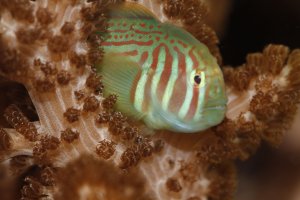
pato
 

Attachments

  • _MG_7709_small.jpg
    _MG_7709_small.jpg
    837.9 KB · Views: 2,689
Upvote 0
If you do a lot of macro work, then the 180L would make sense. It offers a longer working distance, which is helpful in a lot of instances. If you do some macro work and would like to use it for portraiture, then a 100mm makes sense. The IS offers you more flexibility when you try to handhold it, but is not necessary. If you are happy with the ef-s 60 on the crop, then the 100 will perform similarly on FF. If you have a 70-200L II, then the 100L makes less sense because both perform similarly for portaits at 100mm.
 
Upvote 0
When considering the 100mm IS version, I found that the tripod collar is pretty much mandatory thing when shooting from a good tripod. The lens overhang from mounting the tripod to the camera adds enough bounce to effect photo sharpness, even when using mirror lock-up and live view. Canon should include the tripod collar with the lense, IMO.
 
Upvote 0
webexpert said:
I like macro prhotography and until now I have some nice photos of flowers and insects that move slowly (spiders) using an 60mm canon efs macro lense. I want to go full frame so I would like to hear your suggestions. Is it worth going for the 100mm IS which is the double price from the non IS? I am also considering the 180mm but although is an L lense is not IS. Do I need IS in order to take a moving subject (i.e. a bee, a flower under wind) without a tripod with these magnifications. If so why the 180 lense is not IS and is the most expensive? Also what about image quality?
Please I would love to hear the expert advise.
Thank you

100mm Non L is good, The 100L is better in the field and the 180L is the best for studio use.
 
Upvote 0
I havent used canon 180mm but have used Sigma 180mm of my friend for couple of days. I found it too bulky and very difficult to frame in field. If I add 270EX on top of it, I cant hand hold it for more than a minute. Using tripod is not always an option, especially with butterflies and dragon flies. 100mm F2.8L is very useful in the field, when I have to get down on the ground, or have to track moving insects. I find IS is useful too sometimes. As others stated, it makes framing easier too...
 
Upvote 0
knkedlaya said:
I havent used canon 180mm but have used Sigma 180mm of my friend for couple of days. I found it too bulky and very difficult to frame in field. If I add 270EX on top of it, I cant hand hold it for more than a minute. Using tripod is not always an option, especially with butterflies and dragon flies. 100mm F2.8L is very useful in the field, when I have to get down on the ground, or have to track moving insects. I find IS is useful too sometimes. As others stated, it makes framing easier too...

That's the primary problem with 180mm. It's too big that's why I recommended it only if you're using tripod almost all the time. :) 100mm 2.8L IS is the best option most of the time but the non-IS is still sufficient for 70% of your photos.
 
Upvote 0
webexpert said:
I like macro prhotography and until now I have some nice photos of flowers and insects that move slowly (spiders) using an 60mm canon efs macro lense. I want to go full frame so I would like to hear your suggestions. Is it worth going for the 100mm IS which is the double price from the non IS? I am also considering the 180mm but although is an L lense is not IS. Do I need IS in order to take a moving subject (i.e. a bee, a flower under wind) without a tripod with these magnifications. If so why the 180 lense is not IS and is the most expensive? Also what about image quality?
Please I would love to hear the expert advise.
Thank you

I assume you know that the 60 is only useable on APS-C cameras, not full frame.

The 180 gives you more working distance compared to the 100 or 60. This can be important. I also think the 180 blows out the background nicer than the 100 IS or the 60 EF-S.

The 180 also takes extenders.

IS does not help remove object motion, so those moving insects or moving flowers will still be blurry with IS. I think the only real "on the fly" solution is multiple exposures and hoping that one or two are good. Or, go out on calm days.

If size/weight is a concern, the 180 is bigger and heavier than the other two. The images from the 180 seem to have something that is lacking in the 100 IS... but you would need to try both to see for yourself.

The 100 IS does not come with a tripod collar- it is an extra cost option, and the Canon OEM part isn't cheap.
 
Upvote 0
verysimplejason said:
That's the primary problem with 180mm. It's too big that's why I recommended it only if you're using tripod almost all the time. :) 100mm 2.8L IS is the best option most of the time but the non-IS is still sufficient for 70% of your photos.

That's why I love my 150mm Sigma. Fast and still light enough to be hand hold for quite some time. Having OS (aka IS) and also being able to mount converters on it is then just the icing on the cake. I would really recommend everybody to have a real close look at that one when deciding which macro lens one should buy.
 
Upvote 0
Status
Not open for further replies.