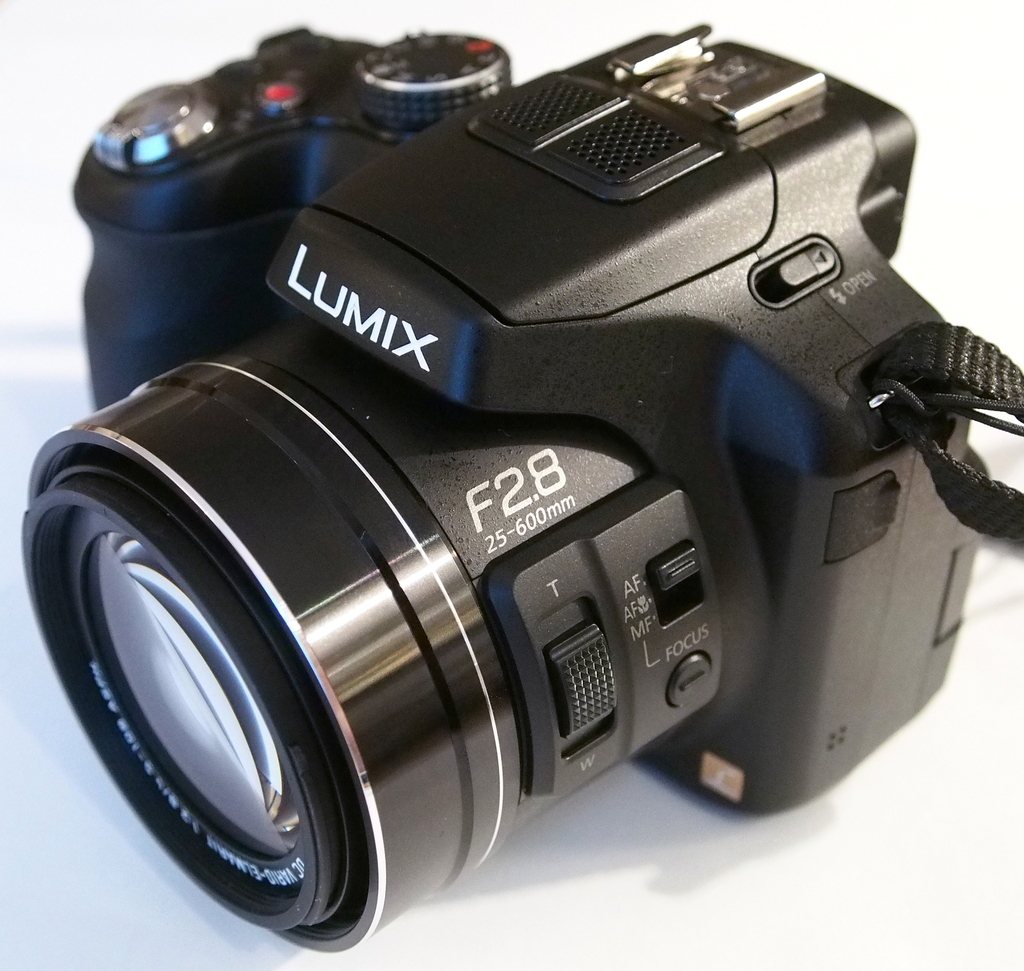
Why aren't zoom lenses faster than 2.8?

Status
Not open for further replies.
rs said:
In 35mm terms, its 6.1-30.5/1.8-2.8 lens is the equivalent of a 28-140/8.3-12.9 lens. Nothing too special.

Don't want to go off topic, but in 35mm terms it is still an f/1.8 - 2.8 lens. It might have an equivalent field of view as a 28-140mm lens. But the shutter speed is based on the f/1.8 to 2.8 aperture, which is pretty good. The equivalent background (or lack of) is what you'd expect from a 6.1 - 30.5mm lens (which is largely independent of sensor size). That is, you'd have similar background blur at 30.5mm at f/2.8 on G15 as you would with a 16-35mm zoomed to 30.5mm at f/2.8 on a 5Diii. And in dark shooting conditions, shooting macro, or when capturing action with the fastest possible shutter speed, the ability to have more in focus for a given aperture is sometimes just as important. (And besides, in post production it is easier to blur a background than add more detail in).

In a round about way, just trying to say that the aperture range of a lens should be viewed independently of sensor size. From there, most sensible photographers can use their own judgement as to whether a particular system/sensor size is suitable for their purpose. Need more background in focus, shoot m43 or the G15. Need more background blur, shoot medium format (or adjust in post production). Need it just right, shoot full frame.

Imagine this scenario - Canon releases an EF-S 400mm f/4 with image quality, build and price equivalent to the EF 400mm f/5.6. Even though some might say it is still a "f/5.6 equivalent", most people would instantly see the benefit of the faster aperture.
 
Upvote 0
Hillsilly said:
rs said:
In 35mm terms, its 6.1-30.5/1.8-2.8 lens is the equivalent of a 28-140/8.3-12.9 lens. Nothing too special.

Don't want to go off topic, but in 35mm terms it is still an f/1.8 - 2.8 lens. It might have an equivalent field of view as a 28-140mm lens. But the shutter speed is based on the f/1.8 to 2.8 aperture, which is pretty good. The equivalent background (or lack of) is what you'd expect from a 6.1 - 30.5mm lens (which is largely independent of sensor size). That is, you'd have similar background blur at 30.5mm at f/2.8 on G15 as you would with a 16-35mm zoomed to 30.5mm at f/2.8 on a 5Diii. And in dark shooting conditions, shooting macro, or when capturing action with the fastest possible shutter speed, the ability to have more in focus for a given aperture is sometimes just as important. (And besides, in post production it is easier to blur a background than add more detail in).

In a round about way, just trying to say that the aperture range of a lens should be viewed independently of sensor size. From there, most sensible photographers can use their own judgement as to whether a particular system/sensor size is suitable for their purpose. Need more background in focus, shoot m43 or the G15. Need more background blur, shoot medium format (or adjust in post production). Need it just right, shoot full frame.

Imagine this scenario - Canon releases an EF-S 400mm f/4 with image quality, build and price equivalent to the EF 400mm f/5.6. Even though some might say it is still a "f/5.6 equivalent", most people would instantly see the benefit of the faster aperture.

People have been misled by this insane nonsense for years.


The "35mm equivalent" is what is really important and nothing else.

From a physics perspective the "35mm equivalent" is capturing identical information. What really matters is the geometry of the light hitting the sensor:

Depth_of_field_illustration.svg


Generally the technical difficulty of achieving a particular geometry is INDEPENDENT of sensor size, meaning it's equally difficult to create a 17-55mm f/2.8 IS lens as it is to create a 24-105mm f/4.0 IS.

The front element of a 1/1.7" sensor lens that is 8-30mm f/0.3 lens would be 11.4 inches, and so would the front element of a 35mm sensor that has a 28-140mm f/1.8 lens.

Going back to the 35mm equivalent discussion, consider this:

On 7D compared the the 5D Mark III


The sensor is 1.6 x 1.6 times smaller.

35mm equivalent aperture - Multiply by (1.6 x 1.6 / 2 ) (an f stop is a base 2 log, so we divide by 2 to multiply between base 10 and base 2 if you were wondering, this just converts the number systems, nothing else)

35mm equivalent focal length - Multiply by 1.6

35mm equivalent ISO or light sensitivity - Multiply by (1.6 x 1.6) (bet you haven't heard of that, but if you do the math the 7D's sensor amplifies the signal 1.6x1.6 times more at a given ISO than the 5D3)


The point is that people are often misled by manufacturers changing the geometry of a camera system, particularly putting in small sensors and then claiming otherwise impressive performance numbers which are incredibly misleading because you are measuring them on a different scale.

It's like saying:

I have a million dollars, and then failing to mention these are Zimbabwe dollars worth $20 not, American dollars.

Yes aperture ISO and focal length are fixed numbers, but so are monetary figures, and the most important thing even the most basic dealing of currency has is WHAT currency you're dealing with, and 99% of people require an "equivalent" frame of refference to understand foreign currency or need to do a conversion. Likewise with cameras, geometry (type of currency) is the most important thing when dealing with the performance of a camera system, and the first thing anyone needs to do is bring up a conversion to the local frame of reference, APS-C 35mm, whatever.

To respond to your post though, there is NO benefit to a 1 stop faster aperture on APS-C sensor vs full frame because they (more than) cancel each other out. You don't stop action any quicker at all, whatsoever, because remember the ISO is skewed too, so all you're doing is just turning up the ISO sensitivity in a roundabout way. You have been misled into thinking there is a benefit.

 
Upvote 0
JonB8305 said:
Is it a business decision (ie dont want to canabalize the prime market) or a technical limitation (physically can't do it with current tech) or cost issue (technical difficulties would require that the lens be priced too high for target market)?

There are hard physics facts which limit the chance to use well known designs to built such a lens.

Look at the cut views of e.g. a 2.8 70-200 II (see http://cweb.canon.jp/ef/lineup/tele-zoom/ef70-200-f28l-is-ii/img/spec/lens-construction.png ). A f/2.0 lens should have a sqrt(2) larger diameter: scale the diameter AND THE THICKNESS of each lens by a factor of 1.41 - the tight spacing between the lenses doesn't allow that procedure to get a 2.0 lens.

Canon and all the other lens producers use exotic materials like high refractive index glass or lenses with special dispersion properties in their premium lenses. There is no headroom to change glass types. Let's dream about a glass type which has a refractive index of 2.5 or 3 without any dispersion and a super coating which increases the transmission to 99.9 %!

Than you have to recalculate the whole design including the 4, 5 or 6 lens groups which are positioned during zooming! This might introduce another 5 or 10 lenses to achieve good IQ and than you will loose more light due to reflections on the lenses ...

There are no physics killer facts to built a e.g. f/2.0 70-200 but physics will reduce IQ and/or increase massively the size (not only front element diameter but also the length). If you demand the IQ of the 2.8 70-200 II you will pay sth. between 50000 and 200000 $/€ for that lens - if it is possible to get such a high IQ. And than your third point factors in ...
 
Upvote 0
Hillsilly said:
rs said:
In 35mm terms, its 6.1-30.5/1.8-2.8 lens is the equivalent of a 28-140/8.3-12.9 lens. Nothing too special.

Don't want to go off topic, but in 35mm terms it is still an f/1.8 - 2.8 lens. It might have an equivalent field of view as a 28-140mm lens. But the shutter speed is based on the f/1.8 to 2.8 aperture, which is pretty good. The equivalent background (or lack of) is what you'd expect from a 6.1 - 30.5mm lens (which is largely independent of sensor size). That is, you'd have similar background blur at 30.5mm at f/2.8 on G15 as you would with a 16-35mm zoomed to 30.5mm at f/2.8 on a 5Diii. And in dark shooting conditions, shooting macro, or when capturing action with the fastest possible shutter speed, the ability to have more in focus for a given aperture is sometimes just as important. (And besides, in post production it is easier to blur a background than add more detail in).

In a round about way, just trying to say that the aperture range of a lens should be viewed independently of sensor size. From there, most sensible photographers can use their own judgement as to whether a particular system/sensor size is suitable for their purpose. Need more background in focus, shoot m43 or the G15. Need more background blur, shoot medium format (or adjust in post production). Need it just right, shoot full frame.

Imagine this scenario - Canon releases an EF-S 400mm f/4 with image quality, build and price equivalent to the EF 400mm f/5.6. Even though some might say it is still a "f/5.6 equivalent", most people would instantly see the benefit of the faster aperture.
As Radiating pointed out, these smaller sensors have their amplification turned up to make their ISO ratings match the apertures. ISO 1600 on a G15 at f2.8 and 1/100th of a sec will match ISO 1600 on a 5D3 at f2.8 and 1/100th of a sec for exposure. But I'm sure no-one here disputes the fact that the smaller G15 sensor will produce much more noise at the same ISO's. Its simply because the amplification is turned up much higher to compensate for the much smaller imaging circle projecting much less light onto the sensor.

If the imaging circle is a fraction of the size, only a fraction of the light is projected onto the sensor.

While it is a 6.1-30.5/1.8-2.8 lens, it only covers a small imaging circle. To put it into context of a FF setup, it is factually incorrect to only scale up the focal length. The whole system has to get scaled up - so it becomes equivalent of a 28-140/8.3-12.9 lens in terms of focal length, DoF and quantity of light. And to complete that, you should also factor in what the sensor does - its ISO 80 to 12,800 sensor is the equivalent of a FF sensor which operates between ISO 1600 and 270,000.

I wouldn't get involved with blurring backgrounds in post, it will never look right. Instagram will never replace a good lens on a DSLR - just take the photo with the right camera and the right aperture. If you need more DoF with a FF setup, stop the lens down. Shooting at f32 will cause all sorts of diffraction issues, but so does f6.9 on a compact with an equal number of MP. You can always crank up the ISO and NR, and then set the sharpness to 10 in true compact style to ensure no fine detail remains.

Canon already have a 400/4 lens out there - its a FF DO lens, and costs five times as much as the f5.6 version.
 
Upvote 0
rs said:
As Radiating pointed out, these smaller sensors have their amplification turned up to make their ISO ratings match the apertures. ISO 1600 on a G15 at f2.8 and 1/100th of a sec will match ISO 1600 on a 5D3 at f2.8 and 1/100th of a sec for exposure. But I'm sure no-one here disputes the fact that the smaller G15 sensor will produce much more noise at the same ISO's. Its simply because the amplification is turned up much higher to compensate for the much smaller imaging circle projecting much less light onto the sensor.

The "amplification" is not "turned up" for the smaller sensor. A 6x4mm sensor is no more noisy (or "amplified") than a 6x4mm region of a 35mm sensor. Images from the smaller sensor are (theoretically) about as noisy as a crop from a larger sensor.

The reduction in noise has to do with sampling density and averaging, not amplification.
 
Upvote 0
Radiating said:
Generally the technical difficulty of achieving a particular geometry is INDEPENDENT of sensor size, meaning it's equally difficult to create a 17-55mm f/2.8 IS lens as it is to create a 24-105mm f/4.0 IS.

How about a 25mm f/0.7 lens for micro 4/3 ? Should that be comparably difficult to design and build as a 50mm f/1.4 full frame lens ?

To respond to your post though, there is NO benefit to a 1 stop faster aperture on APS-C sensor vs full frame because they (more than) cancel each other out. You don't stop action any quicker at all, whatsoever, because remember the ISO is skewed too, so all you're doing is just turning up the ISO sensitivity in a roundabout way. You have been misled into thinking there is a benefit.

The 400mm f/4 APS-C lens is "equivalent" to a 640mm f/6.4 lens. If you're distance limited, this really is preferable to a 400mm f/5.6 lens on full frame. You're right that it isn't "faster", but it is much longer than the 400mm f/5.6 full frame setup and almost as fast. Unfortunately, it's also quite a bit more expensive (not a whole lot cheaper to make the same lens for a smaller image circle)
 
Upvote 0
Elflord is correct, but the practical consequence remains the same. Yes, when you state the 'FF equivalent' of a P&S lens, that small aperture applies to DoF not exposure. But when considering shutter speed, you also need to consider ISO noise, and the relatively greater total light gathered by the larger sensor means less noise. For example, ISO 640 on my S100 (which has a big sensor, for a P&S) is equivalent to ISO 3200 on a FF sensor (at least), so for a given necessary shutter speed, the 'fast' lens with the small sensor has no advantage in terms of noise - you can get the same shutter speed + noise output on FF.

elflord said:
The 400mm f/4 APS-C lens is "equivalent" to a 640mm f/6.4 lens. If you're distance limited, this really is preferable to a 400mm f/5.6 lens on full frame. You're right that it isn't "faster", but it is much longer than the 400mm f/5.6 full frame setup and almost as fast. Unfortunately, it's also quite a bit more expensive (not a whole lot cheaper to make the same lens for a smaller image circle)

The only real advantage to APS-C when 'focal length limited' is more MP in the final image. From an IQ standpoint, the FF image cropped to APS-C FoV will be equivalent (for similar sensor generations), so if the 7-8.5 MP of the cropped FF image is sufficient for the intended output, the 'reach advantage' of a crop sensor is an illusion. Of course...if you need the MP (24x36" prints, for example), the advantage is real.
 
Upvote 0
elflord said:
The "amplification" is not "turned up" for the smaller sensor. A 6x4mm sensor is no more noisy (or "amplified") than a 6x4mm region of a 35mm sensor. Images from the smaller sensor are (theoretically) about as noisy as a crop from a larger sensor.

The reduction in noise has to do with sampling density and averaging, not amplification.
The smaller the photosite, the less light it gathers - therefore less electrical signal is generated, so it will need a higher amplification before being fed into the A/D converter. If we are comparing the 12MP G15 sensor to a 4.6x bigger diagonal 12MP D3s sensor, not only will the FF sensor with 21 times as much area collect 21 times as much light, but each photosite (pixel) will gather 21 times as much light - which means 21 times less amplification is needed to get the same ISO's - so ISO 1600 on FF equals ISO 80 on the G15 in terms of noise.

However, if we're talking about a 12MP G15 vs a 253MP FF (that same pixel size scaled up to FF), the amplification should be identical. That scenario is where your statement of sampling density and averaging are correct.

Usually its a combination of the two as the number of MP are almost never identical in these comparisons, as are the size of each individual pixel.

ps - I was talking about comparing the entire imaging system - FF sensor, FF lens uncropped to a compact camera
 
Upvote 0
Radiating said:
To respond to your post though, there is NO benefit to a 1 stop faster aperture on APS-C sensor vs full frame because they (more than) cancel each other out. You don't stop action any quicker at all, whatsoever, because remember the ISO is skewed too, so all you're doing is just turning up the ISO sensitivity in a roundabout way.
Ok, Thanks. So, assuming similar generation sensors, an APS-C based camera at ISO 100 at 1/100s would have similar (maybe even worse) image quality to a FF camera at ISO 200 at 1/100s. Therefore no real speed benefit. You'd just have more MPs, which may o may not be important. Makes sense.

Although, we might still have to disagree on the conversion of apertures to 35mm equivalents. While converting the focal length to a 35mm equivalent makes sense (with the preponderance of different sensor sizes, it's good to have a commonly accepted way of understanding focal length), converting the aperture causes confusion. At the same focus distance, a 30.5mm f/2.8 on a G15 has essentially the same background blur and requires the same shutter speed as a 30.5mm f/2.8 lens on a 7D and a 30.5mm f/2.8 lens on a 1Dx. In other words, a 30.5mm f/2.8 lens doesn't change any of its attributes when the sensor changes in size. Therefore, there is no need to convert it to a 35mm equivalent. The 30.5mm f2/8 is already a 35mm equivalent for every exposure and depth of field measurement.
 
Upvote 0
Hillsilly said:
Although, we might still have to disagree on the conversion of apertures to 35mm equivalents. While converting the focal length to a 35mm equivalent makes sense (with the preponderance of different sensor sizes, it's good to have a commonly accepted way of understanding focal length), converting the aperture causes confusion. At the same focus distance, a 30.5mm f/2.8 on a G15 has essentially the same background blur and requires the same shutter speed as a 30.5mm f/2.8 lens on a 7D and a 30.5mm f/2.8 lens on a 1Dx. In other words, a 30.5mm f/2.8 lens doesn't change any of its attributes when the sensor changes in size. Therefore, there is no need to convert it to a 35mm equivalent. The 30.5mm f2/8 is already a 35mm equivalent for every exposure and depth of field measurement.

But...if the 1D X is taking a head shot, the 7D is cutting off the chin and hair, and the G15 is giving you just the eyes and nose - not exactly a flattering portrait. A more relevant comparison is similarly-framed shots, and then the 'crop factor' effect on DoF applies (because with a smaller sensor and the same lens, you're further from the subject for the same framing).
 
Upvote 0
Hillsilly said:
Although, we might still have to disagree on the conversion of apertures to 35mm equivalents. While converting the focal length to a 35mm equivalent makes sense (with the preponderance of different sensor sizes, it's good to have a commonly accepted way of understanding focal length), converting the aperture causes confusion. At the same focus distance, a 30.5mm f/2.8 on a G15 has essentially the same background blur and requires the same shutter speed as a 30.5mm f/2.8 lens on a 7D and a 30.5mm f/2.8 lens on a 1Dx. In other words, a 30.5mm f/2.8 lens doesn't change any of its attributes when the sensor changes in size. Therefore, there is no need to convert it to a 35mm equivalent. The 30.5mm f2/8 is already a 35mm equivalent for every exposure and depth of field measurement.
If they're all cropped to the same angle of view, and printed at the same size. If not, we're talking about very different systems which cannot be compared in such simplistic terms.

If you use the effective focal length in 35mm terms to represent angle of view, lets get one thing straight - the aperture has to be adjusted too, otherwise you're no better than Panasonic's marketing department were with their FZ200:
highres-panasonic-lumix-fz200-8-1342452955.jpg
 
Upvote 0
I resized and re-uploaded the photo as the link doesn't work for embeding unless it's in your cache.

highres-panasonic-lumix-fz200-8-1342452955.jpg


Hillarious though!

Personally I would like to see the following lenses from Canon:

20-35mm f/2.0
35-70mm f/2.0
70-160mm f/2.0

These lenes would all be possible as they are aproximately 2x zooms and would have 82mm filter sizes
 
Upvote 0
Consider the size of 2 or 1.4 zoom lens. Take the focal length and divide by the aperature. That is a rough guide as to the size of the front lens. The exact definite of the F stop is the focal length divided by the size of the aperture. So for a 70-200 F2 lens, the aperture would need to be 100 mm - take this to be the size of the front element. 82 mm filters are expensive enough, 100mm filters would be mucho $$

Well my $0.02 and the limit of knowledge (probably directionally correct but only approximately correct) of optics.
 
Upvote 0
Has anyone tried actually searching for patents / designs for zoom lenses that are faster than f/2.8 35mm equivalent so that we could get a realistic idea of the size and/or cost? Surely someone out there has made such a design.

I spend about 30 seconds checking patents for fast zooms, but didn't want to waste the time searching for the crop factor when someone else out there can probably do a better and faster job than I could.

For what its worth, I would probably only pay $2000-2500 for a 35-85mm f/2 that weighed a little over 2 lbs and was comparable to their 24-xxx zooms in image quality (the 24-70 ii is about $2050 currently on amazon). My wild and speculative guess is that if Canon were to actually introduce such a lens it would be more than double that price, so its kind of a moot point for me. I would still be interested in seeing design info though.
 
Upvote 0
qwerty said:
Has anyone tried actually searching for patents / designs for zoom lenses that are faster than f/2.8 35mm equivalent so that we could get a realistic idea of the size and/or cost? Surely someone out there has made such a design.
Here you go: http://www.adorama.com/HSHC50110.html

Hasselblad MF lens 50-110/3.5-4.5, designed for a 44x33mm sensor (0.76x crop). In 35mm speak, its equivalent of a 38-84/2.66-3.42

$5,595, 1.6kgs, 152x103mm, 95mm filters.
 
Upvote 0
qwerty said:
For what its worth, I would probably only pay $2000-2500 for a 35-85mm f/2 that weighed a little over 2 lbs and was comparable to their 24-xxx zooms in image quality (the 24-70 ii is about $2050 currently on amazon). My wild and speculative guess is that if Canon were to actually introduce such a lens it would be more than double that price, so its kind of a moot point for me. I would still be interested in seeing design info though.
Yeah, I don't think its a technical limitation, it's more an R&D time limitation that keeps them from making f/2 zooms. As others have mentioned, you'd need a lot of glass and large filters, which by weight and filter size eliminates a lot of the market. Then you have to recoup the cost of R&D, and the cost of all that glass, so your starting point price is already higher than $2500+ I'd bet. Then, because its expensive, fewer people are in the market. Forum kings will complain they can have a 35L, 50L, and 85L for the price, and they are all faster than f/2! So your market grows smaller, and cost goes up. Assume it's a $4000 zoom; who is really buying it over the 24-70 f/2.8 at half the price? Those that NEED f/2 also probably NEED f/1.4 as well.

It's also looking to solve a problem that basically doesn't exist, and that pros likely won't pay for. They'll carry a 35L and an 85L, or a 24-70 and a prime instead. Whereas, with the 200-400, getting a 200-560 zoom that is super high quality and doesn't necessitate lens changes in bad environments is something a pro will pay for. If twice as many paid for it, the lens might cost $8-9000, instead of $11,000+.
 
Upvote 0
Status
Not open for further replies.