Will it Finally Happen? A New Macro Lens Longer Than 100mm With Variable Magnification

I use the MP-E 65 and the EF-S 35mm f/2.8 macro on an R7 for moth photography. Both have their advantages/disadvantages but I'm tired of swapping lenses (often in the dark) and the absurd working distances.
It doesn't help with the working distance, but I found the MP-E more practical with full frame. Then the 1:1 covers much larger selection of moths and the 5:1 doesn't go too deeply into diffraction territory (pixel size). As for the 35 ... get the 60! At least my 35 wasn't really good near 1:1.

I'd likely prefer something like 1:2 ... 3:1 on full frame. That would cover pretty much everything I shoot in macro. Then for those that want even smaller critters, another 2:1 ... 6:1.
 
Upvote 0
A RF 200mm f4 macro lens would be great for my "needs". Support for the EF 180mm macro ends in 2027 so if Canon releases this lens somewhere between now and 12 months :) ....

A RF 200mm f4 macro lens would be great for my "needs". Support for the EF 180mm macro ends in 2027 so if Canon releases this lens somewhere between now and 12 months :) .....
I still use my FD 200m f4 macto, close up macto are very hard as is and AF may not be practically helpful. On the other hand, I use my EF 100-400 as "macro" for the 400mm in 1m is very close to 1:1 (sort of macro) and although the AF is struggling at times, the results are pretty good.
 

Attachments

  • R5_31396.jpg
    R5_31396.jpg
    1 MB · Views: 10
  • Like
Reactions: 1 user
Upvote 0
A long macro is much better for moving subjects like insects and animals.
Sorry for the late reply, busy week.

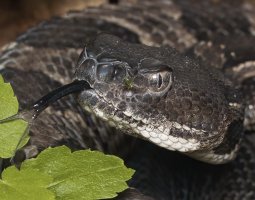
When I first started macro I thought the same. The more I learnt the more I realised that getting close is not about big lenses, but more about knowing your subject. I only shoot live subjects, in situ and almost always handheld. With time and effort it is much easier to work with subjects when they are working with you than to chase them around with a longer lens. Butterflies, dragons, bees, wasps, ants etc all have situation where they can be approached and will be still or as good as. The only exceptions are insects in flight when a longer lens can help. Even there options can be available with some. Dangerous subjects are a bit different, I would certainly not be shooting a rattlesnake with a 60mm macro.
 
  • Like
Reactions: 1 users
Upvote 0
Well, since you mentioned it.. but this was with an OM-1 and 60 macro, not macro magnification, and cropped from full body..and it was a baby at black rock forest (NY, USA) while looking for ants.View attachment 228312View attachment 228320
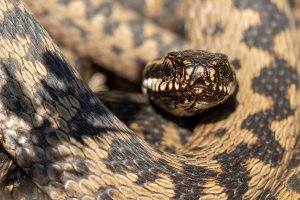
Nice shots. Here in the UK we only have 3.5 species of snake. The .5 is an introduced species only found at two sites but would have been native here a couple of hundred years ago. Of the other three species, only the adder is venomous. They are quite relaxed snakes very rarely biting people. Usually they only bite when trodden on or some muppet grabs one. So I am comfortable photographing them with a 60mm on a crop body. I don’t know the species you show there so not sure how aggressive they are.
 
Upvote 0
  • Like
Reactions: 1 user
Upvote 0
It doesn't help with the working distance, but I found the MP-E more practical with full frame. Then the 1:1 covers much larger selection of moths and the 5:1 doesn't go too deeply into diffraction territory (pixel size). As for the 35 ... get the 60! At least my 35 wasn't really good near 1:1.

I'd likely prefer something like 1:2 ... 3:1 on full frame. That would cover pretty much everything I shoot in macro. Then for those that want even smaller critters, another 2:1 ... 6:1.
I agree with your comments. I chose the 35mm because it offered IS when none of Canon's DSLRs or M series bodies had any form of stabilization. I struggled too with the MP-E, until the R7 or R5 came along. Just having a stable image gave me a better chance of getting the right areas in focus. I've tried stacking but it hasn't been too successful.
 
  • Like
Reactions: 1 user
Upvote 0
I agree with your comments. I chose the 35mm because it offered IS when none of Canon's DSLRs or M series bodies had any form of stabilization. I struggled too with the MP-E, until the R7 or R5 came along. Just having a stable image gave me a better chance of getting the right areas in focus. I've tried stacking but it hasn't been too successful.
I was struggling with R7 and I still struggle with R5II ... although somewhat less. And that is after having no problems with 7DII. The delay in viewfinder is really playing havoc with hand-held macro focusing. Or maybe it is just aging eyes and hands. ;) AF with EF 100L is reasonably fast, but tends to focus on odd places. My stacking is exclusively in studio with rail.
 
Upvote 0
I was struggling with R7 and I still struggle with R5II ... although somewhat less. And that is after having no problems with 7DII. The delay in viewfinder is really playing havoc with hand-held macro focusing. Or maybe it is just aging eyes and hands. ;) AF with EF 100L is reasonably fast, but tends to focus on odd places. My stacking is exclusively in studio with rail.
I had useful results in the past by shooting bursts - then the slight movement of focal plane (due to erratic AF or camera movement) could actually yield multiple frames to stack. Nowadays cameras shoot at much higher fps so this could be even more fruitful.
 
Upvote 0
I was struggling with R7 and I still struggle with R5II ... although somewhat less. And that is after having no problems with 7DII. The delay in viewfinder is really playing havoc with hand-held macro focusing. Or maybe it is just aging eyes and hands. ;) AF with EF 100L is reasonably fast, but tends to focus on odd places. My stacking is exclusively in studio with rail.
For me it has been a bit different. I had a lot of success with the 7D/7D2 as my dedicated macro setups. The 80D I struggled with as the viewfinder at not as bright as that of the 7Ds. So when I swapped my R7 as my dedicated macro body and the 5D2 for wildlife I found d I could setup the R7 with a brighter EVF helping manual focusing. You can also engage the focusing aids in the R7/R5II to help with manual lenses in.macro.

I do enjoy the MPE but it is a heavy lens to use handheld for long periods. So I hope any future iteration will be lighter.
 
Upvote 0
For me it has been a bit different. I had a lot of success with the 7D/7D2 as my dedicated macro setups. The 80D I struggled with as the viewfinder at not as bright as that of the 7Ds. So when I swapped my R7 as my dedicated macro body and the 5D2 for wildlife I found d I could setup the R7 with a brighter EVF helping manual focusing. You can also engage the focusing aids in the R7/R5II to help with manual lenses in.macro.

I do enjoy the MPE but it is a heavy lens to use handheld for long periods. So I hope any future iteration will be lighter.
The MP-E is heavy but also not the easiest to 'focus'. I find the long throw challenging when my subjects are very small and you have to gues what is the appropriate magnification. This is not going to happened, but I wish it had power focusing, using a rocker. That way my hands stay in position and I can rock back/forth and tweak to focus/magnification. I seem to remember something like this from Minolta...
 
  • Like
Reactions: 1 user
Upvote 0
The lack of a decent RF macro lens is one of the reasons I switched to Olympus for all my outdoorsy stuff. The 90 macro (180 mm equivalent) is an awesome lens for optical performance, features and handling. Magnification is up to 2x optical, and it works with the 1.4x and 2.0x teleconverters giving up to 4x optical - and AF works at any magnification. Canon can't touch that.

I still have Canon gear for other purposes, and if the R7 Mark II gives us what we've already had for (eeek) four years with the OM-1, and there's a fully competitive macro lens waiting in the wings, then anything could happen.
 
  • Like
Reactions: 1 user
Upvote 0
The MP-E is heavy but also not the easiest to 'focus'. I find the long throw challenging when my subjects are very small and you have to gues what is the appropriate magnification. This is not going to happened, but I wish it had power focusing, using a rocker. That way my hands stay in position and I can rock back/forth and tweak to focus/magnification. I seem to remember something like this from Minolta...
Interesting thought. With the EF-S 60 I often use BBF to get rough focus the the good old rocking to nail the critical spot. The MP-E is as you say a bit of a different case. Magnification does come with experience but still challenging to get a good composition. When I get it right the results can be superb. But success rate is certainly lower than the 60.

I’ve recently added the Laowa probe lens to my kit. I’ve only shot amphibians with it so far but looking forward to using it on butterflies and dragons later this year.
 
  • Like
Reactions: 1 user
Upvote 0
Nice shots. Here in the UK we only have 3.5 species of snake. The .5 is an introduced species only found at two sites but would have been native here a couple of hundred years ago. Of the other three species, only the adder is venomous. They are quite relaxed snakes very rarely biting people. Usually they only bite when trodden on or some muppet grabs one. So I am comfortable photographing them with a 60mm on a crop body. I don’t know the species you show there so not sure how aggressive they are.
The only snakes or spiders I would shoot in Australia would be in a zoo (or dead)!
Sharks are no problem though :)
 
  • Like
Reactions: 1 user
Upvote 0
The MP-E is heavy but also not the easiest to 'focus'. I find the long throw challenging when my subjects are very small and you have to gues what is the appropriate magnification. This is not going to happened, but I wish it had power focusing, using a rocker. That way my hands stay in position and I can rock back/forth and tweak to focus/magnification. I seem to remember something like this from Minolta...
Yes, MP-E is difficult. For me the biggest problem is being able to find the angle that can accommodate the MT-24EX flash heads followed by trying to find the bloody target at all in higher magnifications. Usually I end up pulling it back for low mag and then trying to increase mag back up while keeping the target in sight. :) The focus aids are nice, but the delay affects them as well.
 
Upvote 0
The only snakes or spiders I would shoot in Australia would be in a zoo (or dead)!
Sharks are no problem though :)
I would definitely get myself into trouble in Aus. Last time I visited relatives in Adelaide I had a few encounters so to speak. I am just too fascinated by them.


Fortunately I live in the UK where the air quality will do more harm than the fauna.
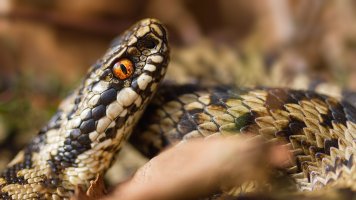
Here are a couple of old shots of our only venomous snake. Nobody has died from a bit from on in decades. They are quite placid and just flee from people. The second shot was taken with the EF-S 60 many years ago. I have plenty of newer ones but these are all I have on my phone..
A55A7810.jpeg

IMG_1449.jpeg

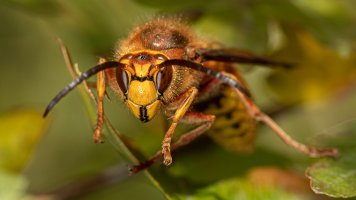
People get quite nervous around hornets too but they are another species here that I find are approachable if you take care and heed their warnings.

IMG_4537-Edit.jpeg

The only little buggers I detest here are midges and horse flies. Both are the spawn of satan.
 
  • Like
  • Love
Reactions: 3 users
Upvote 0
I would definitely get myself into trouble in Aus. Last time I visited relatives in Adelaide I had a few encounters so to speak. I am just too fascinated by them.
Out of the roughly 3000 snake bites a year here, only 1-2 (4?) deaths per year despite the different types of venomous snakes.
Good anti-venoms and first aid knowledge reduces the risk but I think that deliberately taking shots is the wild is a bit much... even for me.

I'm still waiting to shoot a blue-ringed or blue-lined octopus though. Very cute :)
I hate blue bottles with a passion though... very painful.
 
  • Like
Reactions: 1 user
Upvote 0
I have never shot bugs or other objects or critters in nature at more than 1 to 1 ratios, so I can't comment on how that would work out with a new Canon AF long macro lens. However, as a professional who has shot lots of small products and product details, a lens with a focal length greater than 100mm, and certainly more than 65mm, would be an advantage. The advantage would be room - room for lighting to be set up to light the objects from the front with more variety and sophistication than just using a ring light or dual small speedlights that attach to the end of the lens. Autofocus would be nice, but not necessary, because at macro distances you usually work slowly and often need to focus in a way that an auto function wouldn't necessarily predict. Of course, there already exists the somewhat obscure and already discontinued Canon RF adaptable TS-E 135mm f/4.0 with front movements that is mostly geared for small product work, but the availability of that lens, even on the used market, is a concern. So, a longer macro would be a great addition.
 
  • Like
Reactions: 1 users
Upvote 0