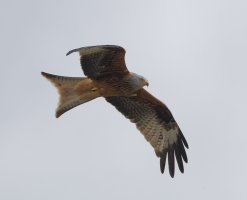
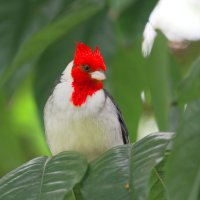
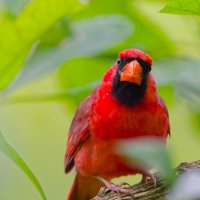
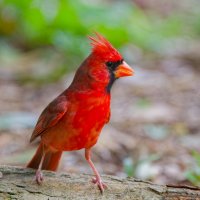
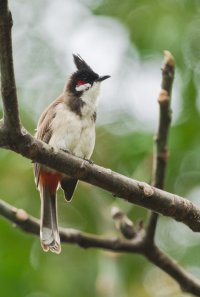
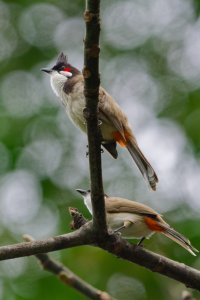
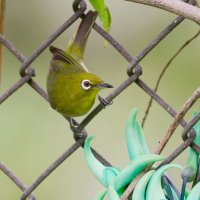
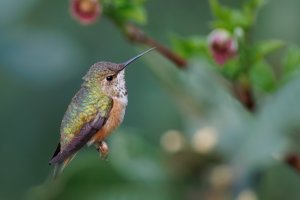
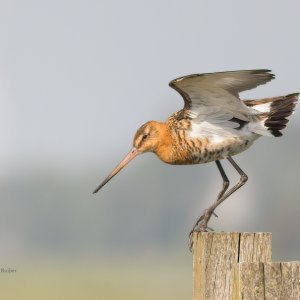
Show your Bird Portraits
- By danfaz
- Animal Kingdom
- 33195 Replies
Thank you, Click!Great shots! I especially like the first one. Well done, Sir!
Upvote
0
Thank you, Click!Great shots! I especially like the first one. Well done, Sir!
I guess 85 1.2 v 85 1.4 being the reference will depend on price, if this 100 1.4 will indeed be announced. With the 135 there's only one so what else I can compare it to?I see it as between the RF 85 f/1.2 and RF 135 f/1.8.
Although it would really just be part of a set of f/1.4 VCM lenses.
There is no 135 f/1.4 VCM.
Lol, seriously? The weight of the 28-70/2 accounts for @riker’s experience that the combo with the R5II appeared to have no stabilization? You’ve gone out to left field on this one.It could just be the weight of the lens.
That is not at all a factor in the CIPA test.
Robots do not get tired.
So you assume that while the IBIS can compensate for more movement at certain focal lengths durring testing, the opposite is true when the lens is handheld in real world scenarios?My point is just that the results will be different.
They will also differ between people.
That is why they use robots to get a consistent number.
Sorry for the late reply, busy week.A long macro is much better for moving subjects like insects and animals.
My point is just that the results will be different.And people get less tired when using OIS instead IBIS?
Or does OIS just work better when you are tired than IBIS?
Lowlight, astro, indoor sports, and blurring out backgrounds.What would be the use cases for 100/1.4 @f1.4 vs say a f2.8 like the current RF100 macro?
For portraiture, wouldn't keeping both eyes in focus be a problem @f1.4?
Planetary images perhaps?
For telephoto/wildlife, wouldn't you be too close?
Others?
A RF 200mm f4 macro lens would be great for my "needs". Support for the EF 180mm macro ends in 2027 so if Canon releases this lens somewhere between now and 12 months....
I still use my FD 200m f4 macto, close up macto are very hard as is and AF may not be practically helpful. On the other hand, I use my EF 100-400 as "macro" for the 400mm in 1m is very close to 1:1 (sort of macro) and although the AF is struggling at times, the results are pretty good.A RF 200mm f4 macro lens would be great for my "needs". Support for the EF 180mm macro ends in 2027 so if Canon releases this lens somewhere between now and 12 months.....
It doesn't help with the working distance, but I found the MP-E more practical with full frame. Then the 1:1 covers much larger selection of moths and the 5:1 doesn't go too deeply into diffraction territory (pixel size). As for the 35 ... get the 60! At least my 35 wasn't really good near 1:1.I use the MP-E 65 and the EF-S 35mm f/2.8 macro on an R7 for moth photography. Both have their advantages/disadvantages but I'm tired of swapping lenses (often in the dark) and the absurd working distances.
I'll say from the top that this information comes from an anonymous source, but I'm told that a new macro lens longer than 100mm is planned. The source claims that it would would have multiple magnification ratios. Canon has made macro lenses that are longer than 100mm. The last one being the EF 180mm f/3.5L […]
See full article.
I would love to see great hand held macro insect shots. Anyone here done that? Thx EDIT: Alive, active insects...
Thanks!Annoying when they do stuff like that!
Still a nice photo!![]()
Annoying when they do stuff like that!Today when I was totally disappointed this male Northern Cardinal landed in front of me! I wish it didn't land on that yellow chain (plastic?) but it landed there...View attachment 228291
IYHO that may be correct as some think that their use case is the only "serious" use case for a lens/genre.IMHO, all serious macro photography happens on a tripod.
My favorite is the Bewick's Wren! All the branches are screaming "the Spring is here!!!". The Red-winged Blackbird is screaming the same by itself but still has no support from the background (not big deal: the bird knows better!).Hi guys, a few portraits (and one tiny BIF) from the last weekend.
We have a Cedar Waxwing, Say's Phoebe, Bewick's Wren and a Red-winged Blackbird.
View attachment 228252View attachment 228253View attachment 228254View attachment 228255