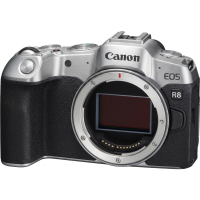
Canon Officially Announces the Canon EOS R6 Mark III

R6II ISO range is 100-102,400 expanded to 50-204,800. Greater than the R6III. Also expected with the larger pixel size. Not sure about the R6. But that’s incorrect.

The R6II also does not let you register specific people. That started with the R1 and R5II. R6III allows it as well. I don’t believe the R3 has had that capability added either.

Those were two errors that jumped out at me and made me wonder how much AI contributed to this latest article comparing the three R6 cameras.
  • Like
Reactions: 1 user
Upvote 0

New EOS R5 firmware has been released.

Hi everyone,

I’m curious about the future firmware possibilities for the Canon EOS R5 and wanted to ask for your opinions.

Do you think Canon might eventually add features such as:
  • Waveform monitor for more precise exposure when shooting video,
  • 3:2 open gate recording, similar to what the R6 Mark III now offers?

Are these functions technically possible on the R5, or are there hardware limitations that would prevent Canon from implementing them?

I’d love to hear your thoughts or any information you might have.
Upvote 0

Canon EOS R6 Mark III & RF 45 F1.2 STM November 6

That's great news, then it works for what you need in stills photography. That's fortunate as it wont work for everyone who uses that focal length, depend on what you use it for. Enjoy your new lens. From the early reviews the RF 85mm VCM looks really decent and one of the least compromised by the uniform size video form factor. :)
I am sorry to hear that your lens is not working as desired. Perhaps you received a defective unit. I would have it checked by Canon Service.
Upvote 0

Here we go Again! Canon Apologizes for R6 Mark III and RF 45mm f/1.2 STM Supply Woes

I still don't understand why the f Canon still sells bodies with kits such as 24-105 f4. The total price is the same as if I bought them separately.
It makes it a lot easier for beginners buying their first camera, my first 700D came with the EF-S 18-55mm and EF-S 55-250mm. At the time I didn't even know the difference between EF-S and EF lenses.
  • Like
Reactions: 1 user
Upvote 0

Here we go Again! Canon Apologizes for R6 Mark III and RF 45mm f/1.2 STM Supply Woes

Or it could be that companies err on the side of underproduction, because they are "terrified" of having excess inventory. Canon always discusses inventory in the quarterly financial documents.
That is an interesting idea, but I'm not sure where you heard that.

In modern manufacturing, especially under JIT (just in time)) and lean systems, companies do not intentionally underproduce; these systems are designed to match production precisely to forecasted demand, maximize utilization, stabilize flow, and avoid both overproduction and underproduction. The claim that firms “err on the side of underproduction because they’re terrified of inventory” misunderstands how JIT actually works and incorrectly interprets routine financial reporting—public companies like Canon must discuss inventory in quarterly statements because it is a required accounting disclosure, not evidence of deliberate supply restriction.

When a company uses claims of “shortages” as a marketing tactic, the shortage is a perception strategy, not an operational constraint, and attempts to rationalize it by appealing to inventory fears are simply trying to retrofit a plausible production explanation onto what was, in reality, just hype. I'm afraid it is just marketing's manipulation of consumer psychology, hoping this explanation is helpful.
  • Like
Reactions: 1 users
Upvote 0

Here we go Again! Canon Apologizes for R6 Mark III and RF 45mm f/1.2 STM Supply Woes

The 'supply woes' press releases are just marketing scams to psychologically manipulate gullible consumers.
Or it could be that companies err on the side of underproduction, because they are "terrified" of having excess inventory. Canon always discusses inventory in the quarterly financial documents.
  • Like
Reactions: 1 users
Upvote 0

Here we go Again! Canon Apologizes for R6 Mark III and RF 45mm f/1.2 STM Supply Woes

The 'supply woes' press releases are just marketing scams to psychologically manipulate gullible consumers.

For anyone interested, this is how it works:

When companies announce that delivery delays are caused by an overwhelming number of orders, they are tapping into well-documented psychological triggers that increase perceived value and urgency. This framing creates an impression of extreme popularity, which activates social proof - the assumption that if many others are buying the product, it must be desirable or superior. It also leverages scarcity psychology, where consumers fear missing out and therefore become more motivated to purchase quickly, even if they were undecided.

In many cases, these claims are strategically timed during product launches to generate hype, shape public perception, and inflate the sense of demand, regardless of whether supply chain factors or deliberate production pacing are the real causes of the delay. By shifting attention to supposed high demand, companies deflect from logistical shortcomings while simultaneously strengthening the emotional appeal of the product.

Now, there's also the psychology of pre-purchasing which is equally amusing:

Consumers who pre-order products before they are released or properly tested are often driven by a mix of psychological biases and emotional motives that override careful evaluation. Pre-ordering taps into anticipatory reward, where the excitement of being 'first' creates a dopamine-driven impulse that feels rewarding even before the product arrives. This behaviour is reinforced by FOMO (fear of missing out) and scarcity cues, especially when companies imply limited stock or high demand. It also reflects optimism bias, the assumption that a new product will meet expectations despite a lack of real-world data. For some consumers, pre-ordering becomes tied to identity and belonging - they want to feel part of the 'in-group' of early adopters, or they align their self-image with a brand’s narrative. In extreme cases, this behaviour becomes a form of self-justification, where placing a pre-order suppresses underlying doubts, because committing early feels like a way to validate one’s loyalty and reduce uncertainty. Altogether, these factors create a psychological environment in which emotion, status, and anticipation overpower measured decision-making.

Make sure to get those pre-orders in folks - you wouldn’t want to miss the thrill of buying something untested just so you can defend it before you’ve even used it. ;)
  • Like
Reactions: 2 users
Upvote 0

Canon Officially Announces the Canon RF 45mm f/1.2 STM

Now I ask you "Just stop already?", okay?
Since you asked almost politely, and fairly respectfully, I acknowledge your reasonable request and I'm happy to oblige.

These days I just read these forums in my spare time as I don't have the time to be posting anymore, but it seriously annoys me when people are stifling interesting discussion because of their psychological frailties and not let others say their part. As a reader, I want to see the diversity of opinions and ideas, and not have people gatekeeping. Otherwise I'm happy to just browse the posts from the sidelines. Peace. :)
  • Like
Reactions: 1 user
Upvote 0

Canon EOS R6 Mark III & RF 45 F1.2 STM November 6

Thanks. I needed a condescending diatribe to read today. The mind reading trick was nice, too.
Maybe check out Alistair's posts of dpreview, he has been called out countless times for jumping to Canon's defense at the slightest hint of criticism of a product. His modus operandi is the basic Argument from Ignorance logical fallacy - "I can't see any problem with it, so there are no problems, so nobody should say anything negative about it". People on that forum have also said to him after looking at how bad his photos are, that he shouldn't be advising anyone about anything. Just a pre-emptive post to stop him polluting this forum in the way he does over there, best to call it out. You need to understand, when someone has very low photography skills it is easy for the gear to far exceed their abilities, so naturally, everything looks good to them, and so they tell everyone that gear is good for EVERYONE, and nobody should complain. No mind reading needed, just a simple logical inference (drawing conclusions based on evidence and reasoning), exaggerated with a little hyperbole for amusement, to sum up Alistair's typical posts and behavior on the other forum - if you don't believe me look it up. Anyway, enjoy your day! :)
Upvote 0

Canon EOS R6 Mark III & RF 45 F1.2 STM November 6

I use a RF 24mm 1.4 L VCM only for stills. It is ideal for me in every respect. Price is slightly higher than the EF 24mm L II version was years ago.
I never had a better 24mm from any manufacturer. I have no need for another 24mm lens from Canon for stills only.
My EF 85mm will be replaced by the VCM version also.
That's great news, then it works for what you need in stills photography. That's fortunate as it wont work for everyone who uses that focal length, depend on what you use it for. Enjoy your new lens. From the early reviews the RF 85mm VCM looks really decent and one of the least compromised by the uniform size video form factor. :)
  • Haha
Reactions: 1 user
Upvote 0

Katharine Burr Blodgett: Inventor of non-reflective coatings for glass?

She invented the technology that makes your glasses, cameras, and phone screens work. Her name was deliberately left out of history—until now.
In 1917, Katharine Burr Blodgett walked into the General Electric research laboratory in Schenectady, New York, and became the first woman ever hired there.
She was 18 years old.
The men in the lab didn't know what to make of her. Women weren't supposed to be in physics. They certainly weren't supposed to be brilliant at it.
Katharine was both.
But to understand how an 18-year-old woman ended up in one of America's most prestigious research labs, you need to understand what came before.
Katharine was born in 1898, just weeks after her father was murdered. George Blodgett, a patent attorney, was shot and killed in a home invasion robbery in Schenectady before his daughter was born.
Her mother, Katherine Burr Blodgett, refused to let tragedy define their lives. She was determined that her daughter would have every educational opportunity—even in a world that told women their only career was marriage.
Young Katharine was brilliant. Frighteningly brilliant. She excelled in math and science when girls were told those subjects would damage their delicate brains.
At 15, she graduated from high school. At 17, she finished Bryn Mawr College—one of the few colleges that would even admit women. She graduated with a degree in physics when most physics departments wouldn't allow women through the door.
Then she did something audacious. She applied for a job at General Electric's research laboratory.
The lab director was Irving Langmuir, who would later win the Nobel Prize for his work on surface chemistry. When he met Katharine, he saw something the rest of the world was trained to miss: genius has no gender.
He hired her on the spot.
She was the first woman ever employed in GE's research lab. The first woman to work alongside the men who were inventing the modern world.
But Langmuir knew she needed more than a job. She needed credentials that would make it impossible for the scientific community to dismiss her.
He told her to go to Cambridge University in England and get a Ph.D. in physics.
In 1926, Katharine Burr Blodgett became the first woman ever to earn a doctorate in physics from Cambridge University.
She was 28 years old. And she was just getting started.
She returned to GE and began working on a problem that had frustrated scientists for decades: reflection.
Every surface that interacts with light—glass, lenses, mirrors—reflects some of that light back. This creates glare. Distortion. Lost clarity.
For telescopes, it meant dimmer images. For cameras, it meant hazy photographs. For eyeglasses, it meant distracting reflections. For cinema projectors, it meant less vibrant films.
Katharine wondered: what if you could eliminate reflection entirely?
Working with Langmuir, she developed a revolutionary technique. She discovered that by depositing ultra-thin molecular layers onto glass—layers so thin they were only a few molecules thick—she could manipulate how light behaved on the surface.
If you layered these films precisely, the reflected light waves would cancel each other out through destructive interference.
The result? Glass that didn't reflect. Glass that appeared almost invisible.
She called it "non-reflective coating."
The world had never seen anything like it.
In 1938, when she perfected the technique, she held up a piece of coated glass and photographers couldn't capture it on film—it was so non-reflective that cameras couldn't see it properly. The images showed what looked like empty space where the glass should be.
She'd made glass invisible.
The applications were immediate and revolutionary. Eyeglasses with her coating eliminated glare, making vision clearer. Microscope lenses could magnify with unprecedented clarity. Telescope lenses could capture fainter stars. Camera lenses produced sharper photographs.
Cinema projection improved dramatically—audiences watching movies in the 1940s and 50s were seeing Katharine's invention, though almost none of them knew her name.
During World War II, her work became critical to the military. She developed improved methods for detecting submarines. She created better de-icing techniques for aircraft wings. She improved smoke screens that saved lives.
By the end of her career, she held eight patents. Her techniques became foundational to modern materials science. The Langmuir-Blodgett film deposition method—named partially for her—is still used today in nanotechnology and advanced materials research.
Your smartphone screen uses her technology. Your anti-glare glasses use her invention. Every precision optical instrument from microscopes to space telescopes builds on her work.
She revolutionized optics. And history almost forgot her name.
Because she was a woman in science, her achievements were consistently attributed to her male colleagues. Langmuir received the Nobel Prize—deservedly, for his own work—but Katharine's contributions were minimized or ignored.
When she was recognized, it was often with surprise. As if brilliance in a woman was an anomaly rather than evidence that women had always been brilliant—just systematically denied the opportunity to prove it.
Katharine never demanded the spotlight. She wasn't interested in fame. She was interested in clarity—in glass, in science, in understanding how the world worked at its most fundamental level.
She worked at GE for 44 years until her retirement in 1963. She never married, dedicating her life to research.
She died in 1979 at age 81. Her obituaries were brief. The world moved on quickly, forgetting the woman who'd made the world clearer.
But every time you put on glasses without glare, you're using her invention.
Every time you take a photograph with a clear lens, that's her legacy.
Every time you watch a movie projected crisply on a screen, you're seeing her work.
Every woman who walks into a physics lab and is told "you don't belong here" is walking through a door Katharine Burr Blodgett already opened.
She was 18 years old when she became the first woman hired at General Electric's research laboratory in a building full of men who didn't think women could do physics.
She invented technology that changed how humanity sees the world.
And for decades, history couldn't see her.
But now we do.
Now we remember that every barrier broken makes the next one easier to break.
That every woman told "you don't belong" who succeeds anyway creates possibility for the next generation.
Katharine Burr Blodgett made glass invisible.
History tried to make her invisible too.
We're bringing her back into focus.
  • Like
  • Love
Reactions: 4 users

Here we go Again! Canon Apologizes for R6 Mark III and RF 45mm f/1.2 STM Supply Woes

Best Buy was showing sold out for body only last weekend but then I looked again wednesday and it was allowing pre-orders again.

Mine is pre ordered from Adorama. I'm waiting on a price for a lens I am trading before I buy my other stuff I still need like memory cards and extra battery. . . and can't forget about the convertor ring or I will have a body with no glass on it. lol
Upvote 0

Here we go Again! Canon Apologizes for R6 Mark III and RF 45mm f/1.2 STM Supply Woes

Curious if this has an impact in the other rumored lens announcement. Haven't heard anything since the R6 III and RF 45mm announcement.

  • Like
Reactions: 1 user
Upvote 0

Here we go Again! Canon Apologizes for R6 Mark III and RF 45mm f/1.2 STM Supply Woes

Do a lot of business with MPB and also with KEH. Prices for used Canon gear has gone up in the past few months - but also the amount they give you for selling or trading your gear. Sold some gear recently that got me more money than when I first got my quote a year ago. They are still much better to deal with than B&H used or most brick and mortar stores who offer you far less. They, unlike most, post actual photos of the gear they sell, and give a far better description than KEH or other sellers, pointing out issues such as moisture or fungus in a lens. Maybe Europe is different. All my experience is with MPB in the USA, and they continue to be my #1 choice for used.
Yes, indeed, Europe is different!
I've stopped making business with MPB.
Upvote 0

Here we go Again! Canon Apologizes for R6 Mark III and RF 45mm f/1.2 STM Supply Woes

I used to buy a lot from (and also sell to) MPB, somewhere between 2017-2021. Since then, I noticed they raised their prices more or less drastically and also their resell offers went downhill. Atm, if I don't sell on Kleinanzeigen (or eBay) I sell to wirkaufens . de because they offer the most money and they've changed my estimate. I get what I signed up for. Sometimes the difference between those is several hundred €...

Buying gear from mpb is even worse: Canon Ra (astronomy) had a RRP of 2.500 € and MPB sold it for 3.000 €! The R6ii has basically lived at the 2.199 € price point for the last year, yet the "like new" was still above 2.200 € for a very long time. Buying a used camera at MPB would've cost more than buying a new. one.

I recently noticed though, that prices have come down a little bit... maybe their sale numbers went because they were/ are so greedy.
Do a lot of business with MPB and also with KEH. Prices for used Canon gear has gone up in the past few months - but also the amount they give you for selling or trading your gear. Sold some gear recently that got me more money than when I first got my quote a year ago. They are still much better to deal with than B&H used or most brick and mortar stores who offer you far less. They, unlike most, post actual photos of the gear they sell, and give a far better description than KEH or other sellers, pointing out issues such as moisture or fungus in a lens. Maybe Europe is different. All my experience is with MPB in the USA, and they continue to be my #1 choice for used.
  • Like
Reactions: 1 user
Upvote 0

Canon EOS R6 Mark III & RF 45 F1.2 STM November 6

Hi Alistair, you seem to praise anything Canon does and take it personally when anyone has a criticism of their products, a self-proclaimed Canon online spokesman. If Canon released a toilet roll tube with cling wrap on the end and an RF mount at the end you will be pre-ordering it and singing its praises from the rooftops. Your bias is so off the charts you're a perpetual source of bad guidance and advice to readers! I've seen your antics on dpreview, especially in the old days when you used to intentionally try to fill any thread critical of Canon with dozens of frivolous nonsense posts to reach the thread post limit prematurely and shut it down so nobody else could comment. Stupid fanboy antics. Did you get banned or reprimanded for that behavior on the old dpreview forum??? ;)

Do you even understand what VCM lenses are for? People need to understand that the Canon VCM lenses were designed primarily with video production in mind, not stills photography, and that this focus shapes the compromises inherent in the series. Unlike mid-tier stills lenses, which prioritize optical sharpness, high-resolution performance, and minimal aberrations across individual lenses, VCM lenses are engineered to maintain consistent size, weight, and handling across the entire zoom range to suit professional cinematography workflows. This design emphasis also aims to minimize focus breathing and facilitate smooth rack focusing, which are critical for video but largely irrelevant in stills work. As a result, optical tradeoffs such as slightly lower corner sharpness, chromatic aberration control, or distortion correction may be present—compromises that would not be tolerated in a stills-focused lens at the same price point. The series’ price positioning reflects not just the lens optics but the engineering needed for consistent form factor, video-friendly operation, and reliable performance across the zoom range, meaning that buyers prioritizing stills might encounter characteristics that differ from what they would expect in similarly priced photography lenses.

Just accept that there is a big gap in Canon's mid-tier photography lenses, and even some in its top tier. Where is the 35mm to match the top tier 85's? It's not here yet. The 50mm VCM is correctly compromised for video, and it's not clear what Canon's lens strategy is, as they're wanting to cash in on the increasing interest in videography at all tiers, but leave stills photographers with a mis-mash of varying quality consumer lenses, and really expensive pro-level lenses.
Thanks. I needed a condescending diatribe to read today. The mind reading trick was nice, too.
  • Like
  • Haha
Reactions: 2 users
Upvote 0

Here we go Again! Canon Apologizes for R6 Mark III and RF 45mm f/1.2 STM Supply Woes

That´s what I thought, too. People believe they get a great deal, but they're too lazy to check. It is actually the same with amazon for several things.
Many Black Friday or "tax free" airport offers are of the same kind. The Frankfurt airport (or was it Munich?) will sell you a tax free Leica M11 at exactly the same price you'd pay at an official Leica store...
PS: A price I'd no longer pay for a digital body with planned obsolescence... You still can get a 70 years old M3 serviced and repaired, but an M11 in 15 years???
  • Like
Reactions: 1 user
Upvote 0

Here we go Again! Canon Apologizes for R6 Mark III and RF 45mm f/1.2 STM Supply Woes

i think people get used to places like MPB having good deals, and start assuming the deals are good without shopping around. places like MPB then try to monetize their customer's habbits.
That´s what I thought, too. People believe they get a great deal, but they're too lazy to check. It is actually the same with amazon for several things.
Upvote 0

Filter

Forum statistics

Threads
37,274
Messages
967,022
Members
24,634
Latest member
Mcsnows

Gallery statistics

Categories
1
Albums
29
Uploaded media
353
Embedded media
1
Comments
25
Disk usage
982.4 MB