

Upvote
0
You are using an out of date browser. It may not display this or other websites correctly.
You should upgrade or use an alternative browser.
You should upgrade or use an alternative browser.
Latest activity
Filters
Show only:

Upvote
0
Canon Says it’s up to Sigma to Make Full-Frame RF Lenses
- By Bob Howland
- Canon Lenses
- 153 Replies
Assume that a lens (1) costs $50,000 to bring it to market (also known as Non-recurring expenses or NRE) (2) but only $400 in RE (Recurring expenses) to make each additional lens (3) and sells for $600. How would an increase in demand cause Sigma to suffer a loss, assuming that production is simply ramped up and there are no additional (capital) expenses such as enlarging the factory or buying equipment to automate the manufacturing process (or paying an enormous one-time licensing fee to make as many lenses as they can)?But Sigma has to make enough of those lenses to be PROFITABLE. That means more than "Sigma would simply sell as many lenses as they can make, be very happy with the revenue."
Revenue MUST cover expenses And return a profit. Obviously, Sigma hasn't figured out how to do that for RF yet. What if Sigma can only fit 500 lenses for ff RF into the current facility capacity and production schedule? Would that be PROFITABLE?
Sigma is in business to make money. Period. It is not in business to be altruistic.
Not as simple as people want to believe, then again, simple if you follow the $. "But demand would be through the roof! They'd make millions!" Nobody HERE knows that. Sigma would know better.
My guess is that RFs is a bigger market with much higher volume and potential sales/profit than ff.
Upvote
0
Canon Says it’s up to Sigma to Make Full-Frame RF Lenses
- By Bob Howland
- Canon Lenses
- 153 Replies
Two questions, actually a two part poll. Assume that Canon want licensing fees from Sigma for Sigma to sell FF and APS-C lenses. Sigma's 300-600 f/4 lens currently sells for $6600 at B&H in both L mount and Sigma E mount.
First question: How much of a licensing fee would Canon want for Sigma to sell each lens in RF mount?
Second question: If that amount became public knowledge, what would be the effect on Canon's reputation as a good company to buy stuff from, with the choices being: Damage greatly, Damage slightly, Neutral, Benefit slightly, Benefit greatly?
First question: How much of a licensing fee would Canon want for Sigma to sell each lens in RF mount?
Second question: If that amount became public knowledge, what would be the effect on Canon's reputation as a good company to buy stuff from, with the choices being: Damage greatly, Damage slightly, Neutral, Benefit slightly, Benefit greatly?
Upvote
0
Canon Says it’s up to Sigma to Make Full-Frame RF Lenses

- By Ozarker
- Canon Lenses
- 153 Replies
But Sigma has to make enough of those lenses to be PROFITABLE. That means more than "Sigma would simply sell as many lenses as they can make, be very happy with the revenue."Sorry, I have the completely opposite opinion.
Why should Sigma (or any other 3rd party lens manufacturer) be 'required' to make enough RF lenses to fulfill a very high demand in short time?
and later they can decide to increase production capacity if the demand justifies it.
In a free market, any supplier can offer as many product units as he wants, while there is no obligation to produce a very large quantity, even if an initial short supply might disappoint some prospective buyers. After a while production capacities will adjust to the demand.
Additionally, all RF and RF-S cameras use the same RF mount, only the image circle of an RF-S (APS-C) lens is smaller than FF.
Consequently, there is no additional 'technical difficulty' to overcome or any 'reverse engineering' needed for FF RF compared to APS-C RF-S. Note that there are already several 3rd party autofocus RF-S lenses available, e.g. Sigma 15mm f/1.4 DC, so 3rd party manufacturers have already solved the 'technical difficulty'.
Revenue MUST cover expenses And return a profit. Obviously, Sigma hasn't figured out how to do that for RF yet. What if Sigma can only fit 500 lenses for ff RF into the current facility capacity and production schedule? Would that be PROFITABLE?
Sigma is in business to make money. Period. It is not in business to be altruistic.
Not as simple as people want to believe, then again, simple if you follow the $. "But demand would be through the roof! They'd make millions!" Nobody HERE knows that. Sigma would know better.
My guess is that RFs is a bigger market with much higher volume and potential sales/profit than ff.

Upvote
0
How much could I sell my EOS R for realistically?
- By Aldherrian
- EOS R
- 2 Replies
My best guess would be to get an offer from MPB or another like them.
That would be the current price knowing you can probably sell it for a bit more privately. That's how I gauged the price when I sold my R7
That would be the current price knowing you can probably sell it for a bit more privately. That's how I gauged the price when I sold my R7
Upvote
0
Show your Bird Portraits

- By AlanF
- Animal Kingdom
- 33424 Replies
6 years is a long wait. Was the P1000 any good for hummingbirds?While waiting for the hummingbirds to return (saw a couple the other day), here is a shot of a Red Shouldered Hawk taken 6 years ago with the P1000. Yes, Canon could beneficially add a super zoom back into the line.
View attachment 228748

Upvote
0
Canon EOS R7 Mark II to Have Stacked 40MP Sensor?
- By Del Paso
- EOS Bodies
- 328 Replies
I once was in a pharmacy in Switzerland, proud owner of a 2 years old Leica digital M 240. The black enamel had already suffered from use, showing shining brass underneath. The pharmacist asked me if I enjoyed collecting classic cameras...And then there are those that are declared classics before they even leave the showroom.At this point, all DSLRs are heading into classic territory. My 5D II must qualify.

You see, "classic" is no rigid definition.
Upvote
0
Show your Bird Portraits
- By foda
- Animal Kingdom
- 33424 Replies
Yeah, that's why I posted that photo. Thought you might enjoy a shot of it in its native habitat.White-rumped Shama is pretty common on Oahu (incl. Honolulu town) too. Not as common as the Japanese white eye but still common.
Theese are from today - Foster Botanical garden.
View attachment 228745View attachment 228746View attachment 228747
Upvote
0
Small Mammals

- By Dragon
- Animal Kingdom
- 223 Replies
Nice detail. That's a big centipede. Mongoose is thinking "lunch".
Upvote
0
Small Mammals

- By ISv
- Animal Kingdom
- 223 Replies
The Small Indian mongoose. I noticed the centipede at home...

Upvote
0
Canon EOS R7 Mark II to Have Stacked 40MP Sensor?
- By Dragon
- EOS Bodies
- 328 Replies
It's not old enough to be a classic yet, much less ancient. For cars the "classic" qualifier is generally 25 years. For digital cameras I'm willing to go half that, or 12.5 years. It won't be a "classic" until February of 2032.
And then there are those that are declared classics before they even leave the showroom.
At this point, all DSLRs are heading into classic territory. My 5D II must qualify.
Upvote
0
Show your Bird Portraits
- By Dragon
- Animal Kingdom
- 33424 Replies
While waiting for the hummingbirds to return (saw a couple the other day), here is a shot of a Red Shouldered Hawk taken 6 years ago with the P1000. Yes, Canon could beneficially add a super zoom back into the line.

Upvote
0
Show your Bird Portraits
- By ISv
- Animal Kingdom
- 33424 Replies
White-rumped Shama is pretty common on Oahu (incl. Honolulu town) too. Not as common as the Japanese white eye but still common.@ISv No luck yet on the Orange-cheeked Waxbill. But here's a White-rumped Shama I photographed last month on a trip to Vietnam.
R5MkII RF200-800mm
View attachment 228729
Theese are from today - Foster Botanical garden.



Upvote
0
Canon EOS R7 Mark II to Have Stacked 40MP Sensor?

- EOS Bodies
- 328 Replies
My 90D is classic, not ancient!
It's not old enough to be a classic yet, much less ancient. For cars the "classic" qualifier is generally 25 years. For digital cameras I'm willing to go half that, or 12.5 years. It won't be a "classic" until February of 2032.
Upvote
0
Canon EOS R7 Mark II Rumored Specifications Round-up
- EOS Bodies
- 85 Replies
I don't have a camera that hasn't been launched yet.
Exactly the point.
Upvote
0
The Follow-up to the RF 24-70 F2.8L IS USM Could See More of the World
- By erader
- Canon Lenses
- 50 Replies
I find 24mm fine for walk around work. 70mm is ok, but the 105mm is a better top end. That said the 23-105 f2.8 is too heavy for my liking. I found the 24-105 f4 to fail to focus correctly in low light on the R5 Mark II, so I stuck with the 24-70 f2.8. Perhaps that was an early focus issue with the mark II, which has been fixed? Anyone having problems with that combo (R5 II, 24-105 f4 at night time with lit buildings or bridges)
24mm seems plenty wide enough, unless you go indoors, when the 10-20mm is king.
i'm a landscape shooter. many of my landscapes with 24-70 are at 24mm. that tells me 20mm would be very useful
Upvote
0
The Follow-up to the RF 24-70 F2.8L IS USM Could See More of the World
- By erader
- Canon Lenses
- 50 Replies
"I'm sure Canon will have to do something to get people to buy new lens."20-70mm would certainly be quite useful. I'm sure Canon will have to do something to get people to buy new lens. The existing ones are so good. Maybe they will eventually get around to a 16-600mm 2.8 that's less than 1KG in weight
lower the price, weight, size (VCM)
Upvote
0
Canon Says it’s up to Sigma to Make Full-Frame RF Lenses

- Canon Lenses
- 153 Replies
Well, with that barrel diameter on the AI generated camera+lens image there should be no problem for Canon, as the barrel seems rather to small to fit the RF mount ....!!
I am not a super fan of AI generated images for that sort of things.
Edit: On second inspection it may not even be AI generated, but just a composite where lens and camera are not to scale??
No, @AcaPixus was referring to the anorexic lens mount on the image in the main site post for this topic. Here’s that image compared to the real thing…Are you talking about the big green thing in post #50?
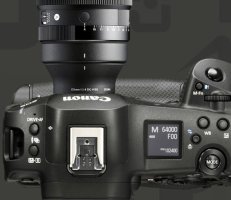
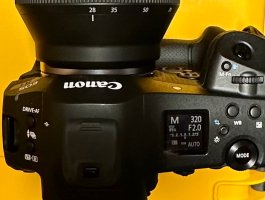
Upvote
0
Canon Says it’s up to Sigma to Make Full-Frame RF Lenses
- By AlanF
- Canon Lenses
- 153 Replies
It's currently available as a special order at £15,000, and has dedicated TCs. I know someone who has one for astrophotography.The big green is the Sigma 200-500 f/2.8. It was introduced after Sigma introduced their 120-300 f/2.8 and 300-800 f/5.6 lenses, weighed 35 pounds and, the last time I saw it listed, had a price of $27,000. I was posting on DP Review when it was introduced and the ridicule it got at introduction was severe. I was extremely disappointed because I wanted a 200-500 f/4. The Sigma CEO said that it was a dream of his father's and it had to be made or the father would haunt him..
It seems that this generation's oddity is the BF. Maybe they should have considered a very compact APS-C L-mount body to compete with Sony's 6X00 series and provide a market for APS-C L-mount lenses..
If Neuro is correct about the Canon-Sigma RF-mount licensing agreement, and he probably is, there is probably also a penalty clause if Sigma releases the details of that agreement, specifically the amounts of the licensing fees. Canon is hardly blameless in this situation. Buyer-seller relationships are inherently adversarial.

Upvote
0
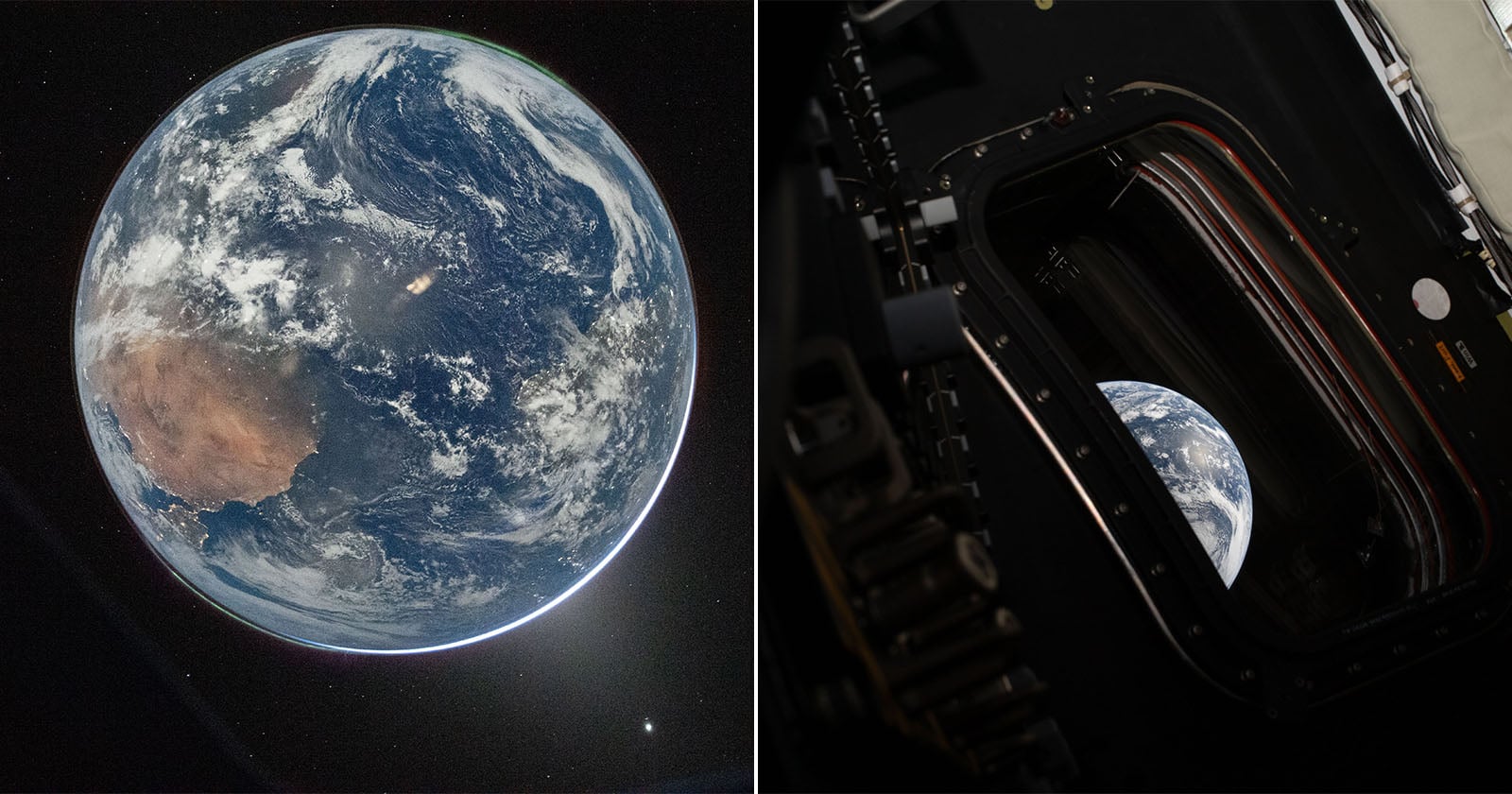
Artemis II crew using Nikon D5 and Z9
- By AlanF
- Third Party Manufacturers
- 10 Replies
The crew is using the D5 as proven technology and introducing the Z9 for future standard use.

Canon Says it’s up to Sigma to Make Full-Frame RF Lenses
- By Bob Howland
- Canon Lenses
- 153 Replies
The big green is the Sigma 200-500 f/2.8. It was introduced after Sigma introduced their 120-300 f/2.8 and 300-800 f/5.6 lenses, weighed 35 pounds and, the last time I saw it listed, had a price of $27,000. I was posting on DP Review when it was introduced and the ridicule it got at introduction was severe. I was extremely disappointed because I wanted a 200-500 f/4. The Sigma CEO said that it was a dream of his father's and it had to be made or the father would haunt him..Are you talking about the big green thing in post #50?
A real lens, used to be the most expensive (apart from Canon's 1200 f/5.6 that is a rarity) but Canon's RF800/1200 make it look cheap.
It seems that this generation's oddity is the BF. Maybe they should have considered a very compact APS-C L-mount body to compete with Sony's 6X00 series and provide a market for APS-C L-mount lenses..
If Neuro is correct about the Canon-Sigma RF-mount licensing agreement, and he probably is, there is probably also a penalty clause if Sigma releases the details of that agreement, specifically the amounts of the licensing fees. Canon is hardly blameless in this situation. Buyer-seller relationships are inherently adversarial.
Upvote
0
How much could I sell my EOS R for realistically?
- EOS R
- 2 Replies
I see postings around $700 for a used body but am looking for a reality check.
Also what are the best places to sell in person according to you? Used to do Craigslist but not sure if it still is the best way to do so.
Thank you.
Also what are the best places to sell in person according to you? Used to do Craigslist but not sure if it still is the best way to do so.
Thank you.
Canon Says it’s up to Sigma to Make Full-Frame RF Lenses
- Canon Lenses
- 153 Replies
RF lenses are outrageously expensive for what they offer, and it's all thanks to the monopoly that Canon enforces on the mount. These kind of things should not even be legal in my opinion.
Sigma lenses are great. I have two Art ones and no complaints. I very much doubt that they are allowed to do full frame ones since nobody else did either.
Also, to be totally fair, Sigma is not producing the lens that I want for other mounts either. So at this moment I am good in general. There are tons of EF lenses that work great. Buying new lenses make no sense.
Sigma lenses are great. I have two Art ones and no complaints. I very much doubt that they are allowed to do full frame ones since nobody else did either.
Also, to be totally fair, Sigma is not producing the lens that I want for other mounts either. So at this moment I am good in general. There are tons of EF lenses that work great. Buying new lenses make no sense.
Upvote
0
Load more
Filter
Forum statistics










Gallery statistics
- Categories
- 1
- Albums
- 29
- Uploaded media
- 372
- Embedded media
- 1
- Comments
- 25
- Disk usage
- 1 GB