Canon Says it’s up to Sigma to Make Full-Frame RF Lenses

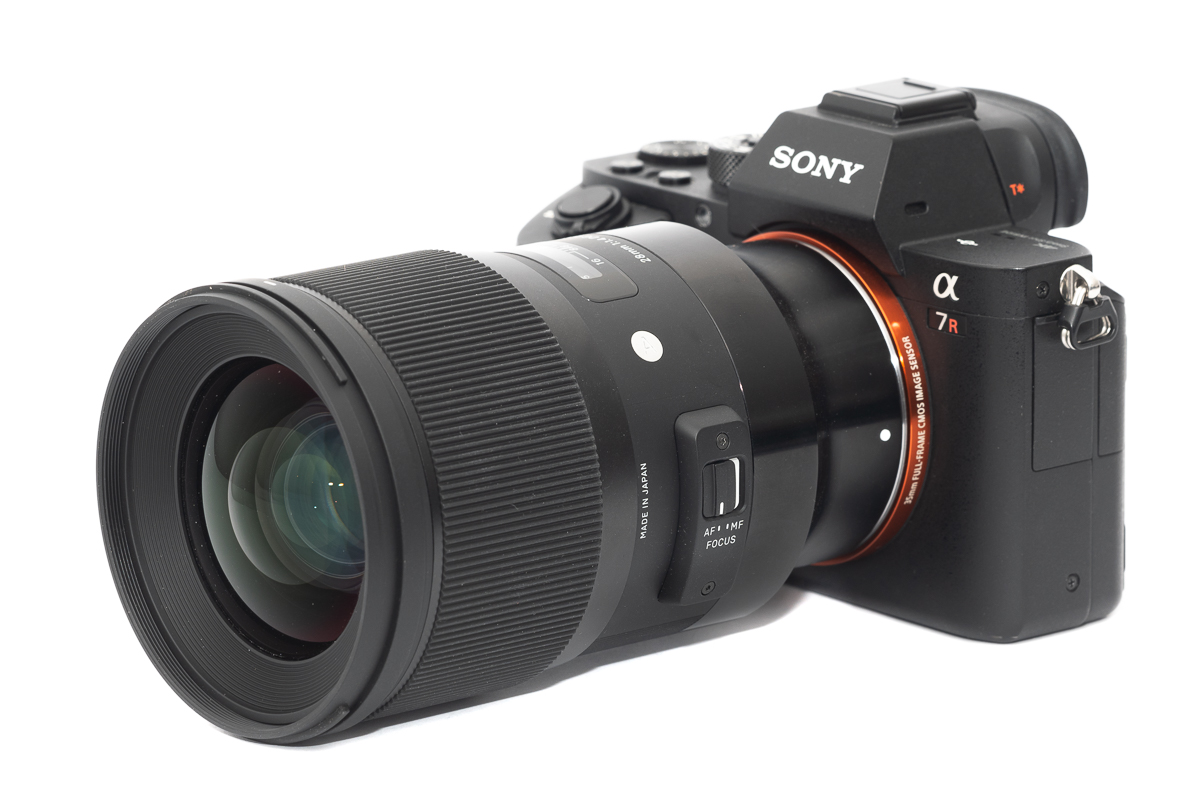
That's the SLR era lens. It was excellent but is huge, heavy, and the AF is very slow by today's standards.

But yes, that lens is one of the reasons that so many people are waiting for Sigma to deliver a revised mirrorless-native version. Likewise for their 40/1.4 and 105/1.4. These were all very loved lenses but don't yet exist with new designs.
Upvote 0

Canon Says it’s up to Sigma to Make Full-Frame RF Lenses

He was talking about production capacity for cameras and lenses, which is very relevant to the topic at hand. Market cap…isn’t. But thanks for trying, at least you’re spot on about not getting the point. :rolleyes:
Oh look, it's the #1 member of the Cult of Canon! He's continuing to drink the Flavor Aid, I'm so surprised. /s
Upvote 0

Canon EOS R7 Mark II Rumored Specifications Round-up

[...]

At the end of the day, clarity—actual image quality—is what most photographers are aiming for.
To reiterate: If you want less noise at high ISO (i.e., better actual image quality), you need a bigger sensor to collect more light. It's really that simple, despite your amply and thoroughly demonstrated unwillingness or inability to accept that.
  • Like
Reactions: 2 users
Upvote 0

Canon EOS R7 Mark II Rumored Specifications Round-up

This thread began discussing the R7 Mark II. The conversation lately seems to be more theoretical and more general in nature.

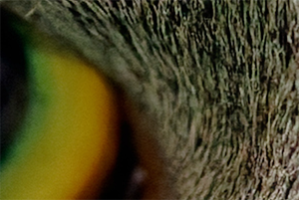
Was your cat's eye example taken with an R7 or R7 Mark II?
I don't have a camera that hasn't been launched yet. R1 with the RF 85/1.2L DS.

Dove.jpg

(The greenish cast is from a green/shamrock runner that's on the console in front of her, St. Patrick's Day decor.)
Upvote 0

Canon EOS R7 Mark II Rumored Specifications Round-up

Lots of misunderstandings and irrelevancies there...and I won't address most of them.

If crop your images to a few hundred pixels, then that might even matter. For example, it might make a difference in this picture of one of my cats.

View attachment 228732

But...that's not really much of a picture now, is it?


As I mentioned previously, at the light levels where those ISOs are used shot noise dominates and read noise is essentially irrelevant. All of the 'improvements' that you think are meaningful (bigger pixels, BSI, per-pixel S/N, etc.) affect read noise, albeit in a functionally insignificant way. Shot noise is dependent on the amount of light being collected by the sensor, meaning all of your arguments about this issue are irrelevant.

If you want less noise at high ISO, you need a bigger sensor to collect more light. It's really that simple, despite your unwillingness or inability to accept that.


While you're hoping for that meaningful improvement in high ISO noise performance in the R7II, you should also hope for unicorn rides and for Canon to set the price for the R7II at $14. Those are all at just about the same level of likelihood, the only difference being the first one is not going to happen because of physics while the last two are just silly fantasies.
I understand the point about shot noise dominating at higher ISOs and that total light collection is a primary driver of overall noise—that’s well established.

Where I think we’re talking past each other is in how that translates to real-world use. In practice, many of us aren’t evaluating downsampled images—we’re working with native files and often cropping, particularly in action and wildlife scenarios. In those cases, how noise presents at the pixel level still matters in the final image.

It’s also not accurate to say that factors like pixel architecture or sensor design are irrelevant simply because shot noise is present. While they don’t change the fundamental photon statistics, they can influence how efficiently signal is captured and how noise manifests in the actual file. Those differences may not be dramatic, but they’re not nonexistent either.

So yes, a larger sensor collecting more total light is one way to improve noise performance—but it’s not the only path. Sensor and processing design choices can influence how efficiently that light is used and how noise ultimately presents in the image.

I’m not disputing the physics there. What I’m saying is that, within those constraints, design tradeoffs still matter—and I believe Canon may have prioritized resolution and broad feature support over high-ISO performance for action use cases.

For example, pixel density itself is a design choice. As I mentioned earlier, a lower pixel count on the same APS-C sensor would increase pixel area, improving per-pixel signal-to-noise and typically resulting in cleaner output at higher ISOs—particularly in scenarios where images are viewed at native resolution or cropped. That would come at the expense of resolution, but it illustrates that noise performance is not solely dictated by sensor size; it’s also a function of how that sensor is configured.

More broadly, the statement that these factors are “irrelevant” because shot noise dominates is an oversimplification. While shot noise sets a fundamental limit, sensor design still affects how efficiently signal is captured and how noise presents in the final image. Those distinctions matter in practice, even if they don’t change the underlying photon statistics.

Part of the challenge here is that cameras like this are being asked to serve multiple use cases—both video and high-speed action photography—which can constrain how aggressively certain optimizations are pursued.

On the “reach” point, I don’t fully agree with the framing either. Reach only has value if the image holds together. If noise degrades detail, then the effective advantage of that reach is reduced. In practice, most photographers are looking for an image that holds up in terms of detail and clarity, not just one that appears closer on paper.

This isn’t just theoretical—in applied optical and sensor system design, these tradeoffs are well understood and routinely balanced depending on the intended use case.

I’m simply saying that I’m not convinced the right balance is being achieved here for action-oriented shooting, and I’m also trying to help clarify the tradeoffs between noise and resolution for those following the discussion.

At the end of the day, clarity—actual image quality—is what most photographers are aiming for.

Upvote 0

Canon EOS R7 Mark II Rumored Specifications Round-up

Note that we are discussing the R7II, not cameras from well over a decade ago. Having said that, even with current sensors (not just Canon) there is a shift in the amount of noise at the ISO values where second (and sometimes third) stage amplifiers come into play.

This thread began discussing the R7 Mark II. The conversation lately seems to be more theoretical and more general in nature.

Was your cat's eye example taken with an R7 or R7 Mark II?
Upvote 0

Canon EOS R7 Mark II Rumored Specifications Round-up

Technically correct, practically irrelevant. Even at base ISO...what is base ISO? Setting a camera to ISO 100 (or whatever its lowest non-expanded ISO setting is) does not mean that's the base ISO. Differences in real base ISO between one camera model and the next also fall into that 'practically irrelevant' category. Important to pedants and measurebators, not to photographers.

Sure, you can stand up and argue that when set to ISO 400, one APS-C camera has the image noise of ISO 412 and another has the noise of ISO 397. BFD. For an APS-C camera set to ISO 400, a full frame camera set to ISO 1000 would have same the image noise, and that's a meaningful difference.

For quite some time, base ISO in the vast majority of digital ILCs has been whatever analog amplification is needed to simulate the response in the midtones to films with ISO100/ASA 100/DIN21°. What amplification factor is needed to get there varies significantly from one sensor design to the next. Sensel size is one of the significant factors affecting how much analog amplification is needed to do that.
Upvote 0

Canon EOS R7 Mark II Rumored Specifications Round-up

For most of Canon's FF and APS-C cameras in the late 2000s and early 2010s, ISO 125 was noisier than ISO 800! I saw other similar tests from other websites which are no longer still up.
Note that we are discussing the R7II, not cameras from well over a decade ago. Having said that, even with current sensors (not just Canon) there is a shift in the amount of noise at the ISO values where second (and sometimes third) stage amplifiers come into play.
Upvote 0

Canon EOS R7 Mark II Rumored Specifications Round-up

Technically correct, practically irrelevant. Even at base ISO...what is base ISO? Setting a camera to ISO 100 (or whatever its lowest non-expanded ISO setting is) does not mean that's the base ISO. Differences in real base ISO between one camera model and the next also fall into that 'practically irrelevant' category. Important to pedants and measurebators, not to photographers.

Sure, you can stand up and argue that when set to ISO 400, one APS-C camera has the image noise of ISO 412 and another has the noise of ISO 397. BFD. For an APS-C camera set to ISO 400, a full frame camera set to ISO 1000 would have same the image noise, and that's a meaningful difference.

That depends on how the camera handles ISO 1000. If it's like most Canon DSLRs handled ISO 1000, it's actually using ISO 800 analog amplification, metering 1/3 stop brighter (resulting in an AE value 1/3 stop dimmer), and including a 1/3 stop "push" instruction in the metadata. So it's like shooting 1/3 stop to the left and then amplifying both signal and noise by the same additional amount after digitization, which produces more noise than one might expect. For most of Canon's FF and APS-C cameras in the late 2000s and early 2010s, ISO 125 was noisier than ISO 800! I saw other similar tests from other websites which are no longer still up. All of the +1/3 stop ISOs (125, 250, 500, 1000) were noisier than the -1/3 stop ISOs (160, 320, 640, etc.) and the stops from ISO 100 (200, 400, 800, etc.).

This page capture at the wayback machine indicates that the practice by Canon began sometime between the 1D Mark IIn and the 1D Mark III and the original 5D. My 5D Mark II, 7D, and 5D Mark III certainly demonstrated the phenomenon. I never really checked the 7D Mark II or 5D Mark IV, since I had long since stopped using +1/3 stop ISOs, and generally used only full stop ISOs below ISO 3200.
Upvote 0

Canon EOS R7 Mark II Rumored Specifications Round-up

Lots of misunderstandings and irrelevancies there...and I won't address most of them.
At the same time, I don’t think it’s accurate to say pixel size is irrelevant. On a fixed sensor size, increasing resolution reduces pixel area, which affects per-pixel signal-to-noise. While normalization can reduce those differences when images are resized, in real-world use—especially at high ISO—those factors can still influence how noise presents in the actual image.
If crop your images to a few hundred pixels, then that might even matter. For example, it might make a difference in this picture of one of my cats.

Screenshot 2026-04-02 at 9.36.41 PM.png

But...that's not really much of a picture now, is it?

My concern is more about how these cameras are actually used. For action and wildlife photography, I’m often shooting at ISO 3200–6400+ to maintain shutter speeds around 1/1000, and I’m not downsampling to evaluate noise—I’m looking at the image at native resolution or cropping, which is very common in birding. In that context, how noise presents in the actual file matters, not just how it behaves after normalization.
As I mentioned previously, at the light levels where those ISOs are used shot noise dominates and read noise is essentially irrelevant. All of the 'improvements' that you think are meaningful (bigger pixels, BSI, per-pixel S/N, etc.) affect read noise, albeit in a functionally insignificant way. Shot noise is dependent on the amount of light being collected by the sensor, meaning all of your arguments about this issue are irrelevant.

If you want less noise at high ISO, you need a bigger sensor to collect more light. It's really that simple, despite your unwillingness or inability to accept that.

As an action photographer, I’m really hoping the Canon EOS R7 Mark II does deliver a meaningful improvement in noise performance.
While you're hoping for that meaningful improvement in high ISO noise performance in the R7II, you should also hope for unicorn rides and for Canon to set the price for the R7II at $14. Those are all at just about the same level of likelihood, the only difference being the first one is not going to happen because of physics while the last two are just silly fantasies.
  • Like
Reactions: 1 users
Upvote 0

Canon EOS R7 Mark II Rumored Specifications Round-up

It does affect full well capacity, though. This means a change in analog amplification levels to avoid blowing out highlights, which means other sensels with very little light striking them are also amplified less, which puts them closer to the read noise floor (but not Poisson distribution noise, which is reduced proportional to the area of each sensel). So this is mostly a thing for base ISO. Is it near the difference of an APS-C sensor compared to a FF sensor? No, it is not. But the difference is still there. The same with BSI vs non-BSI sensors. The smaller each sensel is, the higher percentage of that sensel is blocked from incoming light by the circuitry. Gapless lenses in front of the sensor help to refract more of the light towards the parts of the sensel where there is no circuitry, but they're not precise enough to completely redirect all light to areas of each sensel with no circuitry blocking it. Dual Pixel AF sensors have twice as much circuitry as sensors with the same "effective" resolution which are not Dual Pixel AF sensors. Again, is it near as significant with sensels in the 3-4µm neighborhood as with phone sensels in the sub 1µm range? No, but it's still there.
Technically correct, practically irrelevant. Even at base ISO...what is base ISO? Setting a camera to ISO 100 (or whatever its lowest non-expanded ISO setting is) does not mean that's the base ISO. Differences in real base ISO between one camera model and the next also fall into that 'practically irrelevant' category. Important to pedants and measurebators, not to photographers.

Sure, you can stand up and argue that when set to ISO 400, one APS-C camera has the image noise of ISO 412 and another has the noise of ISO 397. BFD. For an APS-C camera set to ISO 400, a full frame camera set to ISO 1000 would have same the image noise, and that's a meaningful difference.
  • Like
Reactions: 1 user
Upvote 0

Canon EOS R7 Mark II Rumored Specifications Round-up

Now the problem I have with all the "rumours" or speculation is that it was suggested strongly that this MII was targeted for action shooters. If that is the case (and I now question if that rumour was true), then they should not have increased pixel density (it wasn't necessary) at the cost of the same or worse signal to noise in the camera.

You're assuming wildlife photographers prioritize S/N performance over "reach". With advent of modern AI noise reduction, it's now all about reach.
  • Like
Reactions: 1 user
Upvote 0

Canon EOS R7 Mark II Rumored Specifications Round-up

I understand the point about total light collection and how, when images are normalized to the same output size, noise performance can converge. That makes sense in a controlled comparison, but it’s not really how I—or many others—use the camera in practice. In real-world shooting at higher ISOs, noise is a visible and often limiting factor in image quality, and that’s the condition where we were hoping to see an improvement with the R7 MII.

At the same time, I don’t think it’s accurate to say pixel size is irrelevant. On a fixed sensor size, increasing resolution reduces pixel area, which affects per-pixel signal-to-noise. While normalization can reduce those differences when images are resized, in real-world use—especially at high ISO—those factors can still influence how noise presents in the actual image.

I would also question whether dynamic range charts are the right way to evaluate this specific point. Dynamic range is related to noise, but it’s not the same as how noise actually presents in an image—especially at higher ISO. Dynamic range charts are helpful, but they’re not a direct proxy for perceived image noise. Two sensors can plot very similarly in DR and still produce different-looking images at high ISO, particularly when viewed at native resolution or when cropped. That distinction matters a lot for the kind of shooting we’re talking about.

My concern is more about how these cameras are actually used. For action and wildlife photography, I’m often shooting at ISO 3200–6400+ to maintain shutter speeds around 1/1000, and I’m not downsampling to evaluate noise—I’m looking at the image at native resolution or cropping, which is very common in birding. In that context, how noise presents in the actual file matters, not just how it behaves after normalization.

More broadly, this comes down to a design tradeoff. Resolution, noise performance, and video capability are competing priorities on a fixed sensor size. Increasing resolution shifts the balance toward detail, cropping flexibility, and enabling features like 8K video, but it doesn’t necessarily improve high ISO image quality—and it can limit how much improvement you can realize there.

That’s really the point I was making. If newer sensor technologies like BSI improve efficiency, those gains can be used in different ways. You can spend them on more pixels, or you can spend them on better signal-to-noise performance. From a photographer’s perspective—especially for action and low-light shooting—I would have preferred to see those gains translate into visibly cleaner images at higher ISO rather than increased resolution.

You could even make a reasonable case that a lower resolution APS-C sensor—something closer to 24MP—would better serve that use case. Larger pixels would improve per-pixel signal-to-noise, and in many real-world scenarios where shutter speed and ISO are the limiting factors, that could result in better overall image quality. Of course, that comes at the expense of cropping flexibility and video features, which some users value more.

It also raises a more basic question about who this camera is really for. Canon seems to be positioning it for both action/wildlife photographers and hybrid/video users, but those goals are not fully aligned. Pushing resolution higher to support 8K makes sense from a video standpoint, but for action photographers—who are often working in difficult light—the priority is usually cleaner high ISO performance, not additional resolution.

By trying to cover both use cases in a single design, Canon is making a compromise that may end up being at odds with both groups. If the improvements from a new sensor are largely used to increase resolution rather than improve noise performance, then the real-world benefit for low-light action shooting may be limited. At the same time, if video performance relies heavily on noise reduction to clean up high ISO footage, that can come at the expense of fine detail—raising questions about how meaningful that extra resolution really is.

At higher ISO, where shot noise dominates and images are often pushed in challenging light, differences in per-pixel signal-to-noise and how the sensor handles amplification can still influence real-world results in ways that aren’t fully captured by normalized comparisons.

So it’s not that higher resolution is inherently worse—it’s that it reflects a choice about what the camera is optimized for. My concern is that in trying to be a one-size-fits-all solution for both videographers and action photographers, the camera may not deliver the level of improvement either group is really looking for. A more focused design—either prioritizing high ISO image quality for photographers or leaning fully into hybrid/video capability—might have resulted in a more compelling upgrade.

As an action photographer, I’m really hoping the Canon EOS R7 Mark II does deliver a meaningful improvement in noise performance. But if those gains are largely offset by design tradeoffs around resolution and video capability, I think I—and many others shooting in similar conditions—may come away disappointed.
Upvote 0

Canon EOS R7 Mark II Rumored Specifications Round-up

I definetly don't understand your discussion. In some cases you seem to agree but in the end you disagree. That is confusing.

I think we agree that for the same chip size, as you increase the number of pixels (or decrease the size of the individual collection sites), for each site as the density increases, the individual site collects less light. So, Canon in increasing pixel count, actually decreased the ability of each site to collect light and decreased the signal to noise (made the noise performance worse) of each site.

That's only the case for what we call "read" noise, or noise produced by the camera's own circuitry. The other component of noise, called Poisson distribution or "shot" noise, is based on the randomness of the distribution of photons in light. Shot noise increases or decreases at the same rate as surface area if the intensity of the overall field of light is the same. (If the light intensity changes with all else being equal, shot noise only increases as the square root of the increase in light, and is why brighter exposure values at low ISO result in much less shot noise than dimmer exposures which use higher ISO to amplify light - and noise - by a higher factor). Read noise is most significant at base ISO. Shot noise is the much larger component of noise at exposure values which require using higher ISO settings.
Upvote 0

Canon EOS R7 Mark II Rumored Specifications Round-up

No, we don't agree on that. For an individual pixel, smaller means more noise, sure. People who measurebate pixels love discussing that. People who take pictures care about image noise. Image noise is fundamentally independent of pixel size, but rather depends on total light gathered, which is determined by the area of the image sensor, not the number of pixels packed into that sensor. Divide a FF sensor into 45 million pixels or 24 million pixels, the total light gathered is the same.

It does affect full well capacity, though. This means a change in analog amplification levels to avoid blowing out highlights, which means other sensels with very little light striking them are also amplified less, which puts them closer to the read noise floor (but not Poisson distribution noise, which is reduced proportional to the area of each sensel). So this is mostly a thing for base ISO. Is it near the difference of an APS-C sensor compared to a FF sensor? No, it is not. But the difference is still there. The same with BSI vs non-BSI sensors. The smaller each sensel is, the higher percentage of that sensel is blocked from incoming light by the circuitry. Gapless lenses in front of the sensor help to refract more of the light towards the parts of the sensel where there is no circuitry, but they're not precise enough to completely redirect all light to areas of each sensel with no circuitry blocking it. Dual Pixel AF sensors have twice as much circuitry as sensors with the same "effective" resolution which are not Dual Pixel AF sensors. Again, is it near as significant with sensels in the 3-4µm neighborhood as with phone sensels in the sub 1µm range? No, but it's still there.
Upvote 0

Is Vistilen the Next Third-Party RF Lens Manufacturer?

Probably a shell company set up specifically to sell RF versions of the Meike lenses under a different brand. That way when Canon decides to sue the pants off them, there are no assets to go after. That shell company can just be shut down and another one will pop up. This might end up being the way the Chinese brands get their lenses onto RF.
Brand identification/ marketing would be hard if phoenix legal structures were used.
It is possible that these lens would only be available within China where it would be harder for Canon to enforce any copyright/patent infringements.

Entirely likely that they use EF autofocus with RF physical mount.
The lenses don't have to have the fastest or quietest AF motors and still be competitive vs native lenses.
AF Meike lenses are relatively inexpensive eg 35-85mm f1.4-f2 models range from USD135-USD400 on B&H. The price would be cheaper within China.

We are seeing more hardware eg phones that are only available in China where the middle class market is becoming a big enough segment to support volume - especially at the price points vs native lenses.
Xiaomi, Vivo and Oppo all have china-excluding models for instance and these are not low end models.

For perspective, 2% of China's population is about 30m people who have >USD50k personal disposable income ie prosumers.
Add the number of professionals eg wedding photographers then the addressable market is larger.

Canon may also not go for them as it would mean more MILC body sales in China.
Upvote 0

Canon EOS R7 Mark II Rumored Specifications Round-up

I have been writing a fair bit about the EOS R7 Mark II in recent weeks, and with good reason. It's good clickbait, and many people who may be interested haven't been following along yet.. That said, I am trying to be as truthful as I possibly can while stoking the rumors. A little hype […]

See full article...
Upvote 0

Show your Bird Portraits

I do a lot of butterfly and dragonfly photography and much prefer the RF 100-500mm for that, or even the RF 100-400mm (or adapted EF 100-400mm for you), unlike for birds where I prefer the RF 200-800mm. The best shots are when you are close up, and you can get to about 1.2-1.1 meter away with the 100-500mm and 100-400mm, with magnifications of ~0.3x and ~0.4x, respectively. The mfd of the 200-800mm at 800mm is 3.3m and you get much less magnification, and have to zoom out to get closer and boost the magnification. It's relatively infrequent that you can't get close, and some of the keen ones use macro lenses. With the 100-400 and 100-500mm, you can get sufficiently close to dragonflies to resolve the individual lenses on their eyes, and I've never been able to do that with the 200-800mm. Even better is that the RF 100-500 takes the 2xTC well and you can get ~0.6x magnification at 1000mm.
The reminder for the MFDs for various zoom lenses is appropriate.

The reality of the butterfly shot in question here (via the 200-800) is that I left my front door with the hope of imaging birds (and I did!). The acquired image is, sort of, good enough...despite the fact that indeed, I was required to take a step or two back from the subject, in order to acquire focus...at the bush near the corner of our garage.

But the lens, as used, resolved the images for the sensor sufficiently well, I think, for demonstration purposes.

This sort of thing is, in fact, my reality when it comes to photography--'sufficiently well'--and depends on the gear that I have in my hands.

As for as 'the keen ones' and 'macro lenses'...my few attempts at macro photography?

The results (with bugs and insects) indicate I need more practice. Much more...not so keen, apparently.:cool:
  • Like
Reactions: 1 user
Upvote 0

Show your Bird Portraits

Here are cropped images acquired the other day with the R5ii + 200-800@800 combination.

The first one (tufted titmouse) was quite far away--the range offered by the 800 was valuable here in the unedited image below:

View attachment 228726

I did edit/pretty up the image for the Northern Mockingbird a bit (I kind like the lighting). The 800 range here is useful because I like to print these at 13x19 and need all the pixels I can get.

View attachment 228727

I like the 200-800 lens. A lot. Your question here has so many dimensions. In a sense, what you are asking (primarily) is...are there particular situations where the extra reach (to 800) is valuable?

For me, the extra reach is valuable (sometimes ;)).

But I never owned the R5 nor do I own the RF 100-500; there are many comparisons on this site between the 200-800 and 100-500...

Also, I rely on an adapted EF 100-400 II when appropriate (instead of the RF 100-500).

I also own (and use) the very good RF 100-400.

=====

Two butterfly R5ii + 200-800@800 straight out of camera jpegs (but cropped) are here:


If/when you purchase the 200-800, you can post your own thoughts and comparisons!
I do a lot of butterfly and dragonfly photography and much prefer the RF 100-500mm for that, or even the RF 100-400mm (or adapted EF 100-400mm for you), unlike for birds where I prefer the RF 200-800mm. The best shots are when you are close up, and you can get to about 1.2-1.1 meter away with the 100-500mm and 100-400mm, with magnifications of ~0.3x and ~0.4x, respectively. The mfd of the 200-800mm at 800mm is 3.3m and you get much less magnification, and have to zoom out to get closer and boost the magnification. It's relatively infrequent that you can't get close, and some of the keen ones use macro lenses. With the 100-400 and 100-500mm, you can get sufficiently close to dragonflies to resolve the individual lenses on their eyes, and I've never been able to do that with the 200-800mm. Even better is that the RF 100-500 takes the 2xTC well and you can get ~0.6x magnification at 1000mm.
Upvote 0

Filter

Forum statistics

Threads
37,473
Messages
975,024
Members
24,816
Latest member
GLBDD

Gallery statistics

Categories
1
Albums
29
Uploaded media
372
Embedded media
1
Comments
25
Disk usage
1 GB