Canon EOS R6 Mark III & RF 45 F1.2 STM November 6

The one thing I have found it doesn't do well is take an extender. When I needed to send my EF 70-200mm f/2.8 L IS II to CPS for a new IS unit, I used the EF 135/2 + EF1.4X III at a football game. I was disappointed with the results. Focus was accurate (I had done AFMA with the combination in preparation for the game), but the distance sharpest in focus was not up to what I expected out of the 135/2 even when accounting for an added extender. Acutance was also well under what I get out of the 70-200/2.8 IS II. The bare 135/2 beats the 70-20/2.8 IS II at 135mm fairly handily, and the zoom is no slouch at all.
I did some interesting close up stuff with 135 L + EF2.0 II back in the days, thanks to its already short MFD plus the extender, and I can tell you it was pretty sharp when stopped down

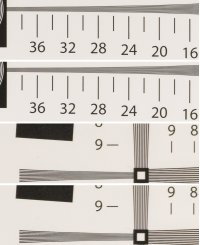
Screenshot 2025-10-31 alle 00.12.40.pngScreenshot 2025-10-31 alle 00.10.11.pngScreenshot 2025-10-31 alle 00.08.34.png Screenshot 2025-10-31 alle 00.10.34.png
  • Like
Reactions: 1 user
Upvote 0

Canon EOS R6 Mark III & RF 45 F1.2 STM November 6

The high 2nd hand price of the ef100-400 and the cost of the 1.4x extender meant that the rf100-500 was a better choice for me. Lighter and shorter as well. I never thought that I would use those focal lengths as much as I have
I absolutely love the RF 100-500mm! It really is my favorite lens :) and it is so helpful for landscapes, details and of course wildlife.
  • Like
Reactions: 1 users
Upvote 0

Canon EOS R6 Mark III & RF 45 F1.2 STM November 6

In the entire history of the R5 and R6 series, the chief differentiator has been Resolution.
I agree. It comes down to that in terms of the sensor. In the history of the 6D vs 5D it was also body, shutter, lifetime of flaps, sealing, etc.

If "the R6 tracks more like the 5D Mark IV", that just proves the point.
I disagree. Moving from the 6D -> 6D II was meh, but from the 6D II to (spiritually, at least) the R6 it was wow. There are far fewer differences between the R6 and R5 when you take a photo or dunk the body in animal snot than what were with the 6D series vs 5D series. Similarly, the RP vs R or 5D.4 was meh. Canon could have kept with meh, but it ran strong. More my point about the 5D.4 comparison and use of the 1D III -ish chip. Canon didn't just hand the masses a road apple. They handed them a quality product by which only resolution and mode selection were the big differentiators.

Put this way:
For CAD $2k in moving from the R6 to R5 you get double the pixels and an LCD display. I guess more EVF pixels.
For CAD $2k in moving from the 6D II to 5D.4 you got double the pixels, better snot resistance, better daylight tolerance, better low end detail preservation, more flaps before failure, etc.

So in moderns times resolution. In the before times pretty much well the whole pie. Steering this back to my original moaning, I'm just hoping the R6.3, despite apparent advancement, isn't inching us back to the whole pie scenario.
Upvote 0

Canon EOS R6 Mark III & RF 45 F1.2 STM November 6

My prediction, based on past history, is that if the R6 Mark III is essentially the R5 in a lower grade body, then the R5 will very soon disappear from dealers' inventories. It won't be up to Canon corporate. The dealers will return unsold R5 bodies to Canon for credit towards future purchases.

The (2017) 6D Mark II was essentially a (2012) 5D Mark III on the spec sheet. Though the 5D mark IV had supplanted the 5D Mark III in 2016, they were still available from many dealers until the 6D Mark II came along. Then the 5D Mark III vanished form new inventories practically overnight. It may or may not have been Canon corporate requiring them to return unsold 5D Mark III. The dealers surely realized the 5D Mark III would be a hard sell with the 6D Mark II priced roughly $1K less and so they returned them to Canon for credit on their balance sheets.
The RP is a mirrorless 6Dii and still being sold.
The EOS R was selling for a long time after the R6/R5 were released.
The R5 is still a great camera and 45mp is a lot more than 24 (or 32) at least in some minds. The R6iii will never be able shoot 8k :-)
  • Like
Reactions: 1 users
Upvote 0

Canon EOS R6 Mark III & RF 45 F1.2 STM November 6

You wife let you buy a lens you didn't even have a body to use it on? She's a keeper for sure!
I did have a spreadsheet for my migration to r mount. The R5 had been teased for at least 3 months by that time and- of course- the R5 is smaller and lighter than my 5Div :-)
  • Haha
Reactions: 1 user
Upvote 0

Canon EOS R6 Mark III & RF 45 F1.2 STM November 6

But really it's the 5D.4 / R vs the 6D.2 / RP we're talking about for the advent of the R5 and R6. The former was noticeably better at the bottom end. Things didn't fully sync up until ~ 3200 -- and that's with fewer pixels on the 6D II. The R6 tracks much more like the 5D.4.

Canon could have just moved the R (~5D.4) chip into the R6. It would have tracked with the 6D II vs 5D.4 gap, but now vs. the R5 in terms of further line differentiation. They went better, thankfully. As pointed out earlier, the R5 and R6 perform virtually the same along the numeric options, and thus for lower values likely to be used no quality difference.

The EOS R and EOS RP were one-off models to get Canon into the FF MILC at a time when lower end camera sales (i.e. APS-C) were drying up and FF was becoming a larger and larger part of the overall market. Introduced in 2018, they had to have been on the planning board since at least 2015 considering how long Canon takes to get a product to market.

In the entire history of the R5 and R6 series, the chief differentiator has been Resolution.

If "the R6 tracks more like the 5D Mark IV", that just proves the point.

The 6D Mark II came along 5 years after the 5D Mark III. The R6 came along 4 years after the 5D Mark IV. Other than resolution, the 6-Series trails the 5-Series by one model cycle (4-5 years) in terms of many features and spec sheet numbers.

Again, compare the EOS R5 to the next generation EOS R6 Mark II:

screenshot (1).png
  • Like
Reactions: 1 users
Upvote 0

Show your Bird Portraits

Continued reflections of hummingbirds. This time a more contemporary lens. This is a TT artisan 250mm f/5.6 Reflex, which is pretty much a clone of the somewhat rare and expensive Minolta of the same dimensions. I have often been curious about the Minolta but never was willing to choke up the asking price, so when this came along, I thought I would give it a try. Not bad for the money. Today was very dark and grey, so shots only possible due to the faster f stop, but still most are at ISO 6400, so some loss of low contrast detail due to noise reduction since cats are pretty low contrast to begin with. First two shots from the R5 and the remainder from R7 as not enough reach for most of the brush shots with the R5. The Vivitar 600mm Solid Cat just arrived and it appears to be identical to the 800 I already have except for one extra magnification element in the 800, so MFD is the same with less focal length. Not useful for my little birds, but the lens in in pristine shape.

2W4A8531-Edit.jpg


2W4A8546-Edit-2.jpg


E57A5034-Edit-2.jpg


E57A4963-Edit.jpg
  • Like
Reactions: 7 users
Upvote 0

Everything We’ve Been Told About The Canon EOS R7 Mark II

When the rubber of the R7 eyepiece needed replacing after about 6 months from new, Canon tried to get out of its warranty obligations on the grounds the eyepiece was an accessory! Compare this with Swarovski. The one of the rubber eyecup rings of my 3-year old binoculars came off and was lost, and Swarovski within two days sent me a pair of new eyecups as it was within their 10 year warranty.
Swarovski includes the warranty in the pricing :ROFLMAO:.
  • Love
Reactions: 1 user
Upvote 0

Canon EOS R6 Mark III & RF 45 F1.2 STM November 6

Compare the spec sheets of the 2012 5D Mark III to the 2017 6D Mark II. They're practically identical, other than 1/3 stop difference in X-sync and 1/4000 vs 1/8000. On the other hand, the 6D Mark II had higher resolution (26MP) than the 5D Mark III (22MP), though not as high as the 2016 5D Mark IV (30.4). The 6D II had an articulated touch screen, WiFi and *** built in, DiG!C 7 vs DiG!C 5+, slightly more cross-type AF points, slightly higher burst rate, and flicker reduction (which all Canon bodies with less than 4 digits in the model name (xD, X0D, xx0D) beginning with the 7D Mark II in 2014 got).

DR at all ISOs was practically identical. SNR was also nearly identical.

View attachment 226671
But really it's the 5D.4 / R vs the 6D.2 / RP we're talking about for the advent of the R5 and R6. The former was noticeably better at the bottom end. Things didn't fully sync up until ~ 3200 -- and that's with fewer pixels on the 6D II. The R6 tracks much more like the 5D.4.

Canon could have just moved the R (~5D.4) chip into the R6. It would have tracked with the 6D II vs 5D.4 gap, but now vs. the R5 in terms of further line differentiation. They went better, thankfully. As pointed out earlier, the R5 and R6 perform virtually the same along the numeric options, and thus for lower values likely to be used no quality difference.
Upvote 0

Canon EOS R6 Mark III & RF 45 F1.2 STM November 6

Prior to the R, the primary general purpose 35mm DSLRs for Canon were the 5D and 6D series, right? The 5D was configured in a way that it best assured things got done for people who needed to do it—whatever that was—and priced it accordingly. The 6D was configured to be technically eligible: For a much lower price, one got a 35mm sensor with OK light sensitivity, half the shutter ceiling, and passable weather sealing. Thus it was in one shade or another for years.

Compare the spec sheets of the 2012 5D Mark III to the 2017 6D Mark II. They're practically identical, other than 1/3 stop difference in X-sync and 1/4000 vs 1/8000. On the other hand, the 6D Mark II had higher resolution (26MP) than the 5D Mark III (22MP), though not as high as the 2016 5D Mark IV (30.4). The 6D II had an articulated touch screen, WiFi and *** built in, DiG!C 7 vs DiG!C 5+, slightly more cross-type AF points, slightly higher burst rate, and flicker reduction (which all Canon bodies with less than 4 digits in the model name (xD, X0D, xx0D) beginning with the 7D Mark II in 2014 got).

DR at all ISOs was practically identical. SNR was also nearly identical.

screenshot.png
  • Like
Reactions: 2 users
Upvote 0

Canon EOS R6 Mark III & RF 45 F1.2 STM November 6

What I hope for and expect with any lens, especially L lenses, is for the actual images they produce, using whatever corrections they are designed for (optical, digital, or both) to be really good. Since the images from the VCM lenses are not just really good, but actually outstanding, I also think they are a remarkable accomplishment. I own and use four of them (24, 35, 50, 85), so I actually know what I'm talking about (unlike people who tiresomely scream "but digital corrections, but digital corrections" over and over and over, without actually owning and using the lenses). When I bought my 50 F1.4, I thought I might hang onto my RF 50 F1.2, which is a truly wonderful lens. However, I just didn't find myself using it. The results from the VCM version are just as good, no-one notices the 1/3 stop difference between F1.2 and F1.4, and the VCM version is so much smaller and lighter. So I've just sold my F1.2. The latest, which is the 85 F1.4, is my favorite 85 ever. It's just superb. You can, of course, stick your head in the mud, ignore the fact that designing lenses for digital corrections (which the VCM lenses employ to a greater or lesser extent, depending on which lens we're talking about--the 85 probably the least) makes possible not just particular body designs but also the kinds of optical performance that would be hard, if not impossible, to achieve with optical corrections only, and thereby miss out on some fabulous lenses. Your choice.
I still want the trend to be for corrections in-lens as able, but the reality is I turned on the digital optimizer in my R6 and the rest is history. I'm even seeing some relatively fantastic 70-200 + EX2 photos that simply would have been trash in my DSLR days with the same combo. So, I'd have to agree at the end of the day...
Upvote 0

Canon EOS R6 Mark III & RF 45 F1.2 STM November 6

One of the benefots (sic) of the EF 135mm f2.0 L is that it can take a 1.4x tc with minimal drop in IQ.

The achillies (sic) heel of the EF 135mm f2.0 L (and also the EF 85mm f1.2 II L) is strong magenta / green Loca (sic) on spectacular highlights. it's easily corrected in Lightroom, but it is very strong on these two lenses.

My experience with an EF 135mm f/2 L + EF1.4X III was rather disappointing. The images were well below the quality of the bare lens or even my EF 70-200mm f/2.8 L IS II at 135mm.

I did AFMA with the Camera + 1.4X + 135/2 before the shoot for which I used it while my EF 70-200mm f/2.8 L IS II was off to CPS for a new IS unit (at age 9 years and a LOT of heavy use with plenty of hard bumps and bangs along the way).

I've never noticed any offensive colors of specular highlights with the EF 135mm f/2 L. But then I usually shoot with it in darker environments where there aren't a lot of bright points in the out of focus areas.
  • Like
Reactions: 1 user
Upvote 0

Canon EOS R6 Mark III & RF 45 F1.2 STM November 6

I'd never dare to say that a line of shamelessly optically uncorrected lenses with extreme vignetting is 'a great accomplishment'. I don't even think the VCM line is worth of the red ring. At that price tag the least I expect is the lenses to be optically corrected.

View attachment 226634
What I hope for and expect with any lens, especially L lenses, is for the actual images they produce, using whatever corrections they are designed for (optical, digital, or both) to be really good. Since the images from the VCM lenses are not just really good, but actually outstanding, I also think they are a remarkable accomplishment. I own and use four of them (24, 35, 50, 85), so I actually know what I'm talking about (unlike people who tiresomely scream "but digital corrections, but digital corrections" over and over and over, without actually owning and using the lenses). When I bought my 50 F1.4, I thought I might hang onto my RF 50 F1.2, which is a truly wonderful lens. However, I just didn't find myself using it. The results from the VCM version are just as good, no-one notices the 1/3 stop difference between F1.2 and F1.4, and the VCM version is so much smaller and lighter. So I've just sold my F1.2. The latest, which is the 85 F1.4, is my favorite 85 ever. It's just superb. You can, of course, stick your head in the mud, ignore the fact that designing lenses for digital corrections (which the VCM lenses employ to a greater or lesser extent, depending on which lens we're talking about--the 85 probably the least) makes possible not just particular body designs but also the kinds of optical performance that would be hard, if not impossible, to achieve with optical corrections only, and thereby miss out on some fabulous lenses. Your choice.
  • Like
  • Haha
Reactions: 13 users
Upvote 0

Canon EOS R6 Mark III & RF 45 F1.2 STM November 6

Anyway, I never bought f/1.4 for portraits, I did it for the light, because f/2.8 to f/1.4 is a very big difference, and not every environment allows the use of flash.

Then the EF 50mm f/1.2 L is not a lens for you. But just because it does not meet your needs doesn't mean it is not an excellent lens for other use cases.
  • Like
Reactions: 1 user
Upvote 0

Canon EOS R6 Mark III & RF 45 F1.2 STM November 6

I´m currently looking to purchase a used EF 135mm F2. I have been looking at this lens on the used market for nearly two years now and it always around 600 €, sometimes 550 €. It hasn't lost any value since I started looking.

The lens really sparked my interest and I could use for school plays, sports and especially for a golden wedding I am shooting next year. This golden wedding made my decision to purchase it. The RF is too expensive for my limited use case, but I´m really looking forward to the EF and I'm curious to shoot with it :)

The EF 135mm f/2 L is an amazing lens. It's never been a top performer reproducing flat test charts but, ohhh, the photos you can get with it!

The images it produces have fine detail yet also a smoothness of tone unlike any other lens in its price range. It's my favorite lens.

The one thing I have found it doesn't do well is take an extender. When I needed to send my EF 70-200mm f/2.8 L IS II to CPS for a new IS unit, I used the EF 135/2 + EF1.4X III at a football game. I was disappointed with the results. Focus was accurate (I had done AFMA with the combination in preparation for the game), but the distance sharpest in focus was not up to what I expected out of the 135/2 even when accounting for an added extender. Acutance was also well under what I get out of the 70-200/2.8 IS II. The bare 135/2 beats the 70-20/2.8 IS II at 135mm fairly handily, and the zoom is no slouch at all.
  • Like
Reactions: 1 user
Upvote 0

Canon EOS R6 Mark III & RF 45 F1.2 STM November 6

Unless your tolerance for poor image quality is extremely high, wouldn't you care about ISO 100-12800? I have yet to find a situation where going beyond that is useful, regardless of camera. Photons are necessary for pictures, after all.

Look at the R5: it's a better and more expensive camera than an R6 with no discernable difference in image quality at ISO 1600-12k (in lab results there's maybe 1/6 stop in it) and it's limited to 51200. There's no reason to think the R6.3 would be any worse and I'm going to go out on a limb and say it'll probably be a tiny improvement.

I'm still curious about your comments generally though, what exactly are you looking for that this doesn't address?
I think my banter with Scott_7D captures my worries/hopes. I hear you saying they're unfounded, based on your experience with the R5. In which case, my pre-release concerns may all blow away on the wind this November! And I guess I'd say the R6 spirit remains good.

But with respect to photons to photos and the usual wonderful places, historically the ISO ceilings have mattered in real world photos, at least as a proxy, for concerns such as shadow detail, quality of noise, top "usable" sensitivity, etc. I think the R5's underlying tech was also 1D III, so smaller pixels / diffraction aside (not that I tend to sweat it) I'd hope for it to be par ISO value for ISO value.

I feel that the R6.3 is being placed as the C50 with the physical features the C50 skipped -- like an EVF and IBIS. And that's great, but I'm a stills guy so for me it's meh. Open gate? I've had that all of this time -- cropped stills just haven't been an issue. ;) Not that it matters -- extra features are extra features, no complaints. I just haven't seen anyone talk about the C50 for stills. But we're going to find out, aren't we?! In days. And as mentioned with Scott, what does ISO 100 -> 64000 mean for stills in this sensor as compared to what the R6 series has enjoyed for 100 -> 102400? i.e., is 10K on a C50 chip the same or better as 10k on the R6 chip? Is it or more like 8K? Maybe it's all the same or better. Maybe 10k on the c50 chip is like 15k on the R6 chip? Translated to the real world: maybe I can catch that end of day picture on the R6.3 with my long lens and extender with the same or better noise and shadow detail as what I could on my R6. In which case, I'm just fretting. Experience, however, says this won't be the case. Experience says the day will end earlier. But hey, people can make better videos. My kid would be happy. :cool:
Upvote 0

Filter

Forum statistics

Threads
37,269
Messages
966,870
Members
24,633
Latest member
EthenJ

Gallery statistics

Categories
1
Albums
29
Uploaded media
353
Embedded media
1
Comments
25
Disk usage
982.4 MB